



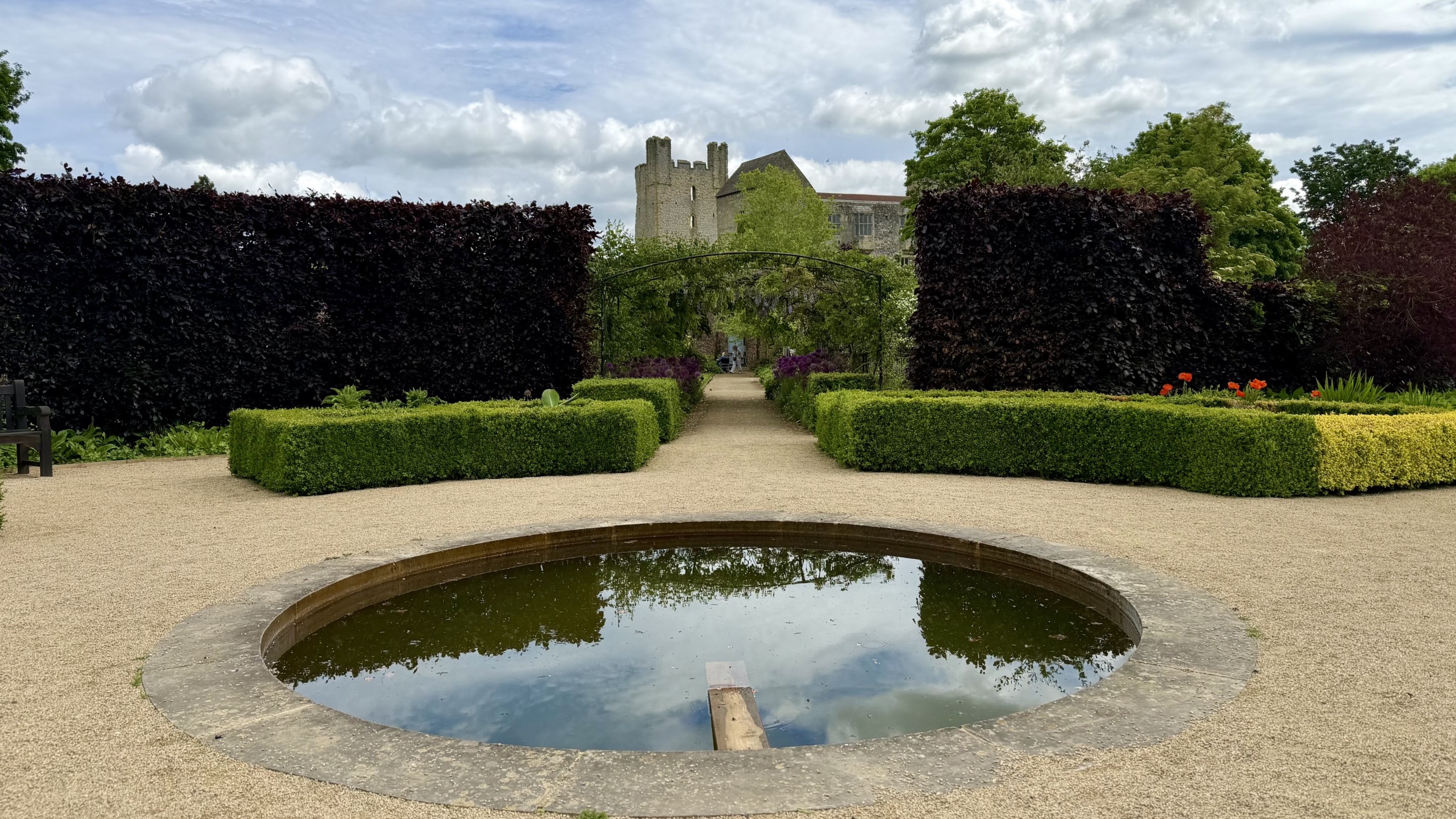
There's a particular kind of silence inside a walled garden. It's not absence, exactly. More a softening. The town is still there. The cars, the shops, the conversations, the castle visitors, the everyday business of Helmsley. But step through the gates of Helmsley Walled Garden and the world seems to lower its voice.
The walls do what they were built to do. They hold warmth. They shelter growth. They create a microclimate in which more delicate things can survive.
Only now, the delicate things are not only fruit trees, herbs, irises, medlars and alpine plants. They are people.
“It’s almost like the world outside sometimes doesn’t exist,” says Louise Harrison, the garden’s Retail and Marketing Manager, as we sit among birdsong, paths and borders on a bright North Yorkshire morning. “Those walls are the barrier for all the hustle and bustle of daily life and all that stress, all that anxiety that we deal with on a daily basis. Within these walls, it goes. You don’t need to worry about that. For this moment, you can leave that behind.”
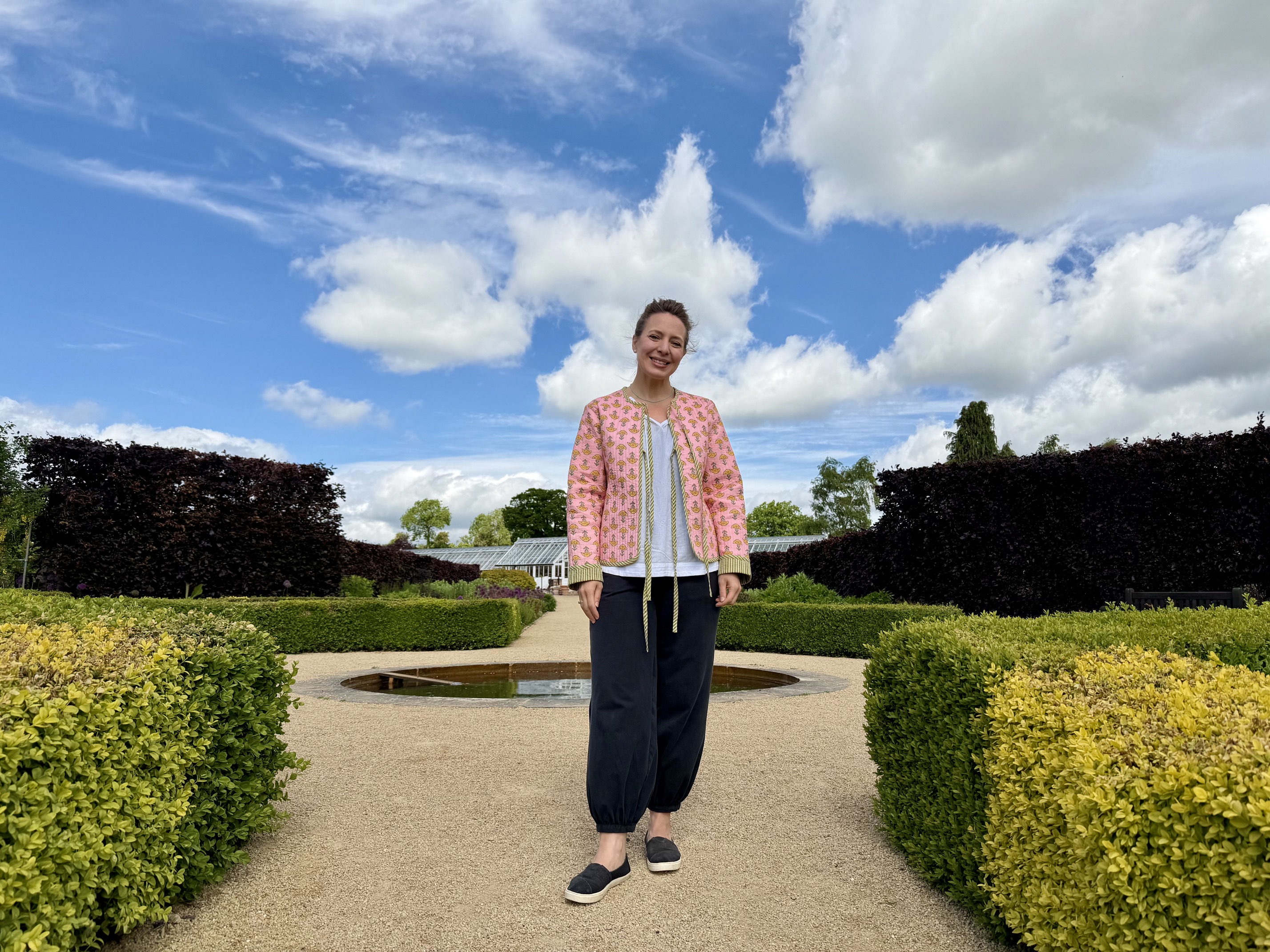
Helmsley Walled Garden is easy to misread. From the outside, it might appear to be another beautiful day out in a handsome market town: five acres of cultivated garden in the North York Moors National Park, with the dramatic ruins of Helmsley Castle rising nearby, a café, a shop, a plant stall, borders, orchards, glasshouses and a view to make even the hurried visitor slow down.
And it's that. It is very much that.
But it's also something much more serious.
Louise’s job is to tell that story. “The main aim of my role is the marketing side,” she tells me, “because I put out there how wonderful this place is and obviously spread the word on what we actually do and the ethos of the garden. Because we’re not just a tourist destination, which a lot of people just think at first glance. There’s so much more behind it.”
That “more” begins with history - and almost with loss.
The garden was once part of the great estate system: a productive walled kitchen garden serving Duncombe Park and, in its earlier life, feeding not only one grand house but a whole way of living. The walls, the angled footprint, the glasshouses, the fruit, the careful management of heat and frost all belonged to a highly skilled horticultural world. Louise points out that the garden is built on a parallelogram, “slightly twisted, so it gets as much sunlight as it possibly can.” In Victorian days, she says, doors at the end of the garden were opened “to let the cold air out.”
It wasn't ornamental indulgence. It was infrastructure. Food infrastructure, labour infrastructure, class infrastructure. A place of work, skill, heat, shelter and seasonal knowledge.
Then came decline.
“When the men went to war, that was the start of its decline,” Louise says. “Sadly, a lot of them didn’t come back.” After that, the garden had various uses. It was, at different times, worked in patches by people who could make use of part of it - a grocer, florists, others. But no small commercial use could sustain the whole site. “The funds needed to sustain and maintain this garden were beyond what they could ever do,” Louise says. “They were just using little patches of it, so the rest of it was falling into disrepair.”
By the early 1990s, Helmsley Walled Garden could have disappeared into the long list of historic places lost not in one dramatic moment, but by the slower violence of weather, underinvestment and time. Walls weaken. Glass breaks. Paths vanish. Ponds are filled in. Buildings become unsafe. A garden, unlike a painting or a building, cannot simply be locked and kept. It lives or it dies.
Then came Alison Ticehurst.
“Alison found the garden in disrepair in the early 90s,” Louise explains. “Her aim was to get this garden, to save this garden, but also to save people.”
That sentence is writ large in MagNorth's visit. Because it explains why Helmsley Walled Garden isn't a conventional heritage restoration project. It wasn't simply about putting back walls, beds, paths and glass. It was about returning purpose to a place - and allowing that purpose to reach beyond horticulture into human lives.
Without that shift, Louise says, “it wouldn’t be here in its current state. It would have fallen into further disrepair and probably the walls would have perhaps collapsed. It just wouldn’t be here as it is, and that community then wouldn’t be here. None of that would have evolved.”
Today, the garden’s public phrase is “a beautiful garden, changing lives.” Louise is quick to say she didn't come up with it. “I think that was June,” she smiles, referring to the garden’s director, June Tainsh. But she knows its power. “It is, isn’t it?”
So what does changing lives actually look like?
“On a day-to-day basis, it’s seeing people evolving and growing,” she says. “It’s seeing that confidence in people. It makes a difference just to come in. Like Eric said, the camaraderie. Just having that interaction with people - and not always like-minded people, but from all different walks of life.”
Eric is one of the garden’s long-standing volunteers. Louise introduces him beside the community plots, where fruit trees are trained and produce is grown. He's been coming for nearly 16 years.
“If it were that bad,” he tells me, with the dry brevity of a man who has no need to overstate things, “I wouldn’t be here 16 years.”
What keeps him here?
“The camaraderie here is fantastic,” he says. “Fantastic.”
That word - camaraderie - keeps returning to the surface, like a reliable crop. It is one of the garden’s quiet forms of yield.
.jpg)
Helmsley Walled Garden has around 115 volunteers in total, Louise says, with about 28 working in admissions and the shop, and the rest largely in the garden. Some come with gardening knowledge. Some come because they want company. Some come because they need routine. Some because they need a place that will not demand too much too quickly. Some because working with plants makes more sense than sitting in a room trying to explain pain.
The garden is careful not to overclaim. Louise is clear that staff aren't trained therapists. “With the therapeutic horticulture, none of our staff are trained therapists,” she says. “So basically it’s the therapeutic benefits that being outdoors in nature and being at one with the garden - that is what they give them.”
But there's nothing vague or sentimental about that. The garden’s staff are horticulturally serious. “It’s teaching them exceptional horticultural skills at a high level,” Louise says. “Our team are trained to master’s level and a lot of them have done the RHS courses. They are very well trained and they’re also brilliant with people. That’s why we’re all here.”
The human results can be profound. Louise describes one individual who, when they first arrived, could not speak to her. “If I was new, he didn’t know me, and when I walked into the room he couldn’t cope. I said hello and he would walk away. Now we can chat about anything and everything forever.”
That change didn't stop at the garden gate. “He’s gone on to do other charity work, volunteer work elsewhere, which he wouldn’t have had the confidence to do without that,” Louise says. “What we have sown with him has enabled him to go out and be more confident in the world, because it can be harsh and here it isn’t.”
And her choice of word - sown - lands beautifully because it isn't metaphor imposed from outside. It's how the place works.
Seeds are sown in March. Pumpkins planted out in early summer. Apples pressed in autumn. Rhubarb cut for the donation stand. Flowers grown for the admissions kiosk, the church in Helmsley and, when possible, other local places. Volunteers do the work in groups, never isolated. The point isn't simply to clear weeds or produce perfect borders. The point is to be together while doing something real.
“We’re not a show garden,” Louise confirms. “We don’t aspire to be a show garden. We’re about people first and foremost, and the garden is obviously a reflection of what they’ve done. The fact it looks fantastic just says it all. But there might be weeds. That’s fine. It doesn’t matter. It’s like people - we all have our flaws.”
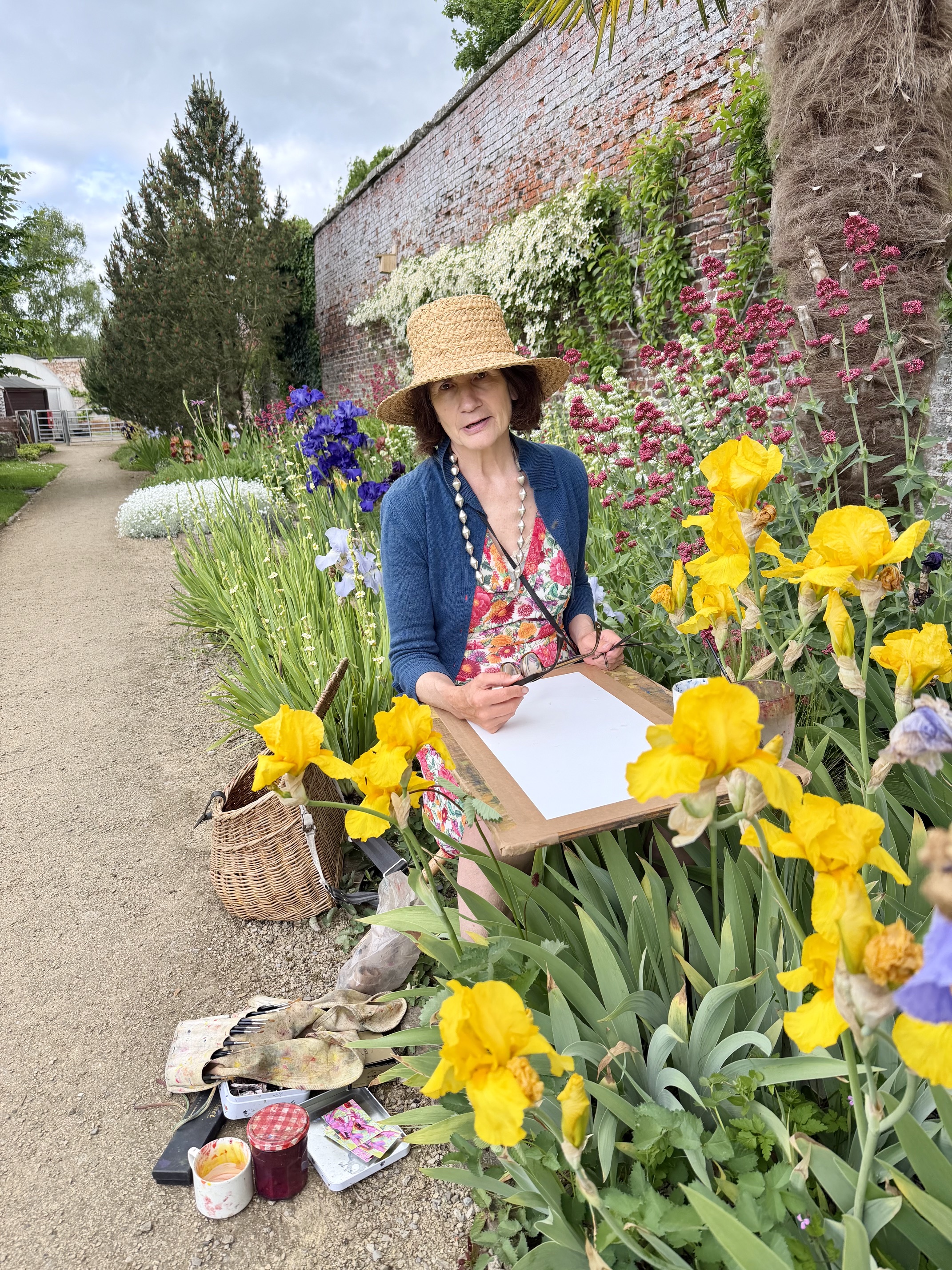
This is where Helmsley Walled Garden becomes particularly important. It refuses the false choice between beauty and care. The garden is beautiful because it's cared for, but also because it cares. Its horticultural value and its social value aren't separate. They're entangled at the root.
There is serious plant heritage here. Louise points out the Yorkshire heritage apple collection, with dozens of varieties. The orchard produces apples and pears that are sent to the Yorkshire Wold Apple Juice Company, pressed, bottled and returned as the garden’s own juice. “We must have had about 700 bottles this year,” she says. There are community plots for local people. There is a medlar tree, strange and old-fashioned, whose fruit must be softened by frost before it can be used. There are irises, a cutting garden, alpine planting, a grass labyrinth, glasshouses, a dipping pond, herbaceous borders, fruit cages, a clematis garden, a white garden for quiet contemplation, and a small “secret garden” connected to the filming of The Secret Garden.
The site is also a cultural space. Theatre events take place on the lawn in collaboration with Helmsley Arts Centre. A sculpture exhibition with the Yorkshire Sculptors Group is due to run through the summer. Works by sculptor Bill Harling have become, in Louise’s words, “sort of a permanent collection,” part of the character of the place.
Helmsley itself is important here. The town can look, to the passing visitor, like a postcard version of North Yorkshire: castle, market square, independent shops, tea, stone, countryside, affluence. But places like Helmsley Walled Garden reveal what sits beneath that view: rural loneliness, ageing, transport problems, hidden need, and the importance of local institutions that create belonging.
Louise has long family connections to Helmsley. Her mother is from the town and her grandparents still live there. But working at the garden has changed her sense of the place. “I’ve got under its skin,” she says. “I feel part of a community. There’s a massive community within Helmsley anyway, and it’s almost like an extension of what we’ve got here.”
She lists the arts centre, the library, the church, local events, volunteers who give time in multiple places, and the town’s ambition to become Town of Culture. “There’s so much going on here with arts and culture,” she says. “When you look closer in Helmsley…it’s just community, community. It’s the word, and sometimes I feel it’s a bit overused, but there’s no other way to describe it.”
One volunteer, - Ann, overhearing that MagNorth is an online cultural magazine for the North of England, cuts through any anxiety about whether a garden counts as culture.
“We do culture dead good here,” she says.
She's right.
Because culture isn't only what happens on stages, in galleries, or under funded banners. Culture is how a place knows itself. It's what people make together. It's how a town gathers, remembers, mourns, grows, cooks, plants, chats, jokes, volunteers and survives. In that sense, Helmsley Walled Garden is as culturally significant as any formal venue, because it holds a living relationship between landscape, history and people.
And it also holds memory.
There are benches for loved ones. There are people who used to come with partners and now come alone. There's a memorial bench for a soldier who worked in the garden before the First World War and didn't return. His family still visits. People donate not only because the garden is a charity, but because, as Louise puts it, “they have been touched by what we do here.”
That emotional investment became critical after Covid. “Coming out of the pandemic, it nearly didn’t reopen,” Louise says. The garden launched a campaign in which people could buy a square metre of garden or a brick - not literally owning the place, but symbolically claiming a stake in its survival. “The town, local businesses, all the community came together and they saved the garden. It was able to reopen and then from then on, excuse your pun, but it’s grown.”
And that rescue story shouldn't be passed over too quickly. It's one of the central truths of northern cultural and community infrastructure: places don't survive because they are lovely. They survive because people decide they matter. Because somebody fills in the funding form. Because somebody volunteers on a cold morning. Because somebody gives a legacy. Because somebody tells a neighbour. Because a small charity somehow takes responsibility for maintaining historic buildings it does not own.
Helmsley Walled Garden is leased from Duncombe Park, Louise explains, but the organisation is responsible for maintaining what is inside it. That includes heritage structures that require serious money. The main glasshouse has already been renovated after funding was secured. Now attention's turning to the Orchard House, where volunteers currently have facilities that aren't good enough for what they give.
“The volunteers at present don’t have really anywhere warm in the winter,” Louise says. “We want to make it a space where they have a community room, where they have sofas and a place to come and get away from when we’re busy with visitors as well. Just a quiet time, and better kitchen facilities for them because they give us so much and the facilities that we give them aren’t what we want at the moment.”
It is also about safety. “We have a lot of people here with varying difficulties and PTSD,” Louise confirms. “It’s important we offer them a safe space where they don’t feel threatened in any way.”
That's what heritage funding can sometimes miss. A restored building isn't only a restored building. In a place like this, it can be a warm room for a volunteer in February. It can be a refuge from crowds. It can be the difference between someone coming back or staying away.
.jpg)
The climate is changing too. Last year’s drought gave the garden “a heads up,” Louise says, of what may be coming. Water conservation, plant selection and visitor expectations all have to adapt. Some parts of the garden may not always look perfect. The public may need to understand that brownness, dryness or weeds aren't always failure. Sometimes they're reality. Sometimes they're ecology. Sometimes they're evidence that a garden isn't a manicured illusion, but a living place.
The visitor numbers are growing - just over 26,000 last year, Louise says - which is both success and pressure. Coach parties, gardening groups, visitors, families, RHS members, Gardeners’ World attention, magazine collaborations and social media have all helped the garden spread its wings. But the challenge is to grow without losing the intimacy that makes the place work.
Louise has seen what happens when people arrive stressed, flustered, having struggled to park in busy Helmsley or carrying the usual noise of daily life. “You see them when they come out of the garden,” she says. “They’re different. Totally different. Their shoulders are relaxed. It’s like the equivalent of doing an hour’s yoga. It all leaves you and you’re just in the moment.”
That's not hyperbole. It is visible.
There's a grass labyrinth in the garden, designed by a specialist from Malton. Visitors are encouraged to walk it barefoot. Louise has done so herself “especially after a busy day.”
“It’s mad we have to remind ourselves to do that,” she says. “But I think the volunteers get that moment in their time here.”
The phrase “safe space” is overused, sometimes mocked, often misunderstood. But at Helmsley Walled Garden, it has brick, soil and weather behind it. It's not a slogan. It's a path, a bench, a greenhouse, a group task, a cup of proper coffee, a wheelbarrow abandoned at half past ten because it is break time and everybody knows it. It 's chickens and ducks, a cutting garden, a produce stand, a community plot, an apple weekend, a quiet corner to read, a person who once couldn't speak now chatting freely.
Louise describes the garden’s logo: leaves, castle and garden held together. “It’s like a hug,” she says. “That’s kind of how it feels to be here.”
There may be no better description.
The hug isn't sentimental. It's built out of work. Hard work. Funding work. Gardening work. Volunteer coordination. Retail. Admissions. Café partnerships. Social media. Maintenance. Weather. Grants. Legacies. Cleaning. Planting. Repairing. Welcoming. Remembering. Opening the gates again and again.
.jpg)
Louise herself came to the garden after working as a professional artist and illustrator. “In not a million years,” she says, did she imagine she would be doing a marketing job here. But the place has clearly entered her bloodstream. “I can’t imagine working anywhere else now,” she says. “I’ll be here forever.”
Towards the end of our conversation, I ask what she hopes people carry with them when they leave - whether they're volunteers, visitors, workshop participants or people who've simply sat inside the walls for an hour.
“I hope that they just carry with them a sense of pride and self,” she replies. “To walk away and feel they’ve made a difference and feel good about the work they’ve done here. And also just having that social interaction - it lifts the spirits. So just walking away, just feeling lighter. Whatever was maybe troubling them before is a little bit more, maybe easier to cope with.”
Then she adds something that feels central to the whole garden.
“They’ve invested. They’ve put something of themselves into this place and it will have an impact forever.”
That's the thing about gardens. You never quite leave them as you found them. And if they're good enough, generous enough, alive enough, they don't leave you as they found you either.
Helmsley Walled Garden was saved from disrepair. But its real achievement is that it didn't become a museum piece. It became a working garden again - only now the crop is wider than fruit, flowers and vegetables.
It grows skill. It grows confidence. It grows friendships. It grows memory. It grows the possibility that, inside old walls, people might find enough shelter to begin again.
And in a North where too many vital places are expected to prove their worth in narrow economic terms, Helmsley Walled Garden offers a different measure.
A place is worth saving when it helps save people.
Helmsley Walled Garden, Cleveland Way, Helmsley, North Yorkshire YO62 5AH.
Open Wednesday to Sunday 10am to 4pm March to December





