



There's a gallery inside the gallery at Leeds Arts University. Then there is another one, smaller again.
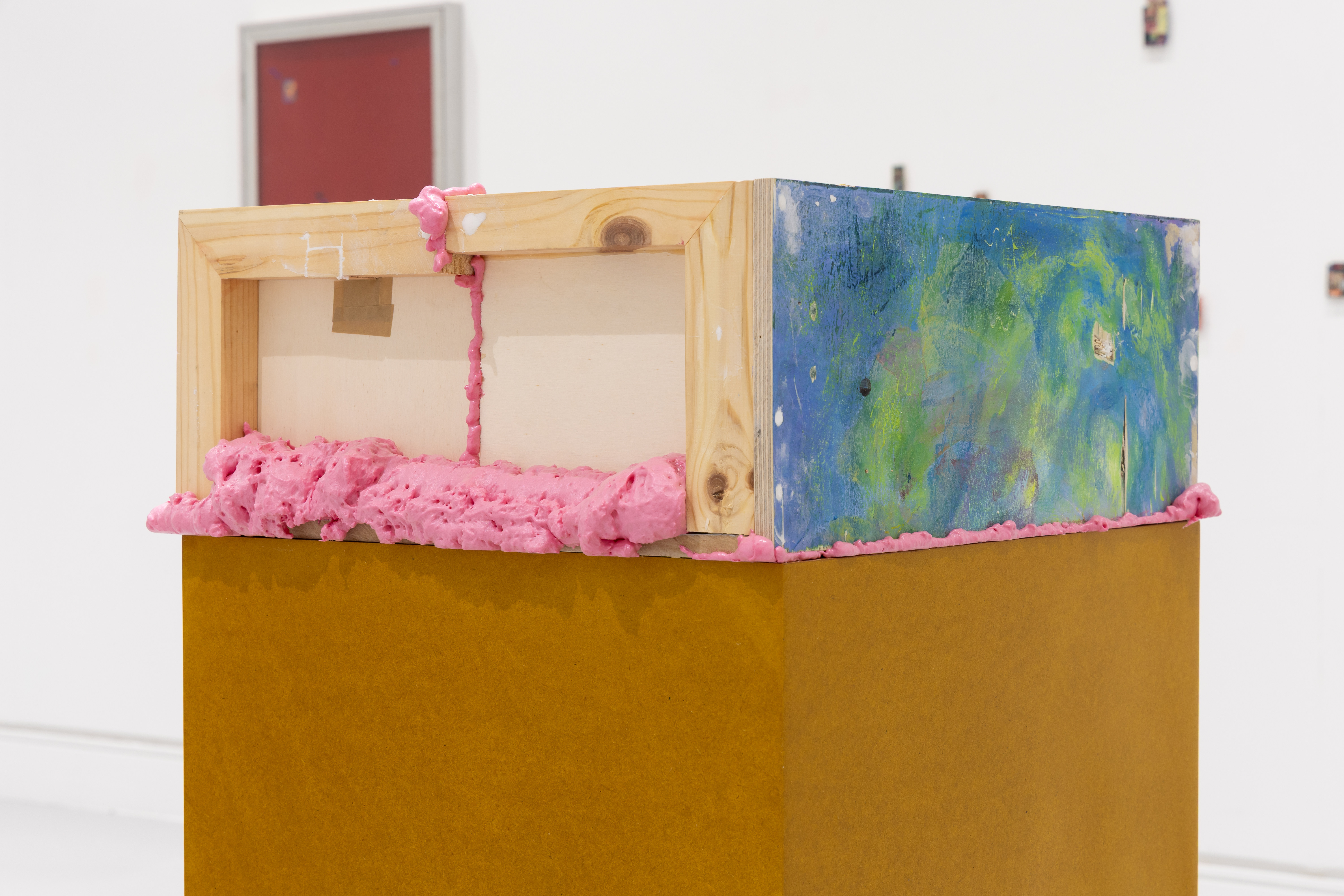
They resemble the room in which we are standing, but only up to a point. The proportions are recognisable; the logic isn't. Built from paper, discarded wood, studio offcuts and fragments of dolls’ houses, David Steans’ architectural models begin with Blenheim Walk Gallery and then quietly abscond with it.
Walls shift. Openings appear. A rupture seems to ooze. Empty miniature plinths wait for exhibitions that may never exist. Above the full-sized gallery, windows look into the curator’s office, where a small jester-like figure has taken up residence.
“You’ve got the dimensions,” Steans says, “but the logic then almost immediately starts to dissolve a little bit.”
That dissolution is the pulse of Paperhouse, a new solo exhibition of collage, text, sculpture and architectural model-making. It's playful without being slight, unsettling without becoming theatrical, and acutely conscious of the institution that contains it.
The exhibition doesn't simply occupy the gallery. It notices it.
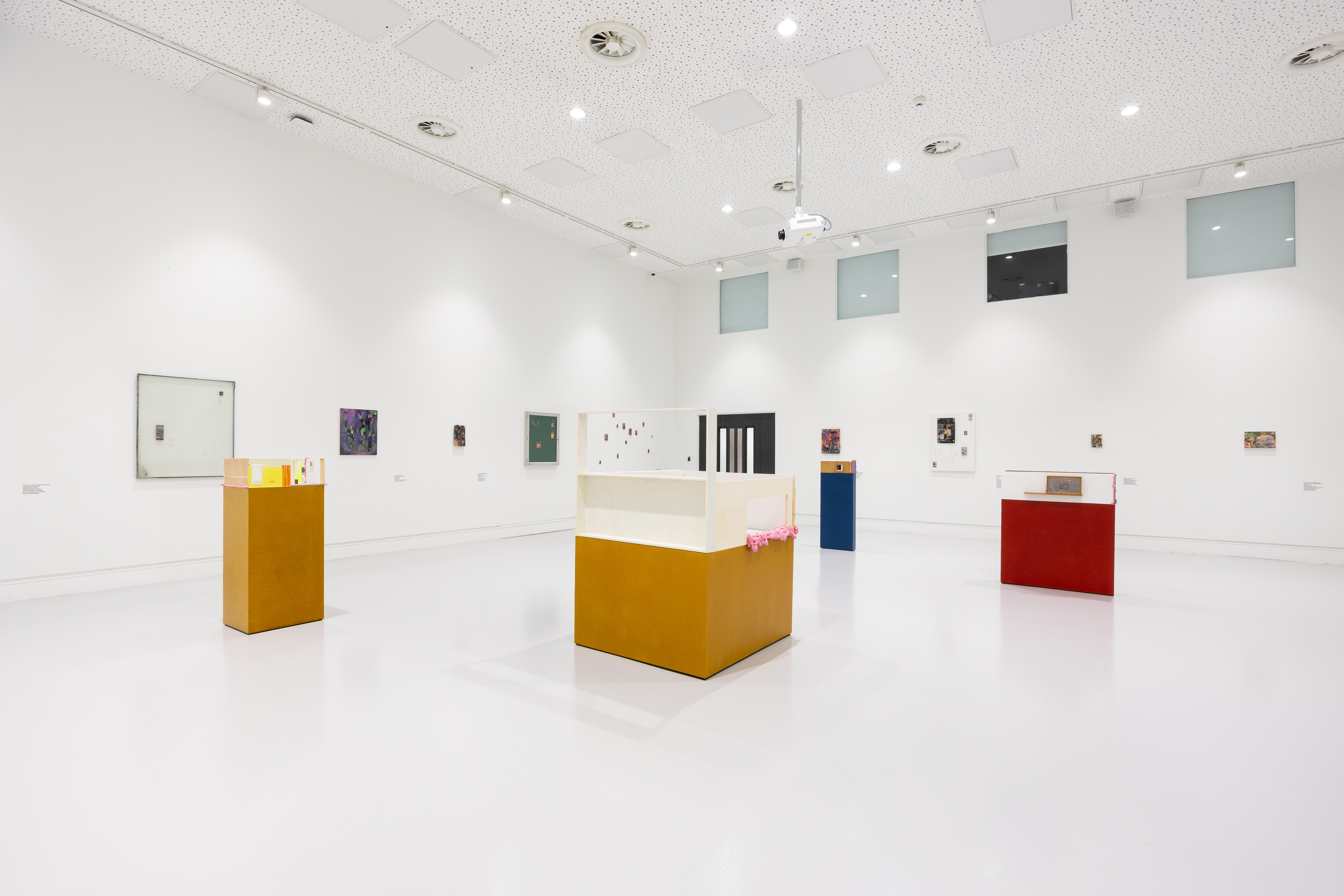
Steans is an artist, writer and lecturer at Leeds Arts University. When invited to propose an exhibition for the space, he knew he wanted to make entirely new work and to use modest, readily available material.
“Cheap,” he says, with no embarrassment attached to the word.
The title comes from Paperhouse, the 1988 dark-fantasy film in which a girl’s drawing of a house becomes a world she can enter and alter through dreams. For Steans, it offered a metaphor for artistic production: the possibility of making something - even a world - from almost nothing.
Paper is particularly suited to the task. It's cheap, common and vulnerable. It belongs to offices, classrooms, sketchbooks, notices and forms. It can carry an instruction or an image; it can be folded into a structure or thrown away.
It also belongs naturally to the art school. Students don't require an industrial fabrication budget to recognise the possibilities in front of them.
“I did want to make something which was, in terms of material anyway, quite accessible,” Steans explains. “There’s nothing overly fabricated or expensive materially.”
That doesn't mean Paperhouse offers an easy code to crack. Steans is more interested in producing an atmosphere than delivering a fixed meaning. Biological and insect-like imagery recurs. So do hints of theatrical gore, but rendered through artificial or found material. Institutional noticeboards and expected sites of explanation become part of the work. Text appears where a visitor might anticipate a label, then slips away from the administrative certainty of one.
There is humour here, but also the uncanny feeling that a familiar system has developed a private life.
Steans describes model-making less as the production of an object than “a kind of method, or a gesture, or a sort of proposal”. Once accuracy began to feel controlling - and, he admits, a little tedious - he approached the structures as three-dimensional collages.
He scavenged the studios for useful fragments. The models retained the gallery’s basic measurements but abandoned the obligation to behave as replicas.
An empty gallery in miniature, he says, can be evocative: “It’s a bit more of a proposal. It’s like: what could you do in here?”
Galleries often perform neutrality. The white wall, the measured spacing and the discreet label suggest that the room has withdrawn, leaving only the work.
Paperhouse refuses that fiction. Blenheim Walk is material, architecture and subject. Its proportions, surfaces, offices and habits all enter the exhibition.
The process of reproducing the gallery also made Steans look at it differently. He had imagined it as a cube, only to discover through measurement and model-making that it's longer, lower and more irregular than memory suggested. A fifth model, made at an even smaller scale, was eventually removed because it didn't work. Other elements were reduced or abandoned when they became too insistent.
This editing is important. Although the materials are scrappy, the exhibition isn't careless. Steans talks about the productive contrast between the pristine plinths made by the University’s workshops and the “junky and scrappy” models placed upon them.
Most of the work was made in an intense three-month period, beginning at the end of June. Around a quarter of it was produced in the gallery itself. That access allowed the room to influence the work and gave Steans something artists don't always receive: enough institutional trust to change his mind.
“I’ve been really well supported,” he says. Curator Dr Marianna Tsionki allowed him to follow the work as it developed without demanding that the finished exhibition reproduce its initial proposal.
The distance between those two things isn't, for Tsionki, a failure of planning. It is evidence that a creative process has occurred.
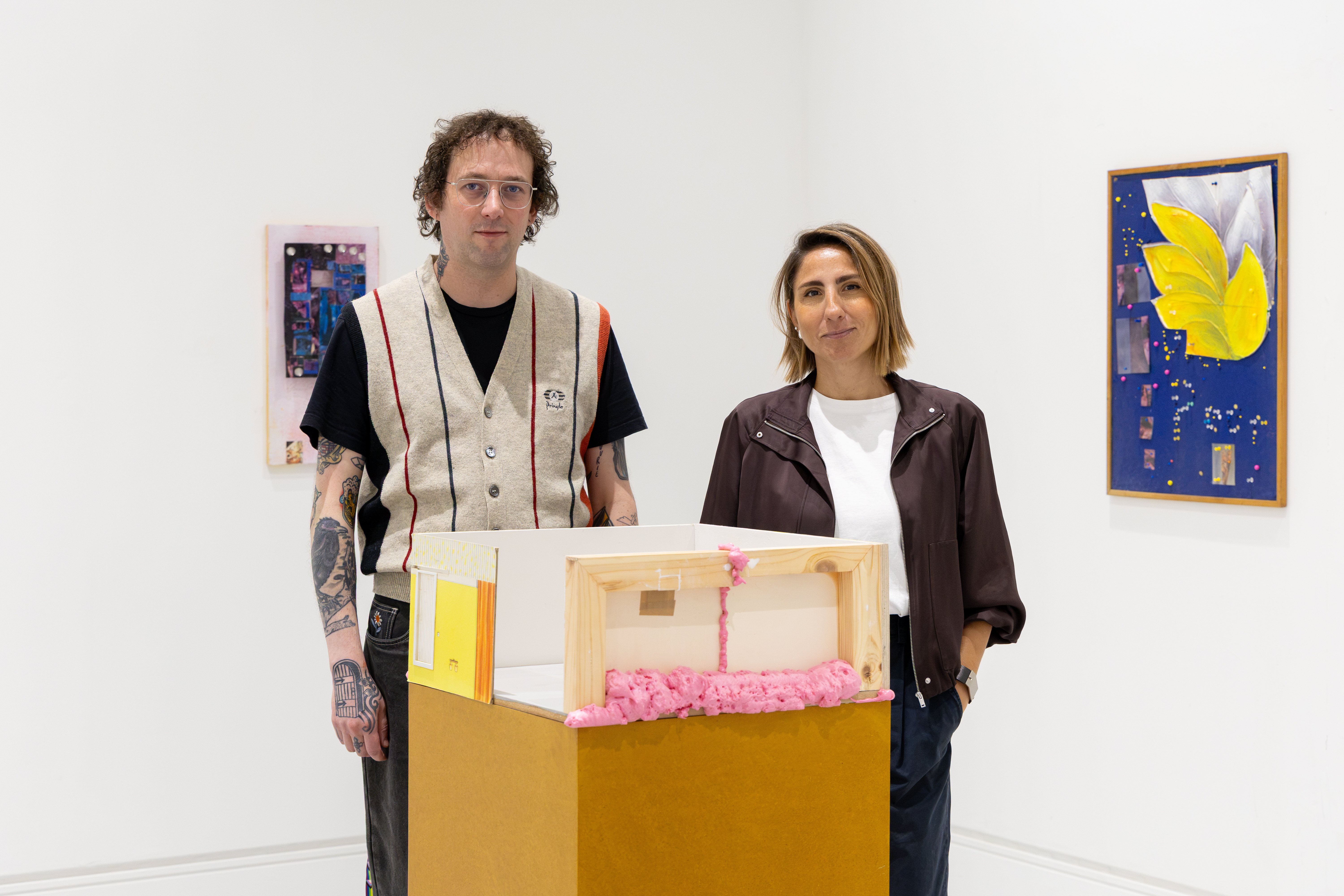
Tsionki is Associate Professor and University Curator at Leeds Arts University. Her account of curating isn't one of selecting objects and arranging them elegantly in a room. It begins with the conditions in which another person can work.
“One of the jobs of the curator is to put systems in place for creative minds to feel safe,” she says.
By safe, she doesn't mean protected from difficulty or encouraged to make timid work. She means a process sufficiently organised, honest and well supported that experimentation becomes possible.
It's a useful distinction at a time when many cultural institutions speak of risk while operating under financial, reputational and audience pressures that reward the recognisable. A university gallery has its own limitations, but it can make room for complexity, research and work whose value isn't measured by immediate saleability.
Tsionki believes such galleries can support ideas that may appear “too much” elsewhere: too risky, too complex or insufficiently rehearsed. She is sceptical of the assumption that audiences must be protected from work that doesn't make itself instantly legible.
“I think that people have the capacity,” she says. “They may not always fully connect with the idea of the artist, but they can feel - and that’s really important.”
For Tsionki, a gallery should permit that feeling rather than smother it beneath explanation.
“People should feel when they enter a gallery. Any gallery, any space that hosts a creative project, should allow you to feel. And once you feel, you can make connections.”
This isn't an argument for abandoning interpretation. It's an argument for balance: enough context to invite a visitor in, without prescribing the correct response once they arrive.
In Paperhouse, paper became the curatorial way in. It connects the collages, models and texts while opening onto fragility, childhood, education, economy and environmental responsibility. Steans’ reuse of discarded material also matters to Tsionki, whose own research includes ecological discourse. But she resists making those meanings behave like a checklist.
To over-explain an artist who deliberately avoids neat categorisation would be to flatten the very quality the exhibition is trying to preserve.
There is another reason Paperhouse belongs here. Steans isn't only exhibiting at the University; he teaches within it.
The relationship between those roles is often hidden. Students encounter the finished exhibition, publication or professional biography, while the uncertainty, discarded attempts and practical compromises that produced them disappear.
Here, the process is still visible. Work was made in the building from the material life of the building. Models altered as Steans learnt the gallery’s shape. Pieces were left out. A proposal evolved. The polished plinth and the rough offcut remain in conversation.
Tsionki sees particular value in the way a university gallery can foreground methodology rather than only the completed object. In Steans’ practice, repetition, fragments, changes of scale and the reassembly of familiar imagery are not incidental stylistic features. They are ways of thinking.
That makes the exhibition a pedagogical tool without turning it into a lesson. Students can see an established artist testing, revising and occasionally rejecting his own decisions. They can also see that accessible material need not produce unambitious work.
Steans is conscious that institutions can unintentionally teach artists to anticipate what's expected of them. Students notice what receives approval and begin shaping their work accordingly. An art school must therefore make room not only for guidance, but for work that doesn't yet know what it is.
Creative education, at its best, doesn't hand down an approved aesthetic. It helps people develop the confidence and critical capacity to locate their own.
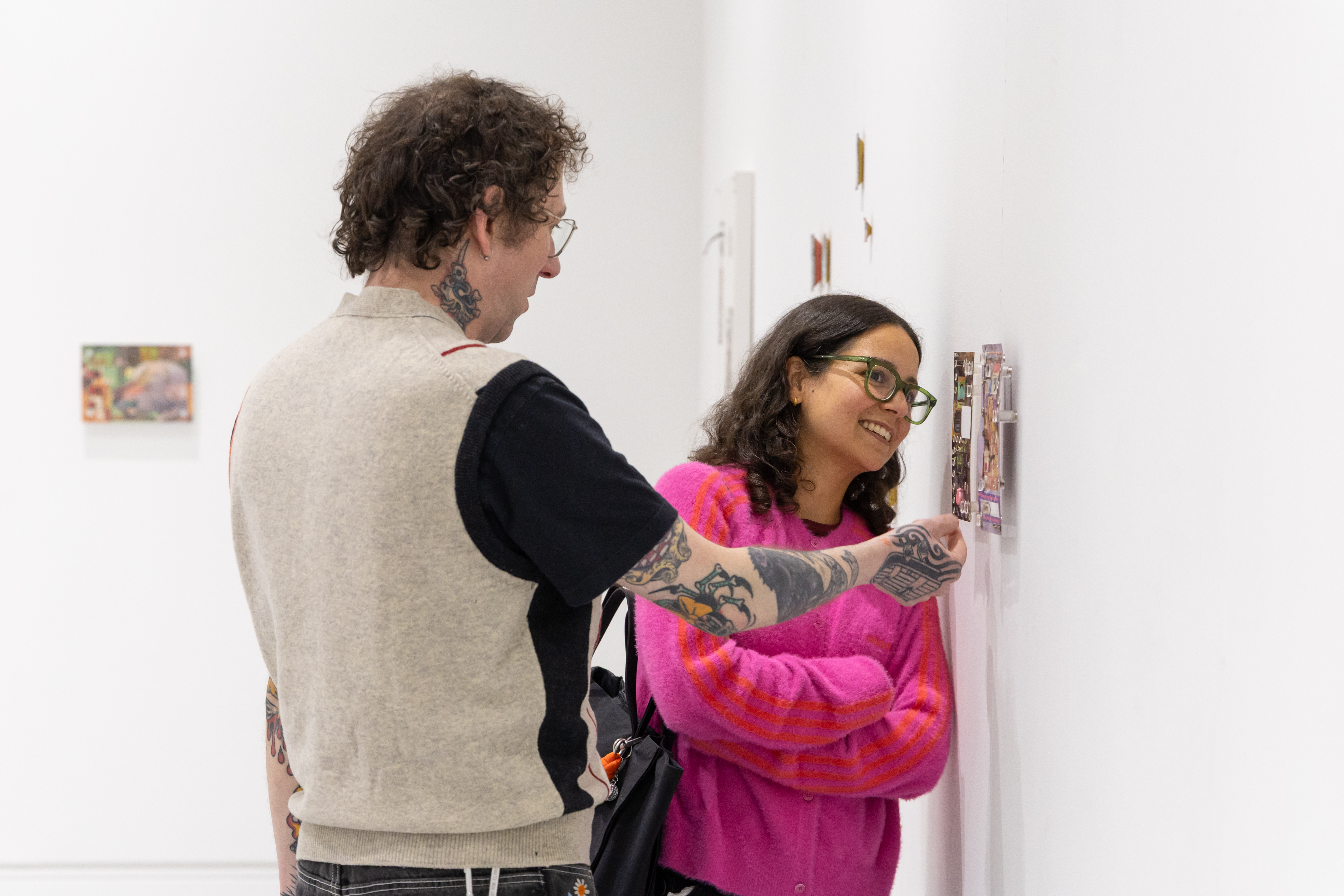
The close working relationship between Steans and Tsionki might appear to complicate the curator’s supposed objectivity. Tsionki is unconcerned by the charge.
“Curators are not objective,” she confirms. “To articulate an exhibition, you need to believe in it. You need to believe in what they are doing and what they are saying.”
Belief, in this sense, isn't uncritical loyalty. It's the intellectual and ethical basis on which a curator chooses to associate their practice with an artist’s. The educational setting allows Tsionki to place a high value on knowledge production, experimentation and pedagogical purpose - qualities that might be harder to protect in a programme driven chiefly by footfall or sales.
The result is an exhibition that could only have been made through partnership. Steans disrupts the gallery, but does so with the support of the person responsible for it. Tsionki creates a framework, but doesn't use it to hold the work still.
Even the curator’s office becomes part of the exchange. Its windows, usually easy to ignore, are brought into focus. The person who ordinarily looks out at the gallery finds the gallery looking back.
The question for a university gallery isn't only what it can do for its artists and students, but who it imagines entering from outside.
Tsionki is candid about the challenge. University galleries don't always possess the public visibility of civic museums or larger arts organisations. She is wary, however, of the quick fix: the blockbuster, the oversized promise or the brief publicity campaign expected to manufacture a relationship with a city.
Her alternative is less glamorous and more demanding - sustained quality, collaboration and long-term commitment.
“If you are active in a city for ten years, they will get to know you,” she says.
Blenheim Walk Gallery isn't attempting to compete with other cultural venues in Leeds. Tsionki describes its role as helping to build “an ecosystem of creative spaces and galleries” which, together, enhance the experience of the city. That involves working across organisations and audiences, including partners beyond the usual visual-arts circuit.
It's a patient model of cultural infrastructure: the university opening outwards, the gallery contributing what it does distinctively, and trust being accumulated through the work rather than asserted by a campaign.
Paperhouse is a persuasive expression of that purpose. It takes the ordinary substances of institutional life - paper, notices, scraps, rooms, windows and plinths - and asks what else they might become. It makes the gallery strange enough for us to see it again.
And it extends the same invitation to the visitor. No specialist vocabulary is required at the door. No single interpretation waits to test whether we've understood.
The dimensions are there. Then the logic begins to dissolve. What happens next belongs, at least partly, to us.
David Steans: Paperhouse
24 September 2026–23 January 2027
Blenheim Walk Gallery, Leeds Arts University, Blenheim Walk, Leeds LS2 9AQ
Monday–Friday, 10am–6pm; Saturday, 10am–4pm
Header image: Leeds Art University, David Steans Paperhouse. September 2026. (Jules Lister)





