



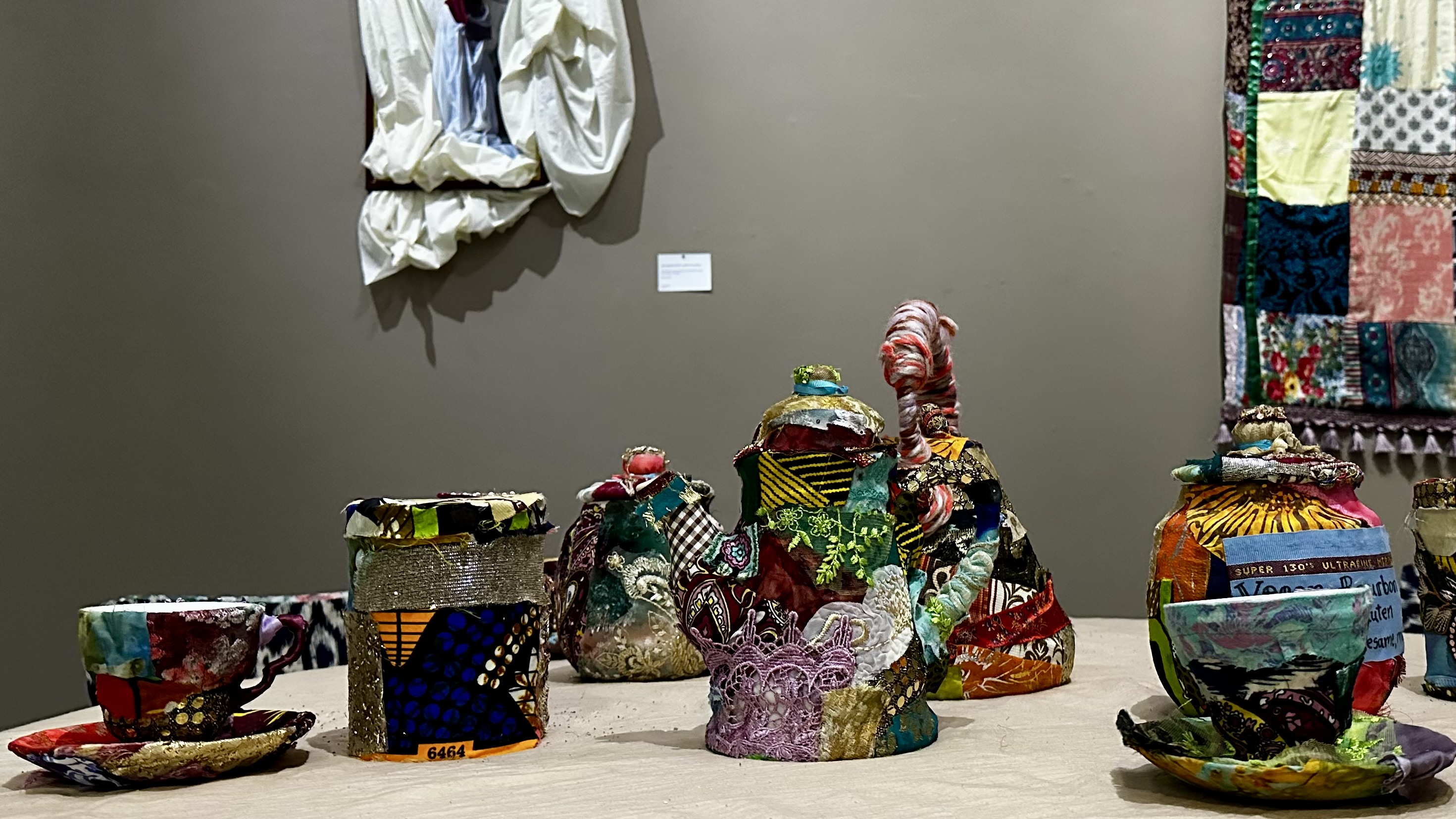
Walking into What the Hand Remembers at East Street Arts, Leeds, the first sensation is not visual but bodily. Sound lingers. Fabric hangs with a quiet insistence. Objects invite touch, not as instruction but as permission. This is not an exhibition that asks to be decoded so much as entered.
The group exhibition curated by Shazia Bibi, brings together four artists - Farwa Rizvi, Laura Joan Smith, Alice Boot, and Saba Siddiqui - whose practices are distinct yet bound by shared questions of memory, faith, and resistance. What connects them is not style or medium, but an attention to what persists: what is carried, revisited, re-felt.
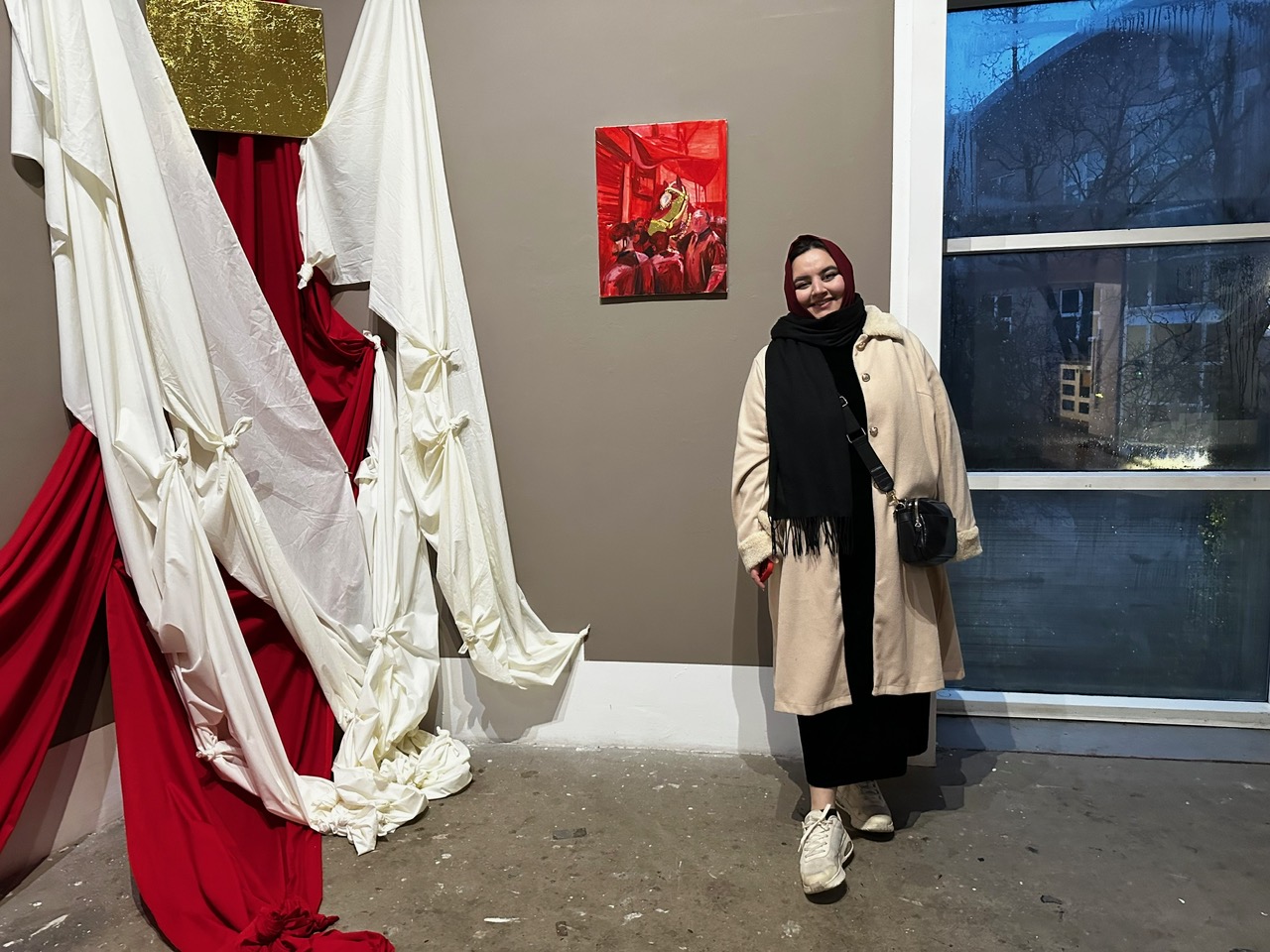
For Rizvi, who initiated the exhibition, the gesture of working collectively was essential. “I didn’t want it to be just me at the minute,” she explains. “I felt like I needed a bit of home - and I felt my work needed to sit with other voices.”
That sense of needing - for grounding, for companionship, for continuity - runs quietly through the exhibition. It is an exhibition shaped not by certainty, but by asking.
Faith beyond rules: Rizvi’s practice has long been informed by faith, but not in the fixed or doctrinal sense that word is often reduced to. “For me, faith has always been beyond,” she says. “It hasn’t been limited to two or three words. It’s been hope, everyday repeated acts - it’s been so much more than just religion and the rules that we’ve made.”
In the exhibition, faith is not presented as belief to be declared, but as something lived: embodied, habitual, and unresolved. Rizvi speaks of arriving at a point where she began questioning what faith means now - in a contemporary world shaped by migration, politics, and fracture. “Are we referring to faith as religion only? Or is it something else - something that carries hope, loyalty, devotion?”
These questions are not answered directly by the works on display. Instead, they are held open - offered to the viewer as shared uncertainty.
And Memory is offered in the Patrick Studio's space as something alive. Memory, here, is not archival or static. It is something that reactivates itself - sometimes gently, sometimes with force.
Rizvi describes a moment of recognition when considering the practices of the other artists in the exhibition. Laura Joan Smith's work, which revisits places from her past using found objects, recorded audio, and archival methodologies, became a way of understanding memory as something re-lived rather than recalled. “It’s that moment where memory is alive again,” Rizvi confirms. “That’s when I knew who to take on board.”
Alice Boot's work similarly resists nostalgia. Instead, it foregrounds the act of making memory in real time - an awareness that the present moment is already becoming the past. Using materials connected to coastal landscapes and childhood environments, her practice asks what it means to work at the limits of material resistance: how far something can be stretched before it gives way, and what remains after.
“What is there in terms of power?” Rizvi asks. “What is there in terms of resistance?”
Saba Siddiqui’s work operates differently again, but with equal emotional force. For Rizvi, encountering Siddiqui’s practice for the first time was profoundly personal. “I wanted to go home so badly,” she recalls. “I was missing that memory thing. And suddenly there was audio in my language. Textiles from my world. I felt at home.”
Siddiqui’s installation invites touch, smell, and interaction, drawing on decolonial methodologies and community-led processes. It is not content to be observed from a distance. “You’re not just required to look,” Rizvi says. “You’re required to feel. To stay with it. To give something - or take something.”
Throughout the exhibition - and during our conversation, the word resistance appears - but not in its most recognisable form. This is not resistance as spectacle or protest alone, but resistance as persistence.
“For me,” Rizvi explains, “resistance is a refusal to disappear.”
In her own work, this refusal is subtle but insistent. Drawing on the visual language of Shia rituals - fabric, colour, ornament, gesture - Rizvi deliberately resists fixing meaning. In her native Pakistan, viewers often immediately categorise the work as explicitly Shia. In the UK, that certainty dissolves.
“That’s the freedom here,” she says. “The identity question is gone. People create their own narratives.”
One viewer at the exhibition opening asked whether a painted scene might depict a wedding rather than a moment of grief. For Rizvi, this ambiguity was not only welcome but necessary. “I’m not pushing everyone into grief,” she explains. “I’m showing how happiness can look like grief, and grief can look like love.”
This collapsing of binaries - celebration and mourning, faith and doubt, love and loss - runs through her practice. It is a way of breaking fixed lines, of refusing singular interpretations, and of allowing faith to be experienced as something complex, tender, and human.
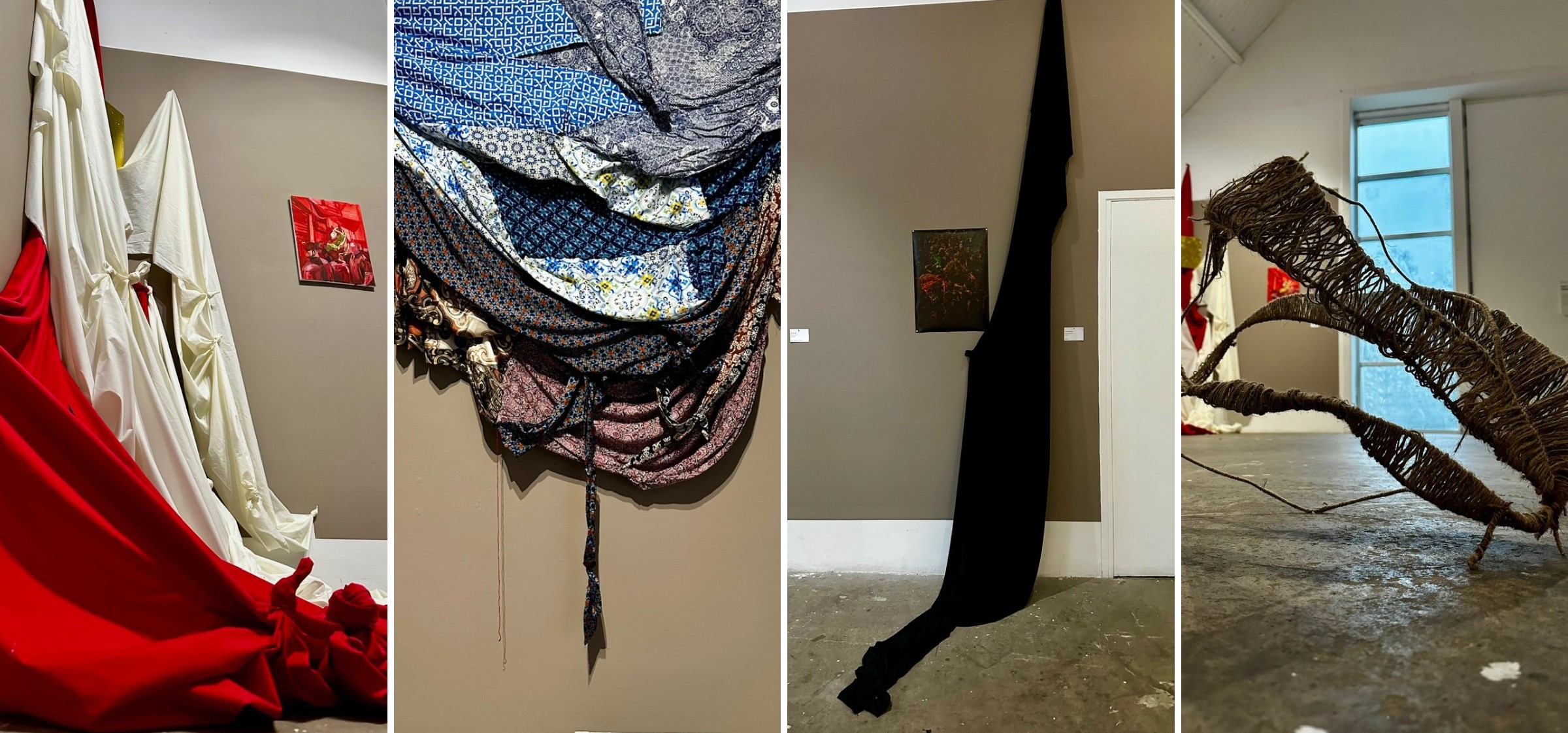
Rizvi’s own pieces sit in the gallery with a deliberate physical presence. Large-scale paintings operate not as windows but as surfaces - dense with colour, gesture, and repetition. Fabric enters the work not as adornment but as structure: stitched, knotted, pulled forward from the canvas so that painting becomes something almost sculptural. The material refuses to stay flat. It occupies the room.
One of the most intimate gestures in Rizvi’s installation is the inclusion of fabric embedded with knots, a practice drawn directly from Shia devotional traditions. In these works, cloth becomes a site of collective projection. Visitors are invited to approach closely, to recognise the weight carried by the knots, and to understand them not as symbols to be deciphered, but as acts - each one holding a wish, a doubt, or a quiet insistence on hope.
Elsewhere, Smith's work unfolds through carefully arranged found objects, audio recordings, and archival materials. Her installation feels almost provisional, as though it could be reassembled differently each time it is encountered. Memory here is not preserved intact but reactivated: fragments of past places are offered back to the viewer, not as documentation, but as atmosphere. The work asks how histories are stored, categorised, and - crucially - re-felt.
Alice Boot’s contributions bring a different physical tension into the space. Working with fibre and material drawn from coastal environments, her pieces stretch and strain, holding the viewer’s attention through their vulnerability. There is a sense of resistance embedded in the material itself: how far it can be pulled, how much pressure it can bear, and what happens when it reaches its limit. These works do not disappear into thebackground. They insist on being seen.
Saba Siddiqui’s installation is perhaps the most overtly immersive. Sound, textile, and scent combine to create a space that feels lived-in rather than displayed. The work invites touch and exchange, allowing visitors to give something of themselves to the installation - or to take something away. Drawing on community-led and decolonial methodologies, the piece resists the passivity of viewing and instead creates a space of shared presence. It is an encounter that unfolds slowly, rewarding those willing to stay.
Together, the works form a constellation rather than a single narrative. Each practice approaches memory, faith, and resistance from a different angle, yet none stands alone. The exhibition functions less as a statement than as a gathering - of materials, gestures, histories, and bodies - asking what it means to remember with our hands, and what it means to remain.
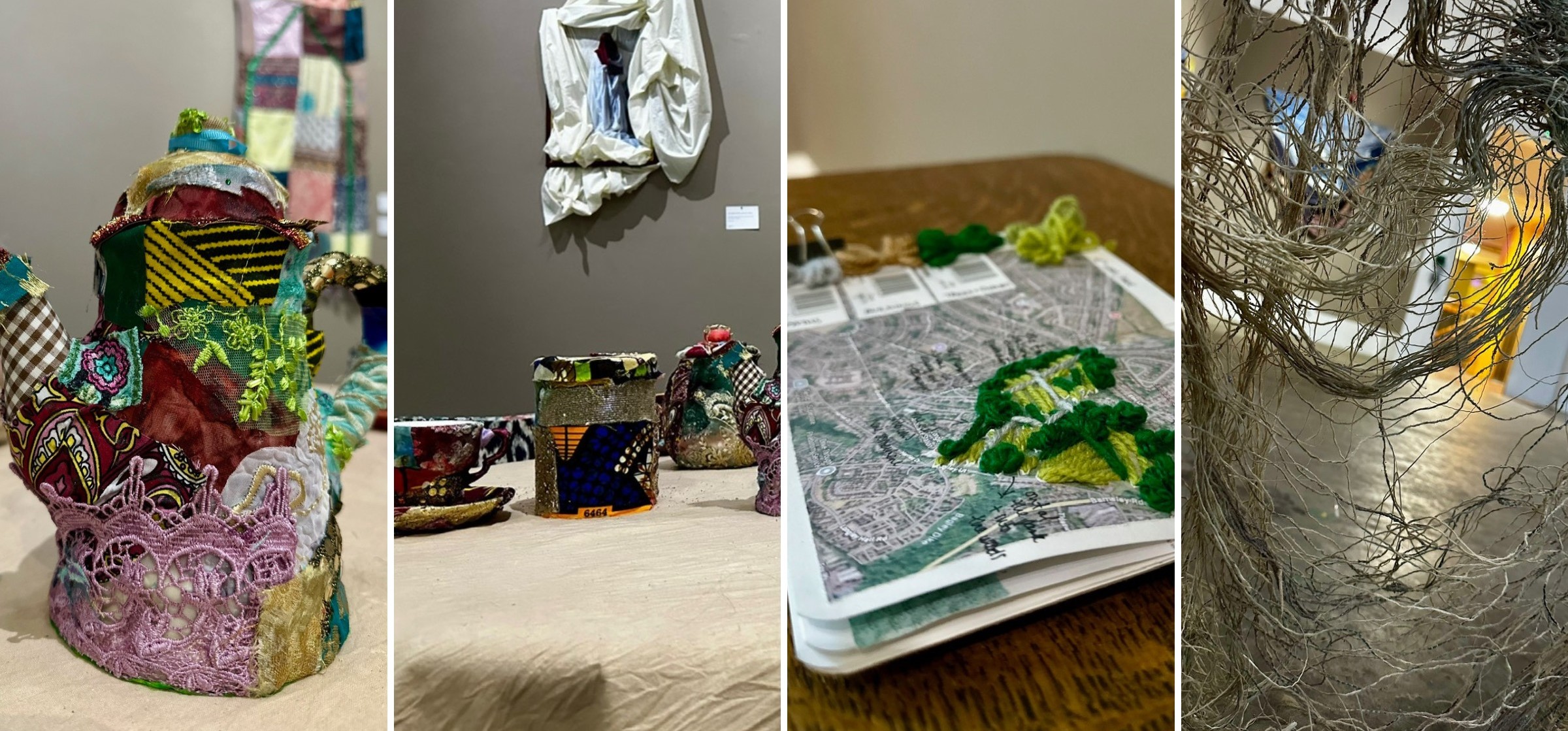
Love as enough - or almost: One of the most striking ideas to emerge from Rizvi’s reflections is deceptively simple: love is enough. And yet she is careful not to present this as a neat resolution.
“I wish people feel like they’re not alone,” she says. “I can’t say love is always enough. Sometimes it feels like it is. Sometimes it doesn’t. But I hope people leave feeling we’re in this together.”
This tension - between hope and uncertainty - gives the exhibition its emotional weight. It does not offer reassurance so much as companionship.
A recurring motif in Rizvi’s installation is fabric tied with knots - a gesture rooted in Shia tradition. Wishes, prayers, unresolved hopes are tied into cloth as acts of faith. By inviting visitors to encounter this practice, Rizvi brings something sacred into a shared, secular space - not as instruction, but as offering.
“It’s just bringing that sacredness into the space,” she explains, “and letting everyone experience it.”
What the Hand Remembers is not an exhibition that demands interpretation. It asks for presence. It rewards slowness. It lingers - much like memory itself.
In a time when faith is often reduced to ideology, and identity to category, this exhibition gently insists on something else: that faith can be everyday devotion; that memory can be alive; that resistance can be as quiet as refusing to vanish.
And perhaps most importantly, that art can be a place where - even briefly - we feel less alone.
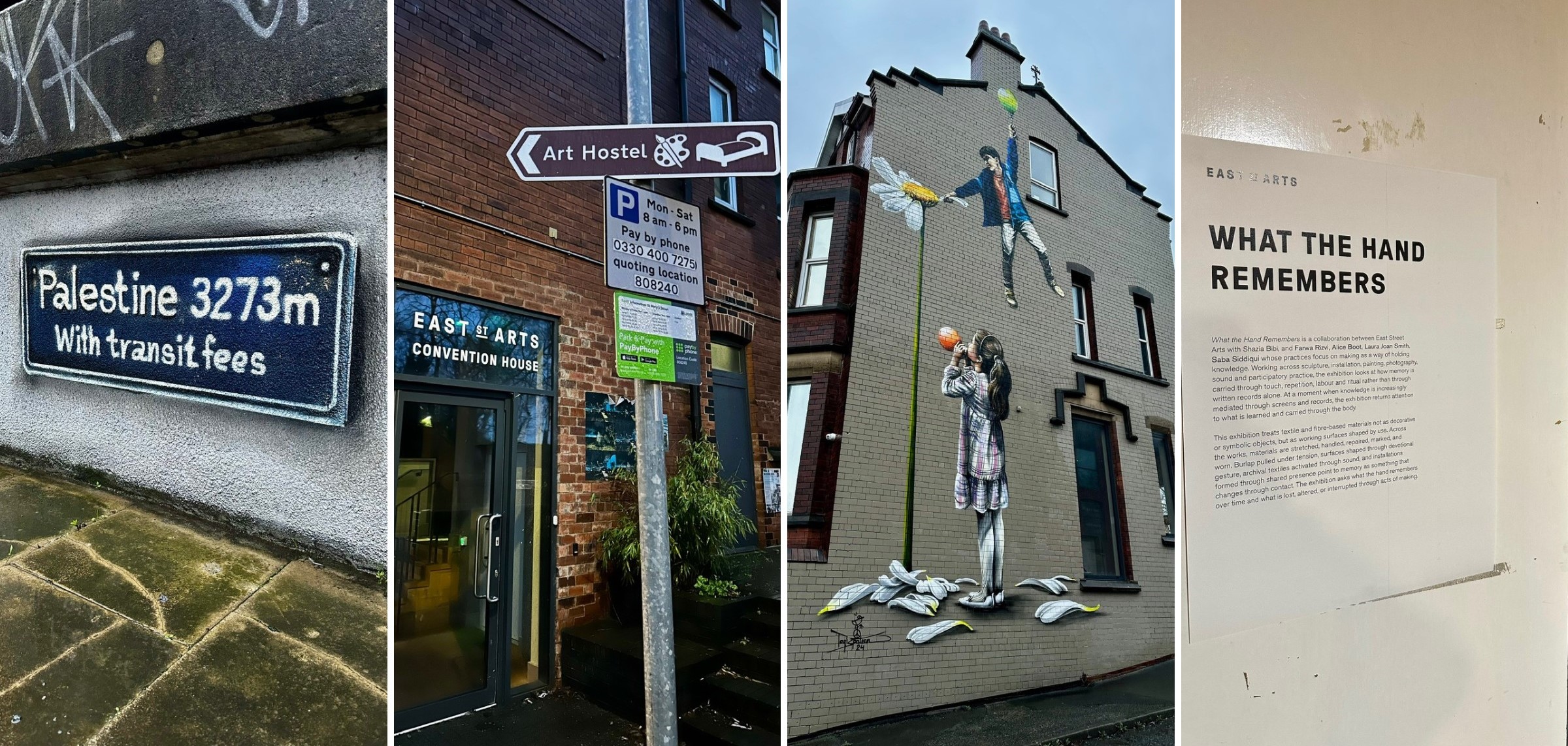
What the Hand Remembers continues until 13 February at East Street Arts Patrick Studios, LS9 7EH.





