



.jpg)
The Hoppings announces itself long before you reach it. Steel rises above the Town Moor. Music, engines and amplified voices collide in the air. Signs promise speed, prizes, fear and pleasure in lettering designed to overwhelm all resistance. Yet, walking through the fair on its final afternoon, it wasn't the machinery that held the attention for long. It was the people gathered beneath it.
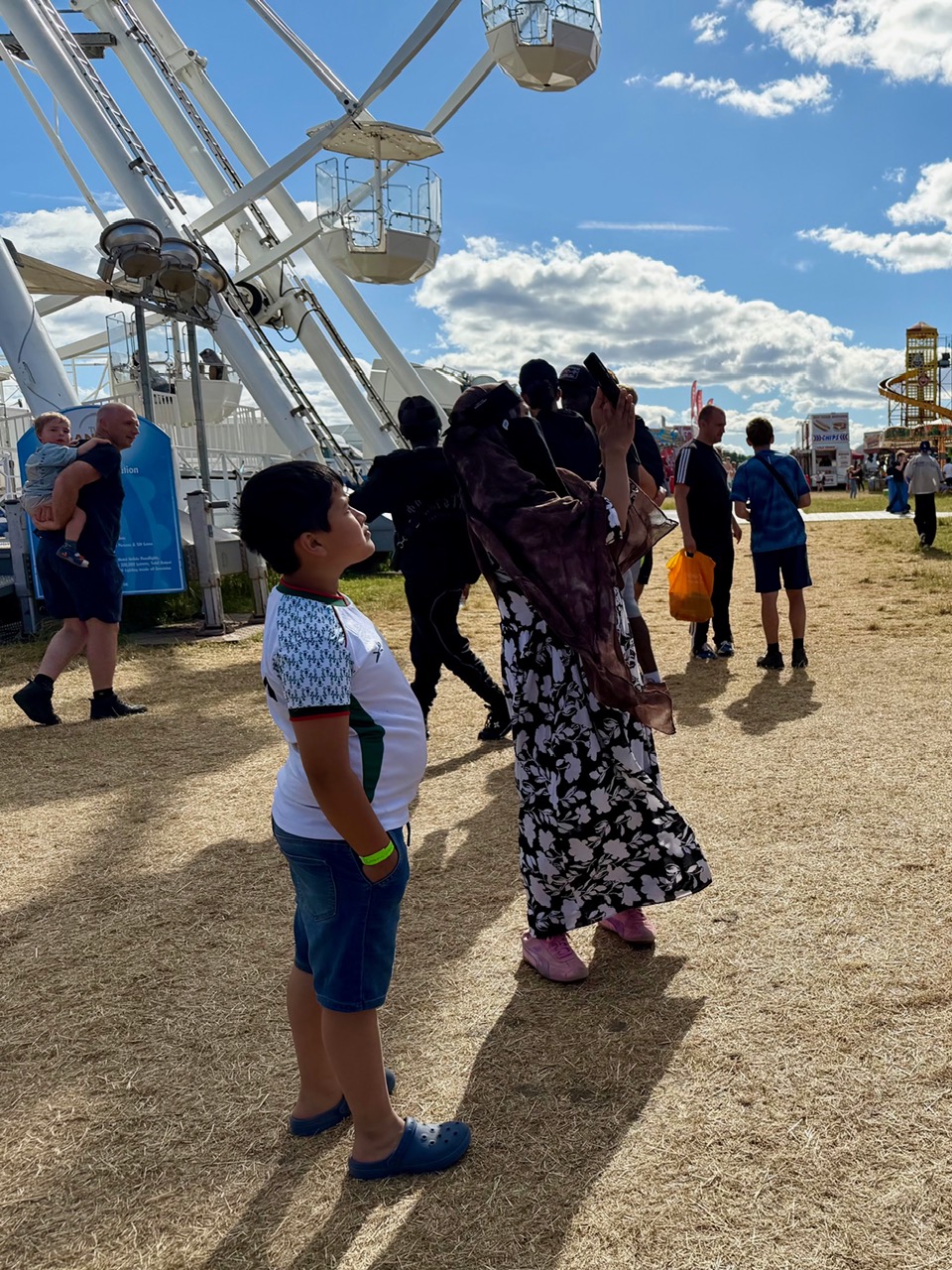
The Hoppings has occupied Newcastle’s Town Moor since 1882, growing across generations into one of the great fixed points of the city’s summer. The fair itself is temporary - assembled, operated and dismantled within weeks - but its place in Newcastle’s calendar feels permanent. Families return with children who will one day bring children of their own. Memory accumulates here, even while everything around it's designed to move.
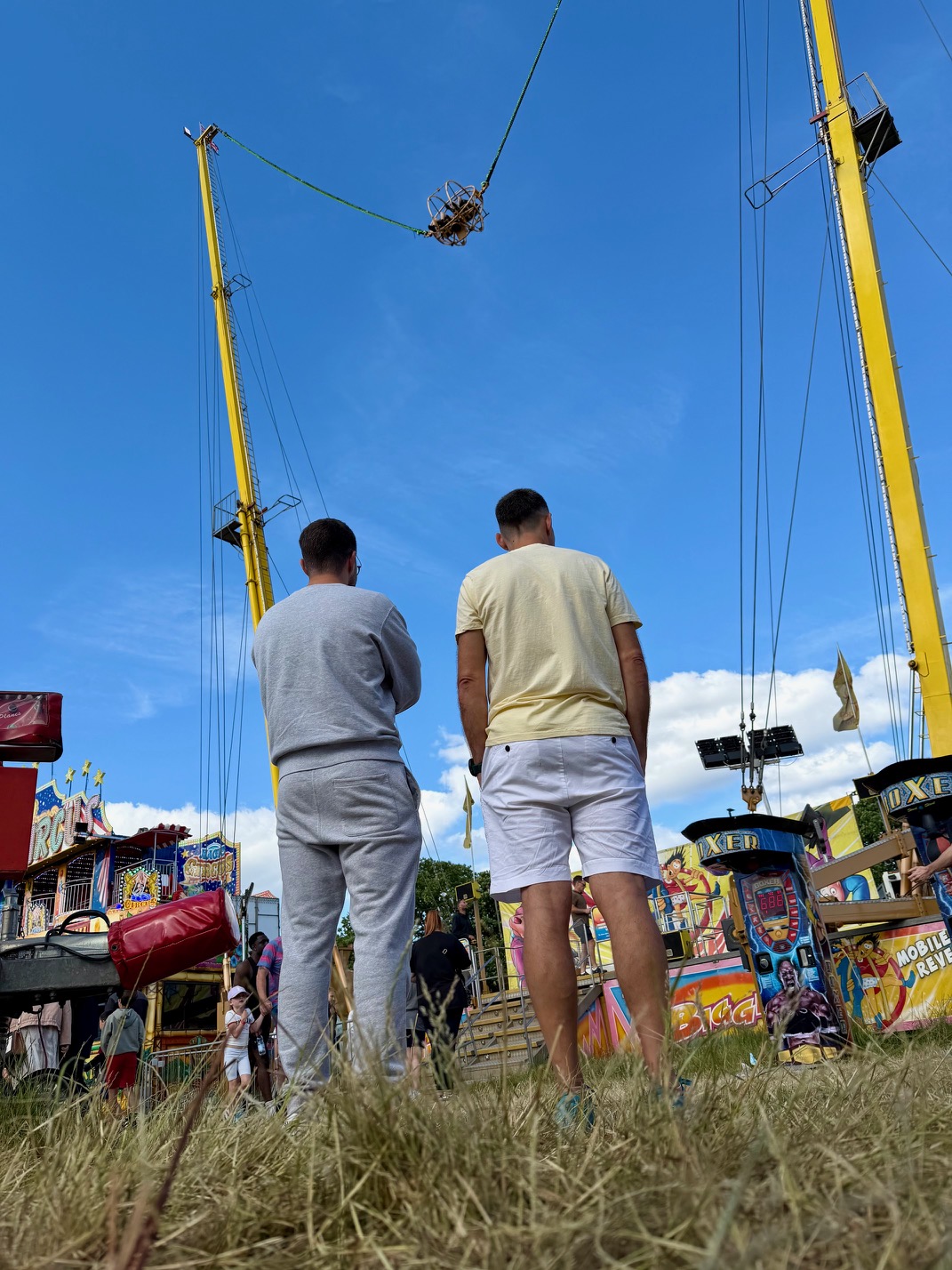
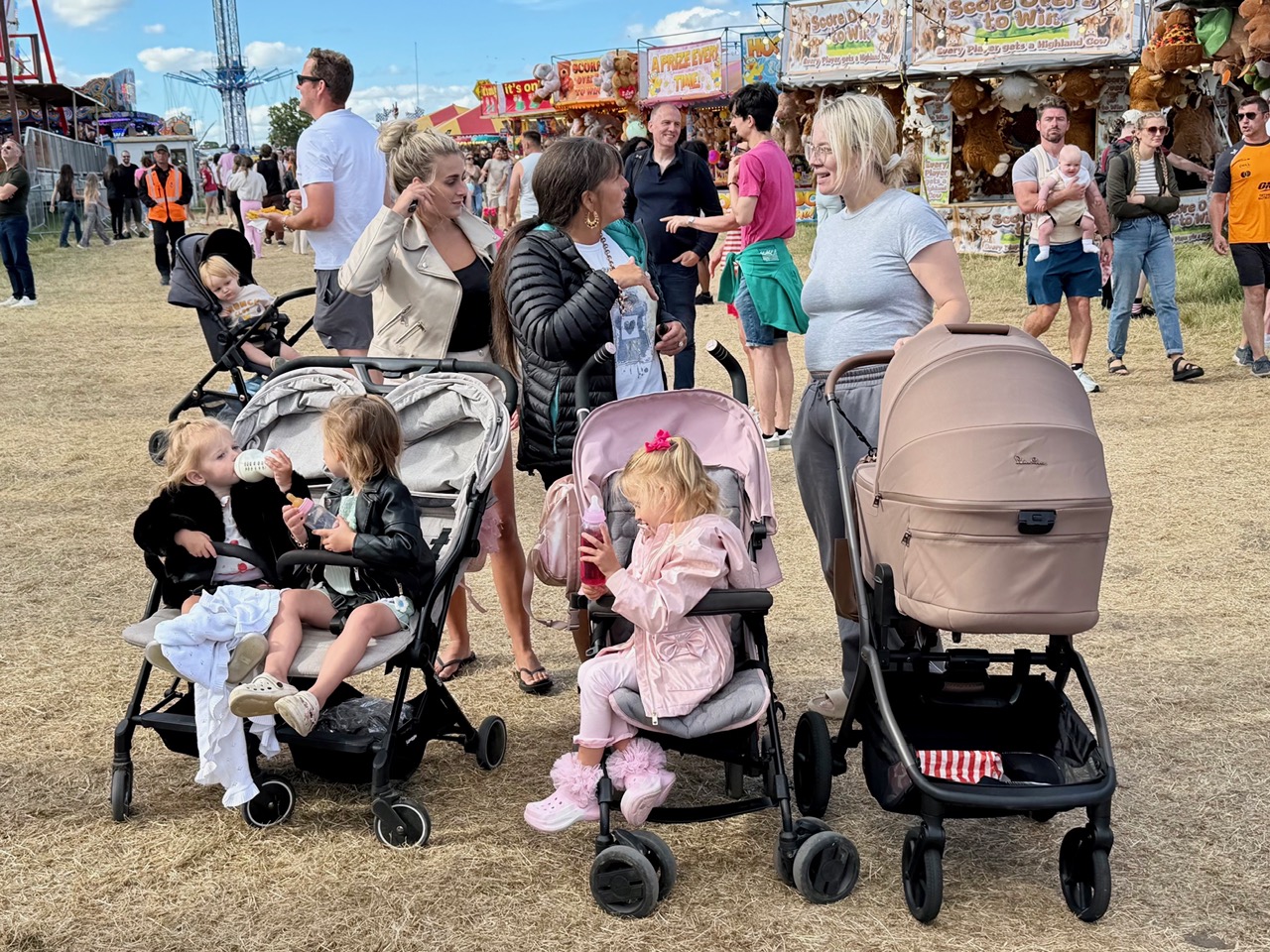
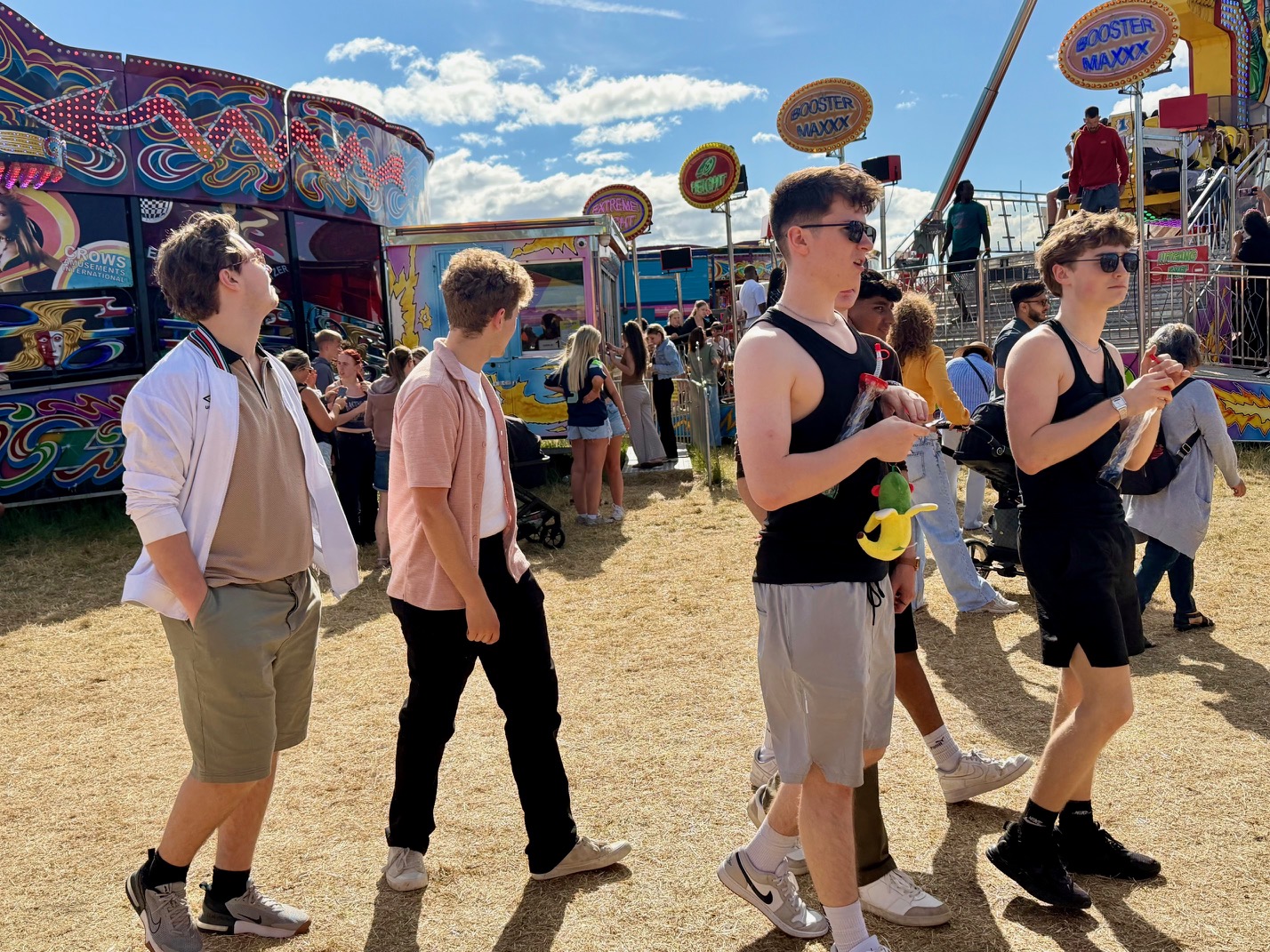
At ground level, the Hoppings is less a collection of rides than a dense, shifting community. Parents negotiate with children. Friends decide whether bravery requires another go. Teenagers circle the attractions, watching one another as much as the rides. Grandparents hold coats, bags and chips. Pushchairs form small encampments wherever a family can find a patch of shade or somewhere to sit.
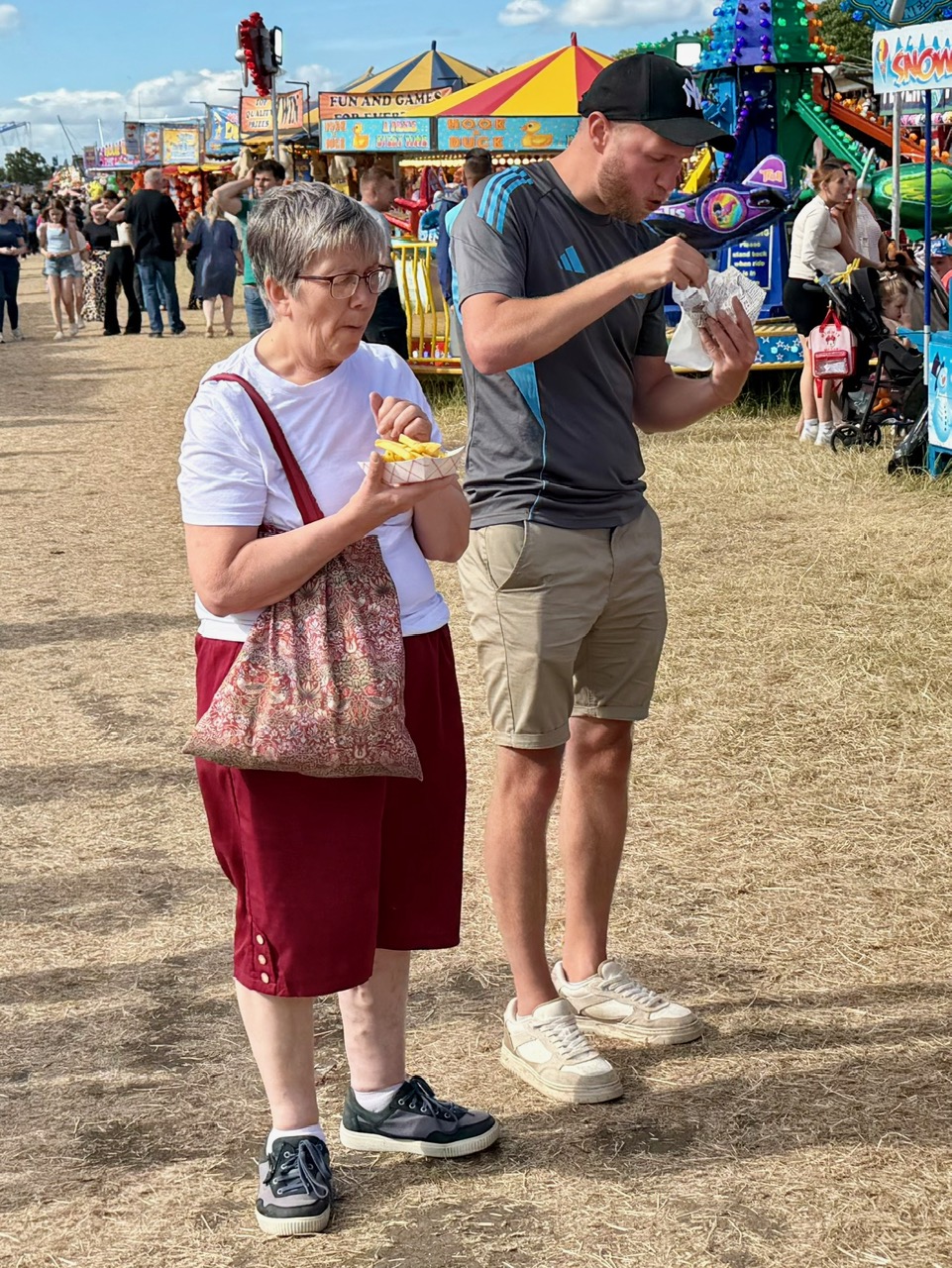
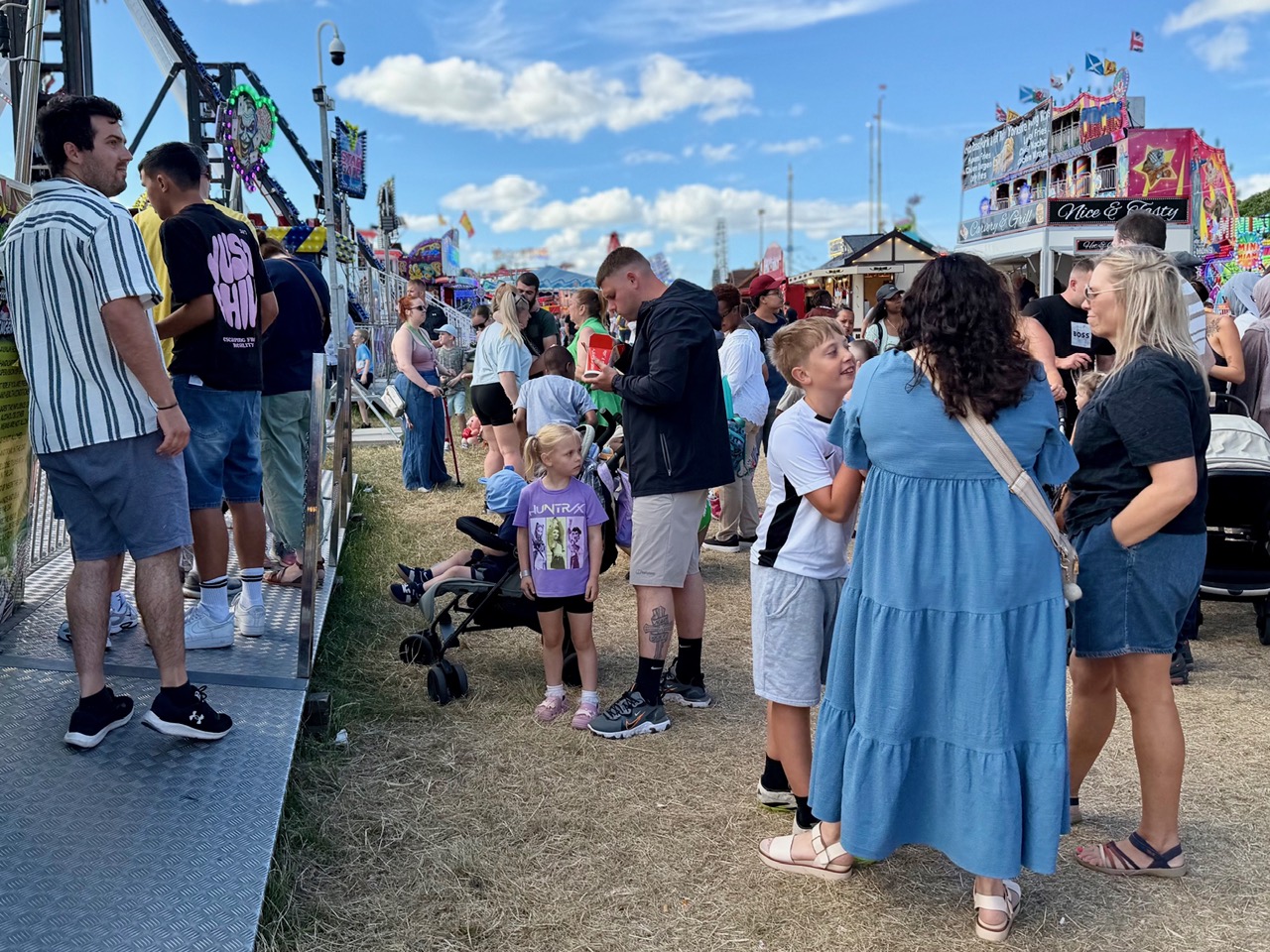
There's a particular democracy to the fairground. Everyone enters through the same open edge of the Moor and walks the same dry grass. The spectacular and the ordinary exist side by side: a passenger is fired into the sky while, directly below, somebody finishes their noodles; music pounds from an illuminated ride while a toddler sleeps beneath its lights. The Hoppings promises escape, but much of its character comes from ordinary life continuing inside the spectacle.
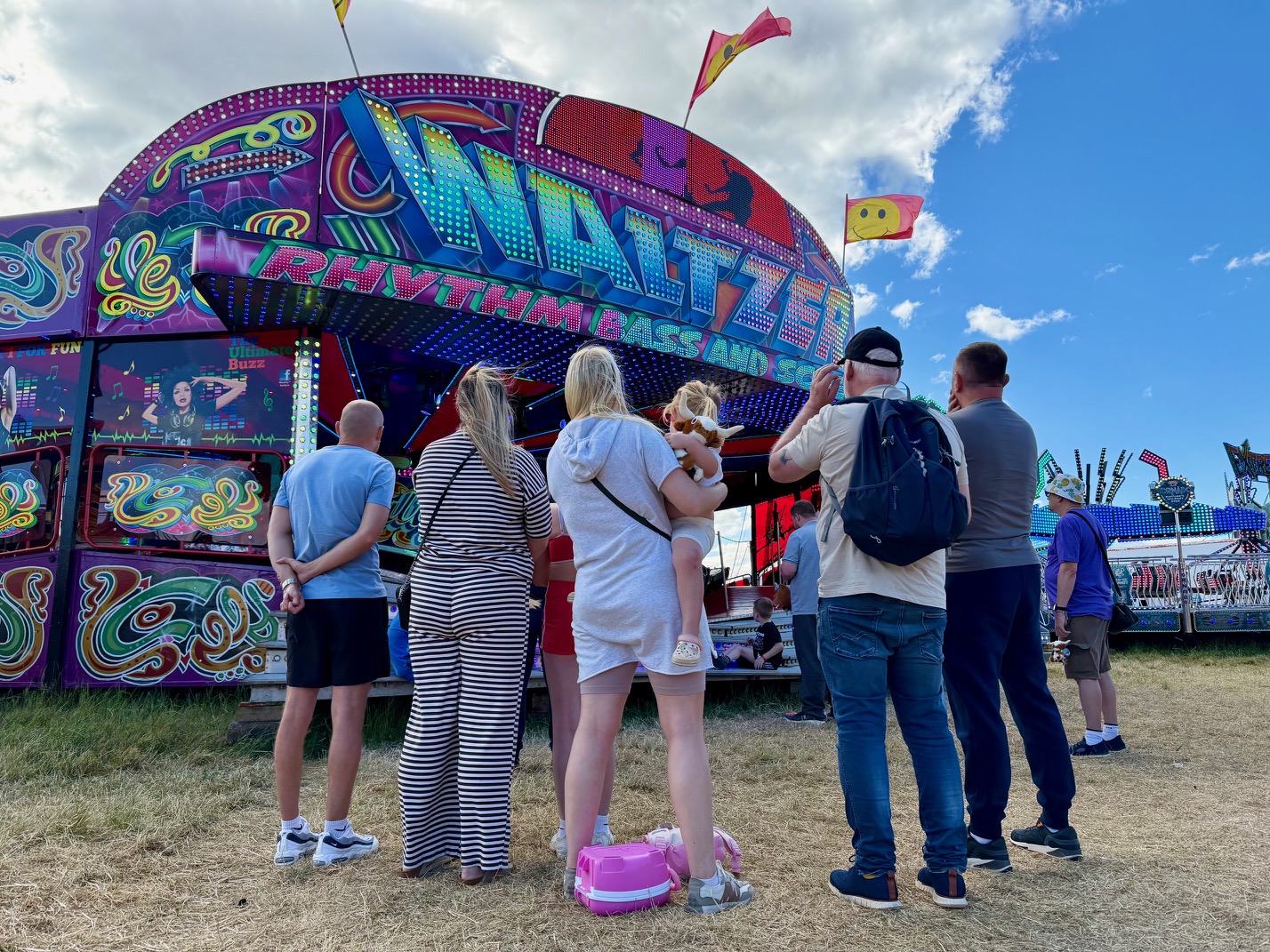
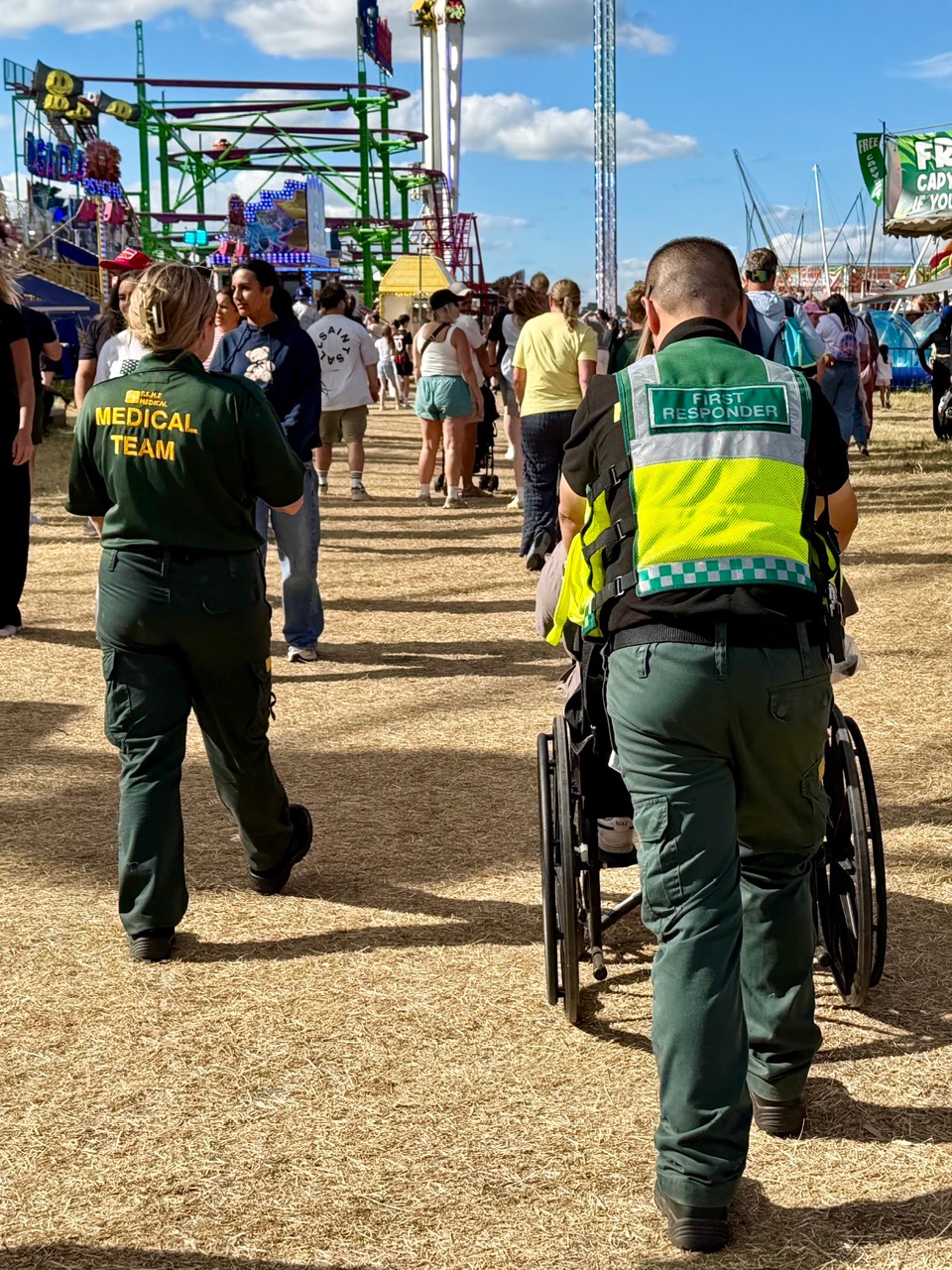
Look away from the rides and another choreography becomes visible. Police officers move through the crowds. Medical teams watch and wait. Ride attendants check gates, collect fares and fasten restraints, repeating small procedures upon which this great performance depends. Behind every shriek and sudden acceleration is somebody doing a job - calmly, carefully and often almost unnoticed.
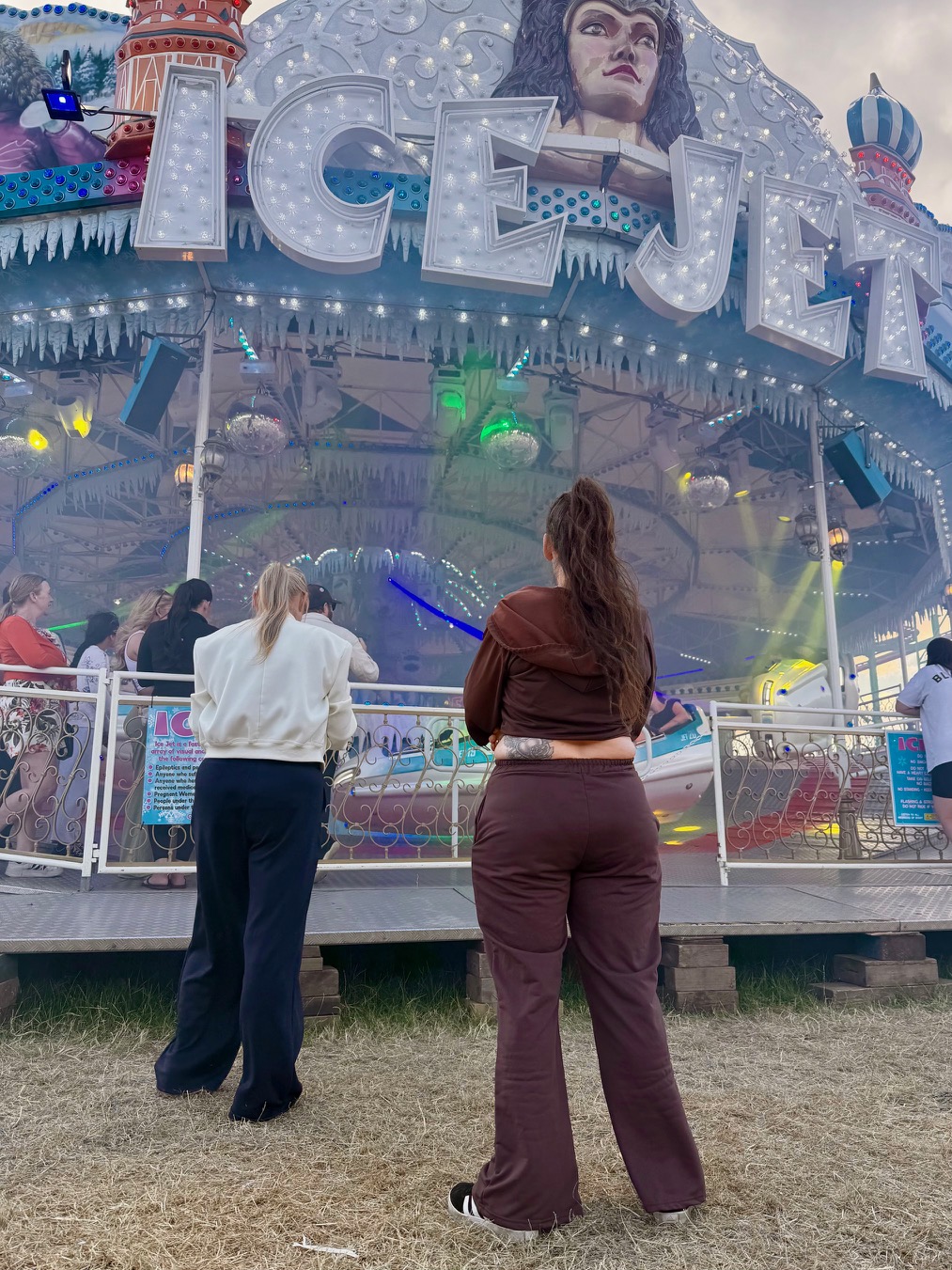
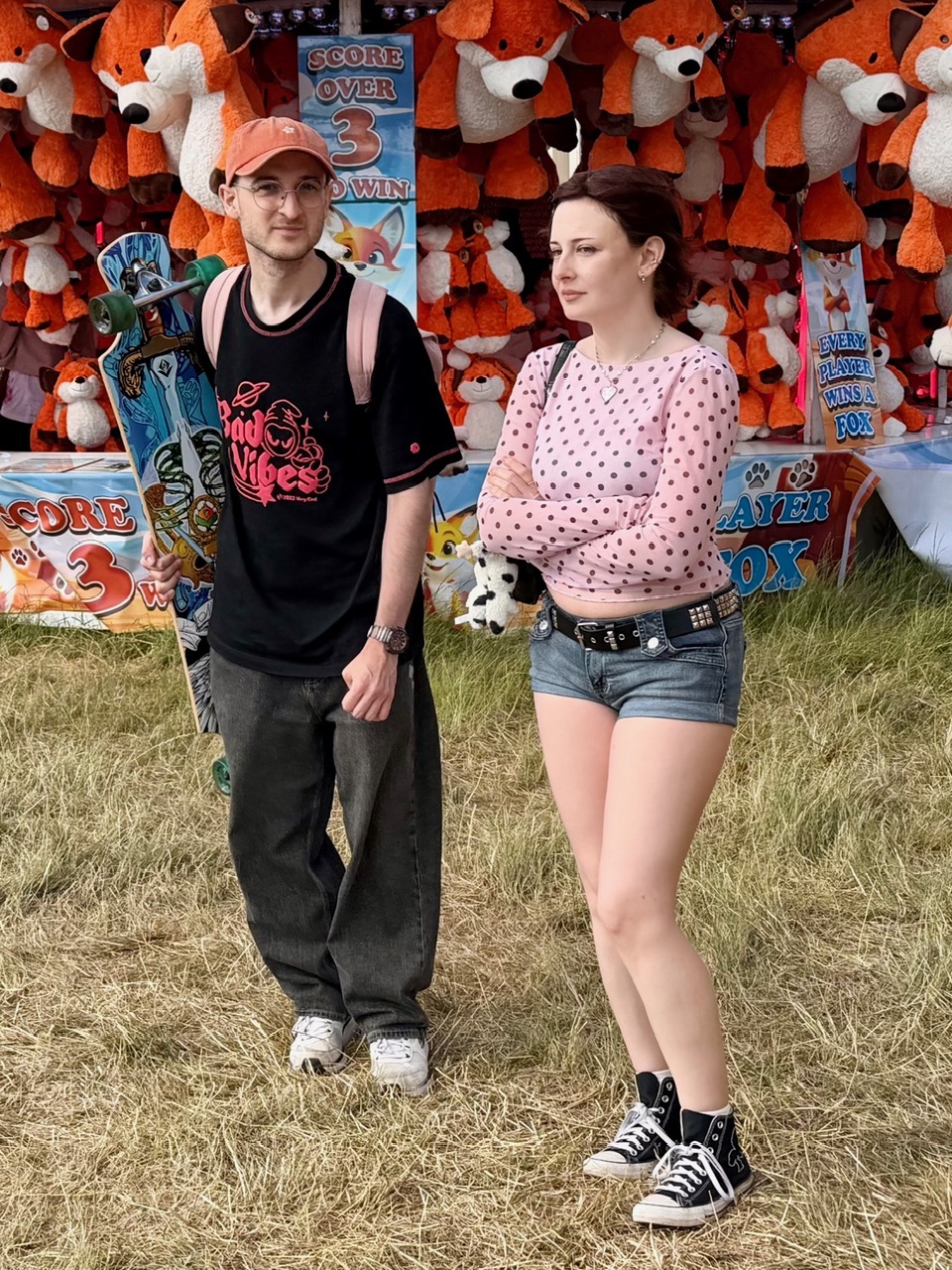
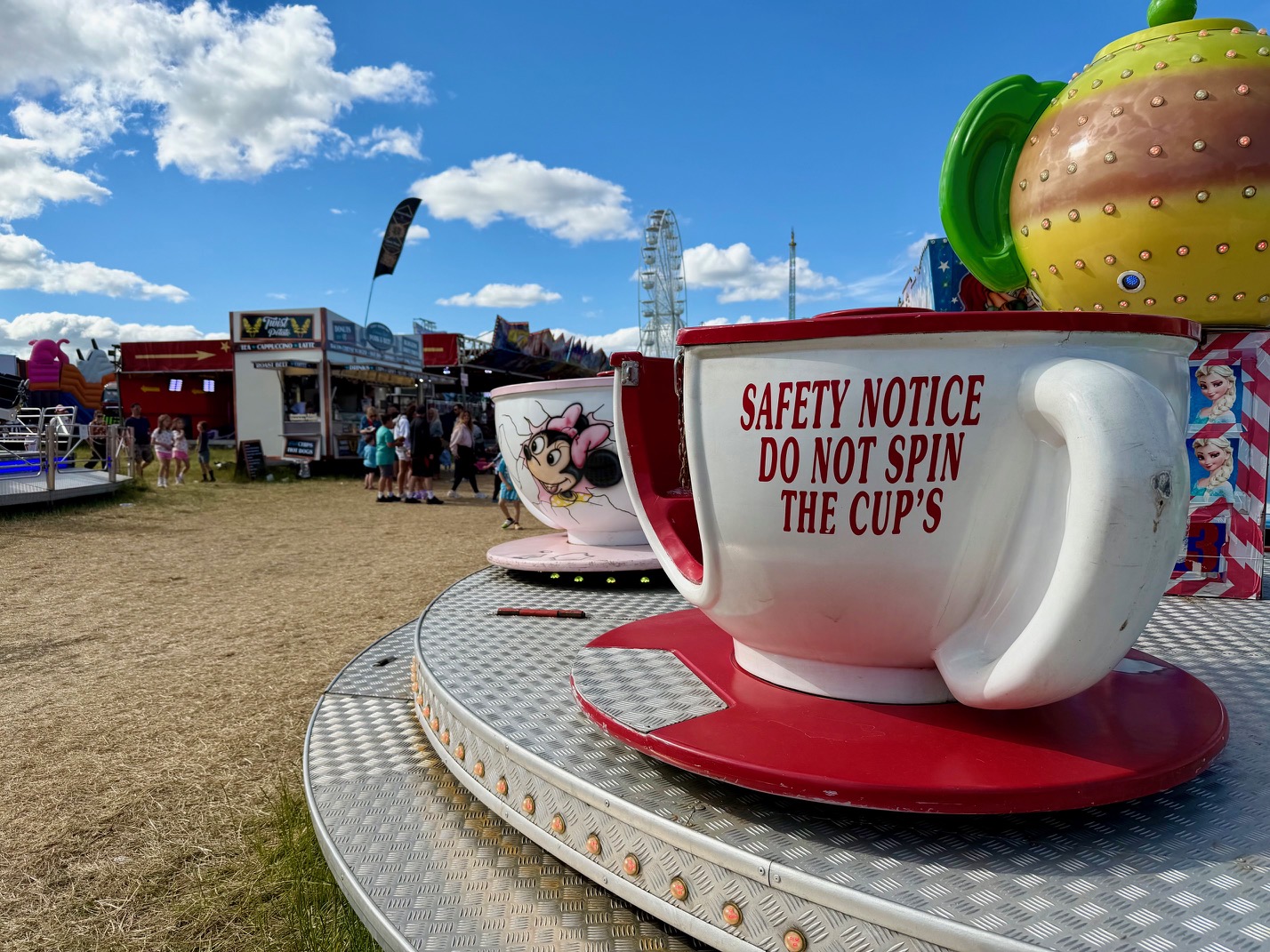
For younger visitors, the Hoppings is partly a theatre of courage. They look upwards at machines whose purpose is to unsettle the body and then decide whether to step aboard. Some rush forward. Others remain at the railings, studying what happens to those who do. Around them, adults offer encouragement, warnings, money and occasionally the merciful suggestion of something less terrifying.
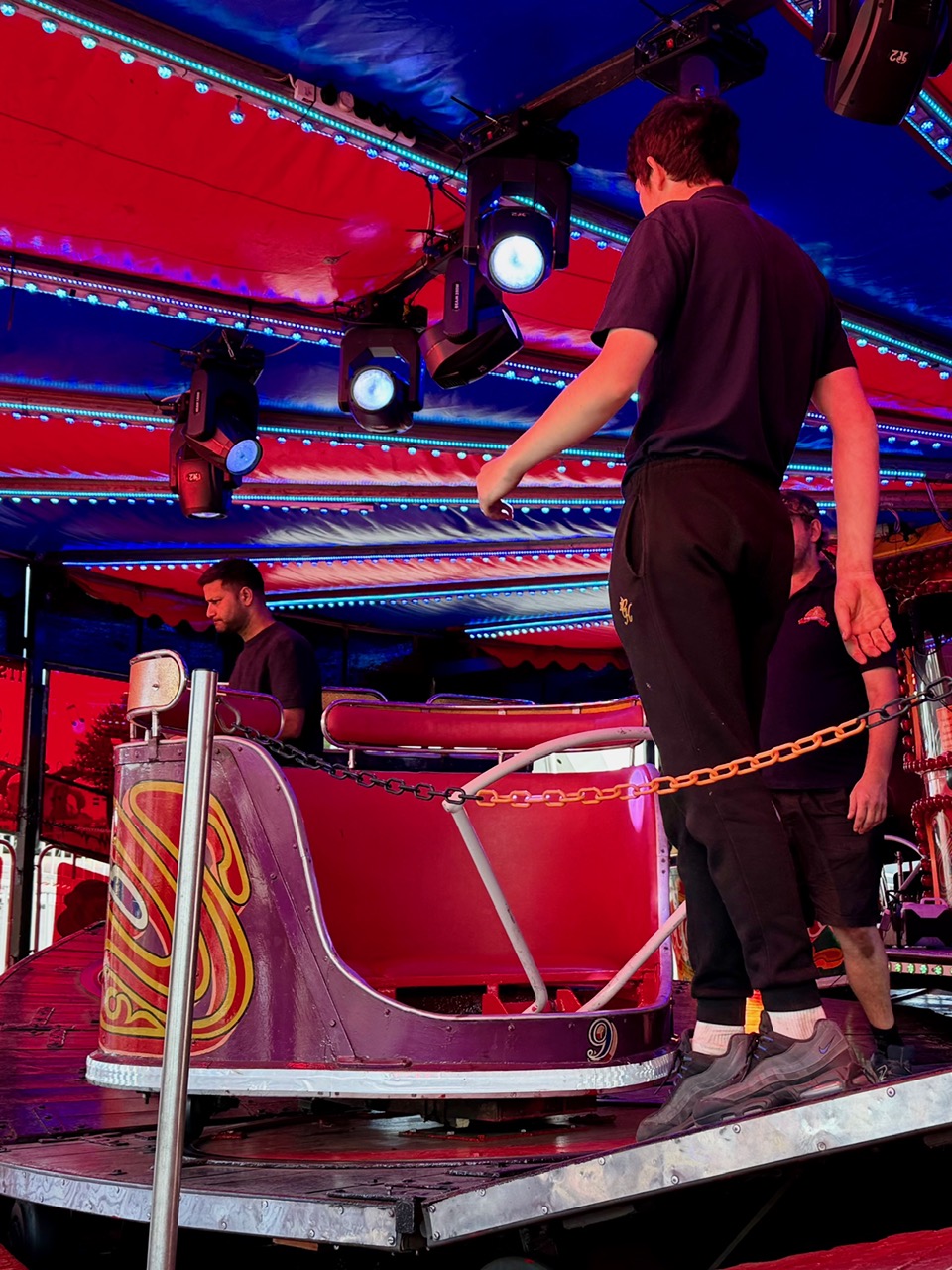
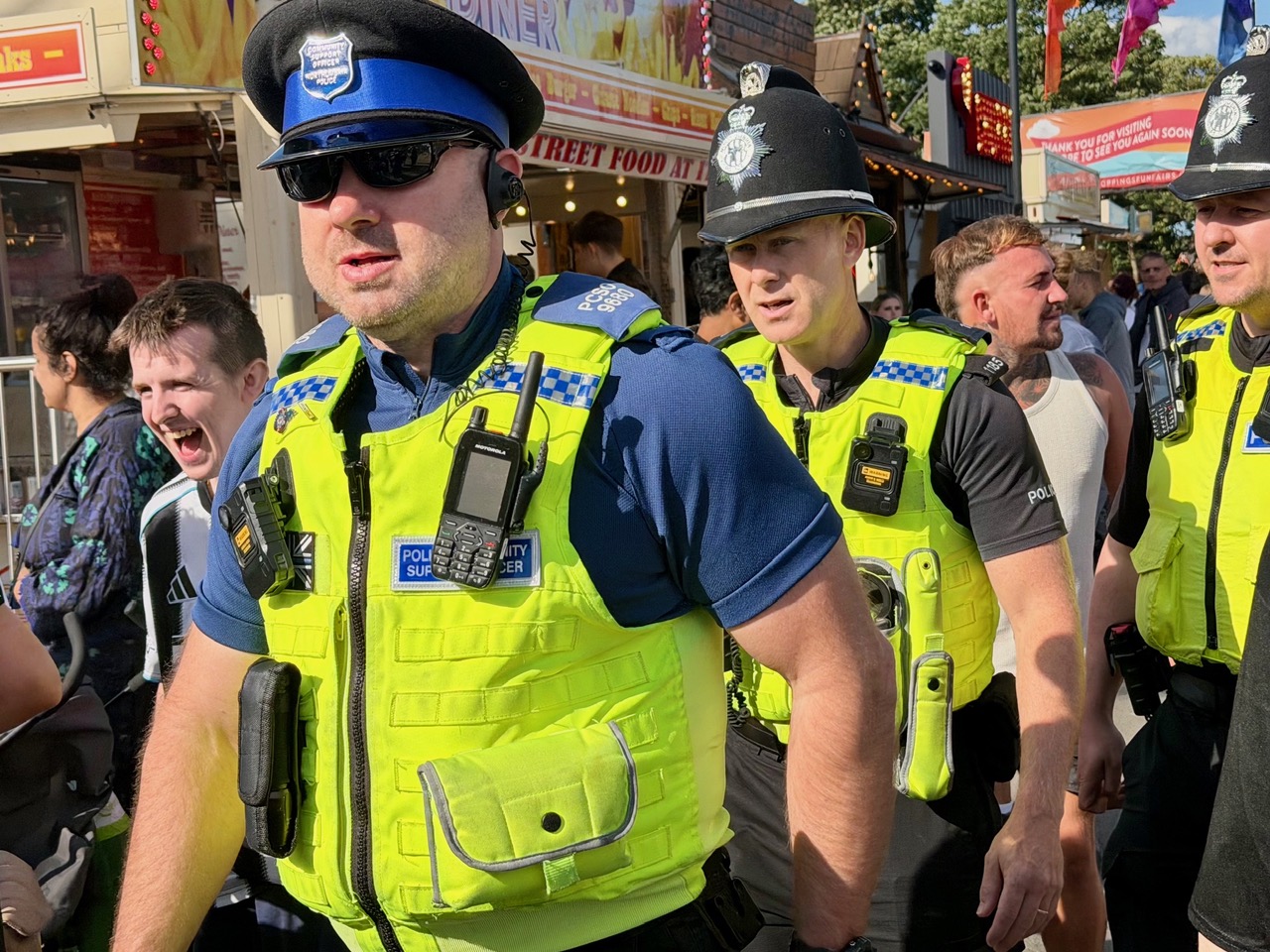
The fairground also understands the ancient power of wanting something almost obtainable. Foxes, bears and improbable soft octopuses hang overhead. Bingo cards, punch machines and prize stalls convert hope into a transaction repeated thousands of times. The prizes might be unnecessary, but that hardly matters. For a few minutes, winning one becomes urgently important.
.jpeg)
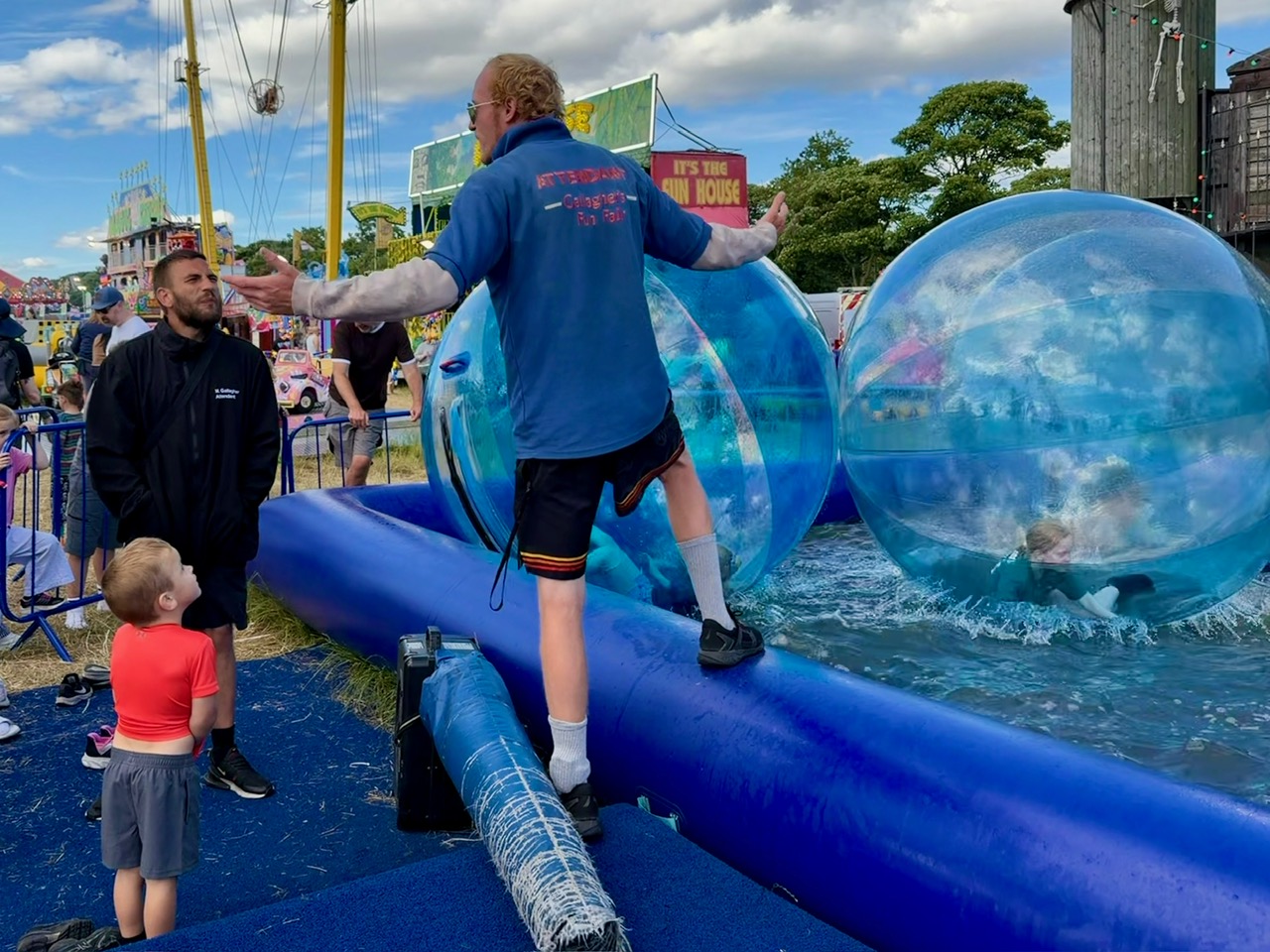
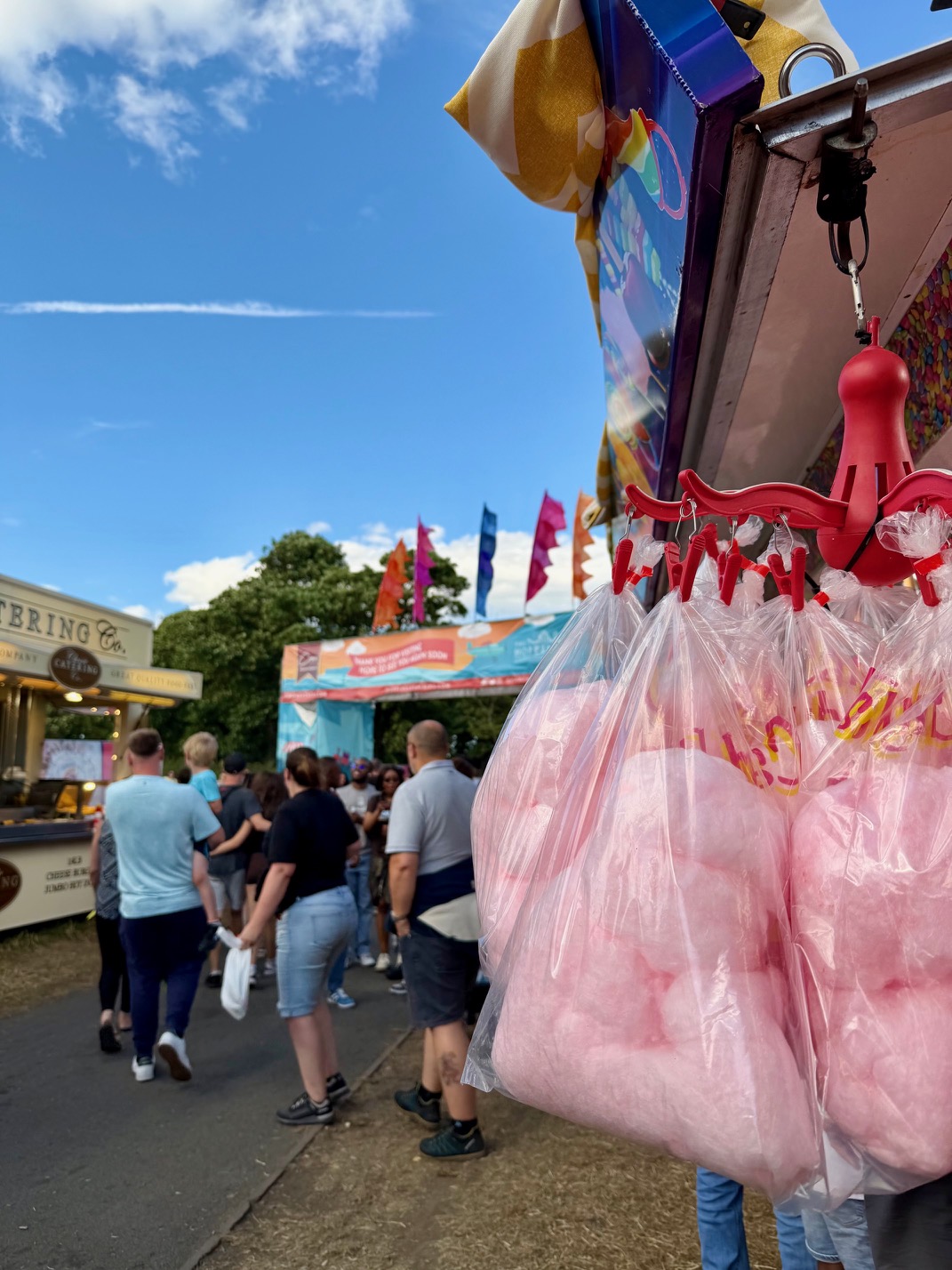
Food is part of the ritual: eaten standing up, shared from paper trays or carried between attractions before it cools. Chips, burgers and sweets provide pauses within the movement of the fair. People stop, look around and recover themselves. These intervals aren't interruptions to the Hoppings. They are where much of its social life takes place.
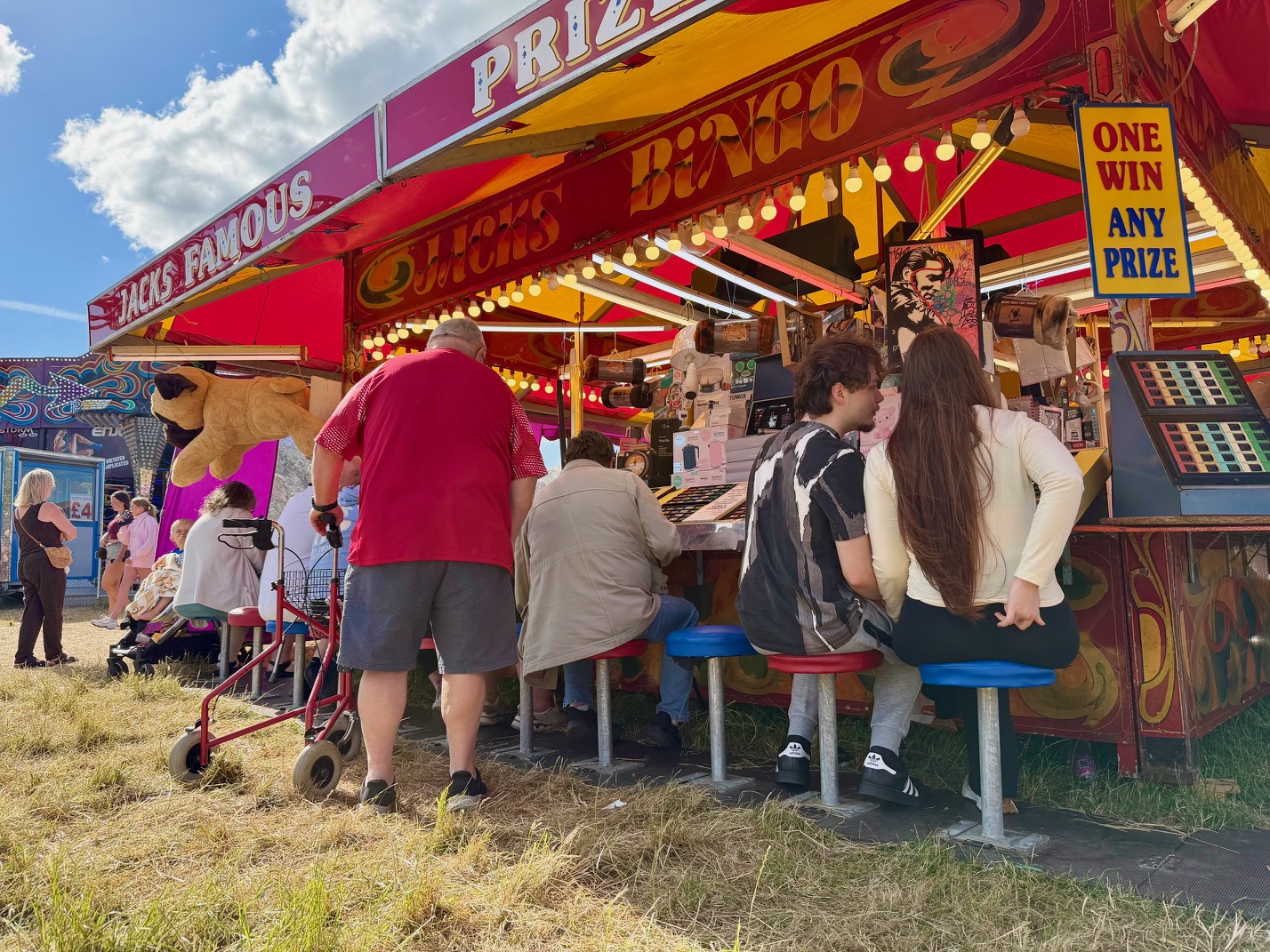
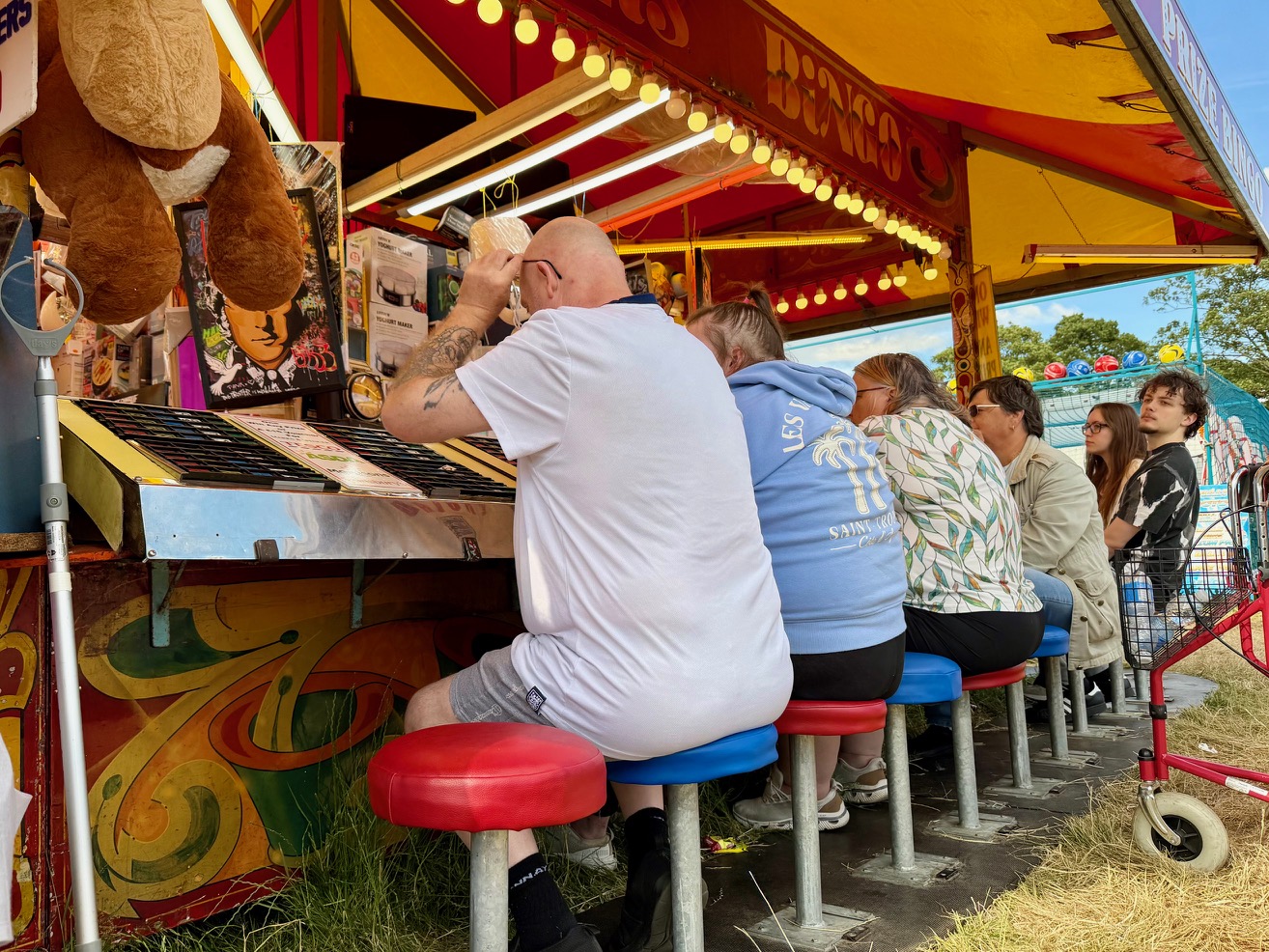
Perhaps that's why the fair remains so compelling. It offers noise, risk and excess, but also the simple opportunity to be among other people. On the Town Moor, Newcastle appears in miniature: exuberant, watchful, multigenerational and gloriously unposed. The visitors become both audience and attraction, each person briefly forming part of somebody else’s memory of the day.
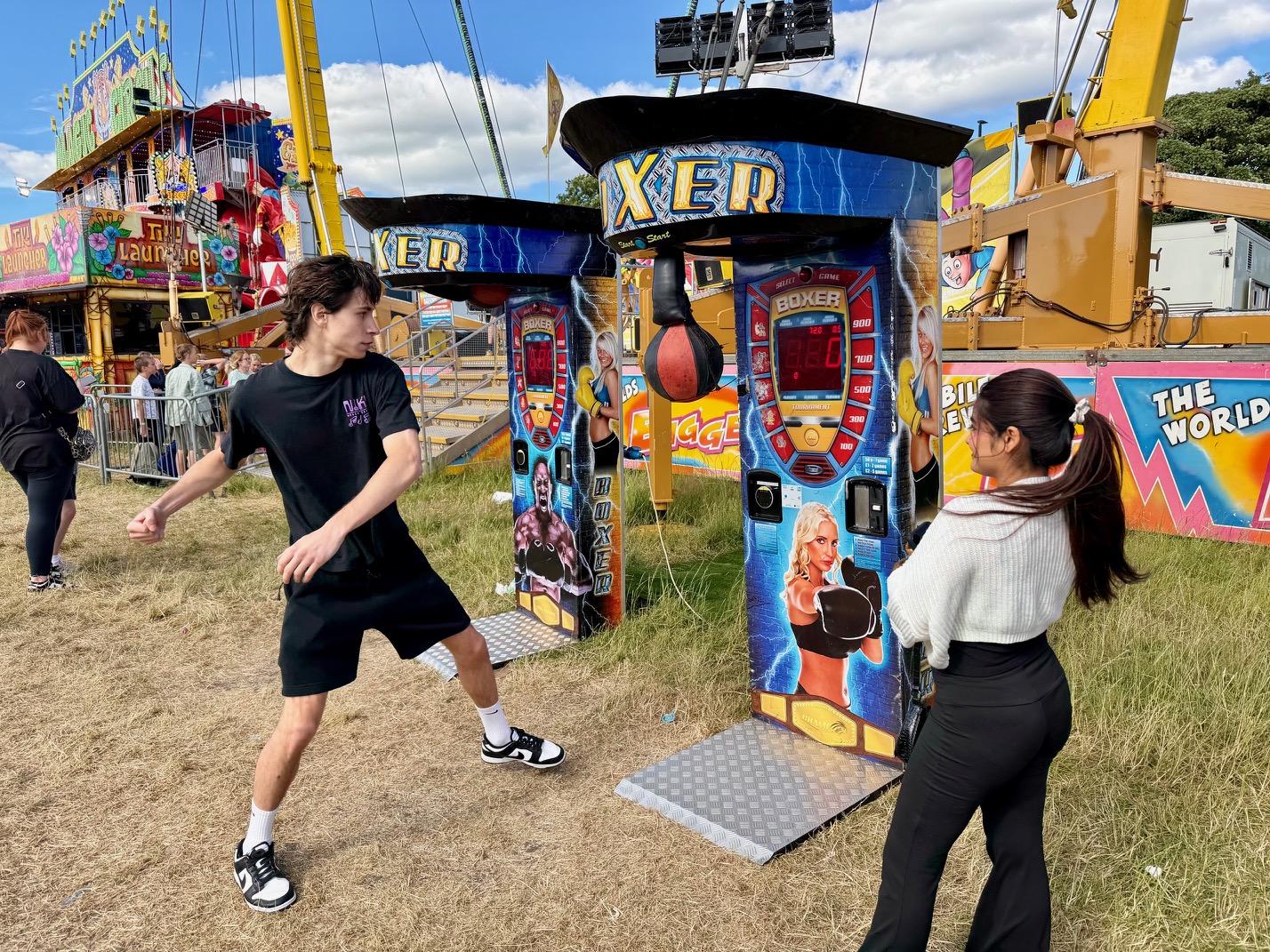
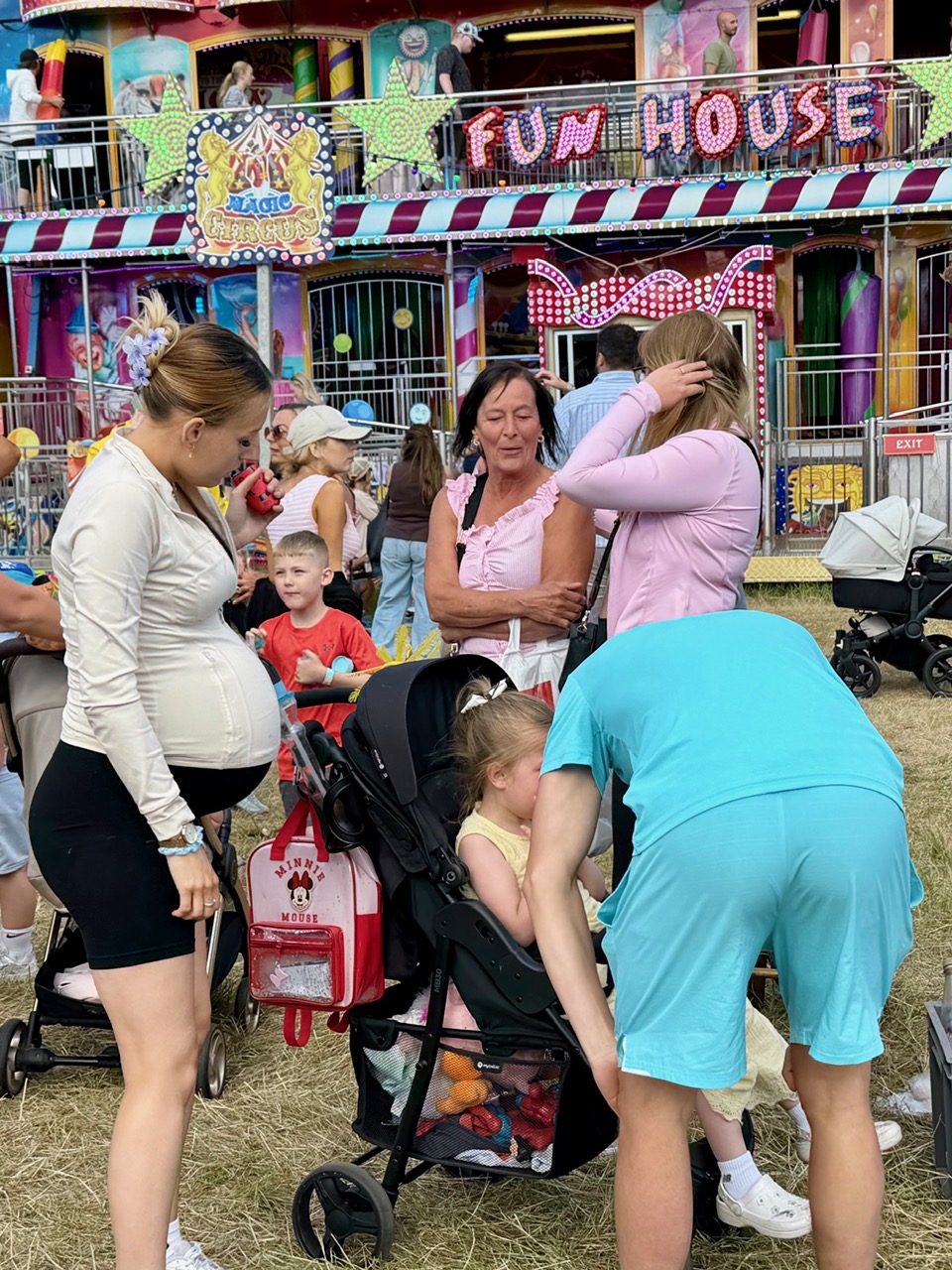
By the final evening, the Hoppings was already approaching disappearance. Soon the lights would be extinguished, the rides folded back into transportable shapes and the Moor returned to open grass. What remained were the photographs: not just evidence of the machines that came to Newcastle, but of the people who gathered around them - eating, waiting, caring, watching, daring and belonging.
Words and photographs: MagNorth





