



There’s a moment, early in my return to York Minster, when the customary boundaries between journalist, subject and communications team feel like they're begininng to dissolve.
People arrive. Introductions overlap. Somebody tries, unsuccessfully, to have a cup of tea. Plans for one article begin multiplying into ideas for several more.
Gemma from the Minster’s communications team advises me that our recent piece with Director of Works and Precinct at York Minster (and Geographer) Alex McCallion had captured what they were trying to communicate: intelligently, but accessibly; passionate about the Minster, but alive to the real-world difficulty of keeping it standing. Her words mean much more than she could ever know.
Alex, is already suggesting people we should return to interview properly.
They’re being incredibly generous. They are two of a very special group of folk who operate from the beloved 550-year-old building.
And the warmth of the welcome reveals something important about the place we’re about to enter. Behind York Minster’s public face is a community of people who aren’t simply maintaining an old building. They’re thinking deeply about knowledge: where it resides, how it travels, what happens when it’s interrupted and how ancient skills might work alongside technologies their predecessors could never have imagined.
Our last meeting with Alex explored a proposition that can sound uncomfortable when applied to one of Europe’s great medieval buildings: the building must change.
This time, we’ve come to meet some of the people making that change possible.
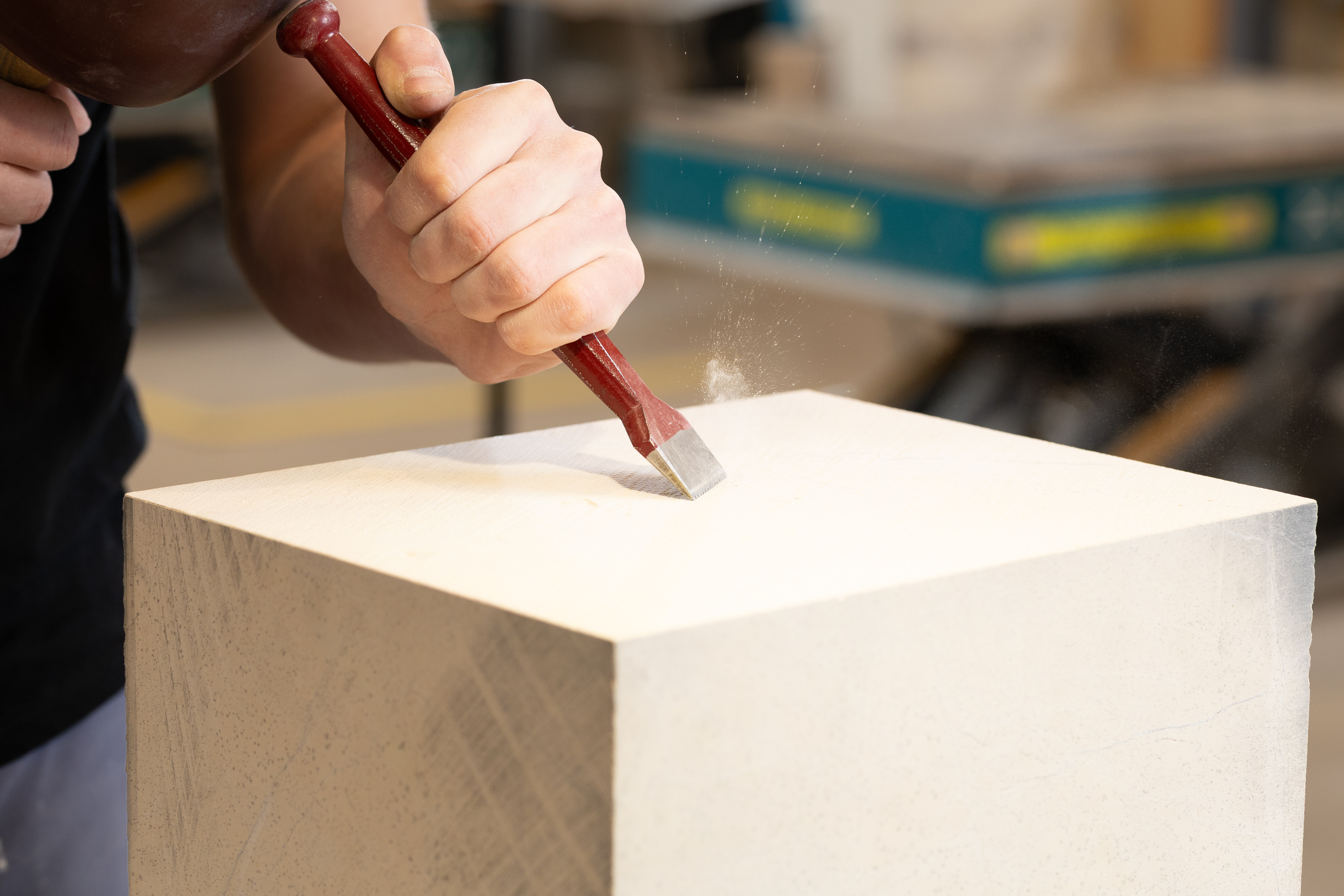
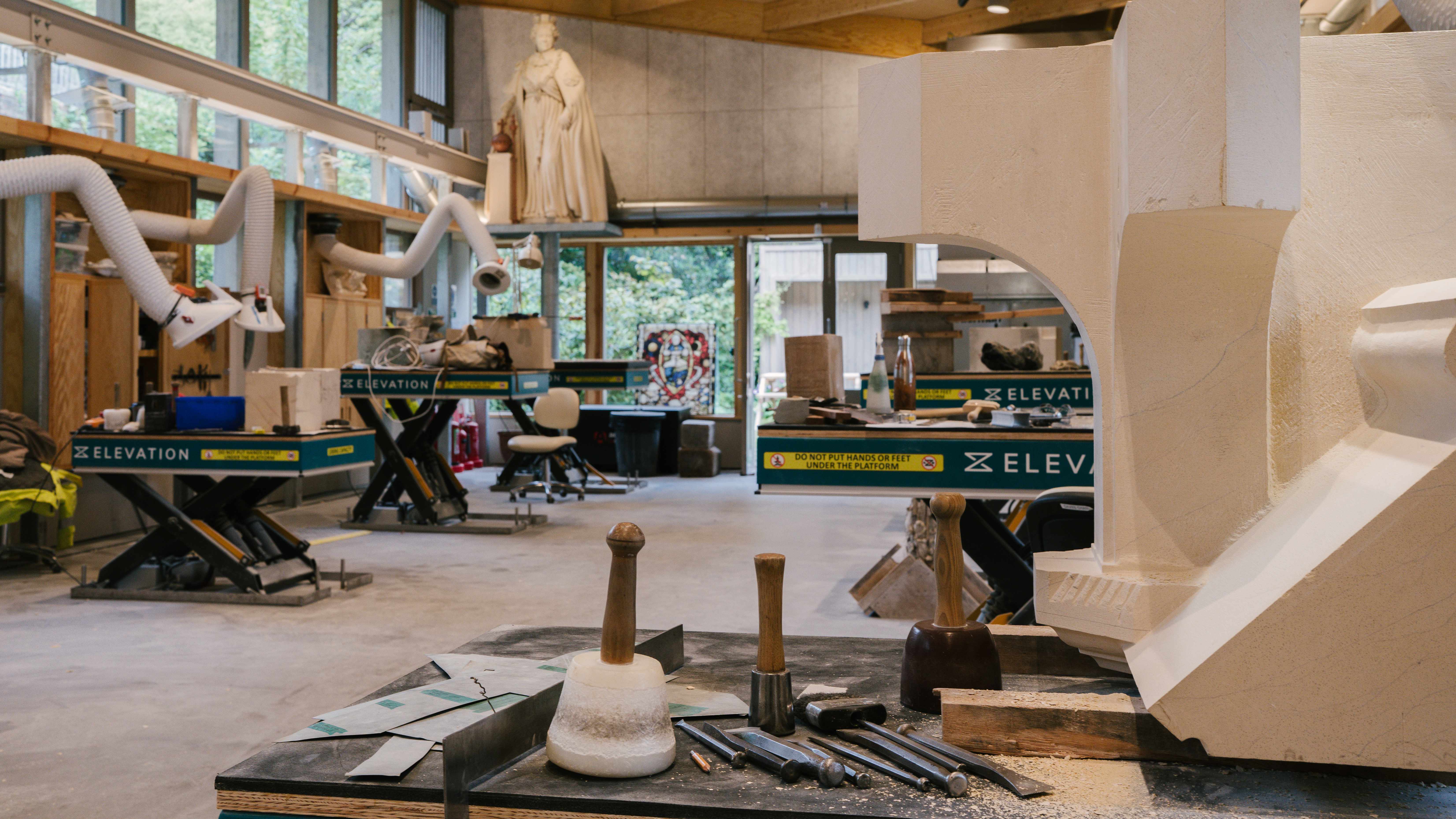
The Centre of Excellence for Heritage Craft Skills and Estate Management is the umbrella beneath which two new facilities sit: the Heritage Quad and the Works and Technology Hub.
The £9.3 million project brings together traditional craft, apprenticeships, international exchange, digital design and advanced stone-cutting technology. Its purpose is both urgent and generational: to ensure there’ll still be craftspeople capable of caring for the Minster and its seven-hectare estate long after the present team has gone.
The Heritage Quad includes workshops and residential accommodation for first-year apprentices and craftspeople visiting from elsewhere in the world. The Works and Technology Hub houses digital surveying and design facilities alongside new stone-processing equipment.
“You’ve got heritage craft, which is obviously about saving the traditional craft skills for future generations,” Alex explains. “So, we’ve always got the skilled craftsmen and women to look after this magnificent building and its estate.
“And then the other side of the vision is embracing cutting-edge technology as a tool to support our work. Technology and craft sit in a careful marriage.”
That marriage is fundamental because the climate isn’t waiting for the conservation sector to resolve its philosophical differences.
Changing patterns of rain, heat, wind and moisture are accelerating damage to precious stone and glass. The Minster must restore more of its fabric, more quickly, while retaining the human knowledge without which sensitive conservation becomes impossible.
The question isn’t whether York should choose between the old and the new.
It’s whether the two can learn to work together quickly enough.
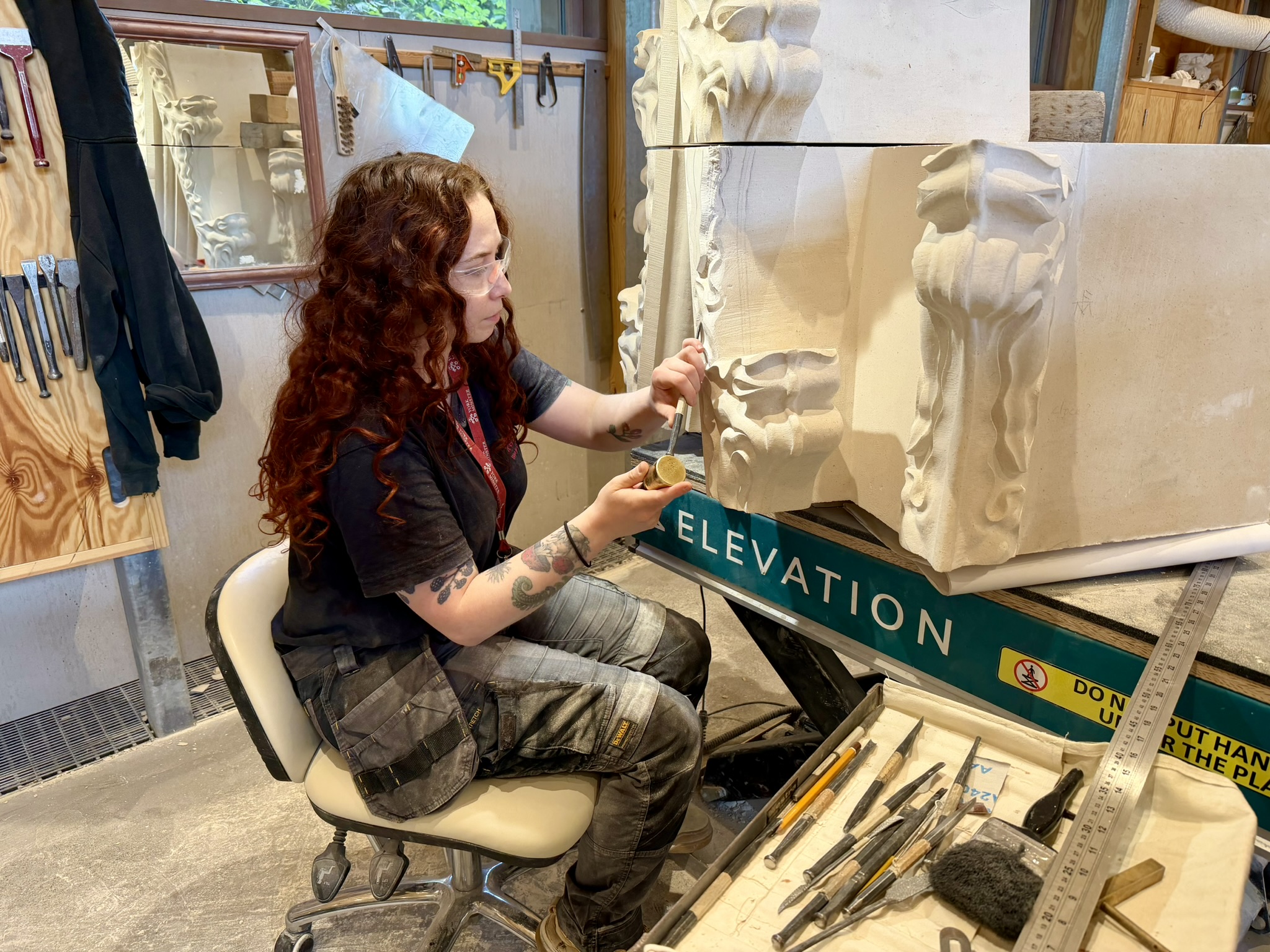
In the Heritage Quad, Freya de Lisle is finishing a large piece of stone destined to form part of a pinnacle.
It’s complex and deeply three-dimensional, with five projecting ornaments known as crockets. The Victorian stone it will replace has eroded badly. The new piece mustn’t merely be durable in isolation; it has to behave sympathetically alongside the surviving masonry around it.
“Part of being a craftsperson is making sure that you’re not just making something new that will work,” Freya says, “but something that will work with what is already present.”
That principle - renewal undertaken in conversation with what already exists - could stand for almost everything happening here.
Freya has worked at the Minster for five years, first arriving through the apprenticeship route. Her path began with a history degree and a module examining the development of castles and country houses. A tutor encouraged students to consider the craft skills embodied within those buildings.
“I had no idea that was a thing you could do,” she says. “I didn’t know stonemason was a job at that point.”
She’d always been a maker. During a gap year, she worked on illuminated manuscript lettering with craftswoman Judith Richardson-Dawes. She had made stained glass and played musical instruments. But somewhere along the way, she’d absorbed the idea that a creative working life belonged either to people whose talent was immediately exceptional or to those with enough financial security to withstand years of uncertain training.
“I’d always thought that making and creating was not going to be a viable option,” she says. “I kind of resigned myself to not being able to have a making career.
“So, stonemasonry seemed such an obvious choice when it became clear that it was a career you could take. I just went all in on it.”
After university, Freya returned to college. Within six or seven months, she secured an apprenticeship at York Minster - “an immense piece of luck that I’m still extremely grateful for”.
Her development has since taken her to Highgrove and Dumfries House as one of The King’s Foundation’s 35 under 35: a network of young makers and changemakers assembled to mark the charity’s 35th anniversary.
For a time capsule at Dumfries House, intended to remain unopened for another century, Freya contributed a chisel already believed to be at least 100 years old.
“There’s a lot of wonderful technology that we use,” she says, “but there are also very old, reliable techniques that will stand the test of time.”
A century-old tool placed into the dark to await another century. Few images could better express the timescale on which the Minster’s craftspeople are asked to think.
The new Centre offers apprentices formal instruction, modern facilities and a clearer path into the heritage professions. But Freya is adamant that the most important knowledge can’t be transmitted through a manual, screen or lecture.
It has to pass between people.
She remembers tackling her first large, multi-crocketed stone several years ago. Unsure how to approach it, she turned to experienced craftsman Dave Willett.
“He got all of my tools and said, ‘Stand behind me and watch.’ I stood there for a week and watched how he treated one of the sides.
“There is no manual in the world that will teach you how to move, what tools to have present or the exact process to go through. It’s much too complicated. You’re not just working on one surface; you’re working in every single plane. It’s very multidimensional.”
The sentence is the clearest possible explanation of why a workshop such as this is critical.
Books can describe a tool. Videos can demonstrate a movement. Digital models can show the geometry of a stone. None can entirely reproduce the accumulated judgement of somebody who’s spent decades listening to how limestone responds beneath a chisel.
“It’s a physical task,” Freya says. “It needs physical understanding.
“The value of having experienced craftspeople around qualified and beginner craftspeople is the most important thing.”
That knowledge extends far beyond carving.
Before Freya can recreate a damaged piece, specialist masons must examine what remains on the building. They measure, interpret eroded mouldings, understand how neighbouring stones meet and create drawings and templates capable of translating an incomplete original into a faithful replacement.
This process, known as setting out, carries unforgiving consequences. A tiny error repeated through successive courses of masonry can become a significant divergence at height.
“If you have a stone with a two-foot bed height, and every two feet you have one millimetre coming up this way,” Freya explains, tilting an imaginary line, “by the time you get to the top of the Minster, it’s fallen over.”
The mason is not invited to improve upon the medieval or Victorian design according to personal taste.
“If something is carved and you don’t particularly like it, or think you could do a better design, you don’t. We reproduce what is present. That’s our job.”
Even the most experienced people here continue to encounter unfamiliar problems. In theory, the Minster’s scaffold completes its journey around the building over something approaching a century. A craftsperson could spend an entire career here and still meet a form they’ve never previously touched.
“I don’t think I’ve ever met anyone who thinks they’re done learning,” Freya says. “As soon as you think you’ve finished learning, you’re finished working.”
A mason may be considered qualified after around four years and experienced after nine or ten. Yet colleagues who’ve spent three decades at the bench must still occasionally step backwards, look up and ponder what the building has presented to them.
“You don’t get bored,” Freya smiles.
Ask what happens if young people are no longer trained in these skills and Freya’s answer is stark.
Historic buildings will deteriorate. Eventually, some will cease to be living buildings at all.
There have already been periods in which the chain weakened. Freya points to the years following war, when craftspeople and apprentices were lost, training was disrupted and hurried repairs created problems later generations are still addressing.
“If you remove one link in the chain of passing an apprentice through to qualified and then experienced craftsperson, you cause another compounding error that continues happening.
“With the lack of money being put into training and retaining skilled craftspeople, you are going to have buildings falling into disrepair. The skills must be passed on.”
The Centre gives that chain a physical home. But the route into stonemasonry remains far from straightforward. Freya believes only a small number of UK colleges currently teach it. York is fortunate to have provision nearby; many prospective students must travel considerable distances.
Her advice to a young visitor is characteristically practical.
Contact a college. Try a weekend course. Find out whether the physical work feels right. Get an old piece of breeze block and carefully have a go.
The first challenge is helping a young person understand that the possibility exists.
Freya once stood inside historic buildings without knowing stonemasonry was a job. Now her work will remain high on York Minster long after everyone who watched her create it has disappeared.
In Freya’s workshop, knowledge travels the short distance between one pair of hands and another.
In the working life of Ahmed Abdul Aal Sayed, it must cross continents.
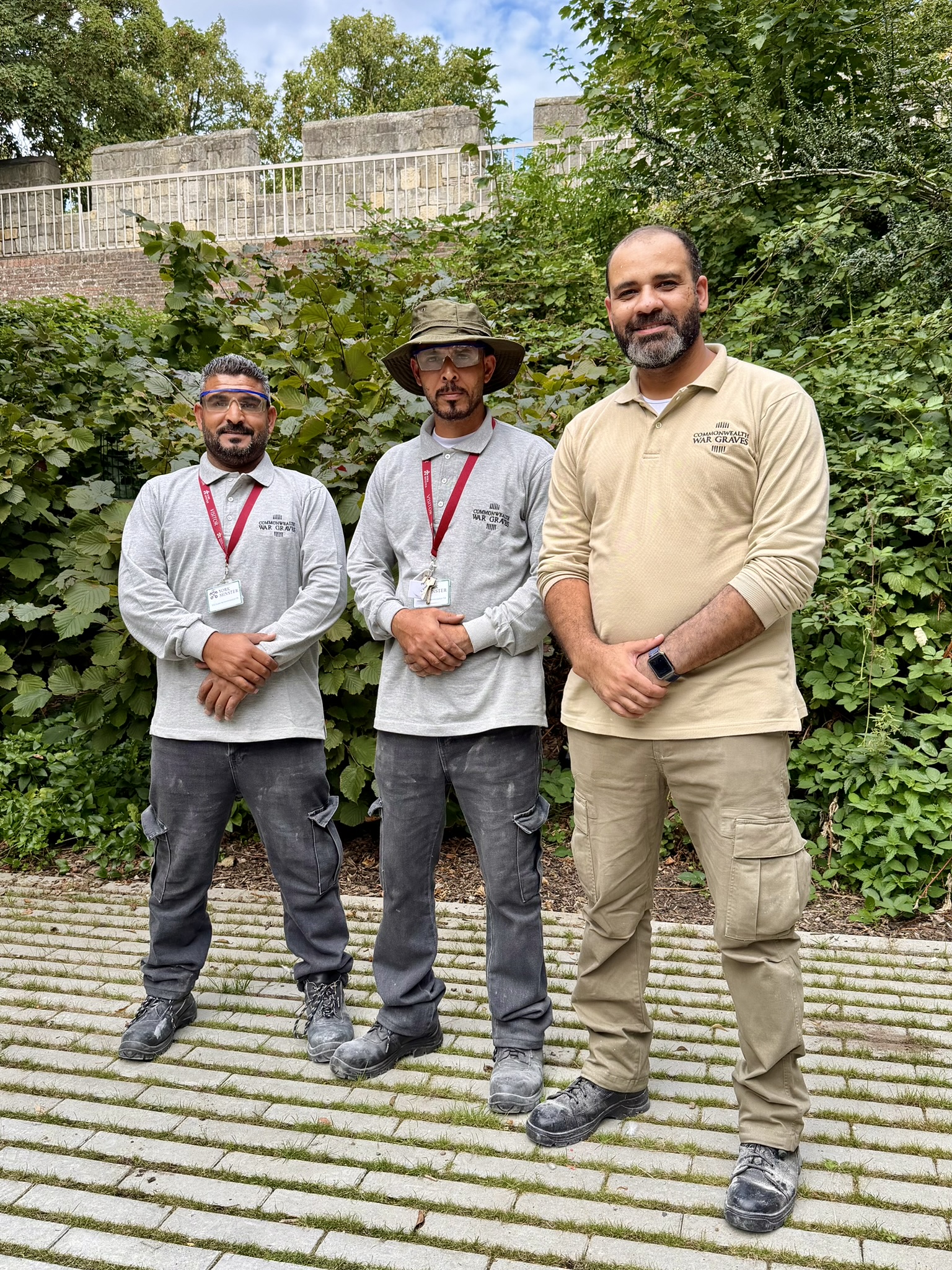
Ahmed is visiting York with colleagues from the Commonwealth War Graves Commission. The team has travelled from Egypt for a week of training, supported through the Minster’s international partnerships.
Ahmed manages works across North Africa and the Middle East. He and his small mobile team travel between Commonwealth war cemeteries, surveying structures, specifying repairs and undertaking conservation work too delicate or specialised to be entrusted to a general contractor.
In Egypt alone, he says, the Commission cares for around 18 sites.
The public encounters these places as landscapes of apparently effortless order: aligned headstones, clipped grass, flowers and carefully maintained memorials.
Ahmed reveals the vast human operation beneath that stillness.
There are walls, drainage systems, staff buildings, electrical faults, plumbing, roofs and structural defects. Full-time gardeners and caretakers are employed to care for these spaces.
“There are condition surveys, maintenance priorities, budgets and repairs planned across five-year cycles” he tells me.
“There is salt rising through soil and attacking stone. There is weathering, accidental damage and occasional theft.”
There are names that must remain legible.
Where remains were recovered, Ahmed explains, a casualty is commemorated with a headstone. Those with no known grave are named on memorials. Replacement headstones are ordered through the Commission’s records system, connecting an individual casualty to a cemetery, plot, row and grave.
Many are produced at the Commonwealth War Graves Commission’s operational hub at Beaurains, near Arras in France, where experienced craftspeople retain the regimental badges, inscriptions and design information required to reproduce them accurately.
The Commission cares for 1.7 million Commonwealth war dead at 23,000 locations in more than 150 countries. Its familiar headstones appear uniform from a distance, but their materials and forms respond to nationality, faith, location and climate.
The dead may be commemorated in stone, but remembrance itself is living work.
Ahmed’s team has come principally to learn.
At York, they’re being introduced to stone and glass conservation, digital modelling, 3D printing, computer-aided design, CNC cutting and the process by which survey information becomes a physical template in a mason’s hands.
Yet some of the most valuable lessons concern methods far older than the new machines.
Certain modern conservation products available in Britain or parts of Europe can’t easily be sourced in the countries where Ahmed works. The Minster’s craftspeople have therefore also demonstrated traditional lime-and-sand mortar techniques.
“The people here are very experienced,” Ahmed says. “They know a lot of techniques - even the old ones - and how to use them in different ways to conserve and restore pieces.”
He’s modest about his team’s contribution, insisting that York’s masons possess far more detailed carving expertise. In Egypt, power tools and grinders are often used to complete work more quickly; at the Minster, he has watched craftspeople achieve extraordinary control through their hands.
“We are trying to learn as much as we can,” he says. “How can we learn this and take it to our work?”
But Ahmed and his colleagues bring another form of knowledge: experience of maintaining sites across different countries, materials, cultures and extreme environmental conditions. They understand what happens when a standard solution meets salt-laden soil or a climate for which it was never designed.
They’re also taking conservation into schools and universities, giving presentations and creating training and internship opportunities for students in Egypt.
Again, the chain returns to young people.
A skill shown in York might help repair a cemetery in North Africa. A student who has never imagined a career in conservation may encounter Ahmed and understand, for the first time, that such a life is possible.
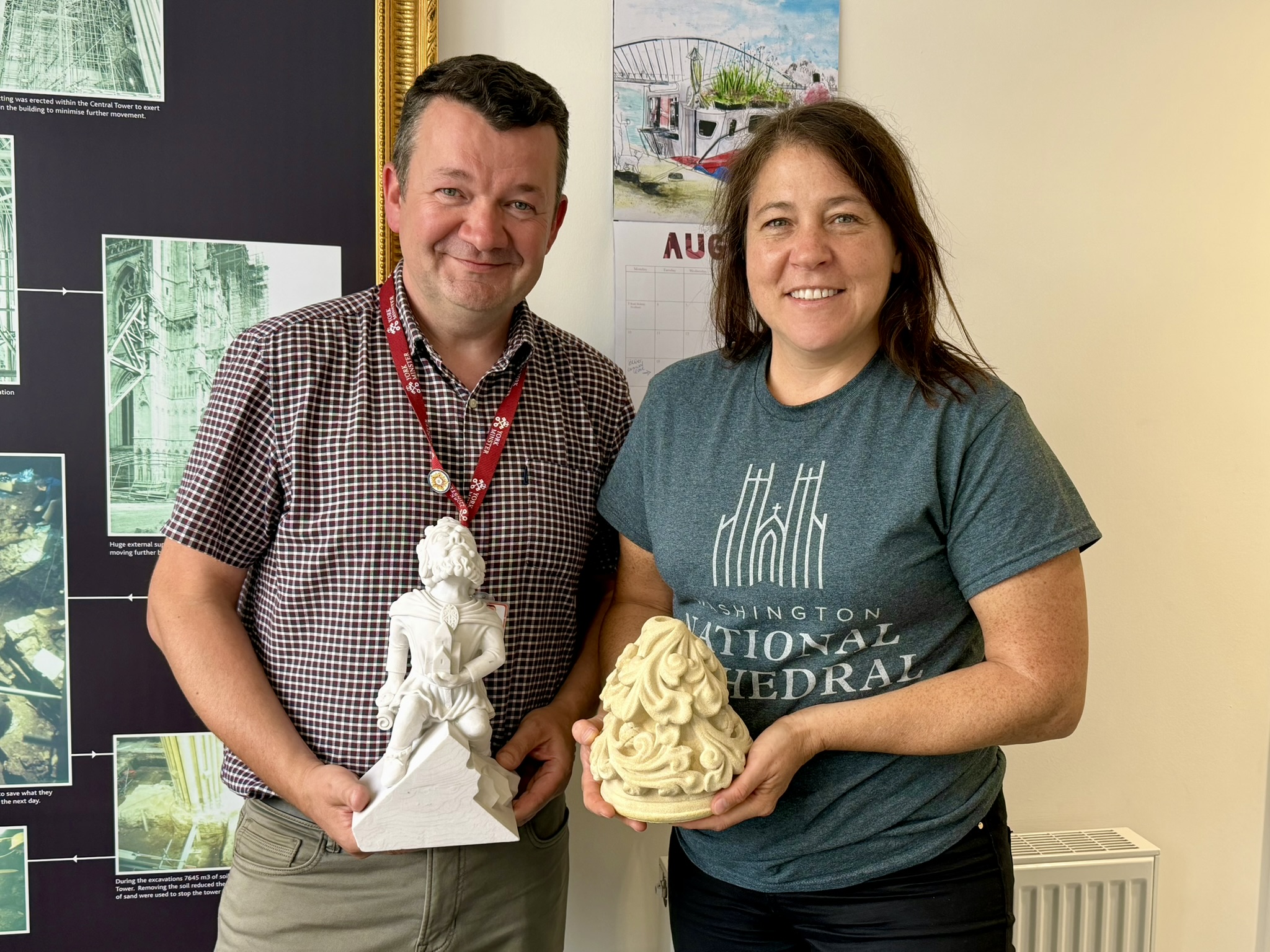
Back at the Works and Technology Hub, Head of Works Paul Peirson and Research and Innovation Manager Laura Cotter are addressing the other side of Alex’s “careful marriage”.
Paul arrived at the Minster, bringing three decades of expertise in operations and manufacturing. He oversees a complex process beginning with the survey of damaged fabric and continuing through digital modelling, quarry orders, cutting, carving, scaffolding and installation.
“In essence, we are a production facility making block stone and finishing it,” he confirms, “and a building site at the same time.”
The new five-axis stone-processing equipment can reach angles and surfaces that were previously inaccessible to York’s saws. It removes much of the excess material before a stone passes to a mason for its skilled final finish.
Paul reports average productivity improvements of around 50 to 60 per cent during parts of that process. One stone scheduled for the machine may require a week of cutting but save approximately six weeks of manual preparation.
This doesn’t mean that somebody uploads a design and presses a button.
“Every saw cut, every single cut in that stone, has to be programmed,” Paul explains. “It isn’t as simple as getting a design, pressing a button and it doing everything itself.”
The anxiety among some experienced team members was understandable. If a machine could cut stone, would it eventually replace the mason?
Paul’s answer is expressed not as a theory but in jobs.
“The machines have actually enabled me to take on two more masons because we can get through the work quicker. It’s having the opposite effect to what people first thought.”
Technology removes weeks of rough preparation. It does not possess Freya’s judgement. It can’t stand back from an unfamiliar medieval form and decide how surviving evidence should be interpreted. It doesn’t understand what an experienced hand understands about the behaviour of stone.
“What Laura and I ask,” Paul says, “is: what does a 21st-century stonemason look like?”
When Laura first arrived at York Minster, she was given a historical tour.
The church had begun at one scale, then been altered, partially demolished, rebuilt and enlarged. Successive generations changed its shape according to need, ambition, worship and the possibilities of their own time.
“And then,” Laura says, “we reached: ‘Now we don’t change anything.’ We don’t want to change the craft. We don’t want to change the building.
“But we cannot keep up with the demand, especially as the weather and rainfall become increasingly severe. We have to change the approach if we’re going to look after this building with the money available.”
Laura understands the fear surrounding technology. It exists throughout manufacturing, where welders, painters and production teams have long worried about replacement by robots. Add 800 years of history, the romance of the cathedral workshop and the creative identity of the craftsperson, and that fear intensifies.
The answer has been to bring masons and glaziers through the process rather than imposing change upon them.
“Heritage does deserve innovation,” she says. “How are we going to care for these really important assets successfully, with tightening budgets, without finding a balance?”
The debate is often presented as a choice between two options: introduce machinery or protect traditional handcraft.
But Laura introduces a third.
What if a cathedral can no longer afford to retain its craft team at all?
What if the work must be outsourced, breaking the daily connection between the building and the people who understand it most intimately?
In York, technology is being used to make the internal craft operation more sustainable - and potentially to support other historic buildings that can’t invest in equivalent equipment. Spare capacity could allow the Minster to prepare stone for other cathedrals and heritage organisations, generating income that returns directly to conservation.
Ancient craft isn’t being preserved as a performance of the past. It’s being equipped to survive the economics of the future.
Inside the Minster, the new accessible ramp near the central crossing offers the clearest early evidence of what this relationship can achieve.
From planning and design to final completion, it was an extensive project. But the physical work - lifting the first floor slab, completing the new intervention and placing the final stone - took five months. Paul believes earlier methods would have required around 18.
Its position demanded minimal disruption to the daily life of the cathedral.
For five months, the team were, as Paul puts it, “in the weeds”: solving problems, programming cuts, working towards the deadline and concentrating too closely to see the completed whole.
Then they stopped and looked.
“It was a really good moment to see the team standing back in awe,” he says. “When you look at it now, you think it has always been there.”
That is exactly what I thought when Alex first pointed it out.
The ramp doesn’t announce itself as a piece of advanced manufacturing. Its ironwork draws the eye towards the choir. Its stone belongs beside the ancient screen. It makes the Minster more accessible without asking the building to become visually unrecognisable.
“We couldn’t get a better compliment,” Paul says.
There is much more happening here.
Paul and Laura are studying how technologies used on New York skyscrapers might help people and materials move around a Gothic cathedral. They’re exploring sensors, environmental data, predictive maintenance, generative design and new uses for powdered waste stone. Some of the work is still experimental; some is commercially sensitive; all of it deserves a return visit of its own.
For now, the ramp is enough.
It demonstrates that innovation need not compete with history. At its best, it can settle so carefully into the life of an ancient building that the visitor barely notices it has arrived.
But behind that apparent effortlessness are Freya’s hands, Ahmed’s travelling knowledge, Paul’s manufacturing systems, Laura’s refusal to accept a false choice and Alex’s insistence that the Minster must prepare for challenges extending far beyond any single career.
No one here believes they will finish the work.
The scaffold will continue its slow journey. Rain will find new paths through old stone. Apprentices will become qualified masons, then experienced craftspeople. Tools will change. Knowledge will pass from one pair of hands to another and travel onwards into parts of the world York’s medieval builders could not have imagined.
The achievement of the Centre of Excellence is not that it has found a way to complete York Minster.
It is that it is preparing the next generation to continue it.
Header image: The Centre of Excellence for Heritage Craft Skills and Estate Management at York Minster (Image: York Minster)





