



A new pencil case. Shoes that still feel too stiff. A different classroom, another teacher and a timetable that hasn't yet become familiar.
The beginning of a school year is routinely presented as a moment of optimism and renewal. But for lots of neurodivergent children and young people, September brings a fresh accumulation of uncertainty, sensory demands and social expectations.
Even apparently small changes can require considerable adjustment. Corridors become crowded again. Bells sound. Instructions arrive quickly. Familiar routines have changed, and a young person must begin the demanding work of understanding what this new version of school expects from them.
Some will show that strain in the classroom. Others might spend the entire school day working extraordinarily hard to contain it.
It can mean that the child who appeared to manage at school returns home exhausted, distressed or overwhelmed. Behaviour that looks sudden or inexplicable might be communicating something their words can't yet express: that the day's simply required too much.
Northorpe Hall Child + Family Trust, which has supported children and families in West Yorkshire for more than 60 years, is asking adults to look beneath those outward signs as our young people settle into the new academic year.
Its specialist practitioners suggest giving a young person time to adjust rather than expecting the first days or weeks to pass without difficulty. Families can create opportunities to discuss worries without pressuring a child to speak before they are ready - and recognise that recovery time after school might be a necessity rather than an indulgence.
Unexpected behaviour, Northorpe says, can be a sign that a young person is anxious, overloaded or struggling to process the new term's demands placed on them.
That matters because distress doesn't always look like distress. It might appear as anger, withdrawal, avoidance, silence or an intense reaction to something that seems insignificant to everybody else.
When too much has already been asked of a young person’s senses and attention, the smallest additional demand can become the one they can't absorb.
Northorpe’s advice also acknowledges someone frequently missing from conversations about school transition: the parent or carer trying to hold everything together.
Supporting a neurodivergent young person can involve watching continually for triggers, helping them regulate difficult emotions and attempting to anticipate problems before they become crises. Northorpe describes that experience as one of hypervigilance - and recognises how exhausting and intense it can become.
There might be meetings with school, disrupted evenings and uncertainty about whether to encourage, intervene or allow space. Parents and Carers must often make those decisions while managing jobs, other children, household pressures and their own wellbeing.
There's no flawless method for doing it.
“There isn’t one right way to support a neurodivergent young person, and what works for one family might not work for another,” says Rachel Thompson, a specialist autism practitioner at Northorpe.
“It’s about finding what works for your family and knowing that you don’t have to do it alone.
“At Northorpe, we don’t believe supporting a young person should mean working with them in isolation. We believe it’s just as important to understand and support the people around them, which is why we work alongside families to understand what they need and find approaches that work for them.”
That approach is significant. A young person doesn't exist separately from the family absorbing the repercussions of an education system, public environment or support structure that may not readily accommodate their needs.
Helping the adults around them is part of helping the child.
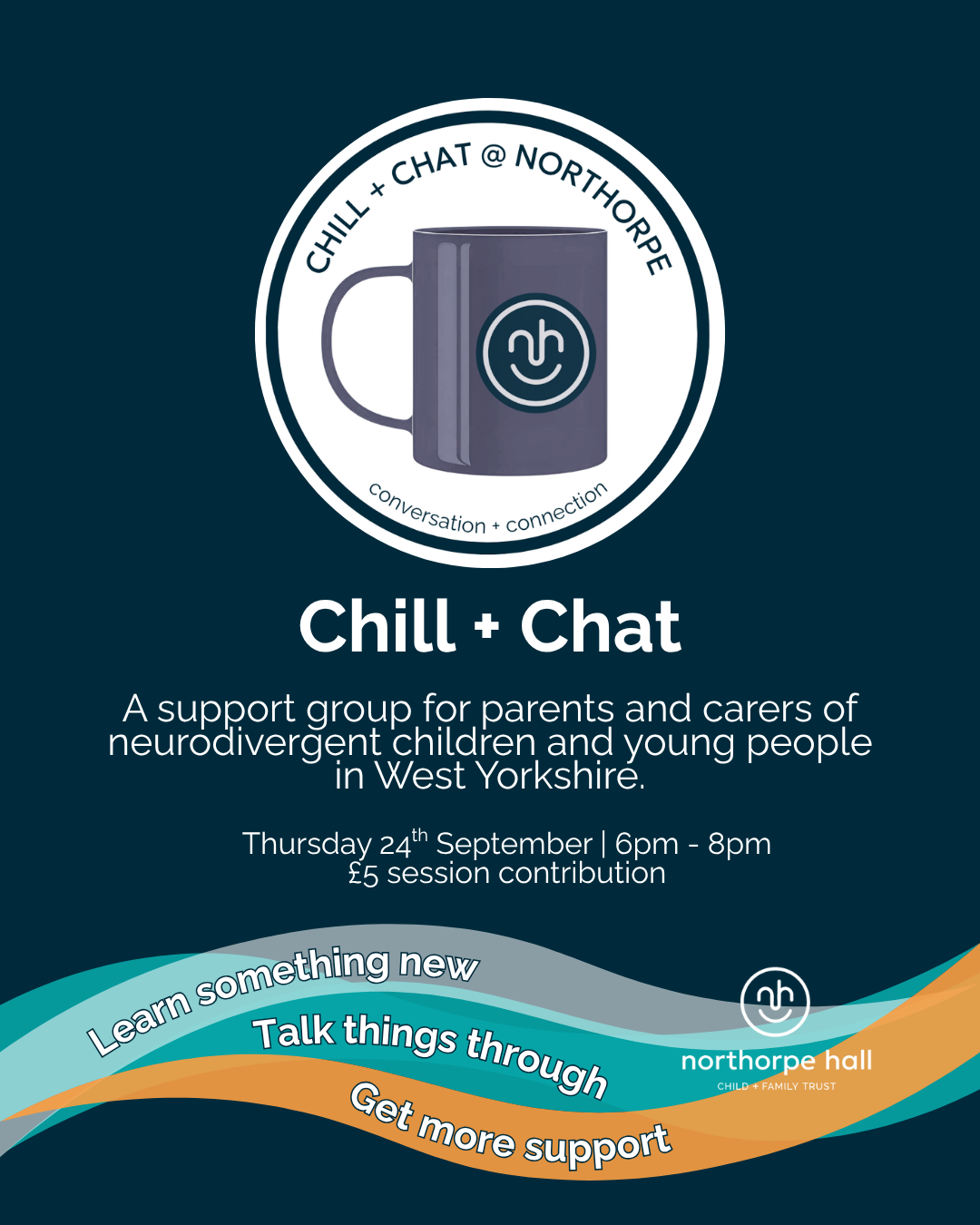
Northorpe is now relaunching Chill + Chat, its monthly support group for parents and carers of neurodivergent children and young people across West Yorkshire.
The group has existed in different forms for approximately eight years and has already supported more than 100 parents. Each session combines a short discussion around neurodivergence with time to talk, exchange experiences and seek guidance from Northorpe’s practitioners.
It's intended to be relaxed rather than clinical: somewhere adults can listen, learn or simply spend time with people who may recognise what family life currently feels like.
The first sessions will explore Spoon Theory, a way of understanding energy as a finite resource. Everyday tasks don't cost everyone the same amount, and an activity that appears straightforward from the outside might require a neurodivergent person to use a substantial share of their available capacity.
The idea can help families think differently about exhaustion and recognise why a young person who has successfully completed a school day could have very little left once they reach home.
It can also give parents permission to consider their own reserves.
The first evening session takes place at Northorpe Hall in Mirfield on Thursday 24 September, from 6pm until 8pm. A daytime session follows on Monday 12 October, from 10am until noon.
Northorpe is suggesting a £5 contribution towards the charity-funded sessions.
The practical advice being offered is valuable. Allow time. Make room for conversation, but do not force it. Look beneath behaviour. Understand that rest may be essential.
Perhaps the most important part, however, is Northorpe’s reassurance that neither young people nor the adults caring for them need to navigate this transition alone.
September asks a great deal of families. Sometimes the most useful support begins with a brew, an unhurried conversation and a room in which nobody has to explain why it has all felt so difficult.
Chill + Chat. Northorpe Hall, 53 Northorpe Lane, Mirfield, WF14 0QL





