



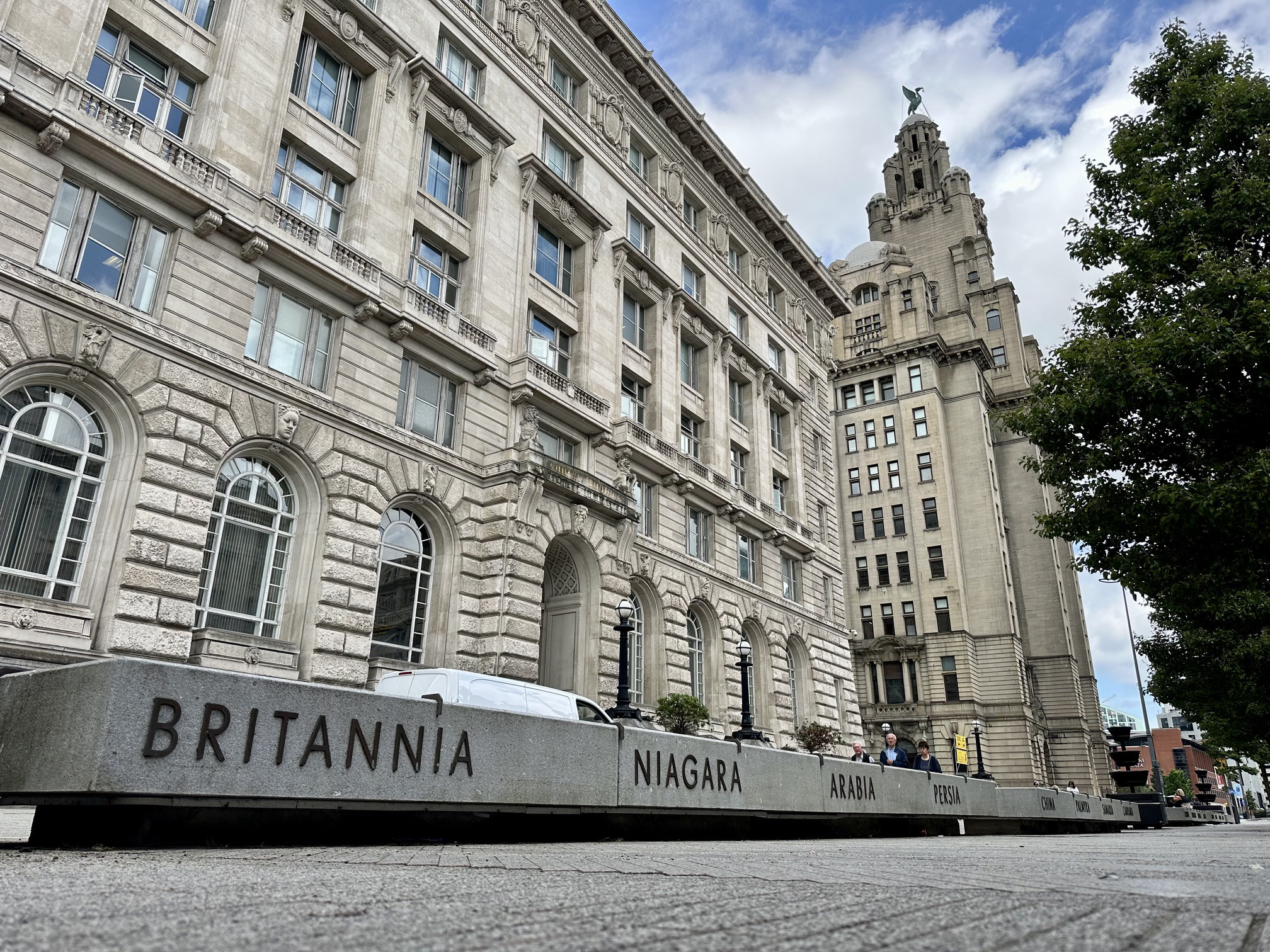
Today, Cunard’s Queen Anne is back on the Mersey.
Along Liverpool’s waterfront, people will gather to photograph her against one of the most recognisable skylines in Britain. Inside the Cunard Building, the great Arrivals Hall is set to be filled with local makers, food, artwork, jewellery and conversation.
I'm watching all of this from a considerable distance, back home in North Yorkshire. But yesterday, before the ship arrived and before the stalls opened, Liverpool City Council’s Heritage Team invited me inside the building that bears Cunard’s name.
Then they took me beneath it. And its the basement I've been thinking about ever since.
The Cunard Building isn't a place that reveals discomfort immediately. It stands magnificently on Liverpool’s waterfront, Portland stone facing the Mersey, positioned between the Royal Liver Building and the Port of Liverpool Building as one of the city’s Three Graces.
Its architecture borrows from the palazzos of Renaissance Italy. Its halls and decorative details were designed to project wealth, confidence, internationalism and permanence. This wasn't merely an office block. It was the headquarters of one of the greatest shipping companies in the world, constructed at a moment when Liverpool understood itself as a gateway between continents.
The building opened in 1916 and remained Cunard’s global headquarters until 1967. It was both corporate palace and working machine: a place where passages were sold, money exchanged, tickets checked, valuables stored, luggage processed and human beings divided according to the class of travel they could afford.
Today, it's obviously tempting to experience all of this principally through beauty. That beauty is real. So is the immense affection Liverpool rightly retains for Cunard.
The relationship began in 1840, when Britannia left Liverpool on Cunard’s first scheduled transatlantic service to Halifax and Boston. More than a century and a half later, the naming of Queen Anne on the Mersey in 2024 affirmed a connection that remains deeply embedded in Liverpool’s identity. The city itself was appointed the ship’s godparent - an unprecedented honour and one that felt entirely appropriate.
Queen Anne’s return provides the spectacle this week. The Cunard Building arguably provides something a bit more complicated.
Before our unique tour began, Alan Smith spoke about what heritage might do for a city. Smith is Liverpool’s Head of Heritage, Preservation and Development. His career has been spent among historic buildings, galleries, museums and civic institutions, but his ambitions reach far beyond preserving a collection of impressive structures in the centre.
He wants to establish what he describes as nodal points of culture across every ward in Liverpool: places through which heritage can create pride, participation and a stronger relationship between communities and the places in which they live.
Liverpool has around 2,500 listed buildings and thousands of other points of historical interest. But Alan’s understanding of heritage isn't confined to formal designations or monumental architecture.
A standing stone matters. A grave matters. An old schoolhouse matters. A tree can matter, because what gives a place significance isn't simply its age or beauty, but the human attachment gathered around it.
He spoke about the belief, still encountered in some communities, that culture and beautiful civic spaces belong elsewhere.
“There’s this narrative,” he said. “‘It’s not for us. We shouldn’t have nice things.’ Why would we not get nice things?”
It's an apparently simple question, but it reaches into the heart of cultural policy.
Who's permitted to feel ownership of a city’s history? Which neighbourhoods receive investment? Whose stories are considered important enough to preserve? Can heritage become a practical resource for communities, rather than a luxury concentrated around buildings that are already celebrated?
Alan talked about repairing the damaged grave of Kitty Wilkinson, Liverpool’s pioneering public-health reformer, and about the work required across historic sites that have been neglected for decades. His approach moves between relatively modest interventions and the development of major collaborative funding bids involving institutions across the city.
The income generated by the Cunard Building tours feeds directly into that work. “Every single penny is reinvested in our heritage,” he explained.
The tours have also helped two young men establish themselves as independent guides. That, for Alan, demonstrates the wider “cascade”, impact or ripple effect heritage can have: generating employment, confidence, skills and opportunity, as well as protecting bricks and stone.
This definitely wasn't an exercise in municipal nostalgia.
Opening historic places can create income and livelihoods. More importantly, it can give us all access to the physical evidence of how our 'places' were made.
Alan explained that earlier tours had included some of the grand rooms upstairs. “But you’ve all probably seen boardrooms,” he said. “What you haven’t seen is the heart and soul of it.”
Then he introduced us to Adam. And we went downstairs.
Adam, a History postgrad, is one of the two guides supported through the council’s heritage work, and seemed both proud and slightly astonished that he had found a way to use his history degree professionally.
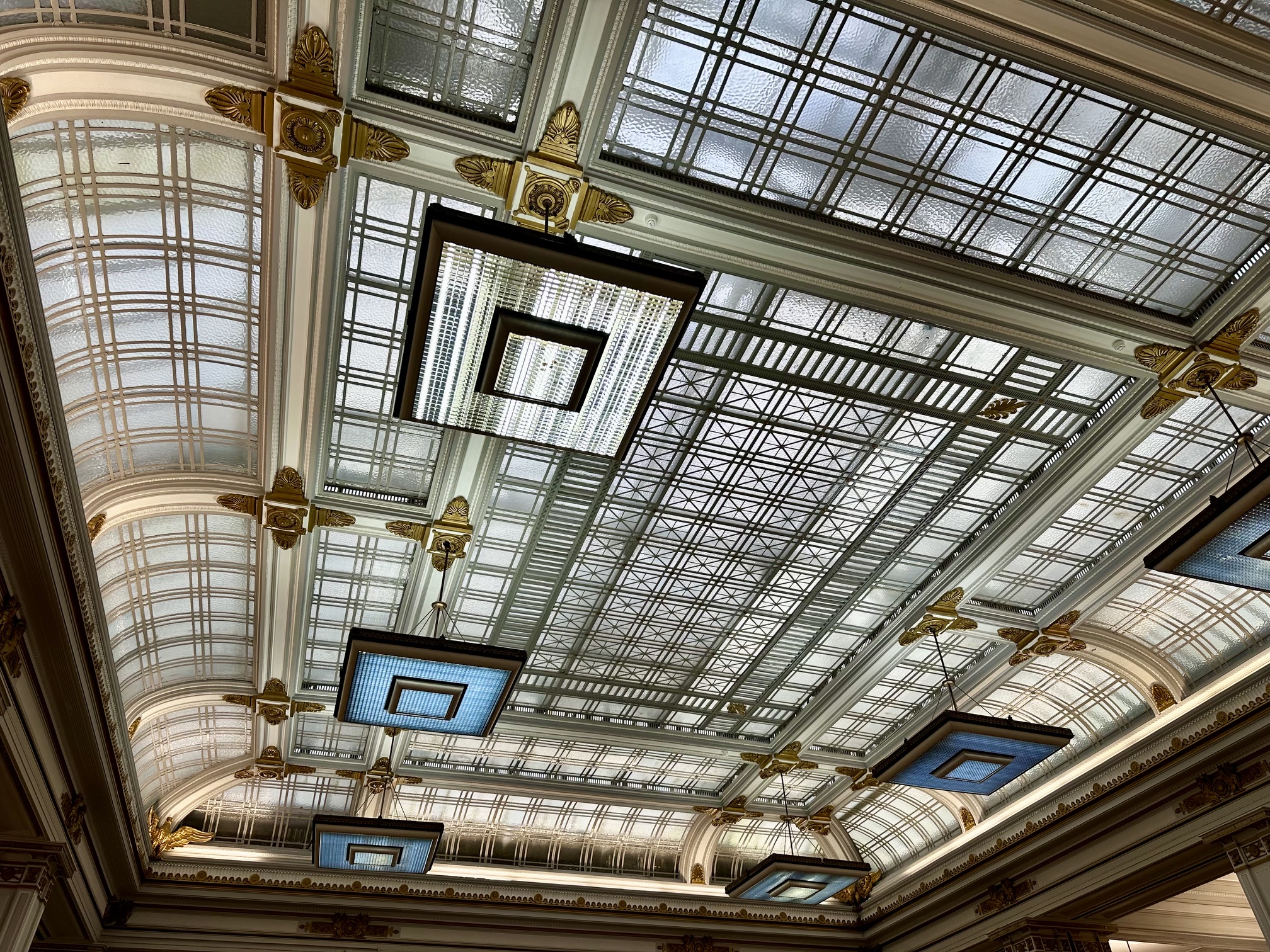
He began in the Arrivals Hall, an opulent room intended to give passengers their first impression of Cunard.
Construction of the building began in 1914, and its unusual footprint was partly determined by the narrow space remaining between its two already-completed neighbours. Its external walls taper as they approach the river, giving the building a shape that has often been compared to the bow of a ship.
Whether that resemblance was part of the architects’ original intention or a useful story created afterwards, Adam treated with suitable scepticism.
The architects, William Edward Willink and Philip Coldwell Thicknesse, drew upon Italian Renaissance forms, but the building also looks westwards. American architectural influences appear throughout the Arrivals Hall, including golden eagles positioned high above the room.
The message was clear. The journey didn't begin when a passenger reached the ship. It began when they walked through the doors of the Cunard Building.
“Your holiday or your emigration and new life starts from the moment that you arrive," Adam told us.
But while every passenger entered through the same hall, they didn'tt encounter the same building. The price of a ticket determined not only the cabin occupied at sea, but the route taken through Cunard’s headquarters before embarkation.
For the wealthiest first-class passengers, luggage could be taken away by staff before they travelled in a private lift to the sixth floor. There, champagne, caviar and live music were provided while they waited to board at their leisure.
Lower first-class and second-class travellers remained closer to ground level. They still had access to a comfortable passenger lounge, along with food and drink, although Adam suggested that the refreshments might have been closer to beer and sandwiches than champagne and caviar.
They might also be offered an upgrade. Cunard, unsurprisingly, had developed mechanisms to ensure that a passenger without sufficient cash immediately to hand could contact a banker and arrange payment.
Then there was Third Class. Or Steerage, as many people continued to call it.
By the time the Cunard Building opened, conditions aboard ships had improved from the mass dormitory arrangements associated with earlier steerage travel. Third-class passengers might share a cabin with several others, rather than sleeping in a vast open compartment.
The terminology had changed partly because shipping companies wanted potential customers to recognise that improvement. But the hierarchy remained unmistakeable.
Third-class travellers entered through the same magnificent Arrivals Hall. For some, Adam suggested, it might have been the grandest interior they'd ever seen.
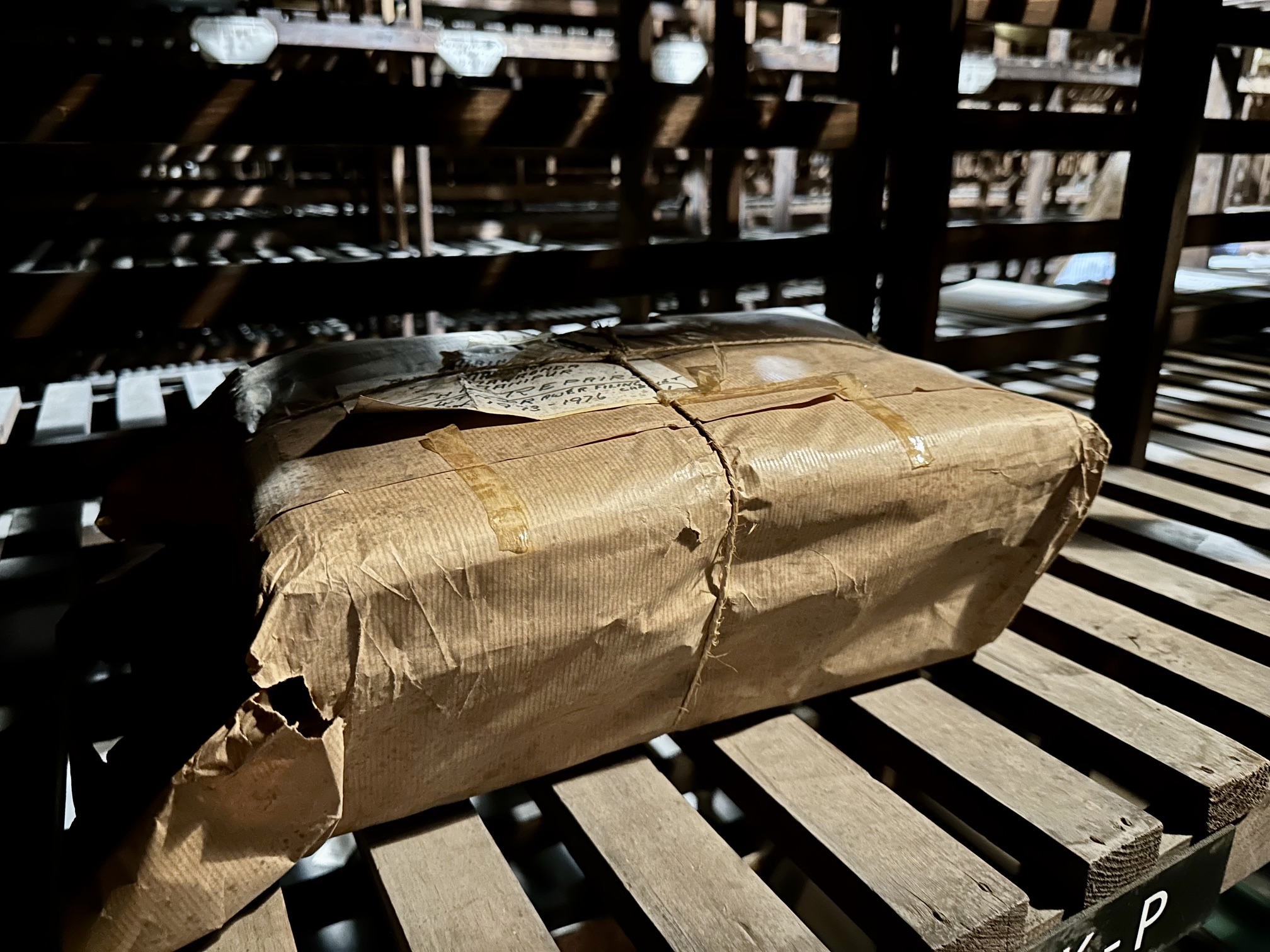
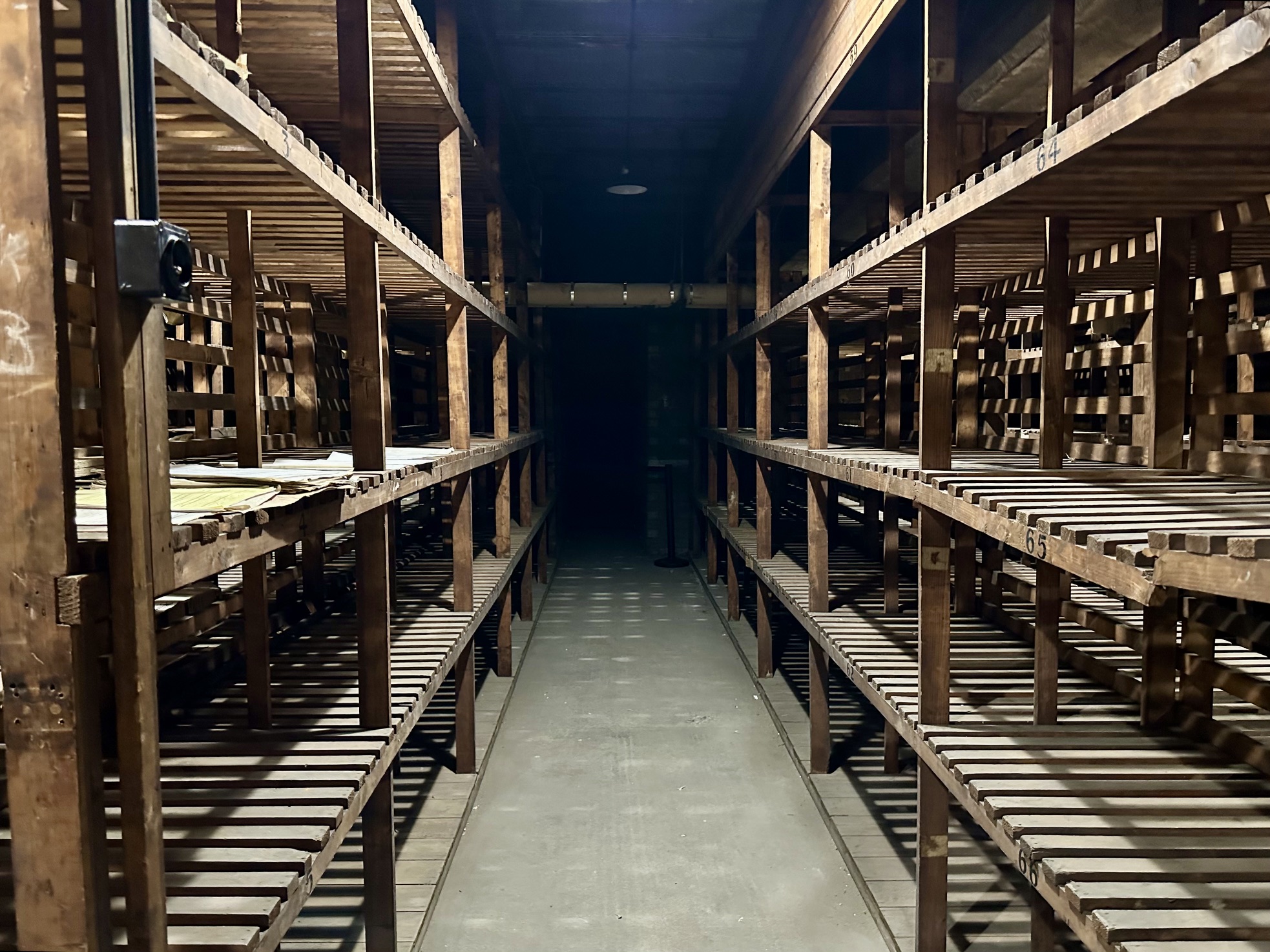
Unlike the wealthier passengers, they didn't have their luggage taken from them. They were directed towards the stairs and into the basement, carrying the heavy trunks that might contain everything they intended to bring into a new life.
There, they waited until they were told that they could return upstairs and proceed towards the ship.
The class system we know so well, was built vertically into the structure. The wealthiest travelled upwards, towards music and champagne.
The poorest went down.
“Herded” was the verb [past tense and past participle] that came to me as we stood below ground.
It remains my word, rather than one used by Alan or Adam, and it might be too blunt for a system that combined bureaucracy, commerce, public-health regulation and the practical demands of moving large numbers of people.
But the more precise truth is not necessarily less uncomfortable.
Passengers were separated according to wealth. Those who had the least were sent below ground and instructed to wait. They retained responsibility for cumbersome luggage which might have contained most of what they owned.
Afterwards, they climbed the same stairs again with those trunks in their hands. Our guide suggested that excitement and anticipation for a new life overseas was most likely the over-riding emotions of these passengers. I'm not sure.
Today, luggage is engineered to glide through airports on wheels. These travellers carried wooden chests, cases and boxes constructed before lightness became a selling point. To stand in that basement is to feel the distance between the language of the shipping industry and the physical experience of migration.
A booking became a person waiting underground. A ticket class became an instruction about where to stand.
An emigrant became a body, a family, a trunk and a collection of documents moving through a commercial system towards an uncertain future.
Liverpool was one of the world’s great ports of emigration. By the middle of the nineteenth century, it had become Europe’s leading departure point for people travelling to North America. In 1851 alone, nearly 160,000
passengers sailed from Liverpool for the United States and Canada. Across the longer period between the 1820s and the First World War, millions left Britain, Ireland and continental Europe through the city.
Cunard was only one company within a much larger industry, and the Cunard Building itself opened after the peak of some of the great nineteenth-century migrations. We shouldn't force one building to carry the whole history of Atlantic movement. But it remains a compelling monument to the machinery of departure.
Railways brought people into Liverpool from industrial towns, ports and rural communities. Others crossed Britain after arriving from Scandinavia, Germany, Eastern Europe and the Russian Empire.
Some had money, contacts and carefully prepared plans. Some were seeking much-needed work or opportunity. Others were escaping hunger, eviction, persecution, political repression or the collapse of any credible future at home. Migration has never been a single experience.
It would be historically careless to describe every person who left Liverpool as a refugee. It would be equally careless to present all of them as carefree adventurers exercising an entirely voluntary choice. Movement exists on a spectrum between freedom and compulsion.
Those who fled Ireland during and after the Great Famine weren't generally placed aboard ships at gunpoint. But to describe their migration as simply voluntary is to ignore starvation, disease, dispossession and the political failure that surrounded them.
Jewish families escaping pogroms and antisemitic persecution in the Russian Empire appeared in shipping records as emigrants. Many were also moving because remaining at home had become dangerous or impossible.
Working-class people from British towns might have made a formal decision to leave. But a choice between entrenched poverty at home and uncertainty overseas wasn't equivalent to the choice made by a wealthy tourist or investor.
There were also people whose departures were more explicitly forced: transported prisoners, expelled communities and children sent across oceans through schemes over which they possessed little meaningful control.
The categories overlap.
A person might be an emigrant to the country they leave, an immigrant to the country they enter and, depending upon the circumstances, a refugee in law or reality.
The moral quality of their movement can't be determined by a passenger list alone. And yet the language we now use for those historical travellers has softened.
We call them pioneers.
Settlers.
Ancestors.
People who sought a better life.
Their journeys appear in television histories and family trees. Their tickets and documents are preserved in archives. Their hardships become foundational stories of courage, endurance and reinvention.
We know how many of those stories continued. Families were established. Neighbourhoods grew. Businesses opened. Trade unions, churches, synagogues and cultural institutions were built. People who might initially have been regarded with fear or suspicion became inseparable from the national stories of the countries in which they settled.
History's restored their names and granted them individuality. That's a generosity we often withhold from those moving now, isn't it?
The temptation to draw a direct line between Liverpool’s emigrant ships and the small boats crossing the English Channel should be resisted. They're not equivalent journeys.
A transatlantic liner operated by a commercial shipping company isn't an overcrowded inflatable launched by smugglers. Britain in the nineteenth century was primarily a country of outward migration, while modern Britain is a wealthy destination state with an established asylum system.
The legal frameworks, routes, risks and global circumstances are very different.
Nor is every person arriving by small boat necessarily entitled to remain in the United Kingdom. That's why asylum claims must be considered individually and fairly.
But refusing a simplistic equivalence doesn't require us to ignore the moral echo. Since 2018, 95% of people arriving in Britain by small boat have claimed asylum.
Of those whose claims had received a substantive decision by March this year, almost 80,000 had been granted asylum or another form of protection. More than 53,000 had been refused. Those figures don't support the claim that everyone arriving is a refugee. Neither do they support the claim that none of them are.
In the year to March 2026, the five most common nationalities among small-boat arrivals were Eritrean, Afghan, Sudanese, Iranian and Somali.
These aren't countries appearing accidentally in the statistics. They're states marked, in differing ways, by war, repression, political violence, forced conscription, persecution, instability - and often the foreign policy of other nations.
Some claims will fail because the applicant doesn't meet the legal test for protection. Others will be accepted because the British state concludes that returning the person would place them at risk.
Until that decision is made, the phrase “illegal immigrant” tells us very little about who somebody is, what they've experienced or what the law will eventually determine.
The small boats themselves have become powerful political symbols. “Stop the Boats” compresses a vast tangle of human experience, international law, organised crime, border control and administrative failure into three words. It's got the force of a simple instruction.
Boats are objects. They can be stopped, intercepted, seized or destroyed. People are more complicated.
People have names and parents. They leave children behind. They receive threats. They flee military service, imprisonment and violence. They travel through countries in which they might have no secure legal status, no family connection and no durable future.
Reducing them to the vessel in which they arrive makes it easier not to encounter them as human beings.
Tomorrow, voters in Makerfield will take part in one of the most closely watched parliamentary by-election of recent years.
Reform UK’s campaign is seeking to harness anger about immigration, asylum and a wider sense that the political system's failed working-class communities.
That anger shouldn't simply be dismissed. People are entitled to expect borders to be managed. They're entitled to demand decisions that are fair and made quickly. They're entitled to question an asylum system in which people can spend months or years in temporary accommodation while their cases remain unresolved.
Communities struggling with insecure work, unaffordable housing, fragile public services and local government cuts don't require lectures about why they should feel fortunate. But serious politics has to distinguish between explaining a problem and identifying a convenient group upon whom to place the blame.
But Britain’s housing shortage wasn't created by a Sudanese family crossing the Channel.
The fragility of the National Health Service can't be traced to an Afghan teenager in a dinghy.
We all know the decline of high streets, the loss of secure industrial employment and the impoverishment of councils across the North have histories extending far beyond the arrival of refugees.
Migration affects services and communities. It requires planning, resources and honest democratic discussion.
But when every structural failure is repackaged as a consequence of immigration, the people with the least power become responsible for decisions made by those with the most.
Liverpool’s history makes that displacement of blame particularly difficult to sustain.
This is a city formed by movement. People have departed from here in their millions. Others arrived from Ireland, Wales, Africa, the Caribbean, China, continental Europe and far beyond.
Seafarers passed through Liverpool and settled. Refugees established communities. Workers travelled to the docks from across Britain and the world.
The city was enriched by those movements, although not without conflict, exploitation or prejudice.
Liverpool was also shaped by empire and slavery. Its wealth was connected to systems that moved commodities and people across oceans, often through violence and coercion.
That history isn't an accusation levelled at the Liverpool of today. It's part of the truth from which the city’s contemporary character emerged.
This is why Alan Smith’s work is essential. Heritage can be used to create a pleasing distance between ourselves and the past.
We restore a building, admire the craftsmanship and tell stories about famous visitors. The difficult parts become footnotes, or are presented as regrettable attitudes belonging to people reassuringly unlike us.
But good heritage work does something else. It opens the evidence.
The safes, ticket booths, lifts, corridors, luggage racks and basement rooms of the Cunard Building reveal how class and global migration were translated into architecture and administration.
The building didn't merely witness inequality. It organised people through it.
None of this requires us to regard Cunard as uniquely malign. The company was part of a commercial and social world structured by profound divisions of wealth and status. It also connected continents, supported thousands of livelihoods and created ships whose engineering and cultural significance deserve recognition.
Liverpool doesn't need to choose between celebrating Cunard and examining the world in which it operated.
It can take pride in the ships, architecture, workforce and international connections while asking who travelled comfortably, who travelled below decks and how those distinctions were enforced.
I don't feel that's hostility towards heritage. It's faith in its importance.
Alan Smith's decision to open these subterranean spaces reflects a confidence that the public can cope with complexity.
As visitors we can admire the Arrivals Hall and understand the basement. We can celebrate Queen Anne and think about steerage passengers.
We can enjoy the romance of ocean travel without pretending that everybody experienced it romantically. Pride and honesty aren't adversaries.
The greatest threat to heritage isn't scrutiny. It's probably irrelevance.
Buildings remain alive when they help us think about the present. Ships become heritage. People become ancestors.
Queen Anne’s arrival on the Mersey today will make a magnificent sight. That red-and-black funnel connects the newest member of Cunard’s fleet with vessels whose names remain part of Liverpool’s collective memory. Families, maritime enthusiasts and visitors will look towards the water and take photographs.
And there's absolutely nothing wrong with that romance. Ships can be beautiful - and departures can be hopeful. The history of ocean travel contains extraordinary stories of engineering, skill, labour, ambition and connection.
But beneath the celebration is another Liverpool story. It's the story of people standing in rooms like those below the Cunard Building, holding tickets and documents and carrying whatever possessions they could take.
They waited for officials to examine them. They waited to be told where they could go.
Beyond the building was a ship. Beyond the ship was an unknown country in which they hoping to work, survive and begin again.
We now look back upon many of them with admiration. We search for their names in archives. We reconstruct their journeys. We describe their determination and courage. What might once have been perceived as a threatening movement of poor and unfamiliar people has become a cherished history of family, settlement and national renewal.
The question raised by the basement for me is whether we can recognise courage only after a century has passed.
Perhaps, in another hundred years, descendants will tell stories about a parent or grandparent who crossed a sea in an unsafe boat because every safe route appeared closed. Maybe they'll preserve a photograph, a message sent from a camp, or a document issued after asylum was finally granted.
Perhaps they'll speak of the fear of arrival, the scrutiny of officials and the hostilityof politicians and newspapers. That journey might become the honoured beginning of another family history.
Not every historical emigrant was a refugee. Not every present-day asylum claimant will be granted protection.
The comparison is imperfect, and has to remain so. But both histories concern human beings moving because the place behind them has become unbearable, or because the place ahead still contains the possibility of life.
A city whose greatness was built on movement is likely to be particularly wary of a politics that teaches us to fear people simply because they have arrived.
The Cunard Building deserves to be celebrated. So does the care, energy and imagination now being invested in Liverpool’s heritage. Alan Smith’s determination to make historic places meaningful across the whole city is important. Adam’s ability to turn a series of surviving rooms into a vivid story of class, commerce and human movement demonstrates exactly why access is important.
Queen Anne deserves her welcome on the Mersey. Liverpool deserves to take pride in its extraordinary relationship with the sea. But perhaps the best expression of that pride isn't to make the story simpler. It's to open the doors wider.
Walk through the Arrivals Hall. Admire the marble, the eagles and the intricate ceiling. Look out towards the river and the great ship beyond it.
Then follow Adam downstairs. That's where the heritage becomes truly human.
.jpg)
Cunard Building Heritage Tours can be booked HERE
Fact-checking and source basis
The Cunard Building is Grade II* listed. Historic England’s official record describes its special architectural and historic interest, while the University of Liverpool’s Cunard Archive confirms that the company’s headquarters remained in Liverpool until 1967.
National Museums Liverpool identifies Liverpool as Europe’s leading emigration port by 1851 and records 159,840 departures to North America in that year.
The most recent Home Office release states that 95 per cent of small-boat arrivals since 2018 claimed asylum. Of the 132,894 people who had received substantive decisions by the end of March 2026, 79,589 had received asylum or another protection status and 53,305 had been refused.
There were approximately 39,000 small-boat arrivals in the year ending March 2026. The five largest nationality groups were Eritrean, Afghan, Sudanese, Iranian and Somali.
Small-boat arrivals represented 42% of UK asylum claims in the year ending March 2026, meaning most asylum applicants didn't arrive by that route.
The Makerfield by-election takes place tomorrow, Thursday 18 June 2026. Reform UK’s Robert Kenyon is contesting the seat against Labour’s Andy Burnham and twelve other candidates.
Header image: The Cunard Building on Liverpool's Pierhead (MagNorth)





