



There's probably an old mobile phone somewhere in your house.
It may be in the kitchen drawer with the expired batteries, instruction manuals and charging cables for objects nobody can quite remember owning. Perhaps its screen is cracked. Perhaps it's not been switched on for a decade. It's ceased to be a telephone and become one of those small, faintly accusing possessions we know shouldn't simply be thrown into the bin. Yet the phone isn't worthless.
Inside it are tiny quantities of metals that have become essential to the way modern countries like ours function. They sit inside smartphones and computers, electric vehicles and wind turbines, medical equipment, defence systems, data centres and the electricity networks which almost everything else increasingly depends.
Some are very challenging to extract. Many are processed thousands of miles from the places in which they'll eventually be used. Their supply chains can be geographically concentrated, politically exposed and vulnerable to disruption. They're known collectively as critical minerals.
And on Teesside, a small number of scientists, engineers and young companies are asking a deceptively straight-forward question: What if Britain’s next mines aren't entirely beneath the ground?
What if some of the materials the country urgently needs are already here - inside our discarded electronics, industrial residues and waste streams - waiting to be recovered?
That possibility has been placed at the centre of a Government announcement at the Wilton Centre on Monday 22 June, when Industry Minister and Stockton North MP Chris McDonald launched a new £50 million programme intended to accelerate critical-mineral extraction, processing and recycling across the UK.
The money forms part of the Government’s Vision 2035 Critical Minerals Strategy, a ten-year attempt to make Britain less vulnerable to global shortages and excessive dependence on a small number of overseas suppliers.
By 2035, the Government wants at least 10% of annual UK critical-mineral demand to be met through domestic production and 20% through recycling. It also wants no more than 60% of any one critical mineral to come from a single country.
These are questions of economic security, certainly. But they're also questions about place. Why was the programme launched on Teesside rather than in Whitehall? Why are experimental recovery and recycling facilities being built at Wilton?
And could the industrial knowledge accumulated across the North East become the foundation of an industry that does more than borrow the language of regeneration?
The term “critical mineral” can sound calculated to make most readers look away.
It suggests a world of geological surveys, metallurgical laboratories and industrial procurement - subjects which may appear distant from ordinary life until the materials involved become unavailable.
But critical doesn't necessarily mean rare. A material may be considered critical because it's economically important, because there are few substitutes for it, or because its production and processing are concentrated in countries or companies over which Britain has limited influence.
The list includes materials used in batteries, semiconductors, permanent magnets, aerospace components, electronics and low-carbon technologies.
Britain doesn't need to become entirely self-sufficient in all of them. (We couldn't.) Even the Government’s strategy accepts that resilient international partnerships will remain essential.
But the concern is concentration. A factory may have customers, skilled employees and full order books, but it can't continue producing indefinitely if a necessary material stops arriving. A national transition to electric transport and renewable energy can't be separated from the origin, processing and availability of the metals those technologies need.
This is one of the less comfortable truths of the green economy. Wind turbines, batteries, electric vehicles and modern grids may reduce dependence on fossil fuels, but they don't release industrial societies from their dependence on physical resources. They change the resources that matter.
The clean-energy transition is also a materials transition. And while the extraction of coal and oil shaped the geopolitical struggles of the last century, access to lithium, nickel, cobalt, graphite, copper, rare earth elements and other strategically important materials is increasingly shaping this one.
The Government describes a secure supply as vital to economic growth, national security and its wider Industrial Strategy. Its new funding programme is going to be divided between three areas.
A £20 million Magnet Hub is intended to establish a national facility for the development, testing and scaling of rare-earth magnet manufacturing, together with the necessary skills and training.
A £25 million Critical Minerals Accelerator will support collaborative projects involving extraction, processing and recycling.
And up to £5 million will establish a Demand Aggregation Platform, through which British industries can pool information about the materials they expect to require, strengthen their purchasing position and potentially make investment in new supply chains more commercially attractive.
It's a serious intervention. But £50 million spread across an entire national sector isn't, by itself, an industrial revolution. It's development money: intended to prove technologies, reduce commercial risk and help businesses move from laboratories and pilot schemes towards viable production.
The more important question is what follows.
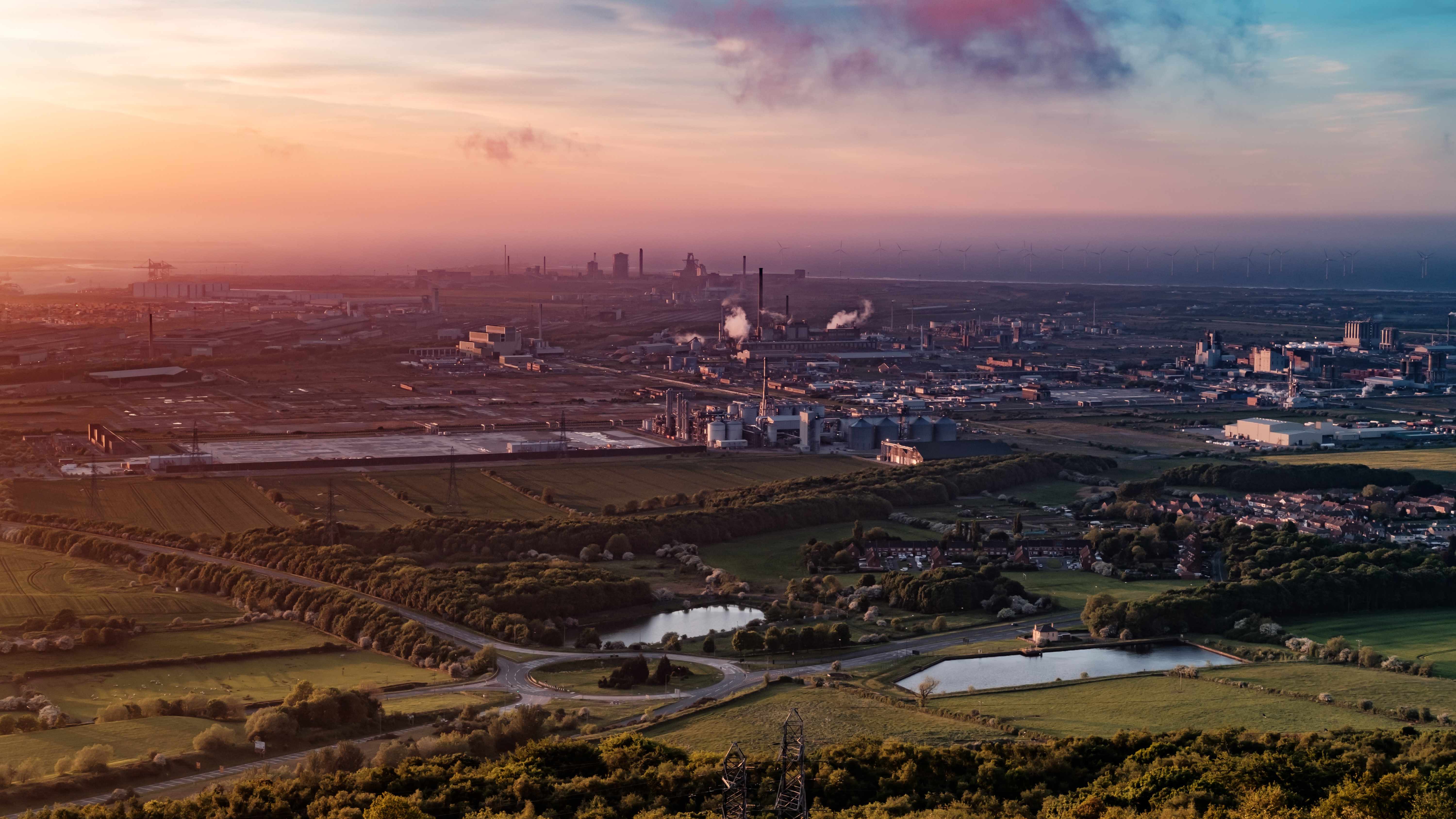
The Wilton Centre stands within one of the most significant concentrations of process-industry knowledge in the country.
It's a place shaped by chemicals, engineering, manufacturing and applied science - by the infrastructure and working culture of an industrial North East that has been in danger of being written about as though industry here belongs only to the past.
Today, Wilton is home to laboratories, technical facilities and businesses working in biotechnology, materials, energy and industrial decarbonisation. Among them are DEScycle and Seloxium, two companies approaching the critical-minerals problem from different directions.
DEScycle is constructing what it describes as a world-first demonstration facility for the recovery of metals from electronic waste.
The company is developing modular processing systems that can be located nearer to the places where discarded materials arise. Rather than shipping electronic waste across long distances to enormous centralised plants - or overseas - its ambition is to establish smaller facilities capable of recovering valuable metals closer to source. It calls this urban mining.
The phrase is both useful and deliberately provocative.
I still think of mining as digging into landscapes to access material created by geological processes over millions of years. Urban mining starts from the recognition that modern towns, industries, buildings, warehouses and homes already contain enormous stocks of refined metal. Much of it's locked inside equipment that has reached the end of its first useful life.
Circuit boards, telecommunications hardware, servers and consumer electronics can contain copper, gold, silver, palladium and other economically valuable materials. Once the product becomes obsolete, those materials don't cease to exist. They simply become harder to see.
DEScycle has leased 15,000 square feet at Wilton for its demonstration work. Its modular approach is intended to allow metals to be recovered nearer to recyclers, data centres and other sources of electronic equipment, reducing the reliance on large, distant processing operations.
Construction of the Teesside plant is now approaching completion, with key equipment installed ahead of commissioning and launch targeted for the second half of 2026.
The company has also agreed a trial involving retired Cisco networking equipment. Scrap circuit boards will be processed at Teesside to assess recovery performance and gather technical and economic evidence about whether smaller-scale recycling can provide a commercially viable supply of recovered metals.
Fred White, DEScycle’s co-founder and chief commercial officer, described the facility as an attempt to transform electronic waste into “a sovereign form of urban mining”.
It suggests that recovering metal isn't simply a matter of responsible waste management. It's about retaining resources, processing capacity and industrial value within the country rather than allowing all three to drain away.
Seloxium, also based at Wilton, is working on the selective recovery of metals from industrial liquids and waste.
The company emerged from research at the University of Oxford and has developed chemical processes designed to identify and separate particular metals from complex mixtures.
Those mixtures may include mine water, industrial effluent, refining residues and other waste streams in which useful metals exist alongside unwanted or potentially harmful material. While the traditional approach to such waste may be to treat it primarily as a disposal problem, Seloxium’s proposition is that it can also be considered a resource.
In 2025 the company raised £6 million to accelerate commercialisation of its metal-purification technology. While its research base remains in Oxford, its Teesside operation has been developed to scale the process towards commercial use.
It's since expanded its space at Wilton, while a supported scale-up project has examined the processing of materials including mine waste, ionic clays and volcanic deposits as possible new routes into critical-material supply chains.
Together, these companies offer a glimpse of what the circular economy looks like once it moves beyond conference language: It looks like pipes, vessels and specialist equipment. It requires laboratories and environmental permits, chemists and process engineers, waste contracts, investors and customers.
It involves commissioning facilities that may work beautifully at experimental scale but must still demonstrate that they can operate reliably, safely and economically in the industrial world. Circularity isn't achieved by drawing an arrow around a diagram. Somebody has to build the machinery.
Governments haven't always struggled to recognise the value of the North’s physical resources. For generations, coal, iron, chemicals, steel, ships and labour flowed from our northern communities into the wider British economy.
What governments have struggled with is ensuring that the places from which national wealth is extracted retain a fair share of its lasting benefits. The launch at Wilton therefore carries historical weight.
Teesside’s attraction isn't only that industrial land happens to be available. It possesses technical infrastructure, chemical-processing expertise, research capability and a workforce formed around industries in which materials must be handled accurately, safely and at scale. That inheritance can't be recreated quickly.
The decline or closure of a large industrial employer is usually measured through the immediate loss of jobs. Less visible is the gradual dispersal of knowledge: experienced operators retiring, supply-chain businesses disappearing and specialist skills ceasing to pass between generations. The presence of businesses such as DEScycle and Seloxium provides proof that Teesside’s industrial inheritance remains active - and is capable of adaptation.
Yet this is where familiar northern caution should enter the story. Over many decades, communities across the North have heard that a new industry will replace the old one. Regeneration schemes have arrived with artists’ impressions, ministerial visits and impressive estimates of jobs that might eventually be created. It's true that some have produced genuine transformation.
Others have created a brief burst of construction work, moved crucial decisions elsewhere or generated benefits too narrow and distant to alter the lives of surrounding communities. The test of this new critical-minerals economy can't simply be whether companies occupy laboratories on Teesside.
It has to be whether the region develops and retains the valuable parts of the industry: knowledge, intellectual property, processing capacity, skilled employment, ownership and influence over future investment.
In other words, will Teesside merely host the equipment? Or is it going to help shape the sector?
Industry Minister Chris McDonald says the funding will enable companies to increase domestic production, create employment and strengthen supply chains.
As the MP for Stockton North, he has a closer relationship with Teesside’s industrial hopes and disappointments than many ministers arriving from London for a launch photograph. “Critical minerals are vital for our national security,” he said, “and this targeted funding will support companies in ramping up domestic production, helping to create new jobs and opportunities in local communities, whilst building more resilient supply chains.”
We must take that ambition seriously, but it also deserves to be measured.
The announcement doesn't yet tell communities how much of the £50 million will be directly invested in the North East. Nor does it establish how many permanent jobs will result, what those jobs will pay, who'll be trained to do them, or how local and regional businesses will participate in the emerging supply chain.
Even the phrase “high-value jobs” requires examination. Does value refer to salaries? Productivity? Specialist qualifications? Shareholder returns? Or the value a secure, long-term position can bring to a household and community?
The distinction has to be clear, because public funding is being used to absorb some of the risk involved in bringing these technologies to market. That's not inherently objectionable. New industrial processes are obviously expensive to prove, and private finance alone frequently avoids technologies until the greatest uncertainty has been removed.
But if public money helps create a successful strategic industry, the public should expect more than the possibility that a handful of promising businesses will later be acquired, relocated or stripped of the expertise developed through that support. The return has to include domestic capacity. It must include training and apprenticeships. And it should include environmental transparency and secure work.
It should also include a clearer relationship between innovation taking place inside specialist campuses and the communities living outside their gates.
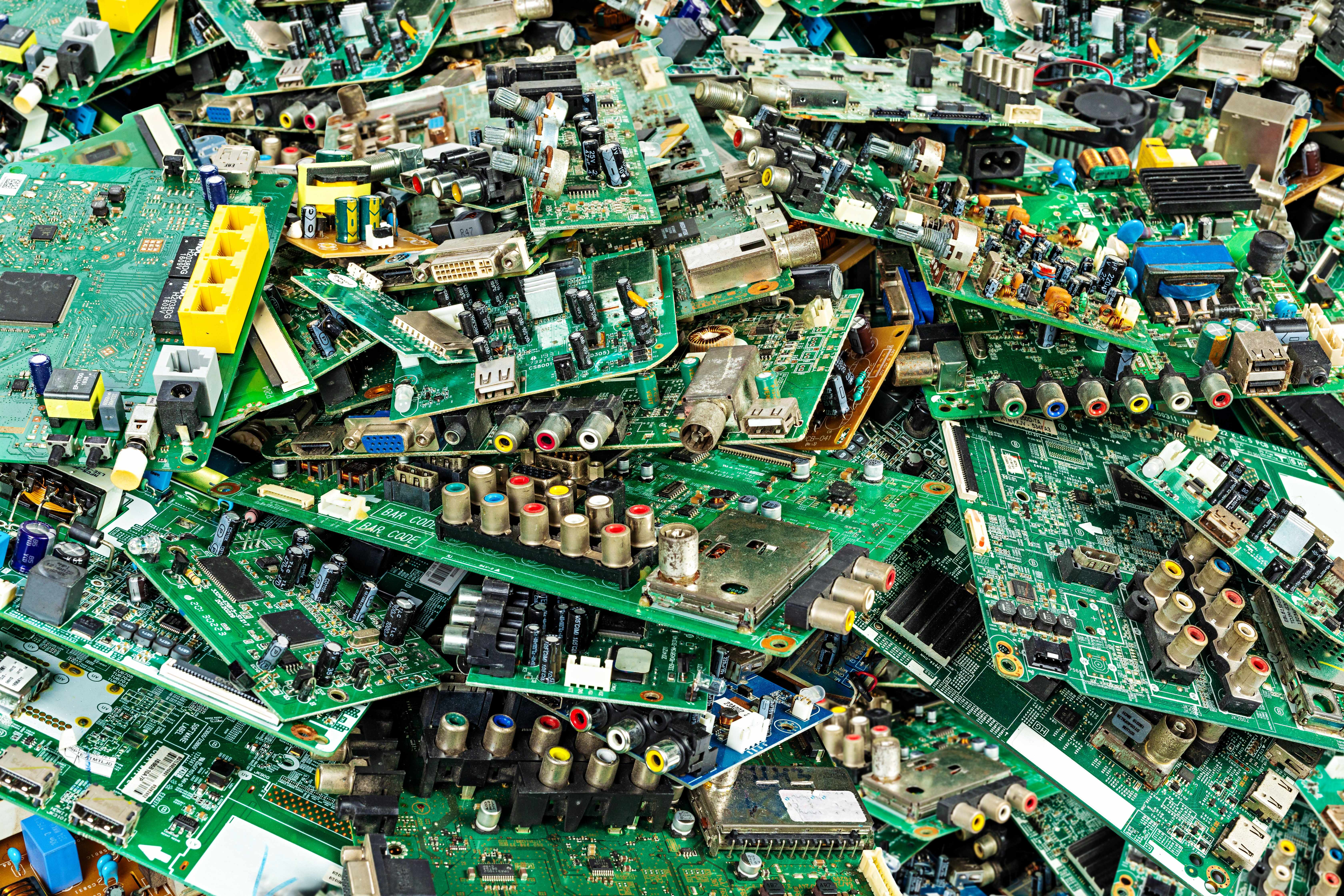
There's a temptation to present the recovery of metals from waste as an uncomplicated environmental good. Compared with opening new mines, urban mining has an obvious appeal. The material's already been extracted from the earth, transported, refined and incorporated into products. Recovering it can reduce waste and potentially decrease the pressure for additional primary extraction.
It may also shorten supply chains and prevent valuable resources being exported or disposed of at lower value. But recycling isn't impact-free.
Electronic and industrial wastes can contain hazardous substances. Separating metals may require heat, energy, solvents or other chemical processes. Recovery rates vary. Not every material can be extracted economically, and some products were never designed to be easily dismantled.
The environmental case must therefore be demonstrated rather than assumed. How much energy does each process use? What chemicals are involved? What waste is left once the target metal's been removed? Can those residues be treated safely? And does the resulting metal genuinely displace newly mined material, or does it enter a rapidly expanding global market in which both recycled and primary production continue to grow?
These questions don't undermine the technology, but they're necessary if the technology is to deserve the description sustainable. The same scrutiny has to apply to new domestic extraction.
Britain’s critical-minerals strategy includes mining as well as recovery, processing and recycling. That may create opportunities in parts of the UK with known mineral deposits. It may also generate conflict over landscapes, water, energy use and consent.
In the North we know better than most regions that the national importance of a resource can be used to minimise the local consequences of obtaining it.
The coalfield communities of Durham, Northumberland and Yorkshire powered industrial growth, but also lived with dangerous work, polluted land and an economy made dangerously dependent upon decisions taken elsewhere. The new industrial economy shouldn't repeat that arrangement just with cleaner branding.
This is where the critical-minerals announcement intersects with a much wider argument taking place across northern communities. The transition to a low-carbon economy is often presented as something that will happen to places: new infrastructure will be constructed, technologies introduced and labour markets reshaped.
But a just transition requires communities to have more than employment at the end of somebody else’s strategy. They need a meaningful role in determining what's built, who owns it and how its benefits will be distributed. That's not opposing technological development or refusing industrial change.
The North East has many of the attributes needed to lead parts of this new economy: universities, ports, energy infrastructure, manufacturing knowledge, chemical expertise and a deep cultural familiarity with industrial work. But leadership is different from hosting.
A region can't be said to lead an industry just because facilities are placed on its land. Leadership means carrying out the research, training the workforce, manufacturing the equipment, retaining successful businesses and ensuring that local institutions and communities have a stake in what grows. The possibility emerging at Wilton is therefore bigger than two processing facilities.
It raises the prospect of a cluster in which waste companies, technology manufacturers, universities, chemical businesses and metal users begin operating within a shared regional system.
Recovered material might move into manufacturing rather than leaving the country. Equipment used in the recovery process might itself be designed and produced here. Technicians could develop transferable expertise. Colleges could create courses around actual employment. Local businesses could form part of the supply chain. Isn't that how an industrial ecosystem is made?
It can't be conjured into existence by a press release. But neither is it an impossible ambition.
Critical minerals remain largely invisible until something interrupts their supply. We see the finished car, not the international chain of mines, processors, refineries, component manufacturers and freight routes behind it.
We hold a phone without thinking about the geological and political history contained within our hand. Then, when that object breaks or is replaced, we call it waste.
Britain's become remarkably efficient at separating consumption from consequence. Products arrive; obsolete objects disappear. The extraction at one end and disposal at the other generally happen out of our line of sight.
Urban mining makes part of that hidden system visible again - and reminds us that waste isn't an inevitable category. It's often a failure of design, infrastructure or imagination.
The old phone in the drawer is still a manufactured concentration of materials for which somebody once disturbed land, used energy and undertook considerable industrial effort.
Throwing those materials away, or exporting them without recovering their full value, isn't merely environmentally careless. At a moment of growing international instability, it's strategically foolish.
Something important is being attempted at Wilton.
On a site interwoven with the North East’s long relationship with chemistry and heavy industry, researchers and businesses are trying to recover value from the remains of our modern consumption.
They're asking whether the things Britain discards can help supply the things it intends to build. And they're offering Teesside the possibility of participating in a strategic industry before it becomes fully formed.
We've been here before, of course: indispensable to a national industrial ambition, promised prosperity in return.
But that history shouldn't make us cynical about every new development. It should make us exacting.
The measure of success won't be the number of ministerial announcements made at Wilton, nor the amount of investment described as “turbocharging” growth. It'll be whether functioning plants follow the pilot facilities. And whether good jobs follow the grants. Whether knowledge and ownership remain rooted in the region. Whether waste is genuinely reduced instead of just being reclassified. And whether the communities that helped build Britain’s old industrial economy are allowed to own a meaningful part of the next one.
Somewhere in a Teesside lab, a circuit board's being treated not as rubbish, but as a source of metals Britain believes it can no longer afford to lose. That's science - and it may just become industry. The political task is to ensure it also becomes regional wealth.





