



Some gigs arrive as entertainment. Others carry a slightly different charge into the room before a note has even been played.
Last night’s Nightmares on Wax show at Howard Assembly Room in Leeds was definetely the latter.
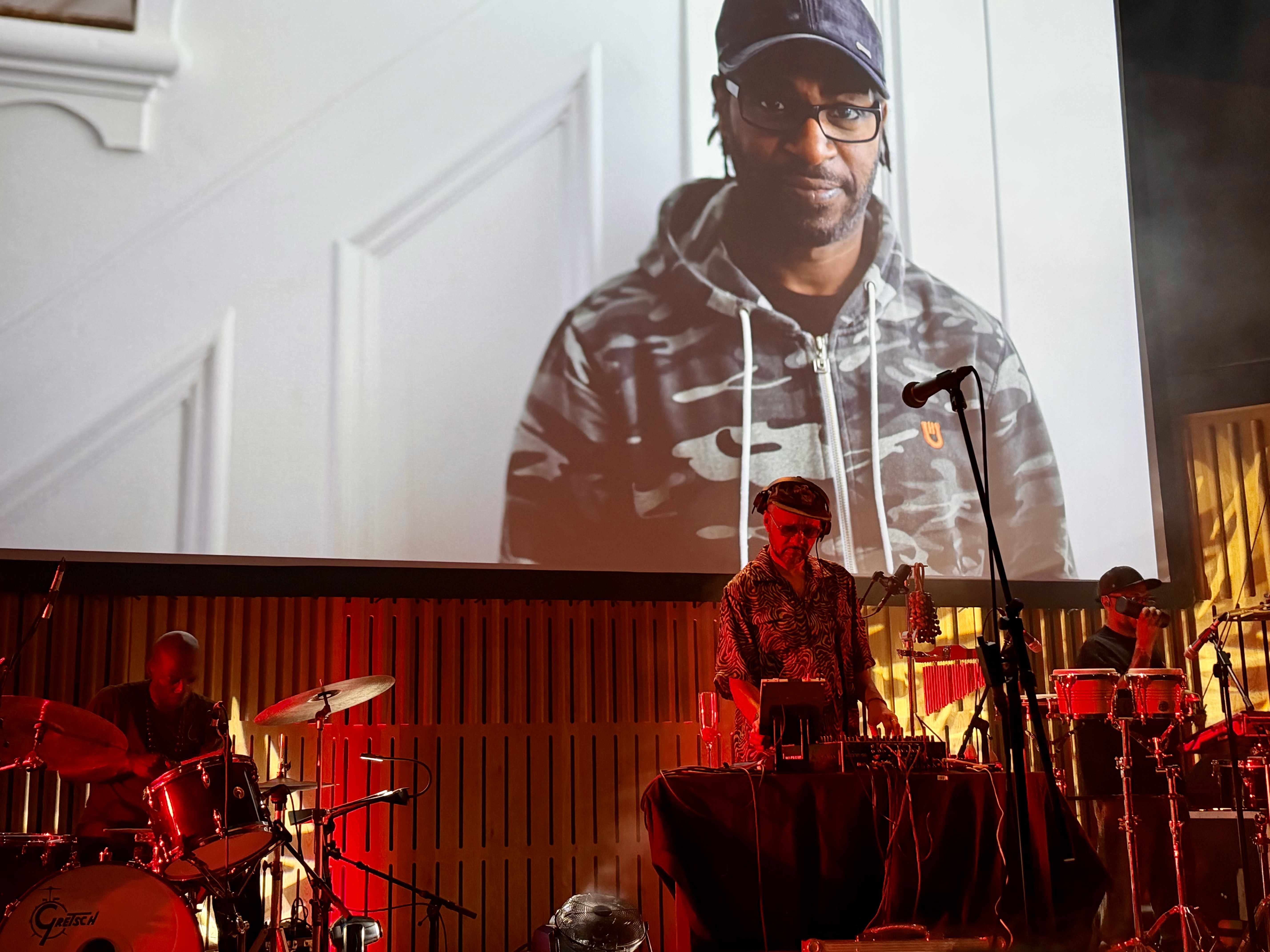
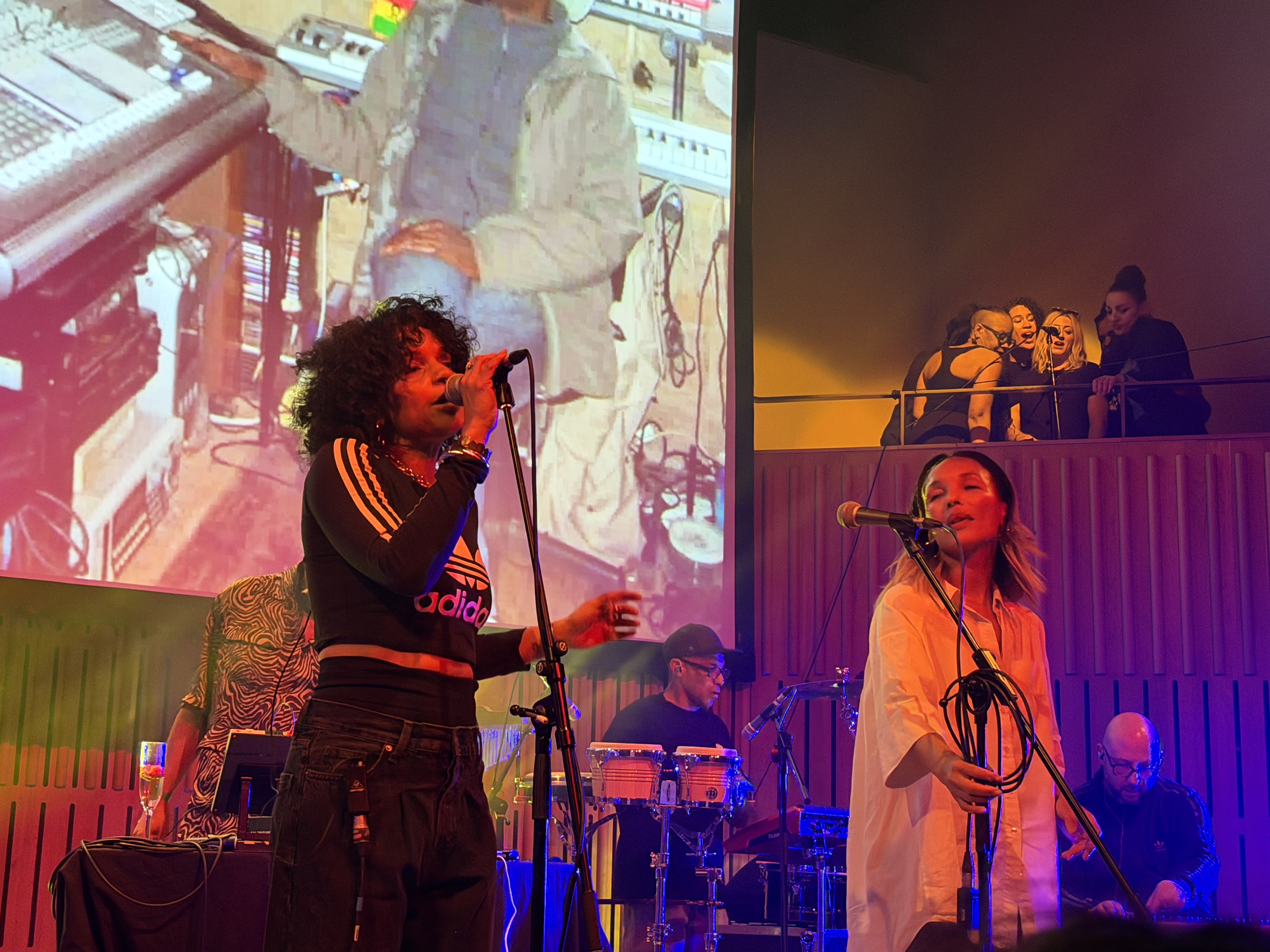
Officially, this was DJ E.A.S.E With The Original Nightmares On Wax Band, a special evening honouring the life and music of Chris Dawkins, the much-loved session player and original member of Nightmares on Wax, who died in May 2025. The event brought DJ E.A.S.E back together with the original band line-up - including Isaac Heywood, Hamlet Luton, Sara Garvey, Rhianna Kenny and Dan Goldman - for a frankly unmissable live set in the city that helped make the sound in the first place.
But calling it a tribute gig only gets you halfway there.
This was a room full of people remembering someone they loved, yes. But it was also a room full of people recognising something about Leeds itself: the friendships, the after-hours conversations, the studios, the clubs, the jokes, the work, the records that stopped being records and became places people returned to.
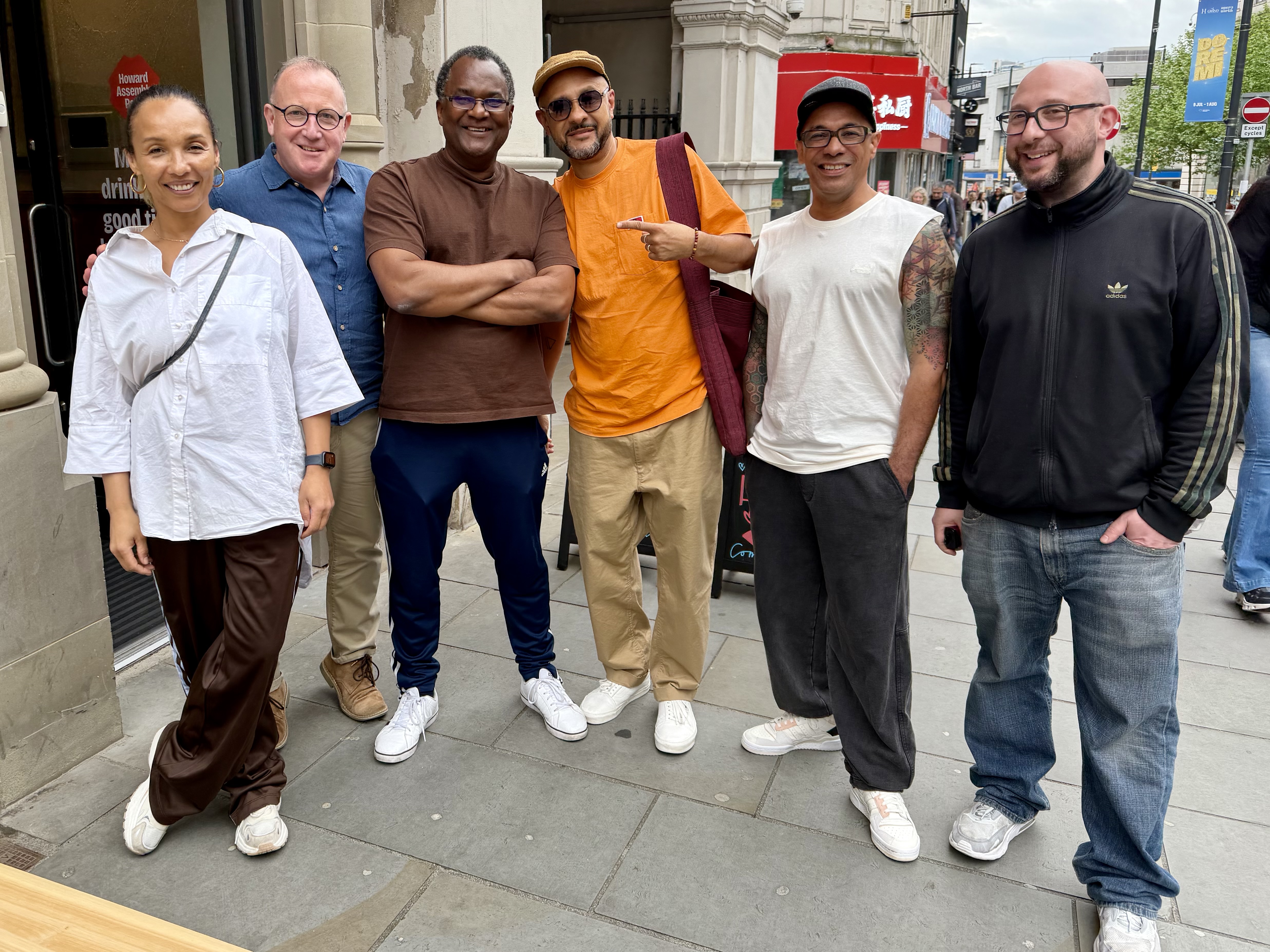
Before the show, MagNorth caught up with Sara Garvey and Hamlet Luton from Nightmares on Wax to talk about Chris, the band, Leeds, and what happens when music made in rooms full of trust travels around the world - then comes home again.
When asked what Chris Dawkins brought into the room, Sara didn't start with technique. She started with feeling.
“Chris brought soul. Chris brought positivity,” she said. “Chris had this nature where he would make everybody in the room unite and feel like this project, or whatever they were doing, would be awesome. He made you reach for your true self in making the record, so you let go of all the masking and all that kind of stuff.”
That, perhaps, is the thing those of us outside music often misunderstand. Great records aren't made only from sounds. They're made from permission. From trust. From someone in the room who makes the rest of the room braver.
“He sort of just got everybody cemented in the room in a really beautiful way,” Sara continued. “He would assist with melodies and he would encourage the best melodies out of you and he would add to them. He just made a session work.”
There was a moment in the conversation when she was asked whether there was a particular sound, phrase or way of playing where she still hears Chris immediately.
“Oh God,” she said, before finding the only answer that made sense.
“Chris had his own sound. And when he died, part of me was obviously like, ‘Oh my God, Chris, our friend is dead.’ And then another massive part was, ‘Where am I ever going to get Chris again?’ Every record that I have now will not have…the thing that I went to Chris for wasn’t just to play guitar or keys or do what he did. It was to get his sound.
“I don’t know what his word would be. It just sounded like Chris. ‘I need Chris on that record.’ That would be what people would say.”
And sara's phrase - it just sounded like Chris - seemed to linger over the entire evening.
Because last night wasn't only about the absence of a player. It was about the absence of a presence. The particular musical fingerprint of someone whose contribution wasn't always reducible to a credit line, a solo, or an easily quoted moment in a track. Chris Dawkins helped shape the early Nightmares on Wax sound on era-defining records including Smokers Delight and Carboot Soul, but the people who knew him talk less like archivists and more like family.
Which, of course, is what this was.
Sara joined Nightmares on Wax in 2002, after the earliest Smokers Delight and Carboot Soul years, coming in around In a Space Outta Sound. What struck her was not hierarchy, but chemistry.
“What struck me was the friendship, the banter, and the genuine talent of everybody in the room,” she said. “And there were no egos. I stayed in the band a long time because of that. And there was the same on tour.”
That word - banter - does get overused, flattened into cliché. But here it's important. In the story of this band, humour isn't a side-detail. It's part of the working method. The way musicians survive tours. The way grief's held without being allowed to harden. The way people who know each other too well can still walk into a room and make something happen.
Hamlet Luton was there at the beginning.
“We started…it was just myself, George, Shovel on percussion, and my cousin,” he remembered, before the conversation slipped into the kind of affectionate shorthand that belongs to people who have lived a lot of life together.
When asked why Smokers Delight has lasted so deeply - why some records stop being albums and become environments - Hamlet gave an answer that felt both perfectly simple and quietly profound.
“I think George was really, really clever at identifying that the market was there,” he said. “At the time there were lots of really great things coming out. England was in charge of the world musically. It was Britpop and there was all sorts of amazing stuff, whether it was the Spice Girls or Take That or Massive Attack. There was a lot of stuff going on.
“George, at the time, because his background is DJing, would have been looking and scoping and deciding: what can I do that’s not falling into all that?”
The answer, Hamlet suggested, wasn't to compete with the noise. It was to create somewhere to go afterwards.
“He managed to identify an area where people, regardless of what you listen to, need to congregate at the finish, at the end of the night, and go cool out. And that’s why it’s easy, because nothing’s changed. Even today we need somewhere, when we’ve finished doing whatever it is we do, to go cool out.”
That's the key to Smokers Delight, he said.
“You don’t have to think about it. You don’t have to think, ‘How brilliant this is.’ It’s just like, you know what, just put that on. It can either be cool out and smoke, or in the background, or whatever you want it to be. It’s just a pair of amazing slippers.”
Sara, listening, supplied the perfect Leeds footnote.
“King of the afters.”
And Hamlet agreed.
“Yeah. And the afters are a Leeds thing.”
There it is. A theory of Nightmares on Wax in one exchange. Not chill-out as lifestyle wallpaper. Not downtempo as a marketing category. But the afters as culture. As survival. As communion. As a democratic room after the big room. Somewhere bodies and heads can come down together.
That explanation is key, because Nightmares on Wax has sometimes been filed too neatly under genre: electronic, soul, jazz, hip hop, trip-hop, downtempo, club culture, Warp Records lineage. But music history written only through scenes, labels and releases misses the living centre of it. It misses the rooms. The trust. The local codes. The way Leeds musicians made something that didn't sound provincial because it never accepted the idea that culture had to arrive from elsewhere.
At MagNorth, we keep pushing against that old, lazy story: that the North receives culture while other places create it.
Nightmares on Wax makes nonsense of that.
Sara was unequivocal.
“I’ve lived in Leeds. I now live in London and I’ve been there a year, and London is very busy, but it doesn’t have the identity Leeds does,” she said. “You can do anything there, but it doesn’t have that…I don’t know what it is. There’s an identity that Leeds has.
“I think if you’re in music in Leeds or in art in Leeds, it’s for the love of it. It’s not for the money, because there isn’t any - unless you get out. But it develops in those rooms of people that just have raw natural talent and want to share it and want to make something great.
“And I think Leeds is so good for that. Not just for studios and making music, but also for club culture. I think it’s the other way round. I don’t think we get it from elsewhere. I think people get it from us. I think we set tones. Pow.”
If there is a Leeds sensibility in music, she said, it is not one genre. It is an attitude.
“Yeah, 100%. I think we’re punk,” she said. “And what I mean by punk is that we don’t care about social norms of stuff. You may be in a scene and you may think, ‘Oh, I want to adhere to the rules of that scene to be included.’ But there’s a little bit of that punk attitude where I don’t really care about what people think about it.
“Manchester’s got it a little bit, but they’re more like, ‘What do you think of me?’ Whereas Leeds, we’re a little less ego, but still with that attitude. I say punk.”
This is why the setting mattered too.
Howard Assembly Room is one of Leeds’ most beautiful spaces: a formal, wood-lined, heritage room attached to Opera North, upstairs from the city, glowing with that slightly secretive civic grandeur that makes New Briggate feel suddenly continental if you catch it at the right time of night. The event was presented in association with Leeds Jazz Festival, with support from the quite brilliant Flying Hats, Wulls, and Jamettone, an improv jazz/hip-hop group featuring Chris’s daughter Shaneen Dawkins.
On paper, you might describe the room as formal. In practice, last night, it was something else entirely.
A room attached to one of the North’s great opera companies opened itself to electronic music, dub pressure, jazz memory, soul lines and Leeds club history. That's not tokenistic programming. That's a cultural institution understanding that the old boundaries between “high culture” and “night culture” were always false ones.
Hamlet saw significance in it too.
“It used to be a movie place,” he said of the room. “It’s having a resurgence, but it’s slowly, like the rest of the world, recognising subcultures. Maybe we’ve just come of age. Maybe we are no longer noisy young kids.
“Maybe now we’re just of age and the young people that are running Howard Assembly Room grew up with what we’re playing and they recognise that it’s part of the fabric of the UK. Maybe we’re no longer subculture.”
Sara laughed at the implications.
“We’re the classics now.”
Hamlet took it further.
“We’re playing in theatres, my God. We’d just come from the Royal Albert Hall. I thought, like, we brought all these bass bins, wreck these gigs somewhere in the window…”
Then Sara made the connection that suddenly made the whole thing land.
“When you go to jazz and you hear old standards,” she said, “we have that. That’s strange, isn’t it? That is crazy.”
It is crazy. And it is true.
At some point, the records people once played at four in the morning became part of the national musical memory. The sounds built in clubs, bedrooms, basements and after-hours sessions now sit inside theatres not because they've been tamed, but because the culture finally caught up with them.
Hamlet connected it to a wider shift.
“Sound system culture now - it’s not what it was. A lot of young white kids now are really heavily into sound system culture. It’s just growing up. The generation before us that were a bit snobby are giving it to the kids, and the kids want the same things as us. And here we are.
“At last, the freedom. We made it.”
There was any number of ways last night could have gone wrong.
Tribute shows can collapse under their own sincerity. Nostalgia can become embalming fluid. Heritage can turn living music into museum glass. But this evening wasn't any of that, because the grief was held inside the music rather than placed on top of it.
There was sadness, yes. But there was also deep warmth. There was humour. There was sweat. There was bass. There was the unmistakable sense of old friends finding each other inside the same grooves again.
When asked what happens emotionally and musically when this group comes back together, Hamlet’s answer was immediate.
“Storytelling. Reminiscence.”
Sara added: “Laughter. Banter.”
Hamlet: “A lot of love. There’s a lot of love.”
Sara: “We watch our families grow together. We know each other. We’re family now.”
That family has become intergenerational. Hamlet spoke about the children of the band now making their own steps into music - DJing, singing, drumming, following the path that might have once looked impossible until their parents proved otherwise.
“It’s strange to see how we have influenced our kids,” he said. “We just look like normal parents, don’t we? We just talk about it. You can’t say, ‘It’s not your job.’ You can’t say no. If you’re serious, son, it’s not easy, but go for it.”
That, too, was part of the night’s emotional texture. This wasn't only a reunion of musicians. It was a gathering of generations. People who grew up with the records. People who made them. People who inherited them. People who knew Chris as a player, a collaborator, a father, a friend.
And all of it was happening in Leeds.
Hamlet has known George Evelyn - DJ E.A.S.E - since before the record deal, before the mythology, before the international recognition.
“I’ve known George long before the record deal,” he said. “We grew up in the same area. I’ve known George for as long as we’ve had sense. We went to the same primary school.”
Sara added: “That’s the thing. We’ve known each other outside of being in a studio as well. We’re peers.”
That knowledge isn't only beautiful - but the secret glue. It's the difference between a band playing old material and a group of people re-entering a shared history.
Later, Hamlet remembered standing on stages at festivals such as Glastonbury, looking out at “a sea of heads” and still being able to turn to each other and crack a joke. Sara remembered asking what the next line was, or telling someone they were doing it wrong. The glamour of the stage collapses into the intimacy of people who know each other’s timing, flaws and punchlines.
That's why the music could stretch without becoming indulgent. Why it could honour Chris without freezing him in loss. Why it could move from tenderness to force, from cool-out to pressure, from memory to movement.
Before the show, Hamlet had hinted that the evening wouldn't simply be soft-focus nostalgia.
“The first song will feel like that,” he said, speaking of the Smokers Delight atmosphere. “But then we’ll get really hard…and then we’ll get really, really quiet.”
That's more or less what happened. In the most perfect of ways.
The music did what Nightmares on Wax music has always done at its best: made space. Space for groove. Space for reflection. Space for the body to remember before the head has finished deciding what it thinks. The sound had warmth but not sentimentality. It had weight without aggression. It had that rare quality of music made by people who understand that restraint can hit harder than excess.
And because it was for Chris, every melodic turn seemed to carry another layer. You found yourself listening for absence. Listening for the parts someone else might have played. Listening for the way a band fills the space around a missing friend, not by pretending the space isn't there, but by letting it speak.
To be able to witness that was hugely emotive.
In a cultural economy obsessed with novelty, content, announcement, growth and brand positioning, this was an evening about relationship. About the value of musicians knowing each other over decades. About the civic importance of rooms where such things can be held properly. About the North’s creative histories not as quaint local colour, but as part of the fabric of British music.
When the conversation turned to what Leeds should do next - not in terms of plaques and anniversaries, but venues, archives and opportunities - Hamlet went straight to the point.
“Opportunities, I would say,” he said. “But it’s the same, regardless of where you are in the country. It seems like music and the arts are taking a real smashing. I don’t understand why the country doesn’t realise how much money and how much employment and how much joy the creative sector brings.”
Sara sharpened the argument.
“I think what’s happened is that they’ve taken what that industry brought and they’ve just consumerised it, and then tried to push out the creative industry,” she said. “But if you do that…”
She didn't need to finish the sentence.
We're still having this conversation. Still asking why the places that make the culture are so often priced out, underfunded, undervalued or flattened into lifestyle backdrops. Still watching cities trade on musical histories while the conditions that made those histories possible become harder for younger artists to access.
And yet, last night, in that room, the counter-argument was alive and audible.
Because as Hamlet pointed out, looking around the building before the show, this was not a marginal gathering.
“What you’ve got around here,” he said, “is literally Clubland royalty. All the guys that were running the biggest clubs in the country. Just around the corner.”
The right room, Sara said.
“You are in the right room.”
She was.
We were.
For younger audience members who knew Nightmares on Wax but didn't know the full Chris Dawkins story, the night offered no neat lesson. Sara resisted the idea that everyone should leave with the same understanding.
“That’ll be on them what they leave understanding,” she said, “because it’ll be their experience.”
That's probably right.
Some will have left thinking about Chris. Some about Leeds. Some about Smokers Delight. Some about the strange fact that the music of their after-hours lives is now being played in beautiful buildings. Some about how grief can become rhythm. Some about how a city’s sound can travel the world and still feel most powerful when it's heard at home.
For MagNorth, the evening felt like a reminder of something we keep returning to.
Culture isn't a luxury. It iisn't decoration. It's not what happens after the serious business of civic life has been completed. It's where memory, place, friendship, grief, identity and possibility find form.
Last night, Howard Assembly Room didn't just host a gig.
It held a city’s musical memory for a few hours, and let it breathe.
Chris Dawkins was absent. Chris Dawkins was everywhere.
And Leeds, once again, set the tone.





