



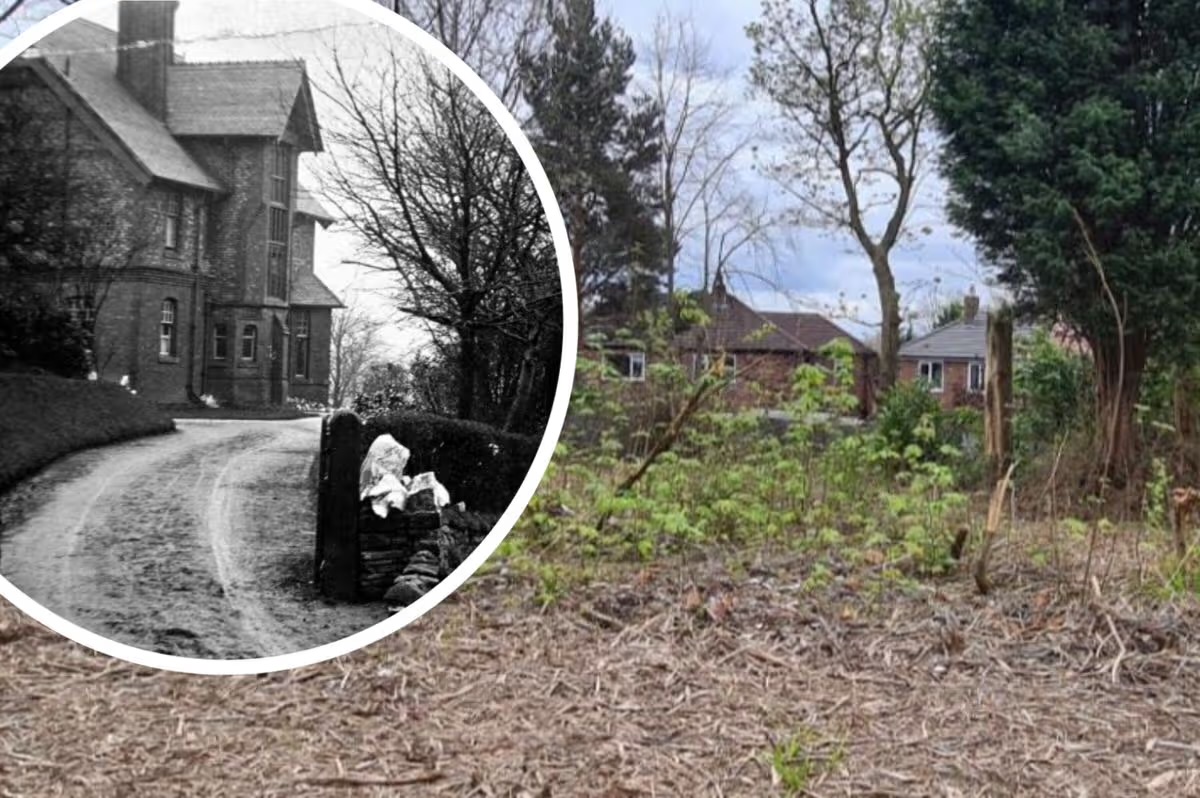
There is a patch of empty land on Meadow Lane in Haughton Green, Tameside, that most people driving past today might mistake for a fly-tip.
I see something entirely different.
I see the house where I grew up.
The Old Rectory Hotel was my childhood home up to the age of 14. Long before it became a planning application or development opportunity, it was one of those places woven into the life of a community. My grandparents, Florrie and Alfred - known to everyone as Chad - bought the Old Rectory in 1967. Together with my parents, Lee and Margaret Chadwick, they transformed it into a successful 26-bedroom hotel, restaurant and diners club.
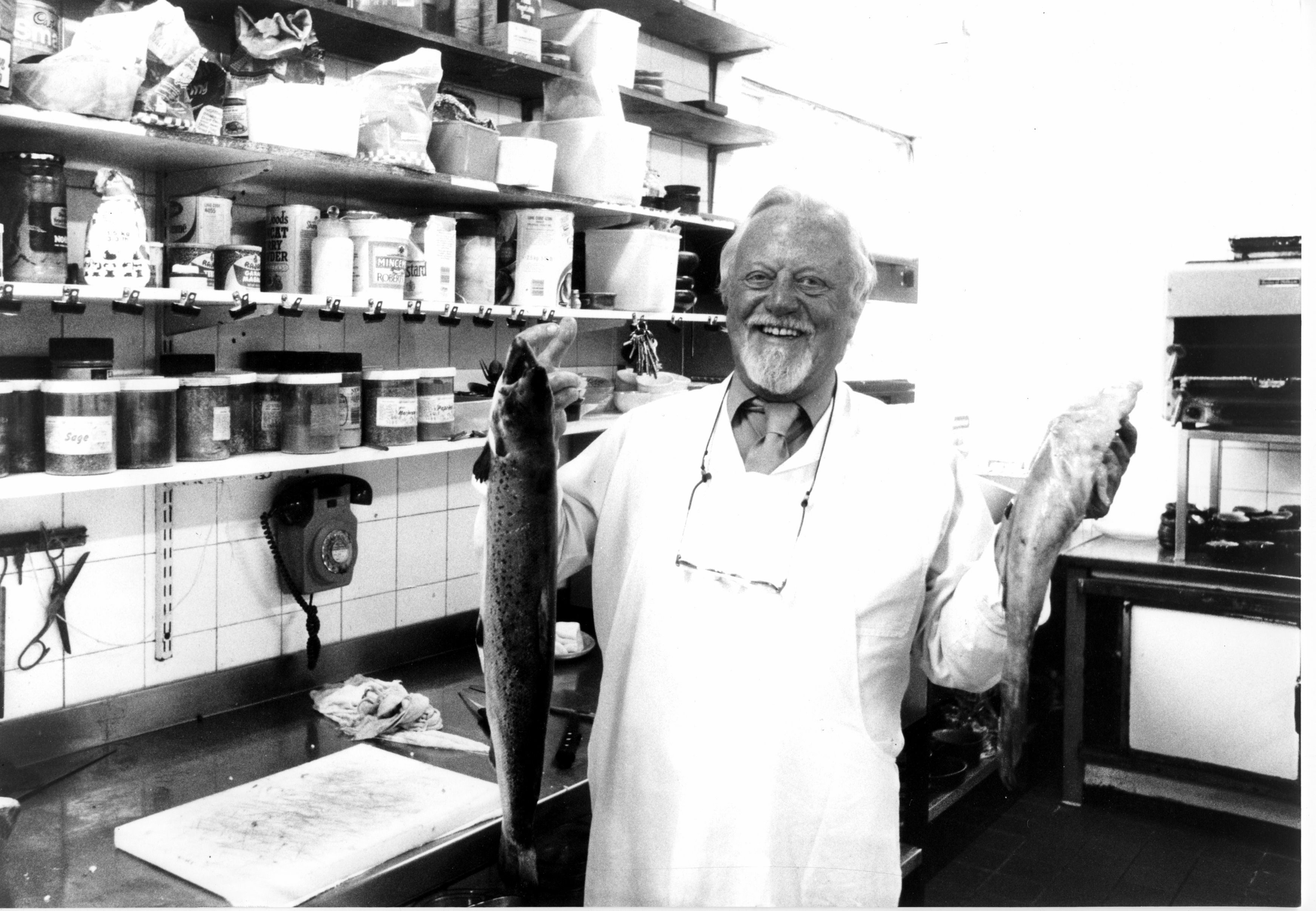
My grandfather was a raconteur and bon vivant, and the family created one of the areas go-to destinations of the 1960s, 70s and early 80s. In fact, his food was reviewed by Delia Smith, when she was a budding food critic, to great acclaim. Coronation Street actors were regulars. John Hurt stayed and became a friend of my grandfather. George Harrison visited; according to our family memories, one of his Apple films was filmed in the car park. Richard Gere stayed for weeks while filming Yanks around Stalybridge and even danced with my grandmother in the hotel bar.
But for Haughton Green, the Old Rectory wasn't really about celebrity.
It was somewhere local people worked, married, celebrated and gathered after funerals.
And it was our home.
My sisters and I spent summer mornings catching tiny baby frogs in the grass, feeling them tickle our palms before releasing them into the Rectory pond among the koi carp. We had tortoises called Banana and Custard. We roller-skated along hotel corridors, watched weddings in the hope of leftover cake andpinched chocolate mints from serving trays.
Behind that idyllic childhood was the relentless work of my grandparents and parents, who built the business through sheer graft.
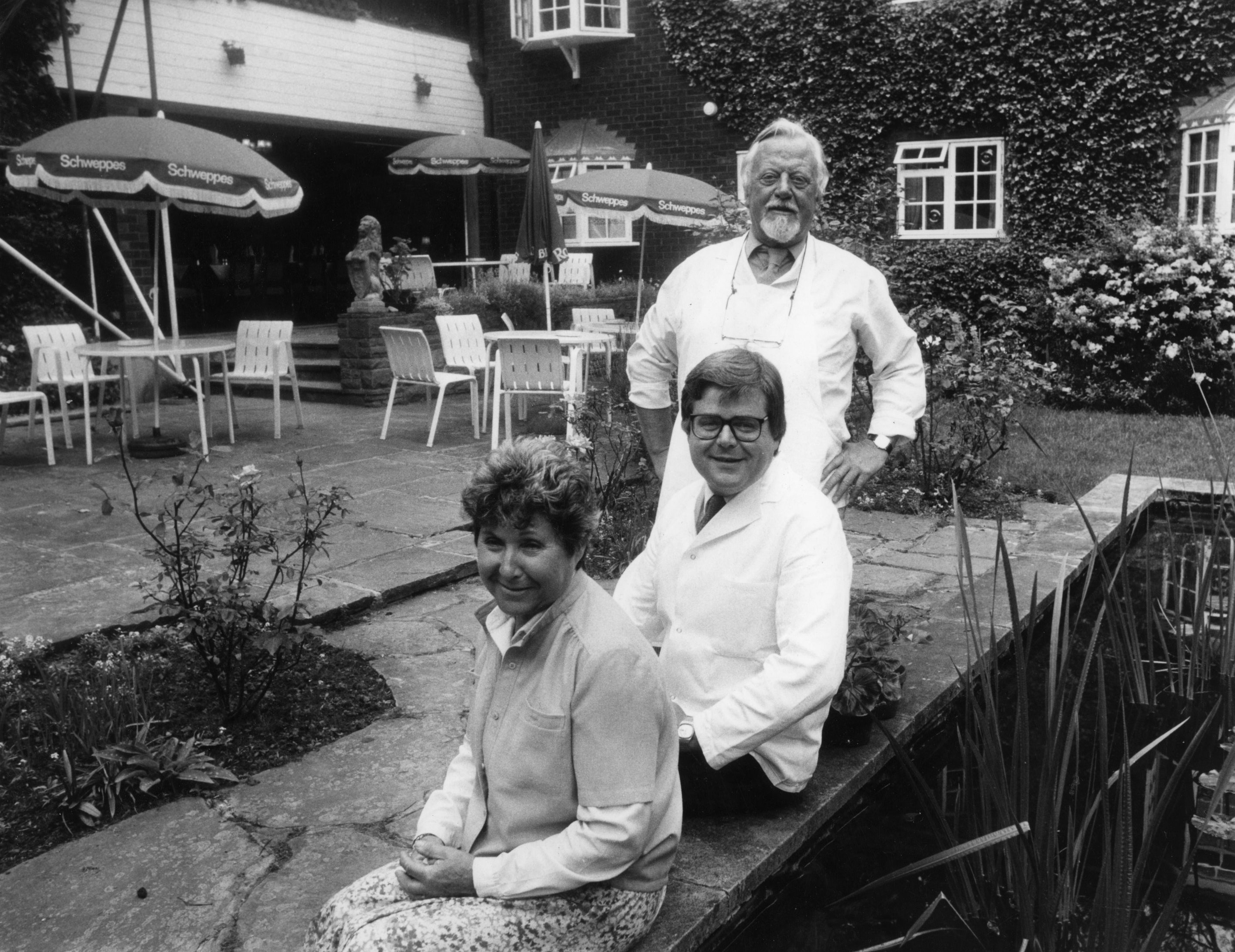
What I didn't fully appreciate as a child was the significance of the building surrounding us.
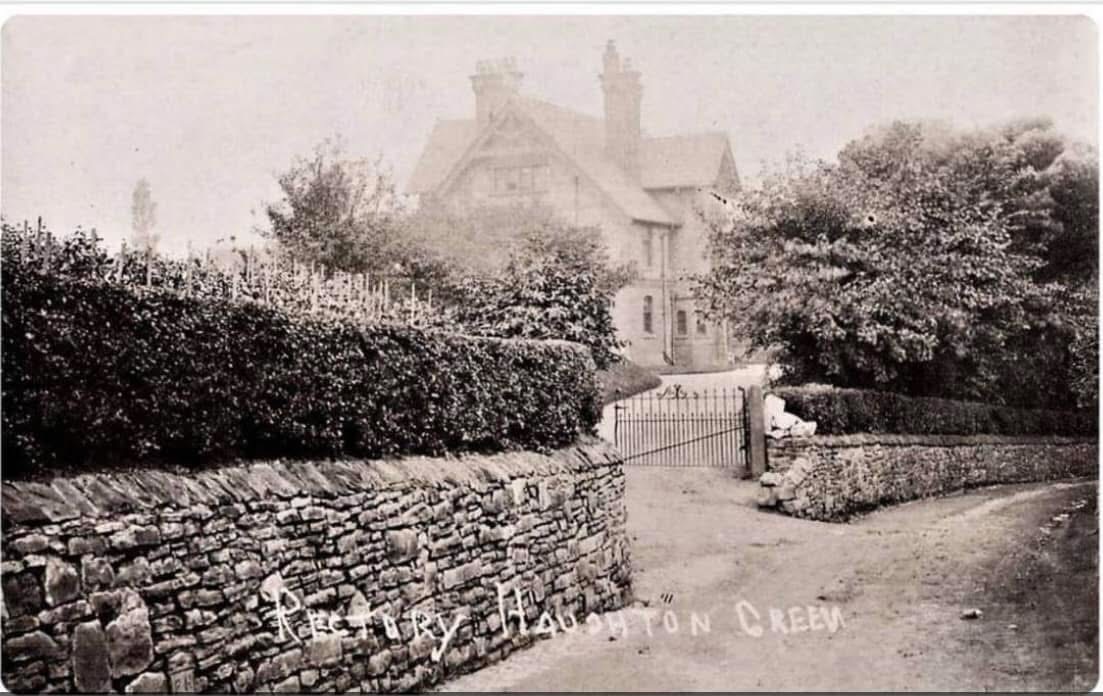
The Old Rectory was built around 1881 as the vicarage for the adjacent St Mary the Virgin, on land donated by local industrialist James Walton, who had also provided land and substantial financial support for the church.
It was designed by the brothers James Medland and Henry Taylor, described by the Victorian Society as "two of the most important regional architects working in Manchester in the mid-Victorian period".
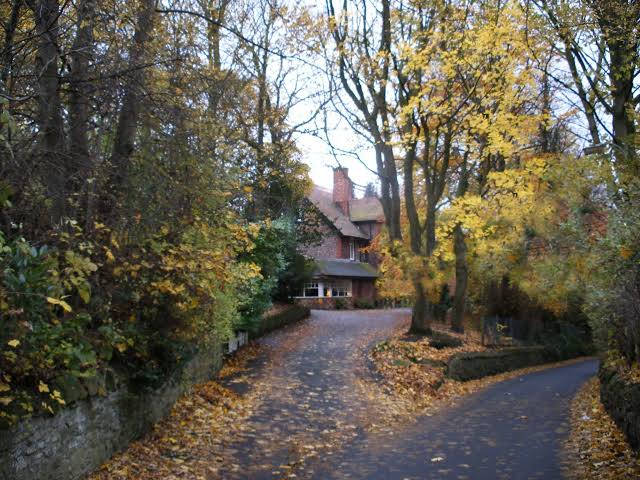
It was an exuberant building of brown and red brick, timber framing, leaded glass, tall chimneys and overhanging gables. David Garrard, then Historic Churches Adviser at the Victorian Society, argued that what distinguished the Old Rectory from countless other Victorian villas was "the striking ingenuity of its details".
The quality extended to its construction. My father, Lee Chadwick, remembers that the woodwork throughout the Rectory, including its extensive panelling, was made from Canadian pitch pine, while the substantial brickwork was double-bonded. These weren't details I understood the significance of as a child; they were simply part of the fabric of home.
Some of those details were wonderfully eccentric. Local historian and neighbour Mag Hurst records that the front door bore the Gothic motto "ye house shews ye owner". A cupboard above the study mantel carried a line from Tennyson's Aylmer's Field, while ornamental bedroom tiles depicted scenes from Morte d'Arthur and Aesop's Fables.
I remember the stained glass, dark timber, cornices and sweeping staircase. Garrard's assessment records those same features: patterned leaded glass in the stair tower, an unusual staircase and stained timber cornicing.
When the building came under threat, residents, Denton Local History Society and the Manchester branch of the Victorian Society fought to save it.
English Heritage rejected an application to list the Rectory in June 2008, even when important new evidence emerged.
Original plans and elevations found in Tameside Archives carried the inscription "Medland and Henry Taylor, Architects, 2 St Anne's Churchyard, Manchester". They dated the house to 1881, conclusively establishing its authorship.
That mattered because James Medland Taylor was, Garrard wrote, "one of the most interesting and original Manchester architects of the 19th century". The Old Rectory belonged to an important cluster of the brothers' buildings around Denton and Haughton Green, including St Anne's, its rectory, St Laurence's and St Mary's.
The Victorian Society challenged English Heritage's characterisation of the house as a relatively conventional Victorian villa. Garrard argued that its asymmetry, unusual entrance, canted corner bay and stair tower weren't evidence of awkward design but expressions of the Taylors' "native oddity and imagination".
He acknowledged that alterations had taken place over the years, particularly inside, but concluded that the exterior remained of "considerable interest and quality". Demolition, he warned, would deprive the area of an important element of its most significant architectural group.
It wasn't enough.
Tameside Council approved demolition on 30 June 2009.
Yet the hotel continued trading for almost another two years. According to Hurst, rumours circulated about refurbishment and renovation. Then, in April 2011, staff arrived for work to discover they were locked out and had been made redundant with immediate effect.
The demolition process that followed remains vivid in the memories of neighbours.
Hurst says conditions attached to the development included fencing to protect trees and measures intended to protect bats. She recalls concerns among residents about whether those safeguards had been properly implemented before demolition began.
Then, on 6 June 2011, three large demolition machines arrived.
For Hurst, who lived close to the site and had campaigned to save the building, what happened that day remains deeply upsetting.
"The end when it came was swift and far more brutal than anyone had expected" she recalls.
She remembers the machines smashing into the building and the distress of watching the wildlife around it being disrupted. Her most haunting memory is not of bricks falling, but of sound: blackbirds nesting in the ivy-covered walls and, later that night, Tawny Owls calling from the trees.
In her account she describes imagining their calls as "a requiem for the loss of a beautiful building and all the wild things that had died that day".
For me, its destruction felt strangely like bereavement too.
My grandfather's memorial plaque, which had remained at the hotel after we left, was rescued at the last moment by a thoughtful neighbour. Otherwise it would have disappeared beneath the bulldozers. For years afterwards it sat forlornly in my parents' garage.
For my father, Lee Chadwick, who had lived and worked at the Old Rectory and helped run the family business, there is another source of frustration: when our family sold it: the hotel was still a viable commercial concern.
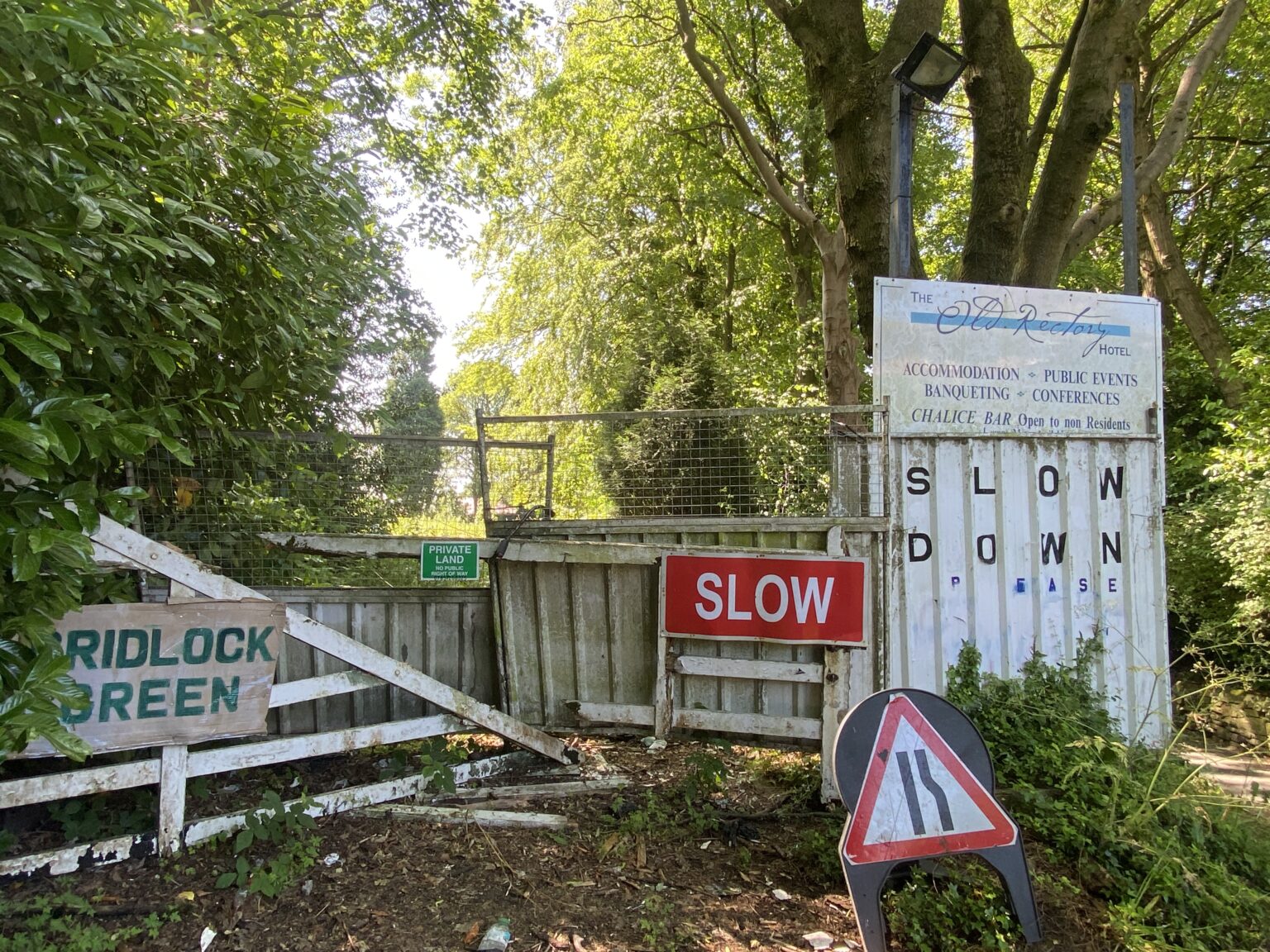
"The destruction of what was a commercially sound business when we sold it, in favour of what exactly, demonstrates the crassness of the then Tameside planners and councillors," he says. "Had I known that was going to happen, I would have tried to buy it back".
His question - in favour of what exactly? - is perhaps the question at the heart of this story.
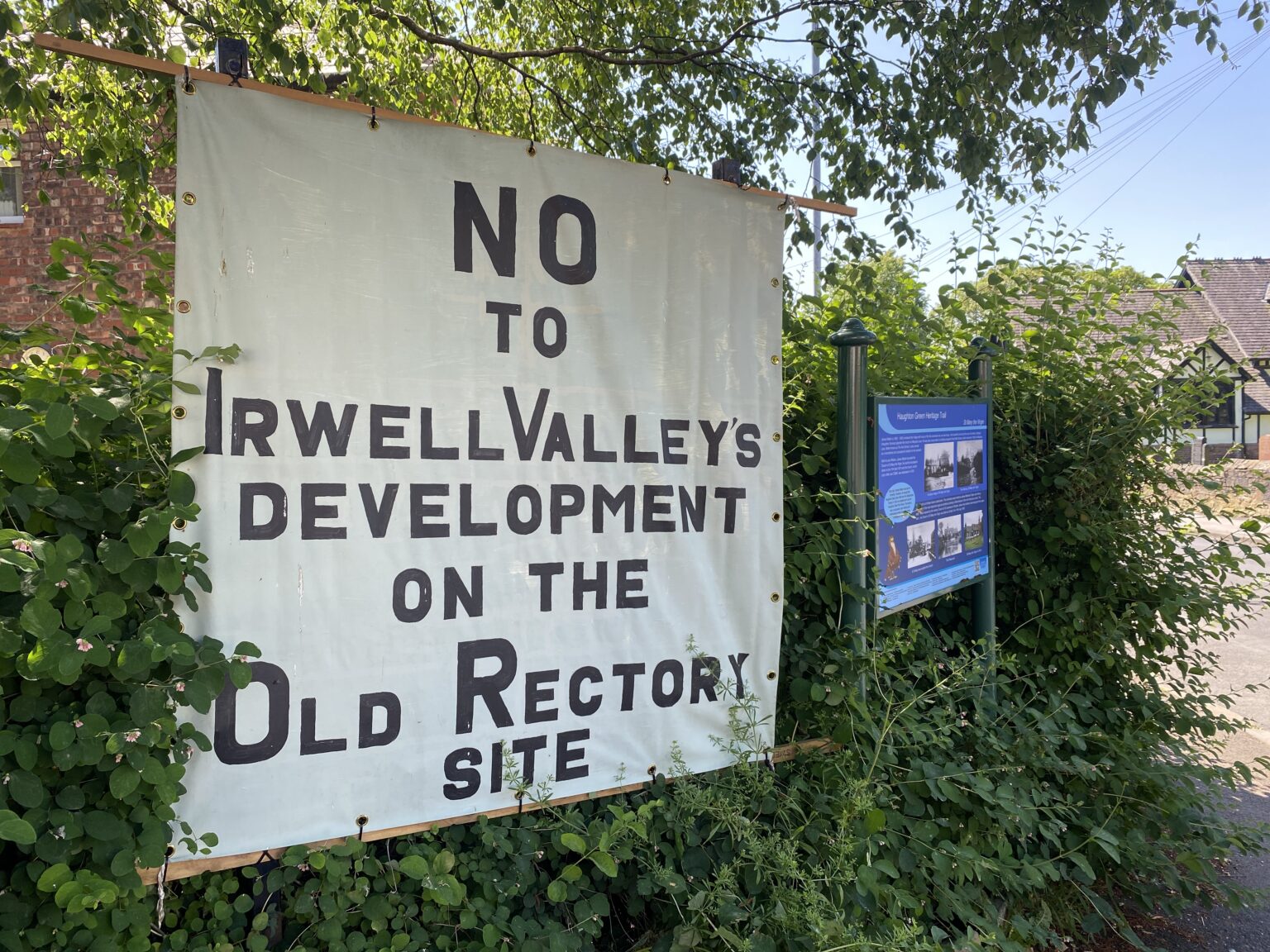
Because after the Old Rectory disappeared, the promised redevelopment didn't follow.
There is an implicit bargain when a community accepts the loss of an historic building. Something is sacrificed because something else is supposedly needed: housing, employment, care facilities or regeneration.
What happens when the building disappears but the promised benefit doesn't arrive?
Andrew Gwynne, then MP for Denton and Reddish, had been one of those campaigning to save the building. When I contacted him about the site in 2023, he remembered the fight vividly.
"It really was the most beautiful building," he wrote, "and I alongside many others fought hard to keep it protected and in situ. It was a very dark day when it became clear we would be unsuccessful".
In Parliament in 2016, Gwynne described the Old Rectory as part of a collection of "quirky and unique" Medland and Taylor buildings and said its demolition had left Haughton Green with the "blight of a derelict site".
After permission had been granted for a care home, Gwynne and local councillors pushed for a Supplementary Planning Document to give the area greater protection.
"The SPD really does go some way to ensure that any development in the area must be heritage led," he wrote to me in 2023, adding that historical features, including the trees, should be protected.
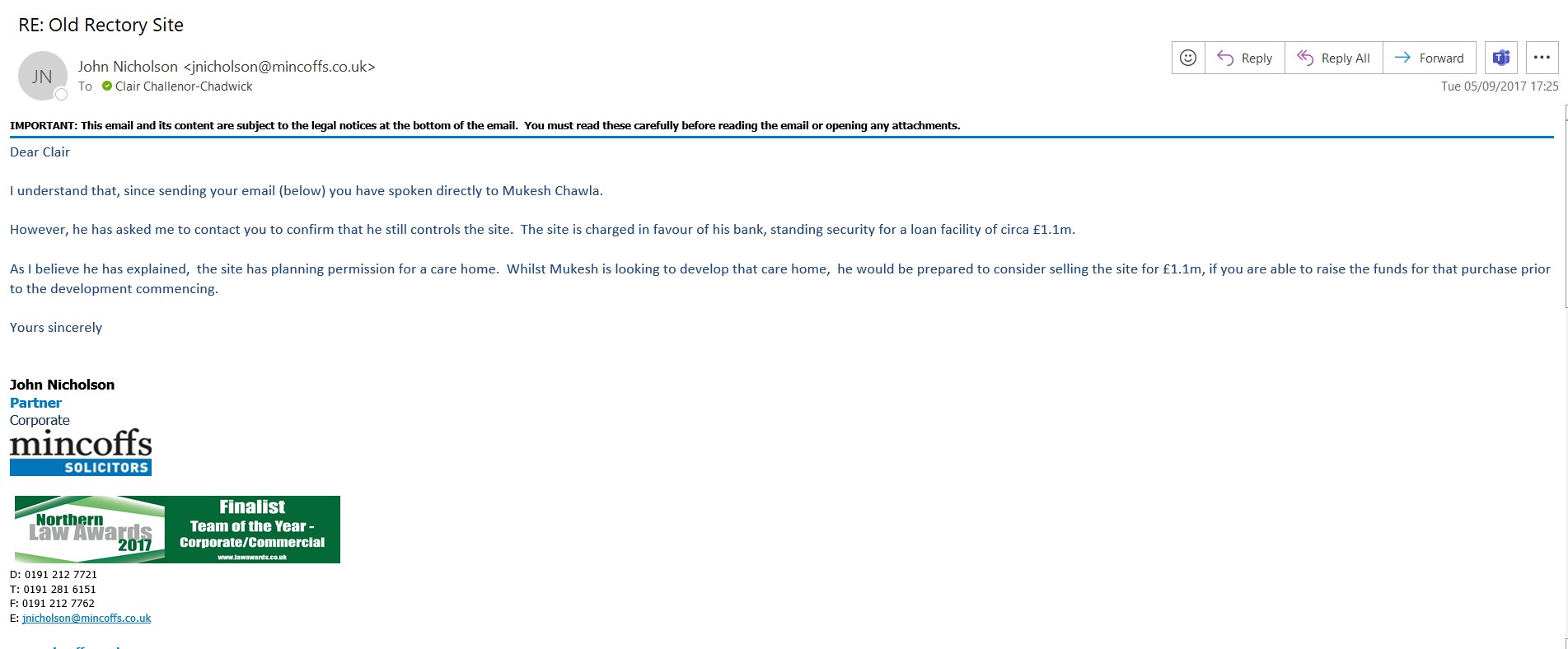
In 2017, I wrote to the owner, Mukesh Chawla, asking whether he might sell the land - or even return it to the community.
The response I received was an offer to sell me the site for £1.1 million.
That figure crystallised something for me. The value was no longer in the building - that had been destroyed - but in the development potential of the land.
And that raises the contentious question of land banking.
The term broadly describes land being held rather than developed, sometimes in anticipation of its value increasing. It needs to be used carefully: an undeveloped site is not, by itself, proof of deliberate speculation. Finance, infrastructure, planning conditions, viability and changing markets can all prevent development.
But the wider issue matters particularly in the North, where brownfield land could provide a substantial part of future housing need.
CPRE research identified capacity for around 166,000 homes on brownfield sites in the North West. In Tameside, 82 per cent of residential development sites in 2024/25 were on brownfield land, up from 74 per cent the previous year.
The tension between using brownfield land and protecting green space has long been felt locally. In a separate 2019 debate, Gwynne argued in Parliament for a "brownfield first" approach, warning against a future in which derelict urban sites remained unused while surrounding green-belt land was developed.
The Old Rectory site has continued to generate plans. In July 2024, Tameside's planning panel approved proposals for 18 apartments following more than 200 objections, after an earlier proposal for 24. The objections included concerns about scale, traffic and the loss of local character.
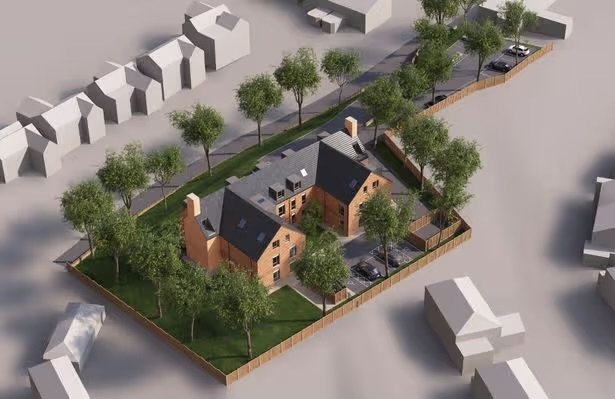
Then came another twist. Records based on HM Land Registry data indicate that the freehold changed hands in December 2025 for £300,000 - striking when compared with the £1.1 million I had been quoted several years earlier.
Perhaps homes will finally be built there.
But I can't help thinking there could be another ending.
Haughton Green's industrial and social history is remarkably rich and surprisingly little celebrated. Meadow Lane once sat among mills, wire makers, hat makers and coal mining. Even the Jolly Hatters pub preserves the memory of the village's hat-making past. Haughton Green also has connections withthe early Co-operative movement.
Why couldn't this patch of land become something beautiful again?
A meadow. A wildlife sanctuary. A community garden. Somewhere to tell the stories of the people who worked in the mills and mines, made hats and wire, built businesses and raised families here.
There is an added poignancy now to that idea. Mag Hurst's account of the demolition is as much about the loss of the wildlife inhabiting the site as the loss of the building itself. The trees, birds, bats and bluebells were part of Meadow Lane too.
The Old Rectory cannot be brought back.
Its destruction raises a bigger question about the way we value places.
Buildings contain memory. They give places character and connect one generation with another. Onc edemolished, they cannot be recreated by the CGI accompanying the next planning application.
In my mind's eye, I can still reconstruct the Old Rectory: the driveway, the trees, the pond, stained glass and staircase; the dining rooms and corridors down which three little girls once roller-skated.
I see weddings and waiters and chocolate mints. I see my grandparents. I see my childhood. Other people see an empty development site.
I see the place where I grew up.
And fifteen years after it disappeared, I am still waiting to see what destroying it actually achieved.





