



When the Olympic flame was extinguished in London in August 2012, the Games entered national memory almost immediately.
For two remarkable weeks, Britain appeared confident, generous and comfortable in its own skin. Athletes from across the country became household names; stadiums were full; public spaces were animated; and the opening ceremony placed industrial labour, popular culture, migration and the NHS inside a spectacular new account of Britishness.
The North was integral to the story.
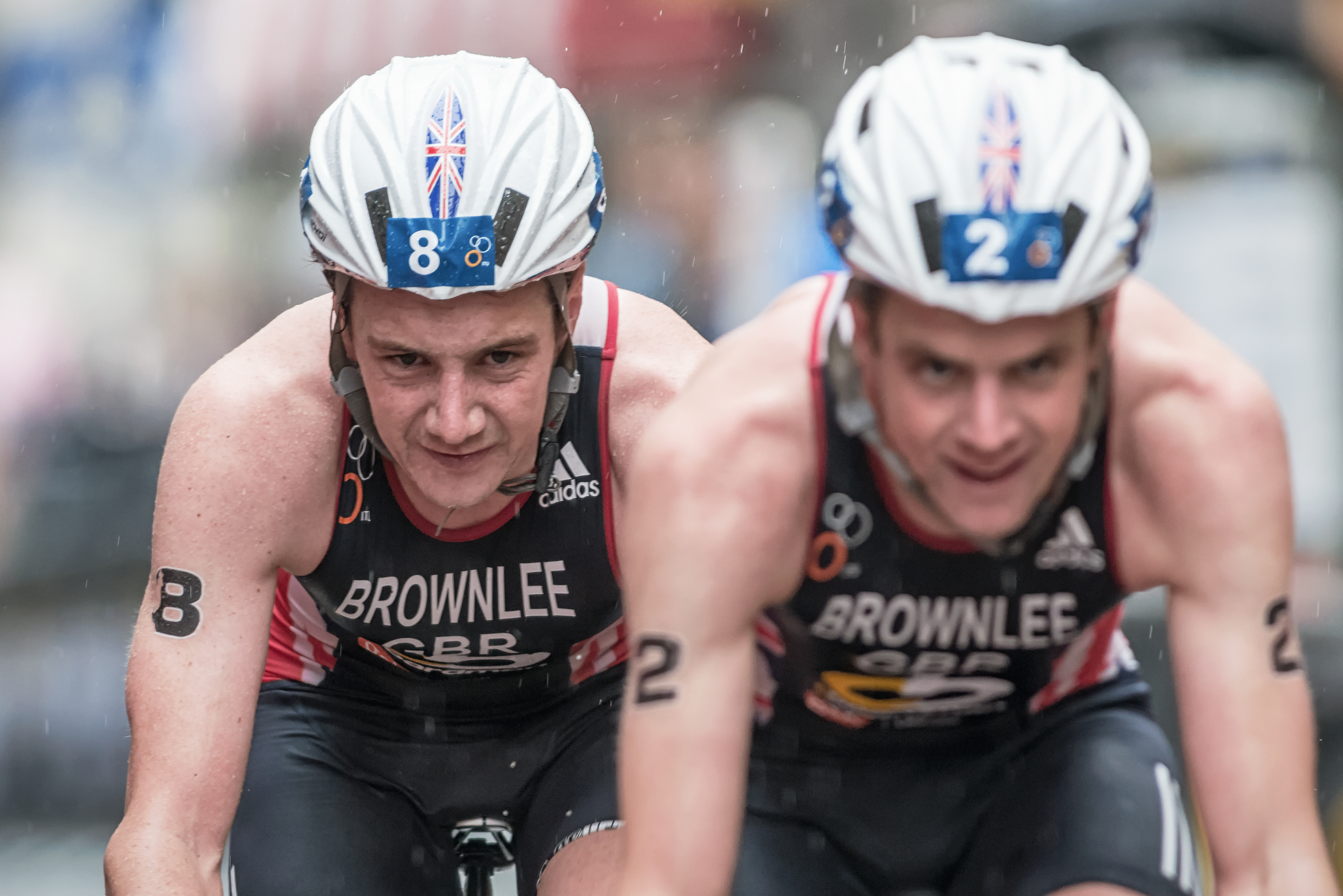
British cyclists trained at Manchester Velodrome before dominating their events, while Yorkshire brothers Alistair and Jonathan Brownlee won gold and bronze in the men’s triathlon. Northern athletes, coaches, facilities and audiences all helped create the impression of a national Games - even if the overwhelming share of the physical investment remained in London.
Fourteen years later, the Government has taken the first formal step towards establishing whether the Olympics and Paralympics could come north.
In May, it commissioned UK Sport to undertake an initial strategic assessment of a possible Games staged across Northern England in the 2040s. The work will consider the likely cost, socioeconomic benefits and prospects of mounting a successful bid.
This is not yet an Olympic bid. There is no confirmed host year, venue plan, budget or guarantee that the United Kingdom will put itself forward.
But the assessment matters. It moves the idea beyond speeches and civic ambition and begins testing whether a multi-city northern Games could withstand financial and practical scrutiny.
For its advocates, the Olympics would be far more than a sporting festival. The real prize would be a deadline powerful enough to accelerate transport, housing, regeneration and public-realm projects across several northern city regions.
“Bringing the Olympic and Paralympic Games to the North would show the world what South Yorkshire is capable of,” South Yorkshire Mayor Oliver Coppard told MagNorth.
“A Great North Games would be about more than sport; it would be a catalyst for opportunity and investment, support jobs and growth, improve transport and sporting facilities and inspire the next generation.”
That is the seductive part of an Olympic proposition.
Governments may defer railway upgrades, housing programmes and regeneration schemes for years. A global event cannot be postponed quite so casually. The opening ceremony provides an immovable date by which trains must run, public spaces must be finished and venues must be ready.
The question for the North is whether the Olympics would unlock investment that communities need—or make useful infrastructure conditional upon winning the right to stage a fortnight of international sport.
The proposal is being developed by The Great North, the collaboration of northern mayors and civic leaders chaired by North East Mayor Kim McGuinness.
Rather than constructing an Olympic park in a single city, its supporters envisage events distributed across the North. Manchester’s established sporting estate would be an obvious foundation: the city hosted the 2002 Commonwealth Games and already possesses the Etihad Stadium, Manchester Aquatics Centre and National Cycling Centre.
Liverpool, Leeds, Sheffield and Newcastle could contribute venues and expertise, while the region’s coastline, waterways and countryside create other possibilities.
Such an approach is more plausible than it might once have been. The International Olympic Committee now encourages prospective hosts to prioritise existing and temporary venues, reducing the financial and environmental burden of constructing facilities with little convincing purpose after the Games.
Brisbane’s successful plan for 2032 proposed using existing and temporary venues for the large majority of its events. A northern bid would need to demonstrate the same discipline.
The North possesses substantial sporting infrastructure, but it does not have a complete Olympic venue plan waiting to be activated. Some facilities would require expansion or adaptation. An athletes’ village - or several - would be needed, together with accommodation, security, accessible transport and the operational infrastructure required to move thousands of competitors, officials, workers, journalists and spectators between dispersed sites.
A multi-city model reduces the demand for new stadiums. It also creates a formidable transport challenge.
The Government has committed £1.1 billion to the planning and development of Northern Powerhouse Rail, with initial improvements east of the Pennines expected during the 2030s. Later phases include a new Liverpool–Manchester route and improved connections between Manchester, Leeds, Bradford and Sheffield.
But there is no completed northern high-speed network waiting around the corner. Detailed delivery timings are still being developed, and different sections of the programme will arrive in phases.
By the time a northern Olympics could take place, the transport system may look radically different. That cannot simply be assumed.
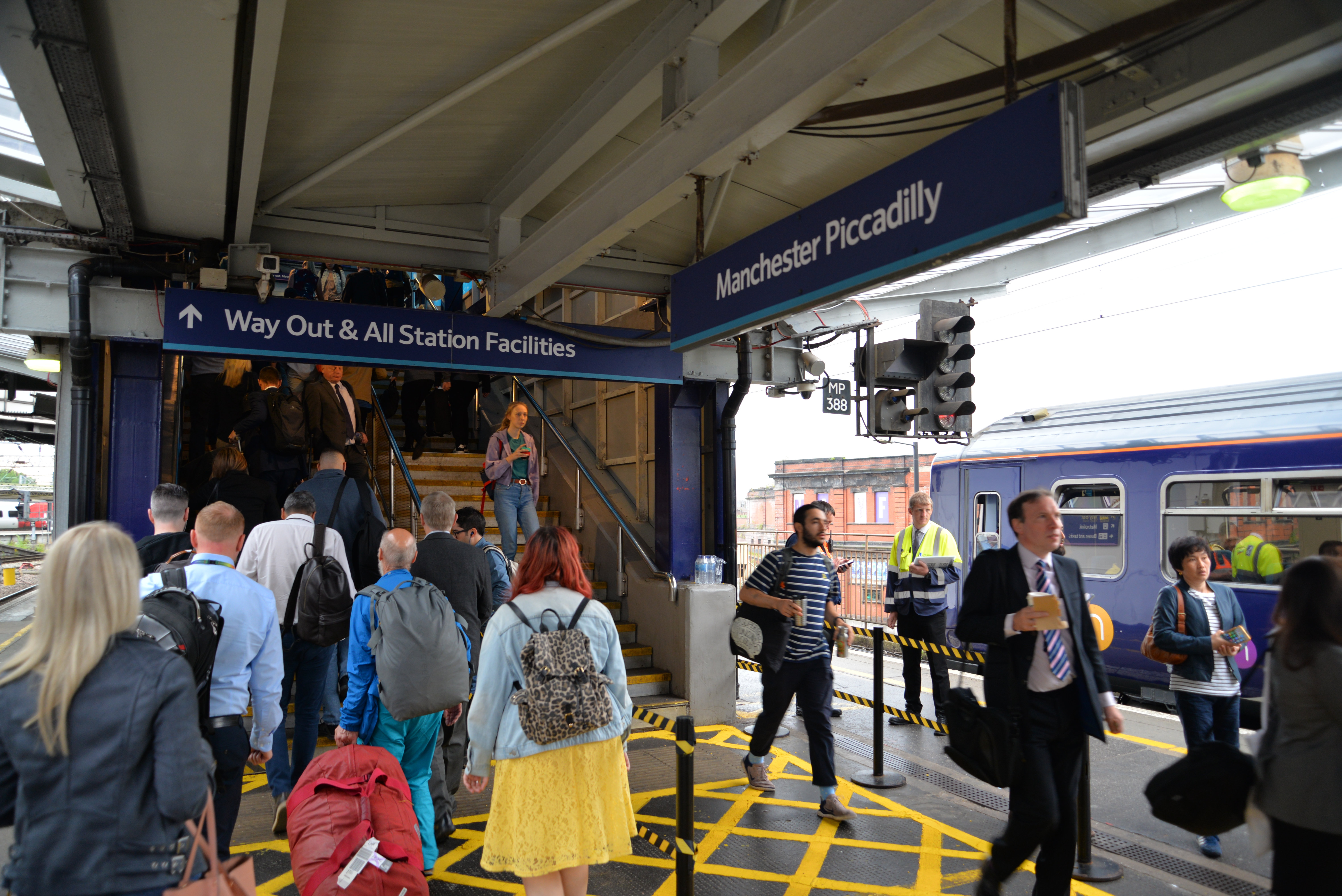
If the Games require reliable movement between Liverpool, Manchester, Leeds, Sheffield, York and Newcastle, the credibility of any bid will rest as much upon railway capacity as upon stadiums and swimming pools.
Bill Price, Strategic Growth Director at engineering and professional-services company WSP, believes construction inflation has fundamentally changed the sums involved in staging an event of this scale.
“If you tried to do the Olympics now, it wouldn’t be £10 billion, it’d be £20 billion,” he told MagNorth.
“Costs have gone up so much - raw material costs, labour costs and energy costs. Everything that goes into the fabric of society and buildings has just escalated.
“We’re all trying to keep the lid on it. Nobody wants to pay all that extra cost, and that is actually why a lot of projects are stalled and not progressing: because they’re not really viable.”
Those figures are Price’s broad assessment rather than a costed forecast for a northern Games. Producing a credible estimate is one of the reasons UK Sport’s assessment is necessary.
The financial structure of an Olympics is also more complicated than the International Olympic Committee simply presenting a host with a bill.
Organising committees generate income through sources including broadcasting contributions, sponsorship and ticketing. But governments and public bodies can remain exposed to major expenditure on transport, security, land, venues and the wider infrastructure required to stage the event. Public authorities may also be expected to guarantee against losses.
London provides both reassurance and warning.
The 2012 construction programme was delivered on time and within its revised budget. The National Audit Office put the Olympic Delivery Authority’s final programme cost at approximately £6.7 billion. However, the original estimate made during the bidding period had been far lower, and Parliament’s Public Accounts Committee warned that the total public cost extended beyond the headline funding package.
More than a decade later, the Games’ inheritance remains contested.
The transformation of Stratford and the creation of Queen Elizabeth Olympic Park are tangible. So are new homes, public spaces and transport connections. Yet promised increases in grassroots sporting participation proved far more difficult to demonstrate. In 2023, the Public Accounts Committee said adult participation had fallen in the years following the Games.
Olympic legacy is not an automatic dividend. It is a set of political choices made before and after the event.
Price argues that a successful northern legacy should not be measured by the quality of a stadium left behind.
“If it went with upgraded stations, and were integrated properly into the homes and housing that the country needs - either following it or in the run-up to it—that would be fantastic,” he said.
“I’m not saying I want to be left with the best stadium or the boxing arena. I don’t personally see that as a true legacy. I think true legacy is really multi-generational infrastructure.”
That distinction may determine whether northern communities ultimately support the proposal.
A railway used intensively during the Olympics and relied upon for generations afterwards is a defensible investment. So is accessible housing first occupied by athletes and then transferred to local people.
A specialist venue without a viable long-term user is much harder to justify - particularly in places where councils have spent years reducing leisure provision and struggling to maintain existing public facilities.
The test cannot be whether an Olympic Games produces economic activity. An influx of visitors, broadcasters, sponsors and competitors inevitably would.
The harder questions are where that money goes; how many jobs remain afterwards; whether local businesses can participate; and whether investment reaches northern towns and communities beyond the principal host cities.
There is also a democratic question. A “Great North” Games cannot be built entirely through conversations between mayors, government departments, sporting bodies and major contractors. Residents will need to know what is being promised in their name, what risks they are being asked to carry and what would be protected if costs rose.
Coppard acknowledges that the proposal must pass those tests.
“We need to be open about the costs, realistic about what can be delivered and relentless about securing a lasting legacy,” he said.
“If the benefits disappear once the closing ceremony is over, or the finances don’t stack up, then the Games would not work for us.
“The prize could be enormous, but only if we build the right plan, bring people with us and make sure communities benefit for decades - not just for a few weeks.”
That may be the most important argument for exploring the proposal, rather than either embracing or dismissing it prematurely.
An Olympic assessment forces northern leaders and the Government to describe what transformational investment would actually mean: which railways, which homes, which sporting facilities, which communities - and by when.
If those schemes make sense only with an Olympic flame burning at the end of them, their foundations may not be strong enough.
But if they are investments the North requires anyway, a Games could provide the momentum, international attention and hard deadline needed to deliver them.
The North has sporting passion, recognised venues and extensive experience of staging major events. Whether it possesses the infrastructure, political unity and financial appetite to host the world is a much bigger question.
For now, the most valuable outcome may not be an answer of yes or no.
It may be insisting that, long before anybody bids for the Olympics, the North is told precisely what the Games would build—and what would still be standing when the crowds have gone.
Header image: Manchester's National Cycling Centre (shutterstock/ironbell)





