



Three days of surveying had already gone into the site. Then, ten minutes into another visit, there it was.
A dark brown cap, bright yellow gills and stem: the Date Waxcap that Nidderdale National Landscape had been asking farmers, land managers and walkers to look out for.
Dr Kelly Harmar, the organisation’s biodiversity officer, discovered the fungus during a grassland fungi survey on 21 October. According to Nidderdale National Landscape, it's the first recorded sighting in the area.
“I was absolutely over the moon,” she said. “We had been encouraging people to look out for date waxcaps because of the unusual conditions this year, but finding one myself was a wonderful surprise.”
When MagNorth covered the search on 13 October, the question was whether an unusual autumn might reveal the species locally. Reports were emerging elsewhere in Britain, and there was reason to pay particular attention following the exceptionally dry summer.
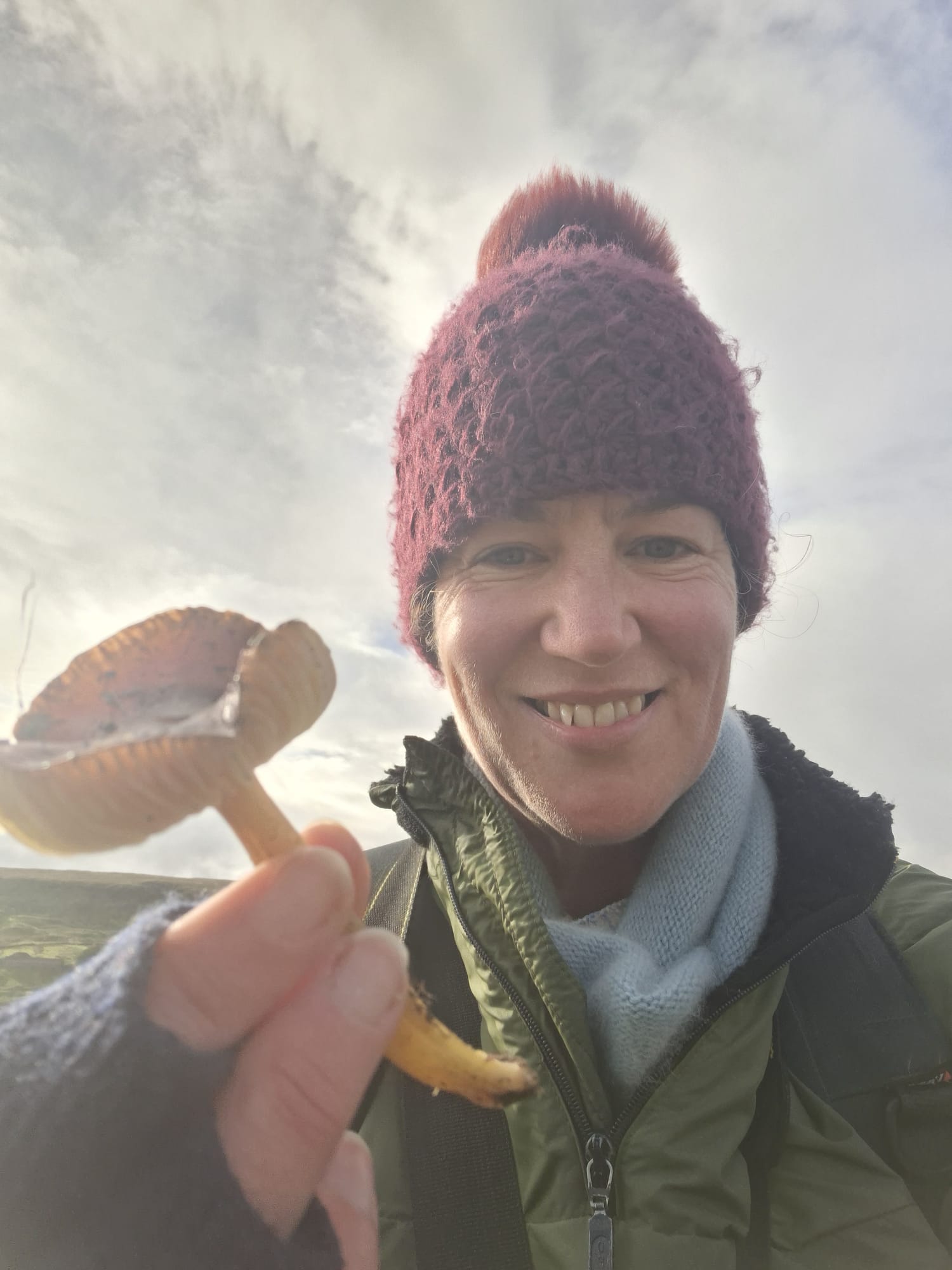
Now that question has an answer.
It's a discovery about what we know of Nidderdale. A first record doesn't establish when a fungus arrived, or how long it's been growing unseen. The Date Waxcap, Hygrocybe spadicea, fruits irregularly and can go unobserved for years. Its appearance makes something visible that previous visits may have missed.
“I’d spent three days surveying this site and then there it was, just ten minutes into the latest visit,” Kelly said. “It is a beautiful, distinctive fungus and to have the first record for Nidderdale is really exciting.”
The precise location is being withheld to protect the site.
The discovery comes in a season that has unsettled familiar expectations.
Dry ground delayed the appearance of many waxcaps. Yet Date Waxcaps have been reported at several sites across the country, including places where they haven't been seen for many years.
“There is evidence that date waxcaps can appear more frequently following dry summers, and there have certainly been more reports than usual this autumn,” Kelly said.
Why that happens remains uncertain. Conditions might have been particularly favourable for the species. Another possibility is that drought has placed it under stress, prompting it to produce fruiting bodies to reproduce. Neither explanation has been established.
That uncertainty is important. An increase in visible fruiting bodies doesn't, by itself, demonstrate that a species is thriving or recovering. Nor does this discovery establish that the summer’s drought was beneficial.
The Date Waxcap is classified as globally Vulnerable on the IUCN Red List. Recording where it occurs helps build the knowledge needed to understand and protect it.
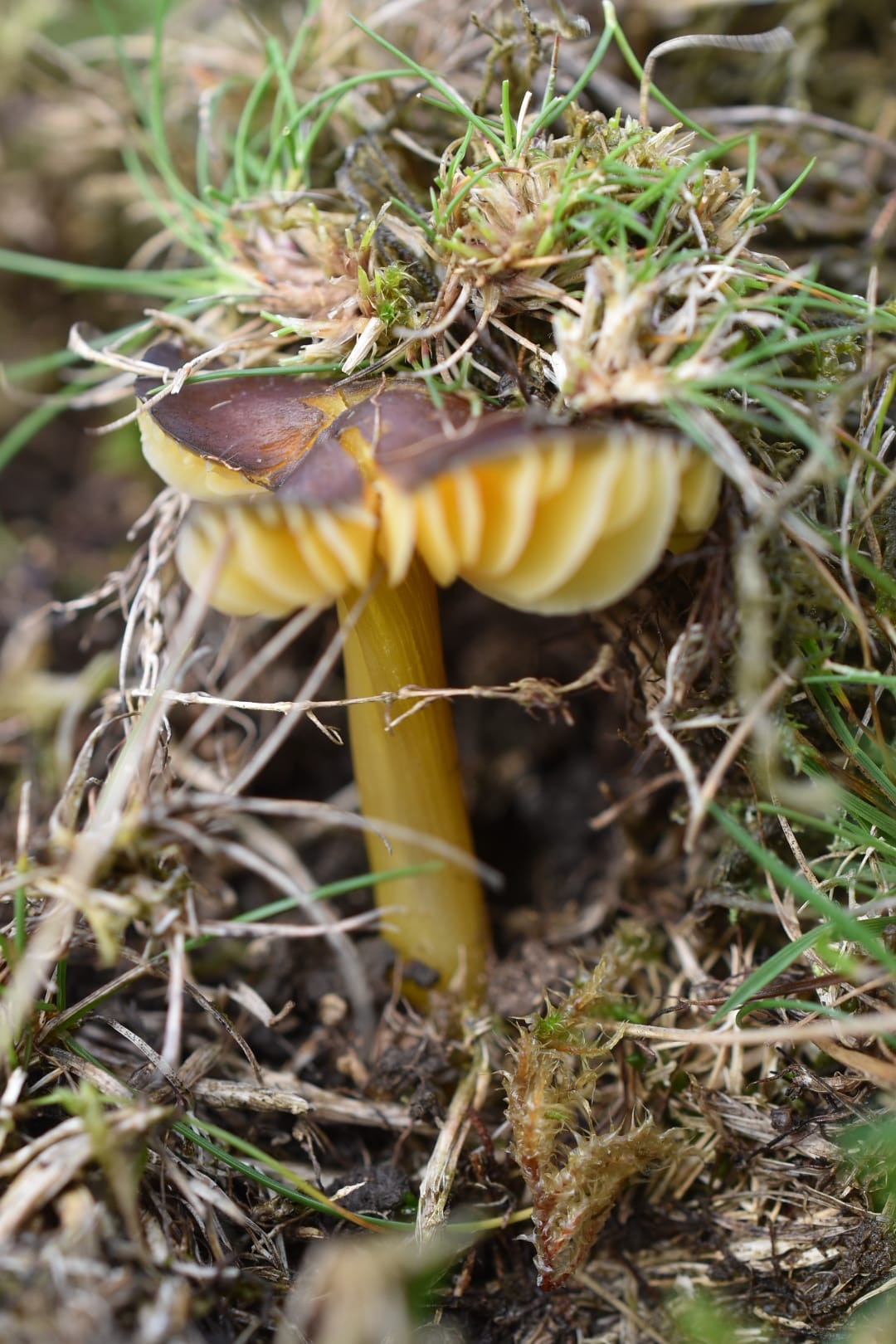
The find adds to an increasingly significant picture of Nidderdale’s grassland fungi.
Specialist surveys across three sites in autumn 2025 recorded 45 species of grassland fungi, including 25 waxcap species. Two sites were assessed as internationally important for their grassland fungi and the third as nationally important.
Expert surveys are continuing this autumn, alongside investigations of further sites. Kelly’s discovery shows why repeated visits can be valuable: even several days of searching cannot offer a complete account of what a place supports.
That knowledge also has a practical use in decisions about land management.
Grassland officer Joseph Haywood is surveying sites being considered for restoration or enhancement in 2027 through the Nidderdale National Landscape Grasslands Project. The partnership with Yorkshire Dales Millennium Trust, which funds his role, aims to restore or enhance around 50 hectares of grassland each year over three years.
Understanding existing fungal interest can help inform that work. A field’s value is not always apparent from a summer visit, or from the plants most easily recognised above ground. Autumn can supply another part of the picture.
Our earlier feature began with the thought that a familiar field can hold more than we understand. This discovery gives that thought a particularly satisfying expression: a species missing from the local record, found through patient attention.
There will be other gaps. The invitation to keep looking remains open.
The Date Waxcap has a dark, date-brown cap with contrasting yellow to orange gills and stem.
If you think you've found one, leave it undisturbed. Take clear photographs showing the cap, stem and underside, record the date and precise location, and send the details to Kelly.Harmar@northyorks.gov.uk for specialist confirmation. Respect access arrangements and obtain permission before entering private land.
Other grassland fungi sightings can be submitted through Plantlife’s Waxcap Watch.
Read our earlier feature: The Field Is Keeping Secrets: Nidderdale’s Search for a Rare Waxcap.
Discovery photography: Kelly Harmar / Nidderdale National Landscape.


