



Richard III has been bent, twisted and transformed into one of theatre’s most recognisable villains for more than four centuries.
In Shakespeare’s play, physical difference and moral corruption are repeatedly made to reinforce one another. Richard’s body doesn't simply belong to the character; it becomes theatrical shorthand for everything the audience is expected to fear, distrust and condemn.
A new disabled-led theatre company based in York is preparing to challenge that inheritance.
Hephaestus Theatre will make its debut at The Basement, beneath City Screen Picturehouse, on Thursday 10 September with RICHARD iii REDUX, written by renowned disability arts practitioner Kaite O’Reilly with the late theatre director and performer trainer Phillip Zarrilli.
The one-woman play examines Richard III through a disability perspective, but it also looks directly at the experience of the disabled actor: the bodies they're expected to portray, the stories from which they've historically been excluded and the assumptions still placed upon them by theatre and film.
At its centre is an Actor exploring her own relationship with her disabled body while investigating the many ways Richard has been represented - as historical figure, Shakespearean creation and enduring cultural monster.
For Hephaestus, the production is both an artistic debut and a statement of intent.
Formed by University of York theatre graduates and Co-Artistic Directors Eleanor Doig and Louisa Ashdown, the company is dedicated to telling disabled stories and putting disabled and neurodiverse artists onstage and behind the scenes.
That distinction is important. Disabled people have frequently appeared as subjects in theatre without being given equivalent authority as writers, performers, directors and makers. Their bodies have been used to signify tragedy, dependence, inspiration or threat, while non-disabled performers have often received acclaim for temporarily inhabiting those experiences.
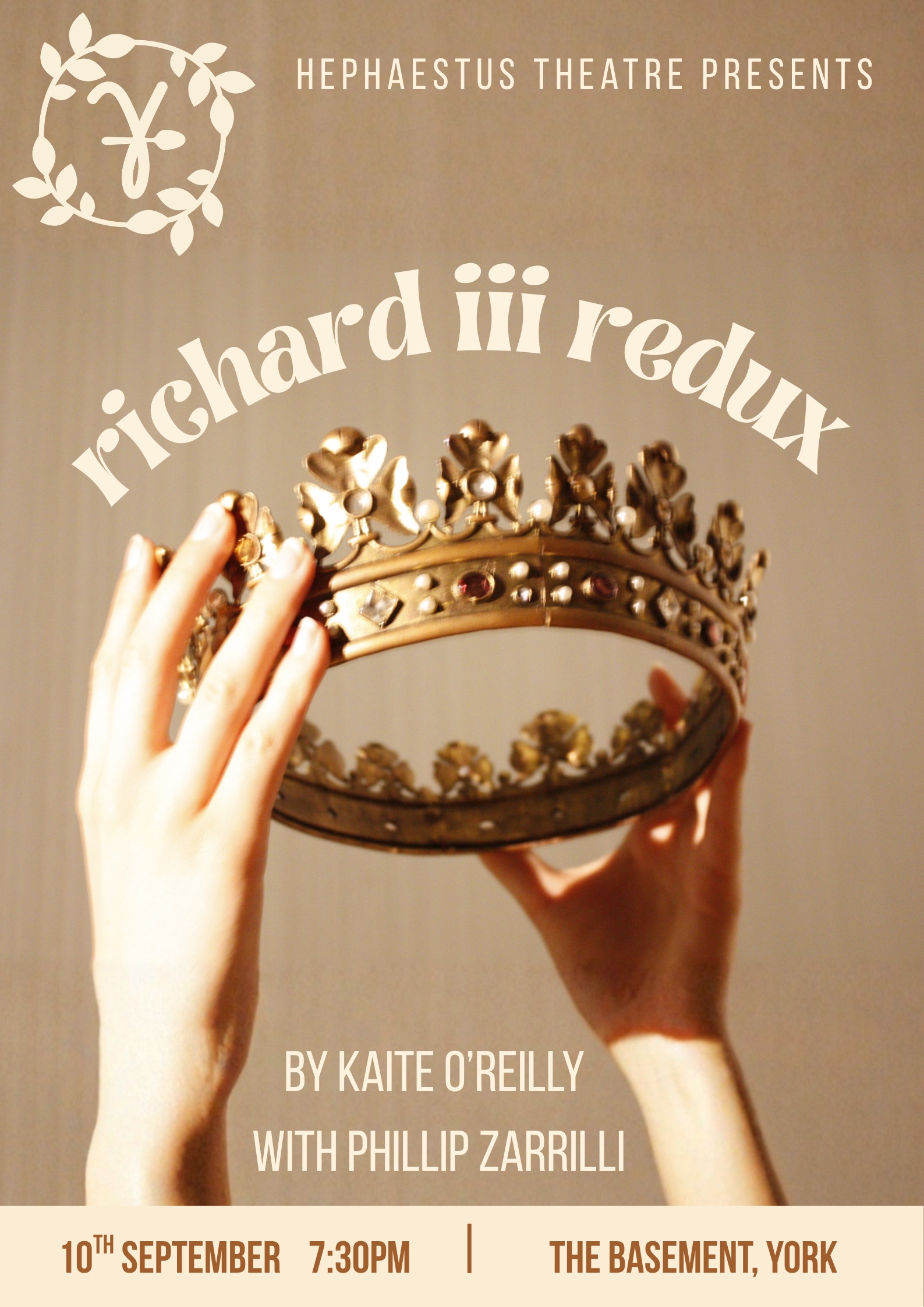
RICHARD iii REDUX turns its attention towards that tradition.
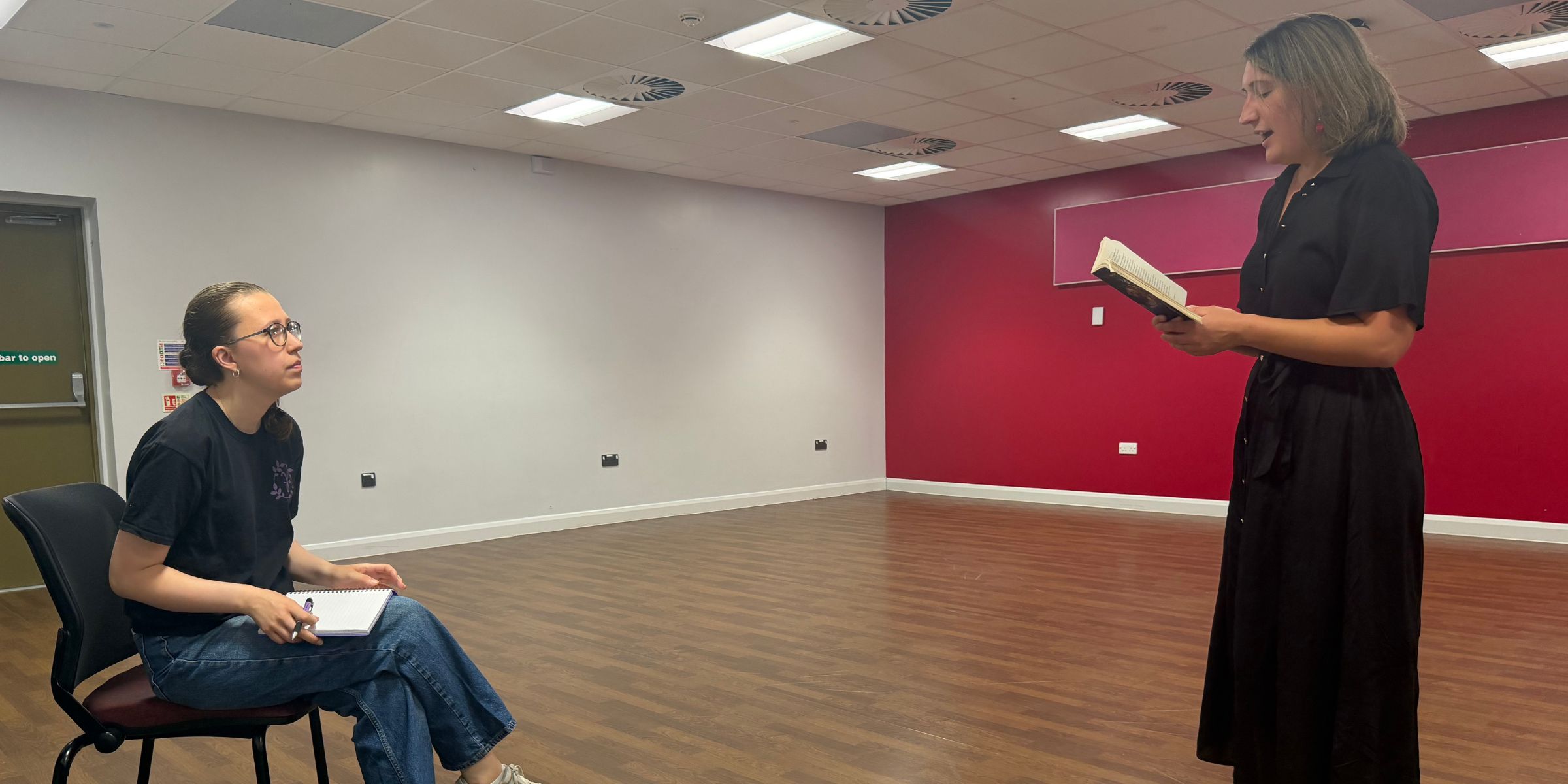
Louisa Ashdown directs the production and performs the role of the Actor, moving between three distinct personas within the text. Her own disability isn't immediately visible, but she describes a strong personal connection with the play’s examination of disabled identity.
The work asks why Richard’s physical difference should have been used for centuries as proof of an internal wickedness - and what might happen if the familiar character were approached by disabled artists refusing that equation.
This isn't an attempt to turn Richard into a misunderstood saint or excuse the brutality associated with his pursuit of power. It's a sharper theatrical question: why has his body been made part of the prosecution?
Georgina Way, who also identifies as having a hidden disability, appears as the Presenter, contributing through filmed elements integrated into the live performance. Producer Eleanor Doig completes the core creative team behind Hephaestus’ first full production.
The debut follows two fundraising events held through the company’s Breaking Boundaries initiative, where disabled artists were invited to present their own work and showcase their talents.
That emerging community around Hephaestus may prove as important as any individual production. York possesses a rich and active theatre culture, but access can't be measured simply by whether a disabled audience member can enter a venue. It also concerns who is employed, who leads, whose work receives resources and whether disabled artists are trusted to create work that is politically complex, funny, difficult and formally ambitious.
The Basement offers step-free access for the performance, which will be captioned throughout.
Hephaestus hopes non-disabled audience members will leave reconsidering a character embedded within the theatrical canon, while disabled people might experience something still too unusual on British stages: recognition without being reduced to a lesson for somebody else.
The company is already looking towards creating original work about the experience of being a disabled artist. But beginning with Richard III feels particularly apt.
Few theatrical bodies have carried so much accumulated symbolism. Few have been interpreted so repeatedly by people who don't share the physical experience being represented.
Hephaestus is not asking audiences to forget Shakespeare’s Richard.
It is asking us to look again - and to notice what generations of theatre have encouraged us to see when we look at a disabled body.
Hephaestus Theatre presents RICHARD iii REDUX by Kaite O’Reilly with Phillip Zarrilli at The Basement, City Screen Picturehouse, York, on Thursday 10 September 2026 at 7.30pm.
The performance is captioned and the venue has step-free access.
Tickets are available through Eventbrite.
Header image: Louisa Ashdown and Georgina Way in rehearsal (Image: James Stewart)





