



Before we get to the film festival, there is some washing to discuss.
Benjamin Till remembers women in Leeds drying their clothes above the road. When a lorry approached, the washing was lifted on a stick to let it pass, then lowered again. For the filmmaker and composer working on A Symphony for Yorkshire, it was irresistible.
“Somebody said to me, why on earth do you want to film that? And I was like, you have no idea. This doesn’t happen in Northamptonshire.”
Till grew up in the Midlands and studied in York. Yorkshire’s confidence in its own identity fascinated him: the way people announced where they came from, the pride contained in the county’s name. His 2010 musical project brought Yorkshire voices together, finding something extraordinary in things their neighbours might barely notice.
“Sometimes it takes an outsider to say, by the way, you are sitting on something here, which is very magical and very special and very quirky.”
That instinct runs through his work as Head of Film Factory at UK Jewish Film. He wants to make room for people whose stories are missing from the screen, and to let them recognise something of themselves when the lights go down.
The Yorkshire connection reaches further than an affectionate recollection. That sense of pride, he says, is “the similar pride that I want the Jewish community to feel right now”.
As the UK Jewish Film Festival reaches its 30th edition, the ambition carries particular weight. Our conversation moves between the delight of discovering a good story and his anger at the hostility he says he and other Jewish people encounter.
He is determined that the films should offer an expansive account of British Jewish life, and he wants non-Jewish audiences to come and share it.

“What is missing from any debate about Jewish people is humanity, universality, commonality,” he tells me.
Till calls the Holocaust, antisemitism and Israel the “triple lens” through which Jewish people are habitually viewed. He argues that this leaves too little room for the relationships, personalities and everyday experiences that make up a life.
“That means that people perceive the Jewish community as either victims or aggressors.”
The British Jewish Life on Film programme allows him to widen that view. It sits within a larger festival of international cinema, but its attention is on people living here: their friendships, families, customs, disagreements and jokes.
“We really, really want non-Jewish people to see these films. We’re desperate to share so that people just, it just changes, it just shifts their expectations a little bit.”
Then he adds: “But I also, I just want them to laugh.”
In Leeds, that invitation comes with fish and chips. Fish, Chips & Faith, directed by Micaela Blitz and Miriam Rosenberg, finds its story in a restaurant serving kosher and halal food under one roof. The film brings Jewish, Muslim and Christian customers into the same frame, eating and talking.
Till had long wanted a short documentary about fish and chips. Here was the subject, with a story of everyday coexistence attached. As he watched the interviews, he expected the customers’ contributions might offer somewhere to shorten the film. Instead, each new encounter gave him another reason to keep watching.
I’ve visited the shop myself before our conversation. The welcome is real. So is the pleasure of finding people comfortably sharing a place at a time when division so often commands our attention.
Till is careful about how much anyone should claim for it. A fish and chip shop obviously can’t resolve a conflict. But, he says, “it just shows a different model”.
“Just the idea that we are cousins, all of those religions, we, you know, there are things that we all believe in.”
The film’s invitation is modest enough to be credible: sit down, eat something, talk to the person beside you. An encounter can begin without everyone first agreeing on everything.
That matters to Till when he thinks about who might attend a screening. He describes seeing people arrive in Leeds wearing pro-Palestinian badges.
“Of course, everyone’s welcome,” he says. “We all have very complex and nuanced views on this situation.”
He hopes those audiences will find something recognisable in the people on screen. In the case of Fish, Chips & Faith, he hopes they might also go and share some food.
Another northern documentary begins with an equally familiar activity: going for a walk. Jack Levy’s Rambling follows the Pennine Wayfarers, a Manchester Jewish walking group whose members have built a community through their excursions.
Till remembers the original appeal of the pitch: an opportunity to take a small documentary out into the countryside. Then came the destination, Kinder Scout, and a connection that deepened the story.
“The missing piece of my jigsaw was I did not know that it was led by a Jewish person from Manchester.”
He's talking about Benny Rothman and his role in leading the Kinder Scout mass trespass. Till knew the story of the struggle for access; discovering Rothman’s Jewish identity brought another part of that history into focus for him.
“There’s something so quintessentially British about the right to roam,” he says.
It’s a connection he wants people to remember: Jewish history within the wider history of working people seeking access to the countryside. In his account, the right to fresh air belongs to the same conversation as cultural belonging and the opportunity to take part.
“That’s something that we should be remembering and embracing and feeling very, very proud of.”
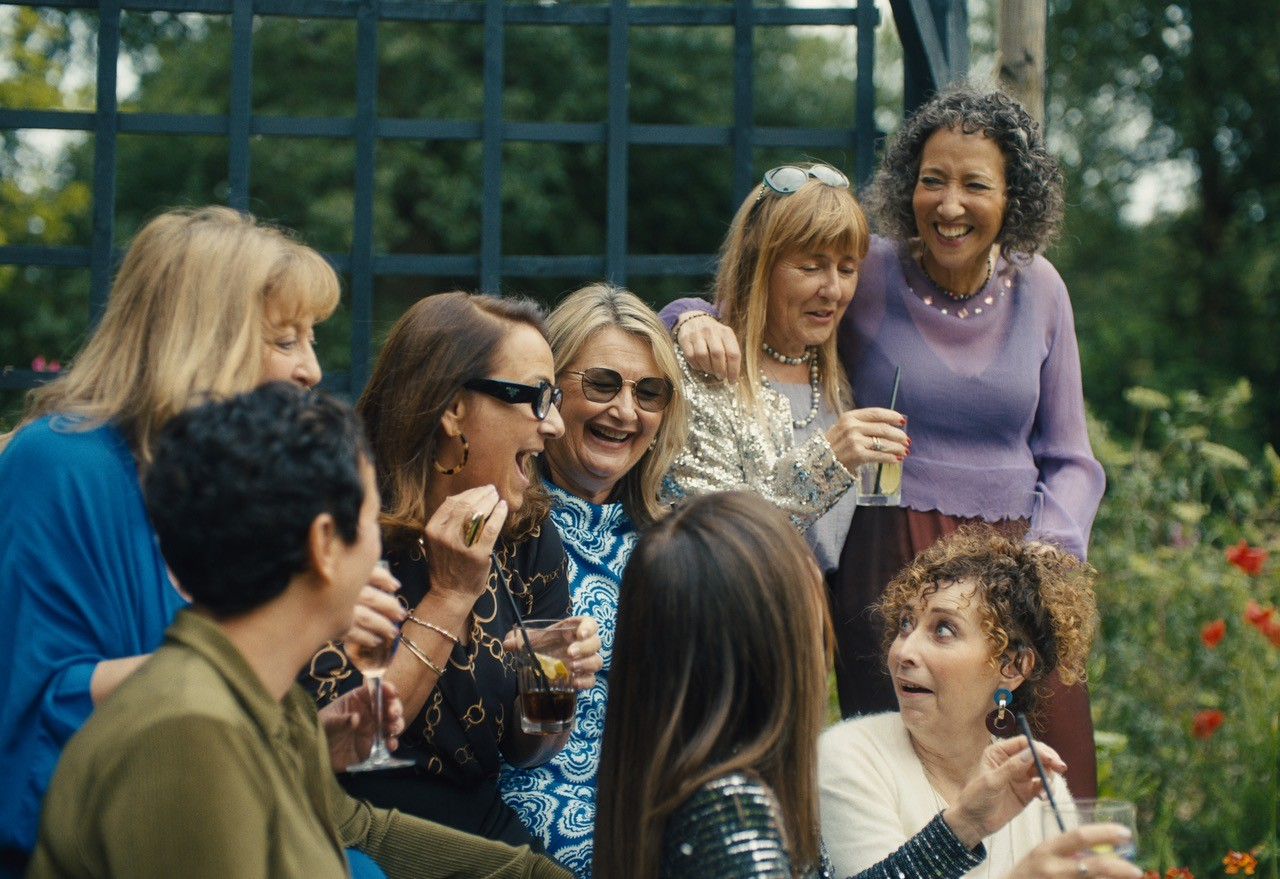
Liverpool supplies a different kind of continuity. Primordial Chicken Soup, directed by Barney Pell Scholes and Daisy Abboudi and first shown at the festival in 2025, follows eight Scouse Jewish women whose friendship stretches back more than half a century. It returns in this year’s Liverpool programme.
“What you see first is their Scouseness,” Till says. “I think that’s really, really vital.”
Their Jewishness is present in the customs and celebrations they discuss. Their identity also belongs to their city, to their shared experience and to the friendship itself. Till finds a similar quality in films emerging from Leeds: “a very clear sense of identity, which is as northern and as Leeds as it is Jewish”.
That regional specificity is paramount to a filmmaker who says he’s spent his career trying to take things out of London. There are stories to be told across the country, and audiences who might rarely see their own communities represented.
He recalls a screening in Bath where someone thanked him because they had genuinely believed they were the city’s only Jewish resident. At the cinema, they discovered dozens of others, including someone who lived on their street.
The screening had created an opportunity to find one another. For a small community, that can have consequences beyond the evening’s entertainment.
When Till talks about the present, his frustration becomes unmistakable. He describes being spat at in the street and having broken bottles thrown at him. He recounts a threat against his non-Jewish husband, who was wearing a kippah while coming to see him at synagogue. These are his accounts of experiences that have shaped how he moves through the world and approaches his work.
He also describes the strain of trying to interpret silence: approaches about Jewish creative projects that receive no reply, and the uncertainty over what a refusal or cancellation means. He questions possible explanations himself. Is a project unappealing? Is he considered too small a name? Is the difficulty connected to its Jewish subject?
“The problem we have at the moment is silence,” he says. “And it’s very, very difficult to prove why the silence is happening.”
An unanswered email won’t, by itself, establish a motive. But his account reveals the exhausting uncertainty that follows experiences of hostility: the difficulty of knowing when an ordinary professional setback might carry another meaning.
Till is a gay man, and he reaches back to his experience of the 1980s when describing the feeling of searching for allies and wondering how much acceptance is conditional.
“I feel that there is something happening that feels quite similar.”
He speaks from his own experience. British Jewish people hold different political views and have different relationships with religion, culture and Israel. The variety he describes is also the reason he wants these films to exist. He resists the expectation that a Jewish artist should first answer for a foreign government before their work can be encountered.
“How about you just take what’s being handed to you about British Jewish life without any question?” he asks. “Just see how similar we all are.”
His own family history is rooted here. He says his Jewish family have been in Britain since the 17th century; his paternal grandmother was a first-language Welsh speaker.
“I cannot describe myself as any other way than British.”
There’s encouragement in his account too. He speaks warmly about the welcome at Leeds’ Hyde Park Picture House and the pleasure of a full screening. That support is incredibly important, as does the willingness of an audience to arrive with curiosity.
Across the programme, there’s room for different languages, generations and family arrangements. Rachel Jones Needs a Boyfriend Not a Bat-Mitzvah, directed by Talia Smith, follows a young Welsh Jewish girl negotiating adolescence and preparations for her bat mitzvah. Other films explore interfaith relationships, family expectations and grief. These are subjects with plenty of room for recognition, and for comedy.
As we approach the end of our conversation, Till is explicit about what he wants readers to understand. The difficulties are real to him. So is his determination to make something joyful.
“What I don’t want it to feel like is we’re just whinging about this,” he says. “We’re trying to show the solution, in my view.”
That means celebrating living Jewish people, giving audiences permission to enjoy themselves and making space for encounters that might otherwise never happen.
“Let’s have some escapism,” he says. “That’s what we want.”
His hope for Jewish audiences is both personal and collective. “I want Jewish people to walk out of those spaces going I feel ten feet taller than I felt before.”
Part of that comes from seeing Jewish people on screen being “interesting and fascinating and funny and sad”. Part comes from discovering who else is sitting in the cinema.
“I’ve met other Jewish people and I know that I’m not alone.”
For everyone else, the invitation is wide-open. Come for the films. Come for the laughter, the friendships and the stories you’ve not heard. Come willing to discover something.
“What I want people to know is this is the positive,” Till says. “This is the alternative.”
The UK Jewish Film Festival marks its 30th edition in 2026. London screenings run from 5 - 15 November, followed by the Manchester and nationwide tour from 15 November - 3 December. The online festival runs from 18 - 30 November.
Selected northern British Jewish Life on Film screenings: HOME, Manchester, Sunday 29 November at 3.45pm; FACT, Liverpool, Monday 30 November at 6.30pm; Showroom, Sheffield, Wednesday 2 December at 6.15pm.
Programmes vary by venue. Full listings and booking HERE


