



When you stand inside Sunderland’s new Culture House, the scale of its ambition becomes clear.
It's not simply the four floors, the incredible, long atrium rising through the centre of the building, the digital screens, the studios or the Sky Garden above Keel Square. It's the range of people the place appears to have been designed to hold at once: a child meeting a book; a teenager trying virtual reality; a family tracing its history; an artist installing work; a freelancer opening a laptop; a small company recording a podcast; someone who has come in only for a coffee and found a reason to stay.
When the doors open on Saturday, 12 September, the £27 million Culture House will become Sunderland’s new City Library and much more besides: 75,000 square feet of library collections, exhibition and performance space, creative technology, local studies, food, play, work and encounter.
The familiar civic language calls it a “living room in the heart of the city”. Culture House Director Leanne Littlewood has a more revealing image.
“It’s a bit cheesy,” she tells MagNorth, looking around the building ahead of its public opening, “but you never know what is going to happen in the contents. When you open the cover of a book, or you come into our building, the contents will change all the time, because we’ll be a different story for everybody.”
Leanne's analogy is spot-on. Buildings don't mobilise communities on their own. They can be beautifully designed, expensively equipped and strategically positioned, but their public value is created in the relationships that form inside them - and in who feels that the place belongs to them.
For Littlewood, that work begins locally.
“Our first audience is Sunderland,” she confirms. “They are the most important people to this building, because it’s theirs and it’s in their hometown. They’re our first audience, but we absolutely want to be a regional, national and international venue.”

Culture House has been designed by FaulknerBrowns Architects as one of the landmark public buildings within the wider Riverside Sunderland regeneration. Its new City Library includes physical and digital books and magazines, local-history archives and genealogy resources. The Den gives younger children space for books, stories and play; the Teen Library adds gaming stations, VR headsets, study space and quieter reading corners.
Elsewhere are an immersion gallery, adaptable event and performance rooms, creative computers, a media studio with podcasting and green-screen facilities, co-working space, retail opportunities for makers, the Northern Gallery for Contemporary Art and the University of Sunderland’s new creative hub. Blacks Corner operates the ground-floor restaurant, while the Sky Garden looks out across the changing city.
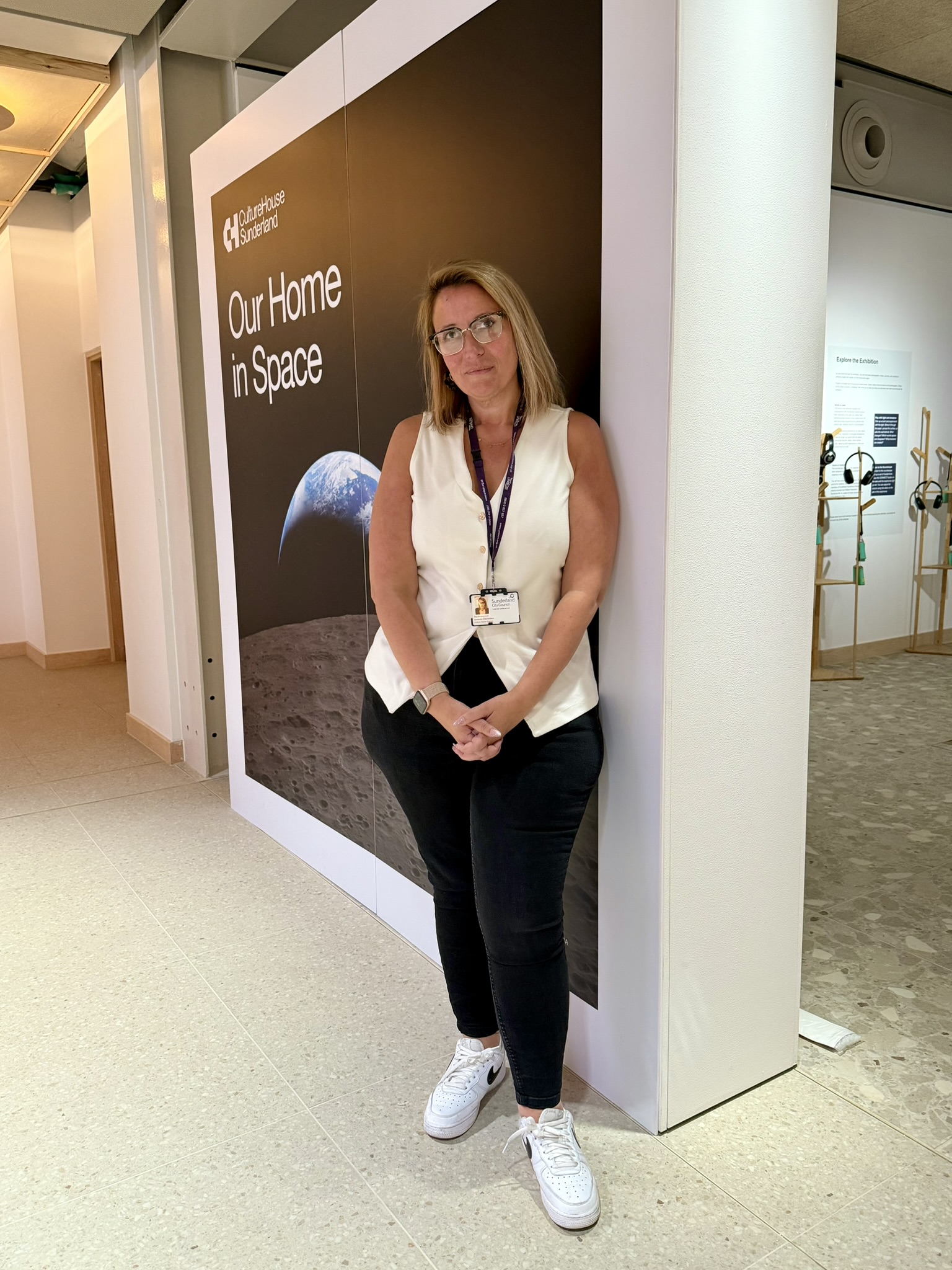
The opening exhibition, Our Home in Space, has been developed with London’s Barbican. Bringing international digital work into the same building as Sunderland-made art is not, in Littlewood’s view, a way of allowing the prestigious name to overwhelm the local one. It is an exchange of visibility.
“We’ve got people involved who are grassroots, people who are regional and people who are international, and they’re all put together in one exhibition,” she explains. “When we put out our exhibition brochure and it has Marshmallow Laser Feast in it, all of their fans will look at it - and they’ll see the stuff that’s coming from Sunderland artists and Sunderland creatives.
“It’s about using their shining stars to shine a light on people locally - and hopefully they’re stars too.”
The principle runs throughout the building. A Seven Stories presence introduces families to the National Centre for Children’s Books in Newcastle, perhaps including parents who have never previously taken their children there. The local-studies collection directs visitors onwards to Sunderland’s network of heritage organisations. Micro-exhibitions and screens will act as invitations to encounter another artist, place, group or idea.
“We always want to try and make a new connection for you, to point out something different,” says Littlewood. “You never know, when you come into Culture House, what the next surprise is going to be - the next organisation, the next programme, the next activity.”
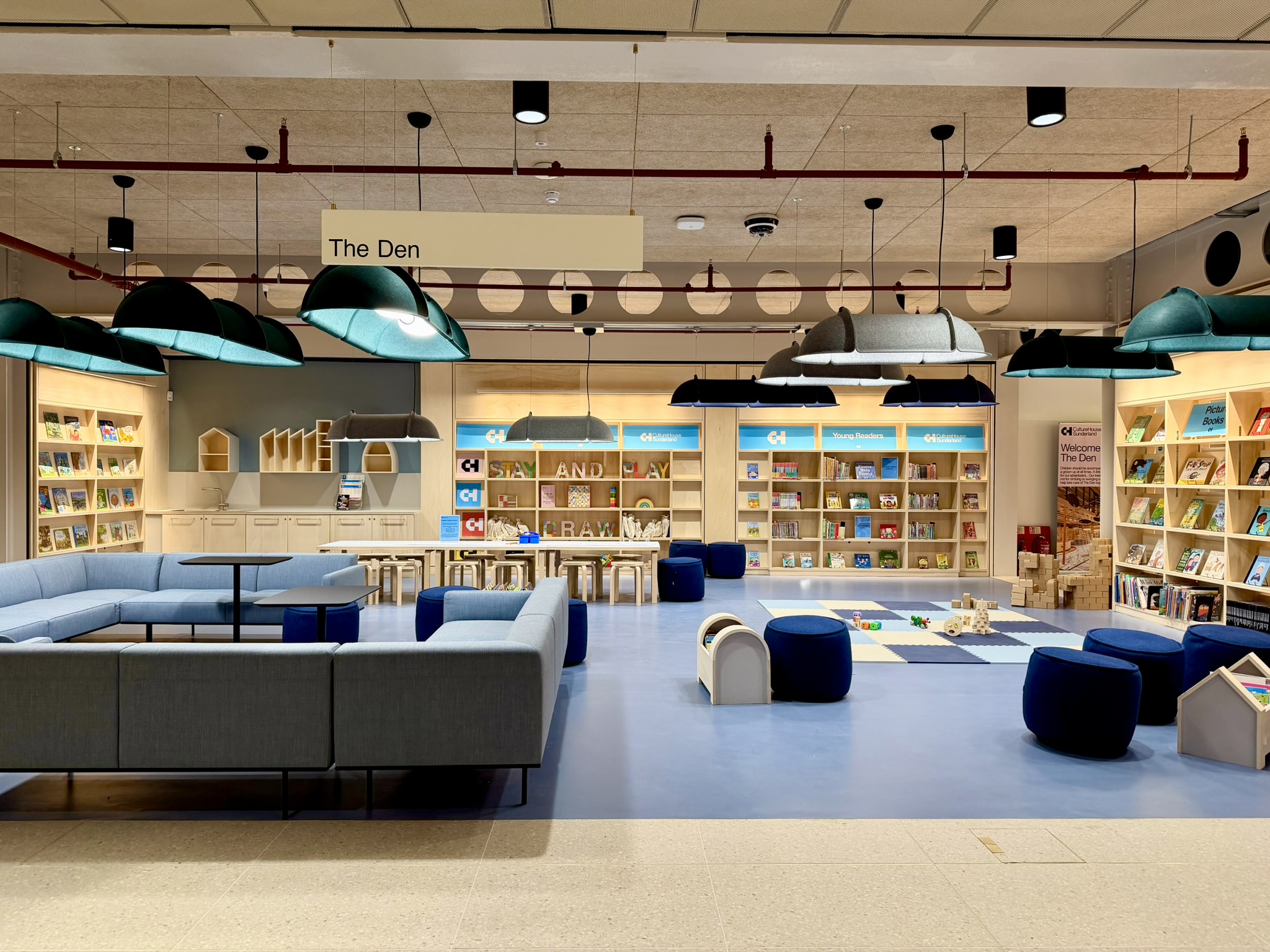
It's easy to talk about children’s reading as a worthy cultural good. Littlewood makes a harder economic argument for it.
“How can we build people who are innovators and entrepreneurs if we’re not teaching them to imagine?” she asks. “That all starts with sitting down and reading a book with them when they’re little - teaching them to dream.
“Places like Culture House, and places like Seven Stories, do that. We absolutely want our communities to go to these places and have those moments with little ones where we can teach them to dream, because in 15 years’ time they could dream up something different that is massive for the city.”
That's the strategic case for a modern public library in miniature. Culture House isn't positioned at one end of a pipeline labelled “culture” and Crown Works studios at the other end labelled “growth”. Reading, play, confidence, digital curiosity, informal learning, professional networks and paid creative work all belong to the same ecology. If a region wants the high-value jobs, it also needs the early encounters that allow local people to imagine themselves doing them.
Nationally, the creative industries contributed around £124 billion in gross value added and supported about 2.4 million jobs in 2023–24. But those opportunities remain profoundly uneven: 46 per cent of creative-industry jobs were concentrated in London and the South East, while the North East held only two per cent of the UK total.
The region’s own figures explain both the opportunity and the urgency. The North East Mayoral Strategic Authority’s latest evidence estimates 23,000 creative-industry jobs in 2024 - 2.67 per cent of employment, compared with 5.03 per cent across England. In Sunderland, as in Durham, Northumberland and South Tyneside, the sector accounted for less than two per cent of employment.
Yet the same evidence estimates that the North East’s creative industries generated £2.1 billion in GVA in 2023 and grew by 17.9 per cent in real terms between 2018 and 2023, against 3.6 per cent across the UK outside London. That growth's real, but not evenly distributed: computer programming and consultancy produced 71.6 per cent of the region’s creative GVA, while the other measured creative subsectors collectively contracted over the same five years.
In other words, a creative boom can't simply be declared. Its routes in have to be widened, its infrastructure connected and its benefits deliberately spread.
Littlewood recognises the old assumption Culture House is trying to dislodge.
“More and more people are recognising that you don’t have to move to Manchester to work in media. You don’t have to move to London to work in TV, or magazines, or theatre, because we have a sector that is growing and bubbling and emerging here. Yes, it absolutely takes time, but we are building those layers of the foundation.
“Once upon a time, if I told my mum and dad I wanted to work in culture, they would have thought I wanted to go on stage - and that would be it. But now working in culture means you can do game design, media design, magazines, social media. The breadth of what is available in the cultural and creative industries is much broader, especially with digital.”
One of Culture House’s most consequential spaces may also be among its least theatrical: the co-working area.
Creative work is unusually fragmented. Across the UK, 28 per cent of creative-industry workers were self-employed in 2024–25, twice the rate across the workforce as a whole. In the North East, 92.7 per cent of registered creative businesses are microbusinesses employing fewer than ten people.
That means many of the people expected to power the region’s creative growth are working alone, often from a spare room, kitchen table or garage. They lack not only affordable workspace but the accidental exchanges from which commissions, partnerships and confidence can grow.
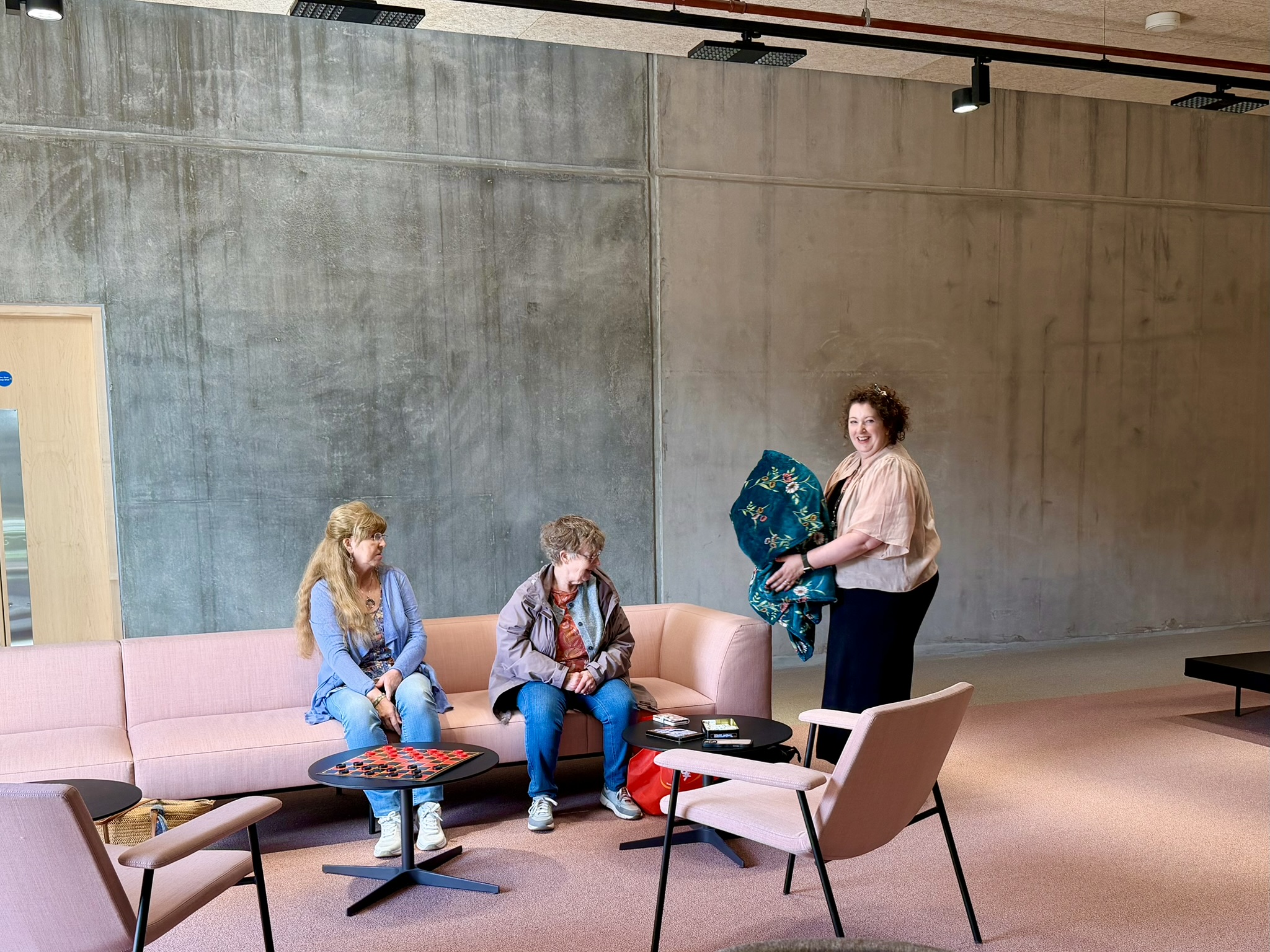
“The whole freelance community that works with cultural services is massive, whether you’re in a venue, a museum, a library or one of the many outdoor events,” says Littlewood. “They don’t have a place to come and meet. Supporting the cultural ecology of the city, doing social events and having purposes to bring people together, is at the core of the work we’re going to do.”
She describes the loss of the “water-cooler moments” once supplied by shared offices: sitting beside somebody in a related field, hearing a problem and realising you know the person who can solve it.
“There are so many people who are entrepreneurs now and work from the garage or the kitchen table. You don’t have those moments to sit next to somebody who might be like-minded or work in a similar industry.
“We’ll try to create them. We might have particular times in the month where we say it’s Tech Tuesday or Freelancer Friday, so if you work in that industry, you work out of the co-working space that day. You never know who is going to be there. It’s those conversations when everybody is having a cup of tea: ‘Did you know about this? Should we work on that together? It’s too big for me, but let’s do it together.’”
This is networking stripped of the lanyard and keynote speech. It's also the connecting tissue a sector dominated by freelancers and tiny businesses requires if public investment is to produce durable local capacity rather than a sequence of isolated projects.
Culture House doesn't arrive alone. It sits beside Keel Square within a rapidly forming civic and cultural neighbourhood: the Empire Theatre and The Fire Station; City Hall and the new Wear footbridge; Riverside Park and new homes; the businesses and public events around the square; Sheepfolds Stables across the river; the University; Sunderland Culture’s network of venues; and a growing collection of independent organisations and community-interest companies.
“We’re a brick within a much bigger wall,” says Littlewood. “Hopefully we’re a big brick. But collectively we create a really strong foundation that we can only grow from.”
The wider regional strategy is moving in the same direction. The North East mayor has announced a £104 million culture and creative-industries package. At its centre is more than £38 million for the first phase of Sunderland’s Crown Works Studios, planned as 125,000 square feet of film, television, gameshow and live-event production space. Regional screen production has already risen by more than 130 per cent in three years; Crown Works is intended to give that activity a permanent industrial base on Wearside.
Culture House occupies a different position in that landscape, but an essential one. A studio development can attract productions; it can't, by itself, ensure that a kid growing up in Sunderland can see a route towards the work happening inside. That requires libraries and colleges, youth programmes and community groups, digital equipment and low-risk opportunities to experiment. It requires somewhere to meet.
The University of Sunderland’s presence inside the building strengthens that bridge. The Northern Gallery for Contemporary Art - the longest-established contemporary-art gallery in the North East - gains a prominent new home, while students will be able to exhibit, collaborate with professional artists and encounter the practical workings of a public gallery.
For Littlewood, the region is already charged with possibility.
“In the North East, we’ve got this little powder keg that’s exploding at the moment,” she says. “These great innovators, these great companies creating digital content - fabulous games for PlayStation and Xbox - are being created in the North East, and you wouldn’t necessarily know.
“What we’re not great at in the North East is going, ‘We’re brilliant.’ We’re very modest. We just trundle along, accepting the fact that we’re grafters and we’ll do as good a job as we possibly can. But we’re not really going, ‘Look at us.’ And it is time to do that.”
Then comes the line that could serve as the building’s economic brief.
“The people here are brilliant. The infrastructure is what we were short of - and now we’ve absolutely got it.”
There is, inevitably, risk in all this promise. A public building can welcome everybody in principle while being used by a much narrower group in practice. Spectacular opening programmes can draw attention without building habits. Footfall is easier to count than belonging.
Sunderland’s recent experience offers useful evidence. A newly published council evaluation of creative and cultural projects supported through the UK Shared Prosperity Fund reports 401,375 people reached by its city-wide culture programme, 5,796 local events or activities supported and 435 volunteering opportunities created. Its central lesson is much more important than any one total: cultural infrastructure is made of “relationships, confidence and shared purpose” as well as buildings, and the deepest engagement came when communities helped determine the content, pace and form of activity.
Culture House’s first-year plans suggest that lesson has travelled. Its Series of Surprises commissions artists, makers, residents, schools, community groups and first-time creatives to produce an open activity at 2pm on 100 consecutive days. More fundamentally, Littlewood says the programme beyond the opening season is meant to be shaped through use and conversation.
“All the ideas aren’t ours,” she says. “They need to come from the community. We’ve programmed the first season, and in that first season we want as many people as possible to come in, see us and talk about what the next thing is. What’s missing? What haven’t we done in season one that we could do in season two or season three?
“We’re not here for a sprint. We’re here for a marathon. We’re going to be here for a long time. If we’re not doing something that reaches you and your community now, come and have a chat with us, because there is space in here for us to do something with you.”
That invitation will be the measure of Culture House. Not whether every resident immediately recognises every activity as being for them, but whether the institution listens when they don't - and adapts.
Littlewood’s own route to Sunderland began in Middlesbrough, where she was a council head of service responsible for events, museums, venues and, at one point, a farm. She was preparing for a library redevelopment there when a video about the emerging Culture House project arrived in her inbox. She sent it to her directors with a note saying, in effect: look how brilliant this is. Two days later, somebody asked whether she might apply to lead it.
The attraction was consistent with a career spent treating culture as a medium for positive change.
“Culture is what brings us together. It’s what connects us all,” she says. “It is such a broad word and it means something to absolutely everybody. In my house, culture is all about football, whether I like it or not. For me it’s probably musical theatre and music. My boys are all about football. My mum and dad are all about music. My younger brother is all about wrestling.
“Culture is the thing that connects you to your community. It’s the thing that makes your bad day better and a good day even greater. You make a connection with something because you love books or drama or music - it’s the thing that makes your heart sing.
“Culture can change your mood, change a person’s day, change a person’s life. It’s about being open to possibilities.”
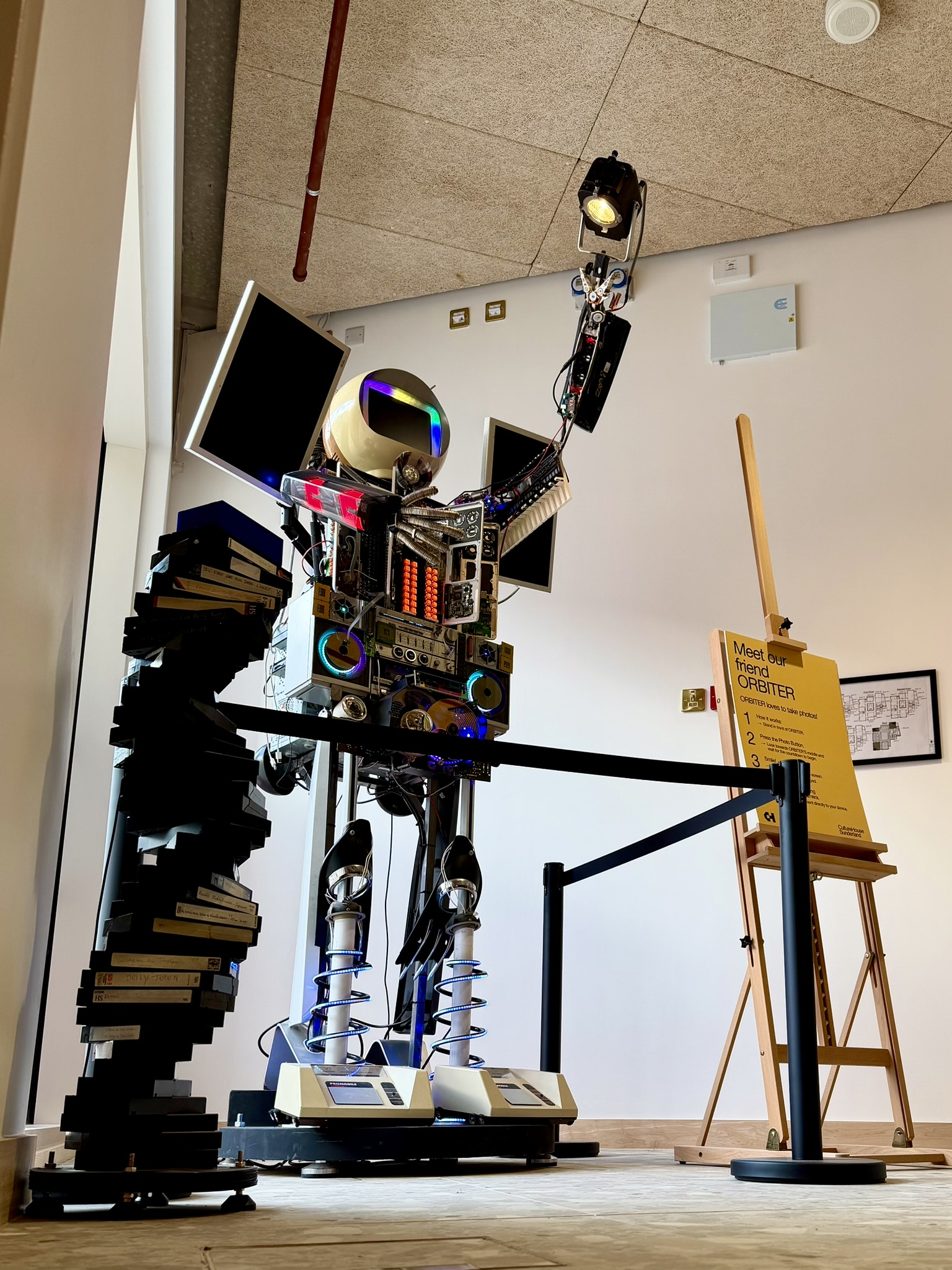
Near the end of our visit, Littlewood introduces Orby - short for Orbiter - a robot made by the artist behind Media Pollution from CDs, obsolete electronics, old wires, circuit boards and parts that might otherwise have gone to landfill. Press the button and Orby takes your photograph; scan the QR code on his screen and it arrives on your phone.
He's playful, accessible and technically ingenious. He remakes discarded infrastructure into an encounter between strangers. In a small way, he also embodies the proposition Culture House is making for Sunderland: take what's already here, connect it differently, invite the public to touch it - and see what new picture appears.

Culture House Sunderland opens to the public at Keel Square on Saturday, 12 September 2026. Entry to the building and Our Home in Space is free.
Programme and visitor information is available HERE
Images: MagNorth





