



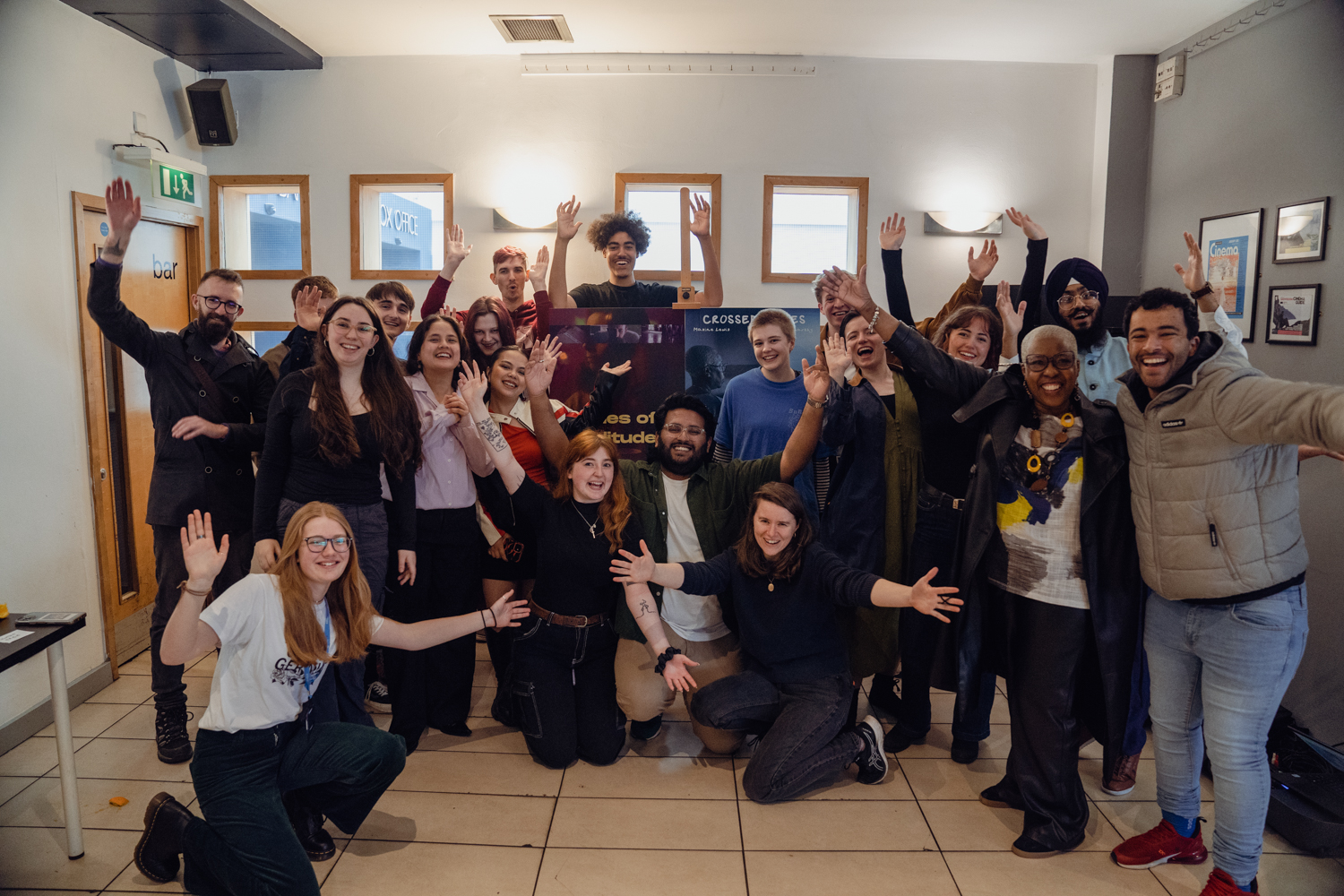
At MagNorth, thanks to the people we meet, we've learned so much over recent years about films and filmmaking. Before a film ever reaches an audience, someone has to get the chance to make it.
That first opportunity can be difficult to locate. A young person might have ideas, ambition and an appetite for learning without knowing a working producer, having access to professional equipment or understanding the different jobs that can turn a vision or script into a finished film.
In Sheffield, three filmmakers have established a company intended to make those first steps more accessible. Surge Films CIC combines commercial production with a social purpose: using profits from paid work to help fund free filmmaking programmes for young people in South Yorkshire, particularly those from working-class and underrepresented backgrounds.
Damian Palli, Kate Hardy and Clair Maleney first came together to run Futures Film School in 2024. The community interest company was incorporated in February 2026. Its ambitions grow out of that earlier collaboration and the founders’ experience of an industry in which opportunity can often be unevenly distributed.
“There are so many incredible young filmmakers in and around Sheffield who don’t get a fair shot at the industry given their Northern or working class roots,” says Hardy, Surge’s operations and outreach manager, in the company’s launch release.
“We know amazing stories come out of our region’s creatives when given the opportunity, so Surge was created to help kick start those chances.”
One example of the team’s approach comes from Glossop, across the county boundary in Derbyshire. According to Surge, it partnered with Into Film to deliver workshops for High Peak Community Arts, supporting a group aged 13–19 to make their first short film.
Working film and television professionals contributed workshops and question-and-answer sessions. The young participants developed their own film with creative freedom, then worked with cinema cameras, lighting equipment and access to costumes through Sheffield Theatres.
The combination matters. Meeting professionals can make an unfamiliar industry easier to understand. Using equipment allows that understanding to become practical. Being trusted to decide what the film should be about is giving young people a role as authors as well as learners.
A completed short also gives a participant something tangible to take forward: work they've helped conceive and produce, with decisions and problems they can talk about. It's a first piece of evidence that they can do the work.
Surge’s launch info says the film was due to screen at an Into Film festival later in 2026.

The access problem has a substantial research base. The Sutton Trust’s 2024 report A Class Act describes barriers associated with unpaid internships, low-paid short-term work and the absence of family financial support. It recommends paid internships and openly advertised opportunities, alongside earlier outreach and better connections between education and employers.
Those findings concern the wider creative industries, rather than an assessment of Sheffield or Surge’s participants. They nevertheless help explain why a practical introduction can be so pivotal - and why training needs to connect to fair employment.
Free tuition removes one obstacle. Travel, equipment and the ability to sustain yourself while seeking work can remain. A successful route into filmmaking needs to consider what happens after someone discovers they want to pursue it.
Surge’s website describes an approach covering roles from directing and location management to colour grading and sound, with mentoring for up to a year after a programme. That breadth is useful. It might even be priceless. Film careers encompass many forms of technical, organisational and creative work; showing young people the extensive range can help them find where their interests fit.
The longer-term question will be how those introductions develop into paid opportunities and sustainable careers. A new organisation like Surge isn't able to demonstrate that entire journey at launch, but it is making the route it intends to build clear.
A project with Kelham Island Museum, the Hawley Collection Trust and UTC Sheffield offers a particularly strong local connection.
Surge says the collaboration is developing professionally produced heritage films about Sheffield’s traditional manufacturing industries while giving students at UTC Sheffield City Centre practical filmmaking experience.
Here, the subject and the process belong together. Students learning to document skilled work are developing skills of their own. A film about manufacturing can preserve testimony, record techniques and help an audience understand how work has shaped a place. Making it requires careful listening, visual judgement and the ability to communicate another person’s knowledge.
There's also an editorial choice involved: what should be recorded, whose expertise should be heard and what deserves explanation to a new audience? Those decisions are part of learning to make films, just as much as operating a camera.
For Sheffield, this is an opportunity to connect its industrial history with people beginning to imagine their own working lives. The project’s stated aim is both a record of heritage and a practical learning experience. The finished films will offer a chance to see how that ambition develops. What Surge Films is doing, is much bigger than making films.
Surge also produces branded content. Its launch release describes a collaboration with Leeds creative agency Northern Artillery on a campaign for student accommodation provider Fusion Students, involving a crew of 25 across several UK locations.
That commercial activity is central to the proposed model. Paid production generates the income from which the company intends to support opportunities for young filmmakers. Its website states that profits are reinvested into free training and employment opportunities for underrepresented young people.
The team is also producing Emily is Over Party, directed by Gomolemo Nyakale. Surge describes it as a BFI-funded short about a girl from Gorton who joins a reality dating show and rebels when she discovers the game is rigged. The company’s release schedules a festival run for January 2027.
These different strands show the range of work the company is seeking to bring together: commercial commissions, original film and community-based learning. Sustaining that combination will require a viable business alongside the social ambition.
Hardy describes the thinking behind it directly:
“After many conversations of our disdain towards not always being given a seat at the table, we decided to build our own so the next generation of storytellers can get the experience and connections they need to make their own mark in the world of film.”

There's a wider cultural reason to pay attention to who gains access to filmmaking. The people making decisions behind the camera help determine which places appear on screen, which lives receive sustained attention and which details are understood from experience.
Opening a route into production gives more people the chance to exercise that judgement. It also gives a young person permission to consider a creative career seriously, with practical knowledge on which to base the decision.
Surge is at an early stage. The work described in its launch material offers a basis for interest, while its impact will become clearer through the opportunities it delivers and what participants do next.
For now, there's something worth supporting in the decision to make access part of the business itself. Sheffield has people with stories to tell. The useful work begins with giving them the tools, guidance and opportunity to make those stories into films.
Find out more: Surge Films. Young people, educators and organisations interested in its work can contact hello@surgefilms.co.uk for programme information.
Header image: A Surge Films Screening


