



In a silent film catalogued as Women Munitions Workers, Sheffield, steel is cast and women make workshop vices. It runs for seven minutes and twenty seconds. The man behind the camera was William Gordon Gregory, a Sheffield teacher.
The Yorkshire and North East Film Archive holds the 16mm film, dated 1940.
There are several ways to tell a story with those seven minutes. You could follow a piece of metal through a factory. You could start with the women at the benches and ask what the film tells you about the work they did. You could ask whose names survived with the reel, and what it would take to put a name to a face. Every choice sends you looking for different things.
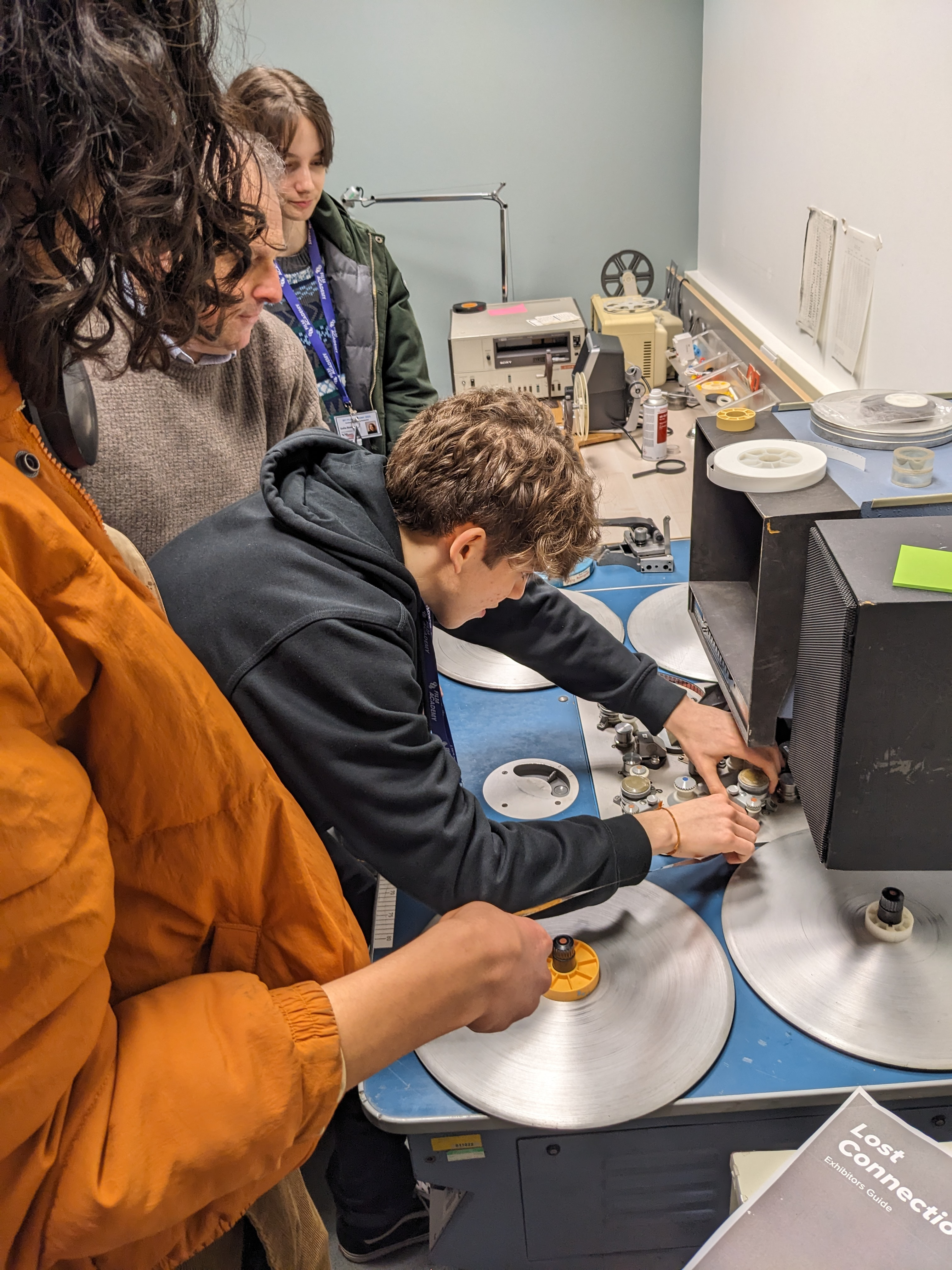
In February, 30 people aged 18 to 22 will come to Sheffield to learn how to make those choices. Showroom Cinema and the Yorkshire and North East Film Archive are running a free, seven-day BFI Film Academy course in film curation and archiving. The group will spend a day at the archive in York, with technical demonstrations and practical work, and visit Pictureville Cinema in Bradford. By the end of the week, participants will have curated and edited an archive short to present to a panel of industry professionals.

The regional archive holds more than 75,000 items, from original film and videotape to material made digitally. Its collections stretch from Sheffield to the Scottish borders, with films by amateurs as well as professionals. There’s a difference between saving a reel and making it possible for somebody to find and understand what’s on it. Cataloguing, digitising and arranging public screenings are all part of getting a film back into circulation.
A few miles from Sheffield, Charles Chislett filmed steelmaking at Parkgate Iron and Steel Works in Rotherham. His 1948 film is called Men of Steel. Set its title alongside Women Munitions Workers, Sheffield and you already have a question for an editor. What would an audience learn about the region’s industrial past if those films were shown together? What would you still want to find out about the people in them?
The two films are examples from the public catalogue. The course organisers haven’t yet announced which footage the group will work with. What matters about the exercise is that participants will have to make decisions about sequence and context for themselves. A caption can restore a name or explain what a machine does. A cut can send the viewer’s eye from the machine to the person working it. An archivist helps make that footage findable, and an editor decides where to direct our attention.
The course covers travel, food and accommodation. Those details are fundamental to somebody weighing up a week away from home. An opportunity can be free to enrol in and still cost more than someone can spare. A residential that pays for the train and the bed makes a different offer.
The organisers are introducing participants to work in preservation, restoration, curation, festival programming and documentary production. Showroom says alumni can also access career support up to the age of 25, including drop-ins, CV advice and talks. The course is part of the BFI Film Academy, supported by the UK Government and the National Lottery.
There’s value in learning how a collection is kept safe. There’s another kind of value in giving someone the time and the footage to see what they would make of it. A young editor may recognise a street, a way of working or a detail in the background that sends them off to ask someone at home about it. An archive gives them somewhere to start. Their film can give the next person somewhere to look.
Header image: A Previous BFI Archive Course


