



.jpg)
There’s a moment in Trompe l’oeil where Veronica Green’s character seems to disappear.
Not exit. Not die. Not transform.
Disappear.
“A voice lost in the noise,” as Kevin Grogan describes it - a deliberate vanishing that speaks volumes about who gets heard, who gets erased, and how easily spectacle can distract us from truth.
It’s a fitting metaphor not just for the show he’s about to star in at Manchester’s Contact Theatre - but for the journey that brought him here.
Because Kevin Grogan - the boy from Rochdale, the musical theatre performer, the drag artist Veronica Green, the RuPaul’s Drag Race UK star - has spent much of his life navigating visibility.
Learning when to disappear.
And, more importantly, when to refuse to.
Trompe l’oeil is not, Grogan insists, a musical in any conventional sense.
“It’s more like a living piece of art,” he tells MagNorth.
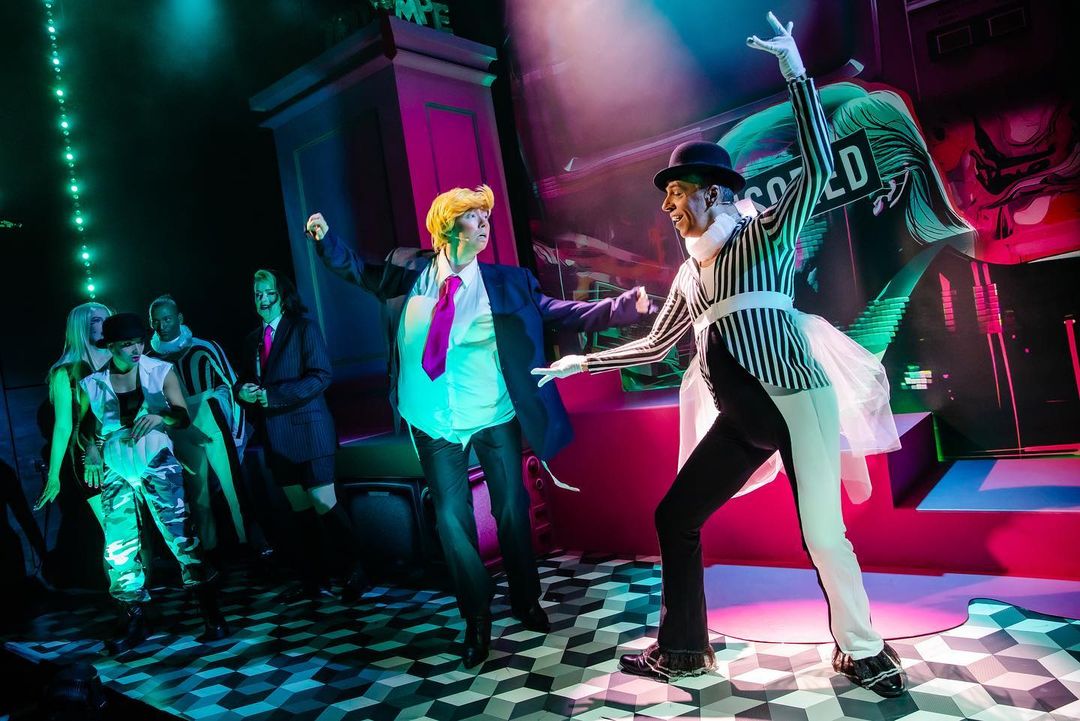
On the surface, it’s surreal, playful - circus elements, exaggerated characters, political parody. But underneath, it’s something far more unsettling: a reflection on the absurdity of modern reality, filtered through the lens of the Trump presidency and a fractured world where truth feels negotiable.
“It’s very easy to just see the clownery,” he explains. “But that’s the point. The spectacle distracts you from something darker.”
The title itself - trompe l’oeil, meaning “to deceive the eye” - becomes a thesis. Look closer. Look again. Don’t accept what’s presented.
And in many ways, that demand mirrors Grogan’s own life in drag.
“Drag is an illusion,” he says. “But it also reveals truth.”
Before the stages, before the wigs, before the television cameras - there was Rochdale.
A place Grogan describes not as limiting, but complex: working-class, multicultural, full of intersecting identities. “It’s not one type of person place,” he says. “There are all different communities…that intersectionality is very prevalent.”
And yet, for a young boy who was “very feminine,” it could also be difficult.
“I didn’t know I was gay,” he recalls. “But everyone else seemed to.”
The labels came early - boy girl, girl boy - the kind of language that shapes a child’s understanding of themselves before they’ve had the chance to define it.
But Rochdale also gave him something else: teachers who saw him. Teachers who didn’t dismiss performance as fantasy, but recognised it as future.
“They laid the pathway for me,” he says. “I didn’t have to agonise about how to make it work.”
That combination - friction and support - would become foundational.
Because identity, for Grogan, has never been about a single moment of discovery. It’s been about accumulation.
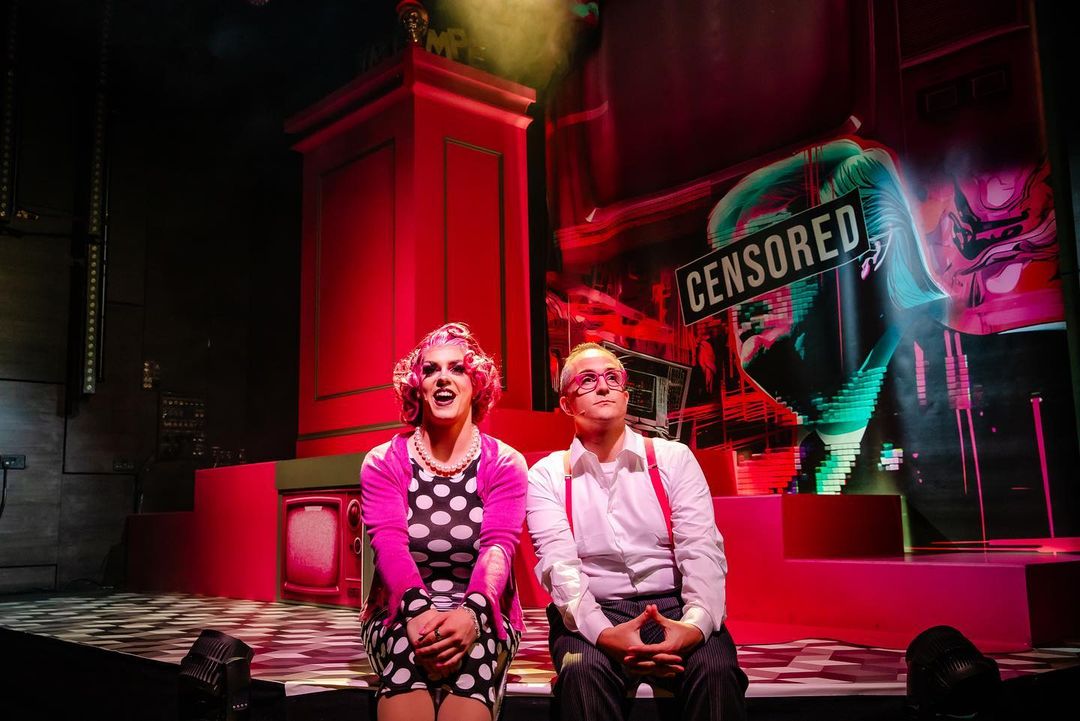
Drag didn’t arrive as a grand declaration. It began, like many things, almost accidentally - a Halloween experiment, a side project.
But it quickly became something more. A language.
“A suit of armour,” he calls it. “It allows you to explore parts of yourself you didn’t know existed.”
What’s striking is not just the freedom he describes - but the self-recognition.
Through Veronica Green, Grogan didn’t become someone else. He discovered who he already was. “I thought I was rebellious,” he laughs. “But actually I’m very prim and proper…a people pleaser.”
Drag didn’t erase identity. It clarified it.
And, crucially, it reframed something that had once been painful.
Because the same traits he was bullied for as a child - femininity, softness - became, in drag, both celebrated and challenged in entirely new ways.
“Before drag, I was too feminine. Then suddenly in drag, people point out how masculine I am. It’s ironic.”
That contradiction led to a realisation that sits at the heart of his story:
“What people say about you has nothing to do with you. It’s about them.”
Grogan’s route to RuPaul’s Drag Race UK wasn’t linear. In fact, it began with rejection.
A television pitch he developed with his brother - creative partner Tony Fran - was turned down with a blunt assessment: they weren’t famous enough.
“So we said, ‘I guess we have to become famous then.’” What followed was a kind of parallel pursuit.
His brother nearly made the first season of Drag Race. Grogan himself landed on series two - but only after an unexpected twist: his brother mentioning him in an audition tape prompted producers to take notice.
It’s a story that feels almost too neat - except it isn’t. Because behind it is persistence, rejection, and a refusal to dilute creative identity for acceptability.
When producers suggested casting “someone like Eddie Redmayne” instead of Grogan in his own project, he walked away.
“I can see me playing my character,” he confirms.
If Trompe l’oeil is about illusion and hidden meaning, Grogan’s work with his brother is about something more direct: storytelling as intervention.
Their Edinburgh Fringe show Vetted - chaotic, inventive, deeply queer - is one example.
But perhaps more telling is their children’s book project, Daniel in the Dress.
A story about a boy who wears a dress, enters an imaginative world with his friends, and confronts fear, shame, and transformation.
It’s whimsical on the surface. But underneath, it’s about acceptance - and the damage caused when that acceptance is threatened.
One reader, a parent of a trans child, told them: “You don’t understand how much this would have meant.”
And yet, despite overwhelmingly positive feedback, publishers have hesitated.
“Queer art…some people don’t want to expose themselves to backlash.” So the plan is simple: keep going.
At its core, this is what connects everything Grogan does.
Not drag. Not theatre. Not television. But space.
Who gets it. Who is denied it. Who has to create it from nothing.
Whether it’s a child in Rochdale, a drag performer navigating public perception, or a character disappearing on stage - the question remains:
How do you exist fully in a world that doesn’t always want to see you clearly?
Trompe l’oeil doesn’t offer easy answers.
“It’s not a show where you just sit and have a lovely time,” he says. “It’s something you think about afterwards.”
And maybe that’s the point.
Because in a world increasingly defined by noise, spectacle, and surface - the most radical act might simply be to look deeper. To refuse the illusion. To see.

If there is a single thread that runs through Grogan’s story, it’s this: Acceptance isn’t passive. It’s active. Hard-won. Ongoing.
“You cannot ignore reality,” he says. “Don’t pretend it’s not real. Face it head on.”
Because only then - in that confrontation between who we are, who we’re told to be, and who we choose to become - does something shift.
Something opens. And maybe, just maybe, the illusion starts to fall away.
See the Show
Trompe l’oeil runs at Contact Theatre, Manchester from 18 April to 2 May, with performances across the week.
A bold, surreal, and politically charged new work, the production blends drag, theatre, music, and visual art into what Kevin Grogan calls “a living piece of art” - one that challenges audiences to look beyond spectacle and confront the world as it really is.
Tickets and full details HERE





