



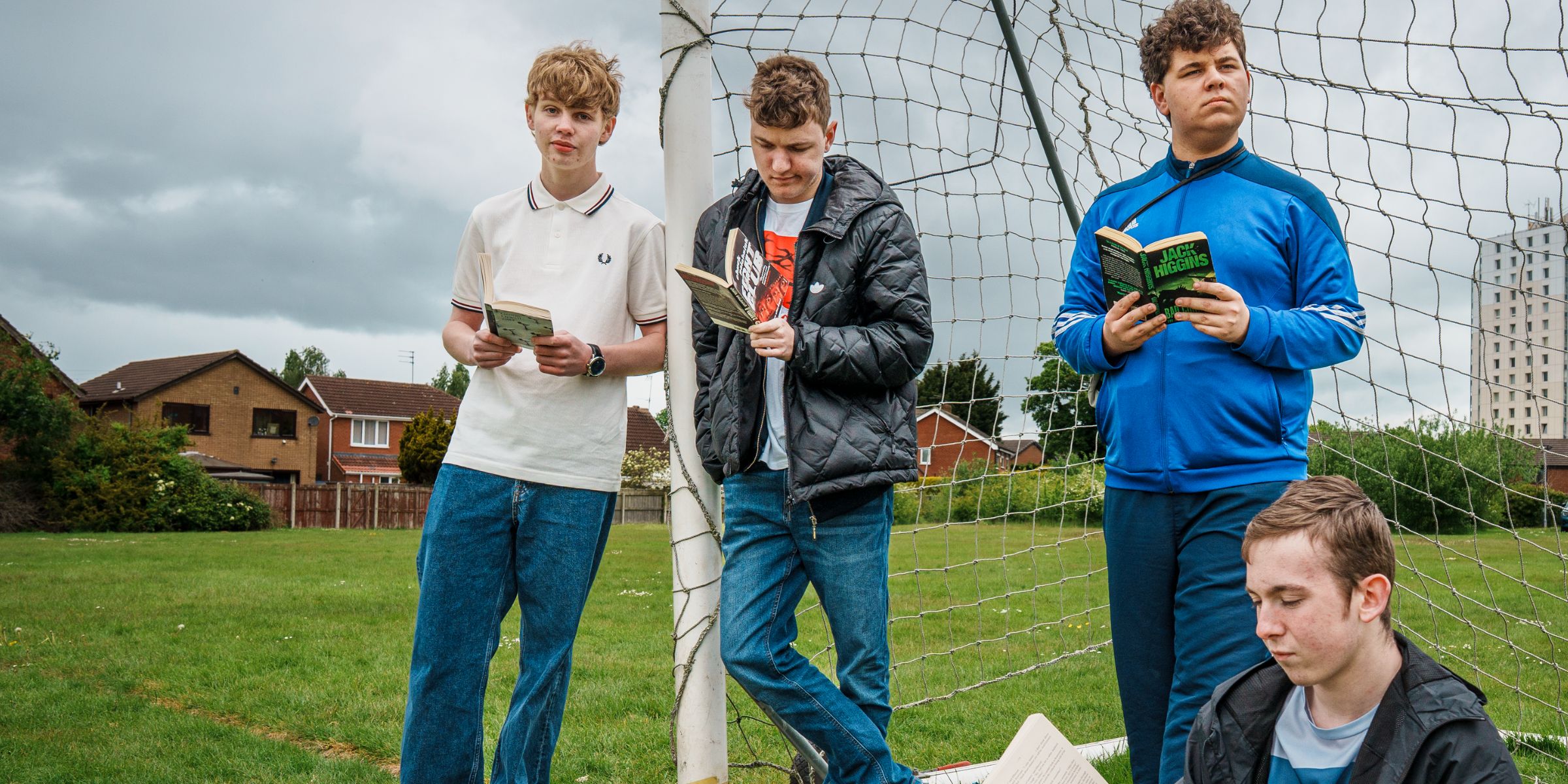
When a friendship broke down, 16-year-old Jake Palmer found something to hold on to in Sylvia Plath’s poetry.
“It kept me going. Poetry keeps me going. Reading keeps me going,” he told The Bee.
Jake is one of four sixth-form boys in Hull whose reading lives feature in a new special edition of the literary magazine published by New Writing North. Between them, their interests range from Diary of a Wimpy Kid and manga to Stephen King, George Orwell and Plath.
These are young people finding pleasure, companionship and ways to understand their lives through books. Their experiences also prompt a question about the language used to describe reading in Britain: who do we imagine when we picture a reader?
Published on 2 October and distributed with The Bookseller, Celebrating the Working-Class Bookworm in the National Year of Reading challenges the assumption that working-class people are largely absent from book culture.
Its argument is that reading happens in places, formats and exchanges that can be overlooked: library visits, charity-shop purchases, books borrowed from friends, supermarket swap tables, audiobooks and digital comics.
To understand who reads, it suggests, we need to pay attention to all of those encounters.
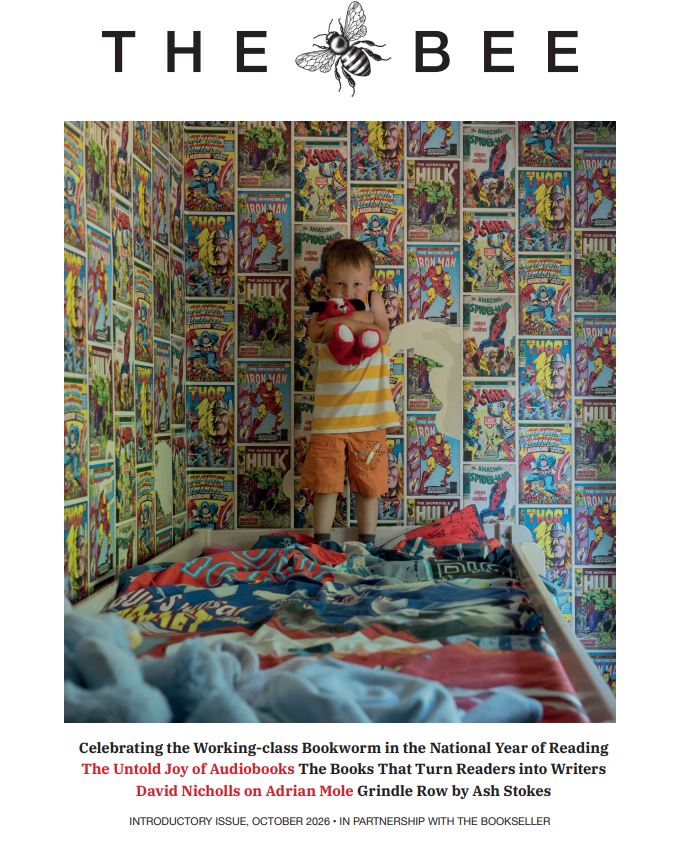
The Bee’s editor, Richard Benson, travelled through Yorkshire speaking to working-class readers about what they read, where they find it and what it gives them.
“For generations, books have offered working-class readers something extraordinarily powerful - an affordable way to escape immediate circumstances, encounter different worlds, make sense of lived experience and imagine different futures,” he says.
“Yet public debate around reading increasingly presents class through a deficit lens - focusing on the people who do not read, rather than the millions who do.”
The magazine’s intervention comes during the National Year of Reading, against concerns about declining reading enjoyment and participation.
Benson acknowledges the serious questions around literacy, poverty and educational access. His concern is that these issues can become compressed into a single account of working-class life, leaving little room for its variety.
“There are serious problems around poverty, literacy and access to education, and nobody should minimise them,” he says. “But poverty, disadvantage and class are too often collapsed into one another, creating a misleading picture of a uniformly non-reading working class.”
His distinction is important. Recognising existing readers can help us understand what sustains a reading life: access to books, encouragement, places to spend time and the opportunity to discover something that speaks to you.

Another of the Hull teenagers featured in the magazine, 16-year-old Kieran Hazzard, learned to read through regular trips to the library. He later helped teach his mum to read.
Today, his interests include fantasy, non-fiction and manga. Much of his manga reading happens digitally because buying a series can be expensive.
His experience connects several parts of the story: the importance of a public library, reading shared within a family, and the practical decisions that determine how somebody accesses the work they enjoy.
For these teenagers, bookshops also have a place in their lives. One describes a local bookshop as somewhere he would be devastated to lose; another calls a bookshop his “second home”.
“We talk about young working-class boys so often in terms of failure, poor attainment or antisocial behaviour,” Benson says. “What we hear much less about are boys like Jake and Kieran: reading poetry, writing their own work, spending time in bookshops and using books to make sense of their lives.
“If we only ever look for deficit, that is all we will see.”
These accounts deserve attention in their own right. They also widen the picture of what cultural participation looks like in a Northern city: a poem that helps somebody through a difficult friendship, a library habit carried into family life, a bookshop that becomes a familiar refuge.
The special edition also introduces 85-year-old Maureen Thomson, whose reading has accompanied a working life in guest houses, factories and on the land.
She now swaps historical romances with friends and through a supermarket book exchange.
For Maureen, those novels connect with the experiences of her mother and grandmother, who worked in domestic service. Through fiction, she encounters lives and circumstances that have a relationship with her own family history.
A book passed between friends might leave little trace of those later encounters in its sales figures. Yet each exchange can bring another reader pleasure, recognition or something to discuss.
The Bee asks the publishing industry and the wider cultural conversation to take that circulation seriously.
“We need to be careful not to dismiss romance, comics, audiobooks, second-hand books or books passed from hand to hand simply because they sit outside the parts of reading culture the publishing industry finds easiest to see or value,” Benson says.
It is also a question of whose tastes receive respect. Maureen’s romances and Jake’s poetry have different forms and audiences, but both readers describe a connection between the words they encounter and the lives they lead.
The Bee grew out of New Writing North’s A Writing Chance programme. Its work now spans a website, literary magazine, The Working Class Library podcast and The Beehive, an online community supporting new and emerging working-class writers.
Its concern with readers sits alongside its commitment to writers: who gets represented, whose experiences reach the page, and who has opportunities within the industry.
Claire Malcolm, chief executive of New Writing North and publisher of The Bee, says the reading debate needs to examine its own assumptions.
“We talk a great deal about Britain’s reading crisis, and rightly so. But we also need to ask who publishing imagines when it pictures a reader,” she says.
“There are millions of people from working-class backgrounds for whom reading already means escape, pleasure, companionship and discovery, yet they are still under-represented both on the page and inside the industry.
“If we want more people to read, we have to make more people feel that books belong to them.”
For the North, that's a conversation about our cultural infrastructure as well as publishing. Libraries, bookshops and informal exchanges all create opportunities for people to encounter stories. The readers in this edition show what those opportunities can mean.
The Bee’s challenge is to begin by seeing them.
Jake has already explained what is at stake for him, in words that need very little interpretation.
“Reading keeps me going.”
The Bee’s special edition, Celebrating the Working-Class Bookworm in the National Year of Reading, is distributed with The Bookseller on 2 October 2026. Find out more at The Bee and New Writing North.
Quotations and readers’ accounts in this article were supplied by The Bee and New Writing North.





