



Some of the North’s most interesting cultural work starts without a strategy document, a development grant or an institution announcing that something interesting is about to happen.
Sometimes, it begins because one person finishes a job, discovers an unexpected stretch of time ahead of them and decides to make something.
For Newcastle-based animator Richard - who works under the name Lazerray - that something has become sixteen original animated films, sixteen tracks by independent musicians and a portable projection installation intended to appear in grassroots venues across the North East.
Its name is LED ON. Its first phase will be shown upstairs at The Cumberland Arms, perched above Newcastle’s Ouseburn Valley on 8 and 9 August.
Admission is free. Visitors can arrive whenever they like between 2pm and 9pm, stay for one film or the entire hour-long cycle, ask questions, take a seat or quietly leave again if experimental animation projected above a pub turns out not to be their thing.
There's something unusually generous about that proposition. There's also something considerably more ambitious happening beneath it.

Richard’s original idea emerged from two related observations. The first was that animated visuals at live performances can transform the experience of hearing music. The second was that the smaller venues he enjoys visiting often sit quiet when bands aren't playing.
Could the visual material normally seen behind a performer become the performance itself? Could a music venue operate, temporarily and informally, as an animation gallery? And could the result be made portable enough to travel between different pubs, clubs and independent spaces without requiring an enormous technical operation?
“I’ve always been a fan of animated backdrops while the bands are playing,” Richard explains. “It usually enhances the experience.”
He had also encountered moving-image installations inside galleries, but often felt hurried when watching them. Film was present, yet not always afforded the time or attention given to the objects around it.
His response has been to create a dedicated hour of animation accompanied by music from artists working across the North East and beyond. The films will be projected onto a purpose-built backdrop in a continuous loop, making it possible to encounter the work without a prescribed starting point or a demand to remain until the end.
It occupies an intriguing space between a gig, a cinema programme, a digital art installation and an especially adventurous afternoon in the pub.
And the music isn't incidental accompaniment. It's central to the project.
Each animated piece has been developed for a track by one of sixteen acts: American Wrestling, Black Rain, Class Gymnast, Ellen Moss, Groundbird, Hivemind, J. G. Winter, Kirsty Hall, Ladakee, Milne Glendinning Band, Monsav, Nano Kino, Perisher, Radikal Queen, Ten Eighty Trees and Yeti Thieves.
Between them, they represent a glorious refusal to settle into a single genre.
There's indie rock, goth, post-punk and shoegaze; jazz, folk, ambient music and dream pop; blackgaze, spoken blues, cinematic composition and politically charged storytelling. Some of the acts are well established within their own creative communities. Others are at an earlier point in their development. Most of them have connections to the North East.
The installation gives their work another setting in which to be discovered.
It's not a compilation of conventional music videos, or a promotional showreel. Instead, sound and animation have been allowed to reshape one another - creating sixteen discrete visual worlds that will be experienced as one larger work.
Richard has created LED ON in just under two months.
That timeframe is striking enough. More unusual is his decision to document much of the process as it happened, recording regular video diaries that acknowledge the practical uncertainties as well as the creative breakthroughs.
Visitors can see the polished installation in August. Those following its development online have also seen a lone animator thinking through projection surfaces, templates, equipment, transport, publicity and the unsettling question that shadows almost every independently produced event: will anybody actually come?
The project was always intended as an experiment. Richard wanted to use skills gathered during more than a decade in video and digital roles while pushing himself into unfamiliar methods. Some animations remained close to their original concepts. Others changed direction as techniques failed, developed or produced something more interesting than planned.
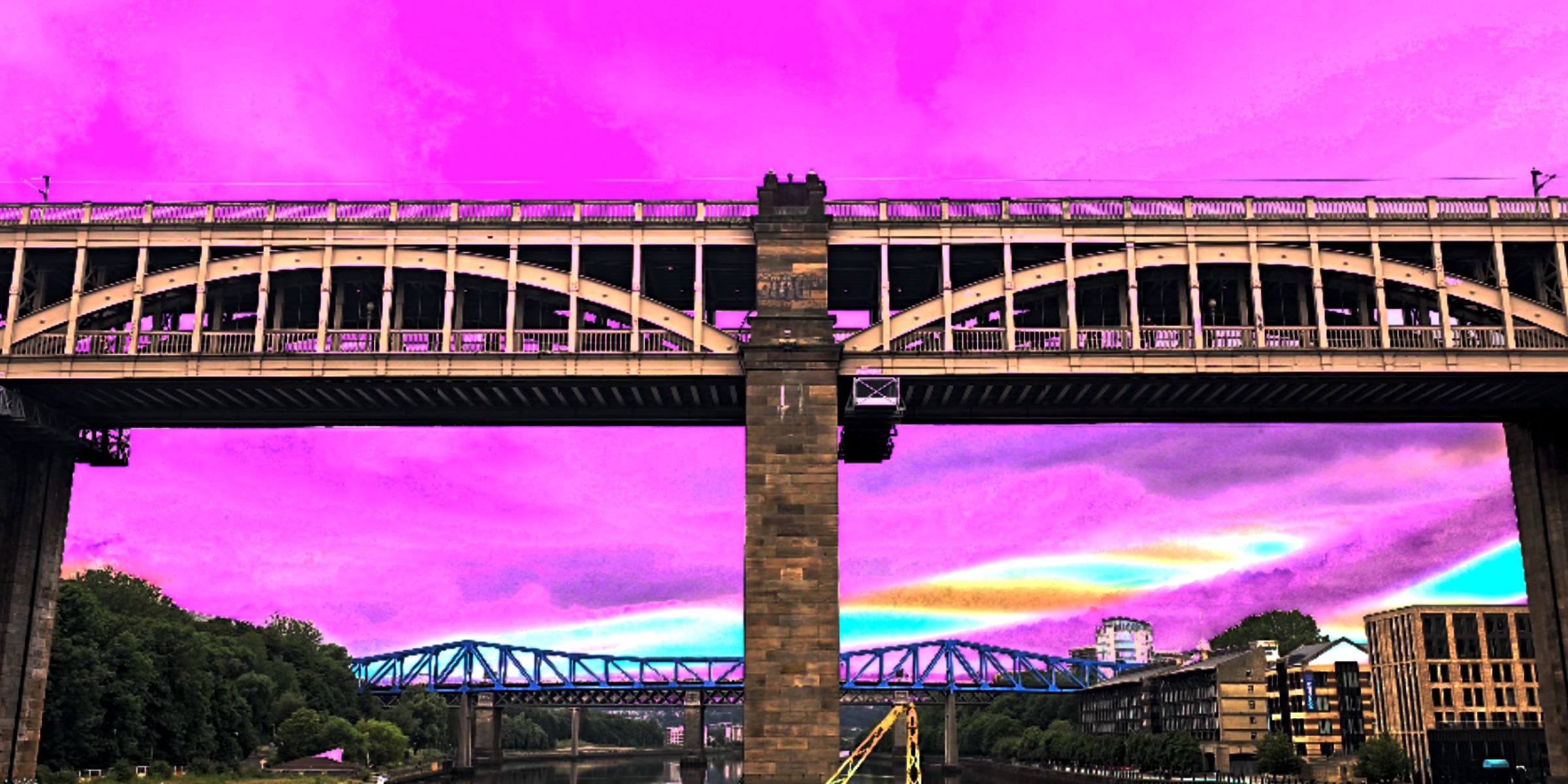
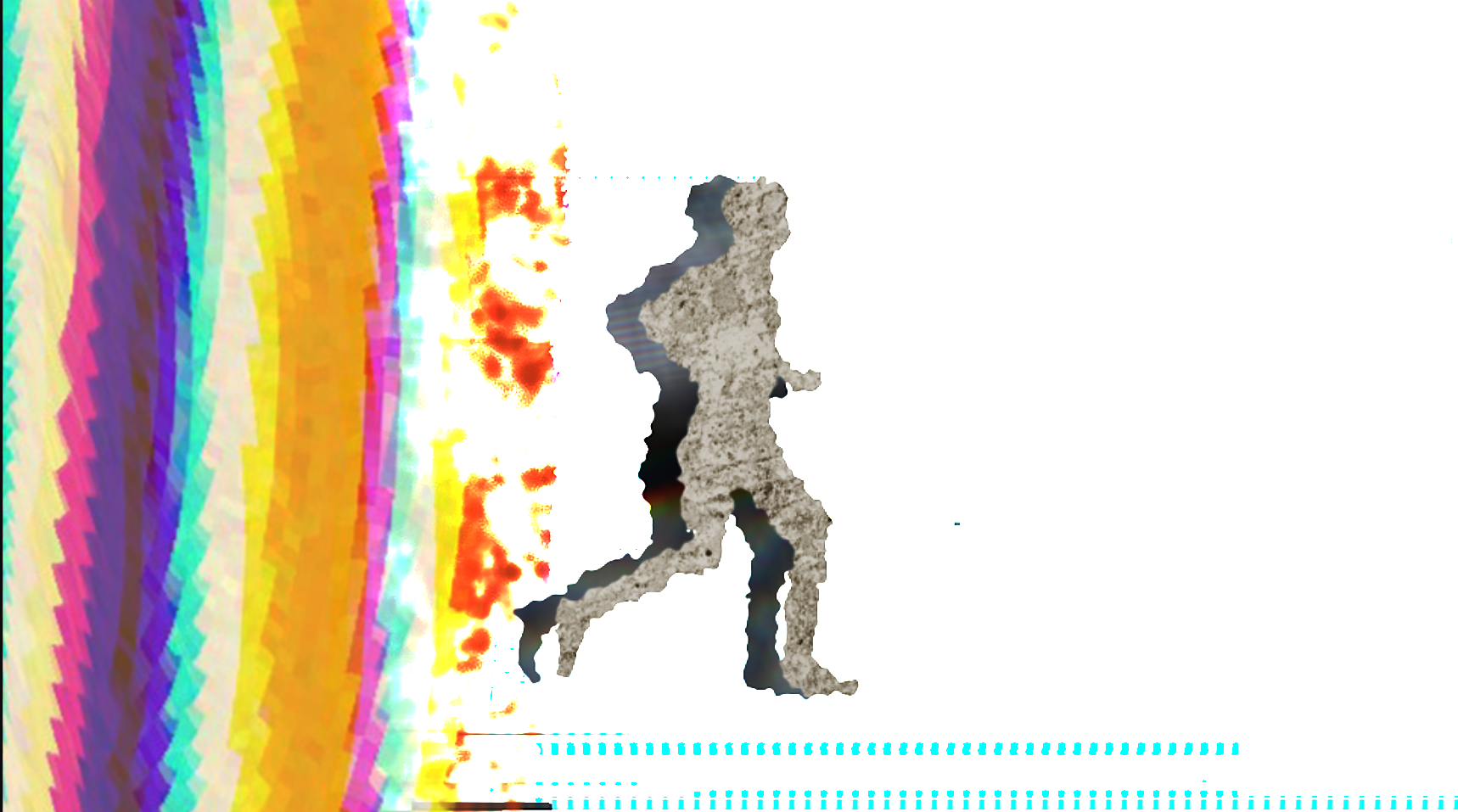
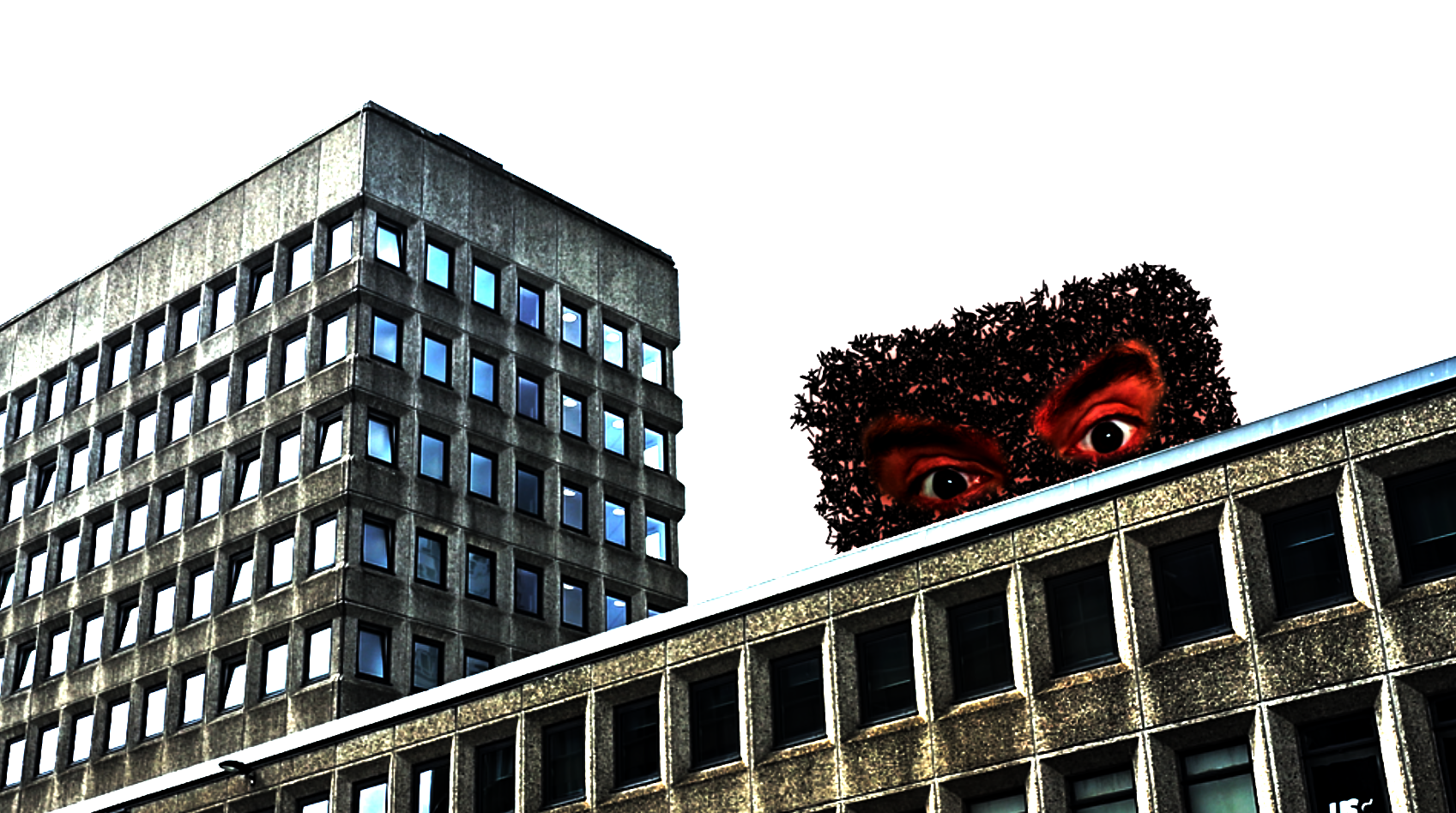
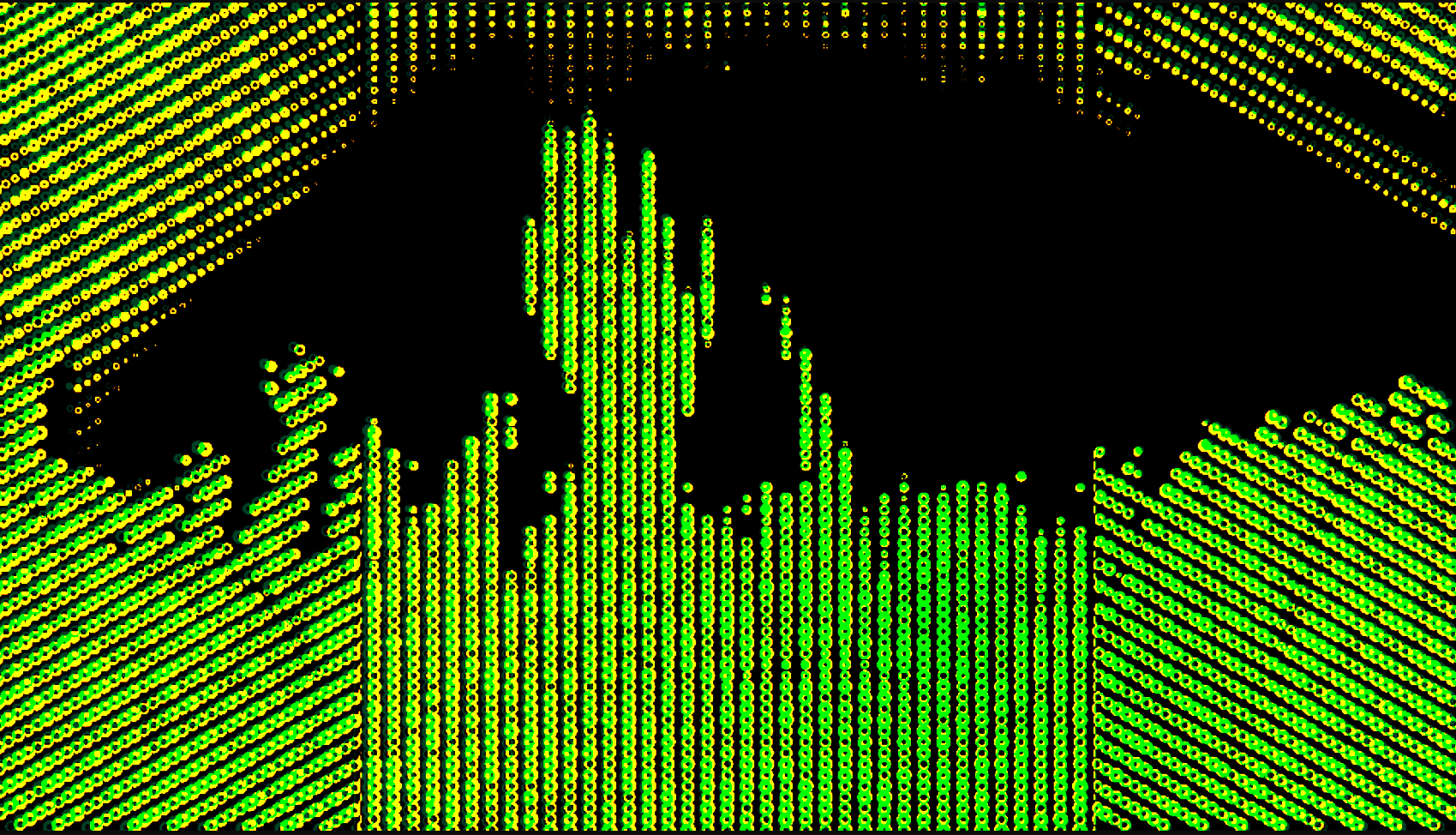
Rather than applying one established visual treatment across all sixteen tracks, he's used the project to test different forms and processes. The preview images move from saturated geometric landscapes to fractured figures, urban unease and shapes that appear to exist somewhere between solid objects and visual interference.
There are moments of brightness and apparent simplicity, followed by images which feel watchful, distorted or slightly menacing. They offer glimpses without providing an easy explanation.
The ambiguity is intentional. Richard is reluctant to disclose too much of the technical process before the first showing because he wants the installation to retain its capacity to surprise.
It is worth stating, however, that the imagery hasn't been made using generative artificial intelligence. Every film has been constructed and animated by Richard.
At a moment when the production and ownership of creative imagery are being rapidly contested, that fact gives LED ON another quiet significance. This is digital work in which the technology remains visible, but so does the maker: choosing, building, adjusting and occasionally wrestling with an idea until it works.
Richard's created adaptable controls within the animation projects, allowing elements such as colour and timing to be altered across entire sequences rather than rebuilt individually. Some of that knowledge comes from producing templates for other animators in previous professional work.
But LED ON has also required him to move way beyond comfortable or efficient methods.
“I’ve tried to step out of my comfort zone with these and create some quite complicated set-ups which I can adapt to use in future animations,” he says.
This, then is not only a finished installation. It's the construction of a creative toolkit - one that might support further films, new musical collaborations and the next phases of the project.
The first version of LED ON is self-funded.
Richard explored potential funding, but the likely decision timescales meant waiting months before he could know whether the project was viable. He wanted to begin immediately, announce the dates and discover what the idea might become through making it.
So he went ahead.
That decision has inevitably shaped the installation. An earlier plan involved additional projectors and a greater number of surfaces. The final structure has been scaled back into something Richard can carry, assemble and operate by himself.
The limitation may ultimately prove to be one of the project’s strengths.
LED ON hasn't become a less successful version of a large institutional installation. It's developed its own form: compact, adaptable and able to appear inside spaces that would never possess the budget, architecture or technical staff for a major digital commission.
It can pop up, run for a day or two and move on.
The mobility is fundamental to Richard’s ambitions. Newcastle is intended to be the beginning rather than the entirety of the project, with future appearances being considered across the North East and surrounding areas.
If it works, “Phase 1” will be followed by more animation and further opportunities for musicians to have their work interpreted visually.
Richard jokes that, if all goes well, he might eventually reach Phase 451.
Behind that understatement is a serious model for cultural circulation. Instead of expecting audiences and artists to travel towards a permanent centre, the work's been designed to reach different towns, venues and communities.
It asks what might happen if a digital installation behaved more like an independent band.

The location of the first showing is not a neutral container.
The Cumberland Arms overlooks the Ouseburn Valley, where former industrial buildings, music venues, artists’ studios, pubs and cultural organisations have formed one of Newcastle’s most distinctive creative districts.
For more than two decades, the pub has supported live music, comedy, poetry and traditional performance while presenting itself as a place in which preservation and experimentation can coexist.
That makes it an unusually appropriate home for LED ON.
Richard’s installation is connected to the familiar culture of the small music venue: the darkened room, the shared listening, the projected backdrop and the possibility of discovering an artist whose name was unknown an hour earlier. Yet it's also rearranging those elements. The band is absent. The visual artist steps forward. The venue becomes a gallery without adopting the social rules of one.
People already in the pub can wander upstairs. Nobody needs to book a timed entry, understand motion graphics or possess the appropriate vocabulary for discussing experimental art. There's no requirement to arrive at the beginning or demonstrate commitment by remaining until the end.
“I want to try to allow people to just wander in if they happen to be in the area or even in the bar downstairs,” Richard says.
“For all attendees, it could be their type of thing, but there’s an equal chance that it may not be - and I don’t want to hide discovery behind a paywall.”
That might just be one of the project’s most radical features.
Removing the admission charge doesn't make the work less serious. Allowing people to leave doesn't devalue it. The absence of ceremony might instead create the conditions in which somebody who would never consciously attend a digital art exhibition encounters one by accident.
Northern culture is often discussed through its most visible organisations: theatres, concert halls, museums, funded programmes and large festivals.
Obviously those institutions matter enormously. But they're sustained by a much wider ecology of artists, freelancers, musicians, technicians, promoters and independent venues - people and places that often develop new work before anybody has decided it forms part of a cultural strategy.
LED ON is making some of that ecology visible.
One animator is giving sixteen musical acts a new route towards an audience. A grassroots venue is allowing an upstairs room to become a temporary moving-image gallery. Musicians have entrusted their work to somebody else’s visual interpretation. A technical experiment is becoming a public event. And, if Richard’s plan succeeds, the whole construction will be packed away and taken somewhere new.
None of this is vast. I think that's a big part of its appeal. The health of a creative region can't be measured only by the spectacular things it can commission. It also depends on whether an individual with an unusual idea can find a room in which to try it; whether independent musicians are given ways to be heard; and whether audiences can encounter new work without price, geography or cultural confidence standing in their way.
There's vulnerability in what Richard is doing. He admits that he doesn't know whether people will attend and that even asking businesses to display a poster can leave him flustered. He's had to learn the practical work of promoting an event alongside the technical and artistic labour of building it.
But he's continued. “I’m really happy I decided to go ahead and just do it,” he says. “A few people have mentioned how it’s quite a feat to develop and put on such an event, and I think I need to give myself more credit - which is probably a more difficult task than this whole project has been.”
Might that be the most revealing line in the entire undertaking? Behind the severe graphics, strange figures and complicated animation systems is something altogether more human: a northern creative deciding that an idea is worth the risk of an empty room.
On 8 and 9 August, the projector will be switched on.
The rest of us should probably turn up.
Where: The Cumberland Arms, James Place Street, Newcastle upon Tyne, NE6 1LD
When: Saturday 8 and Sunday 9 August 2026, 2pm–9pm
Admission: Free. Under-18s must be accompanied by an adult.
Format: Sixteen animated films presented as an hour-long continuous loop. Visitors can arrive and leave at any point.
More information: LED ON by Lazerray
Header: Newcastle's High Level Bridge. Image: Lazerray





