



It begins with a brew.
Before the play, before the podcast, before anybody is asked to disclose anything difficult, JoJo Kirtley puts the kettle on. There may be cake or sweets. There will be ordinary conversation: kids, football, the place somebody comes from, the things they've brought into the room. Nobody is hurried towards a revelation. Nobody is greeted as a case study waiting to happen.
This could sound like the least dramatic part of theatre-making. Kirtley has come to believe it's among the most important.
"Sometimes it's just about connecting with the community," she says. "It's not about going in and saying: right, we're going to do this today."
Her new three-part podcast, Theatre of the Survivor, has grown from encounters of exactly this kind. Produced by the female-led Workie Ticket Theatre, it brings together interviews, two audio plays and an original song, all developed with women and girls in Sunderland. Its subjects include grooming, coercive control, stalking, domestic abuse, family expectations, the manosphere and the long work of recovering a life after violence.
The series is timely and serious. But to describe it simply as a podcast about violence against women and girls would miss the larger proposition behind it. Kirtley is trying to change who holds authority when survivors' experiences become art, and what an arts organisation owes the people whose lives inform its work.
Her starting principle is unequivocal: "Survivors are not the subjects of theatre; they are its leaders."
Kirtley is a writer, theatre-maker, former teacher and mother of three. She is also a survivor of domestic abuse and sexual assault. After leaving an abusive relationship and returning to the North East, she founded Workie Ticket Theatre in 2017 with an idea that was clear even if the future organisation was not: theatre could be used to challenge social harm, and women's experiences should sit at the centre of that work.
The company has since worked with survivors, women in recovery, female veterans and communities whose stories rarely reach conventional stages. Its work ranges across domestic abuse, poverty, homelessness, women's health and the lives of overlooked women from the region's past.
Kirtley's own experience shapes the way she enters a room, but she doesn't present lived experience as a qualification that settles every question. It's a means of establishing honesty.
"I don't want to be going into survivors and going, 'Let's make a play,'" she says. "What I do is go in and say: I've been there. I've done that. I know what it's like, and I know how horrific it is."
What troubles her is the space that can open after immediate intervention. A woman may have reached safety, received crisis support and begun navigating housing, benefits, court proceedings or counselling. Then, at some point, the formal machinery retreats. Therapy may be available after a long wait, or privately to those who can pay. The task of rebuilding confidence, identity and connection can become a solitary one.
"What happens when you're a survivor and you've had all of that emergency support?" Kirtley asks. "A lot of the time, you're left and that's it. You're left on your own just to get over it."
She's not suggesting that theatre can replace specialist services. Workie Ticket collaborates with organisations that provide them, including Wearside Women in Need. Her argument is that creativity can occupy part of the neglected territory beyond immediate survival: a place in which people can be witnessed without being exposed, make something with others and recover the right to imagine themselves as more than what was done to them.
That requires a different understanding of what the art is for. The finished play matters, but so does every hour spent building enough trust for it to exist.
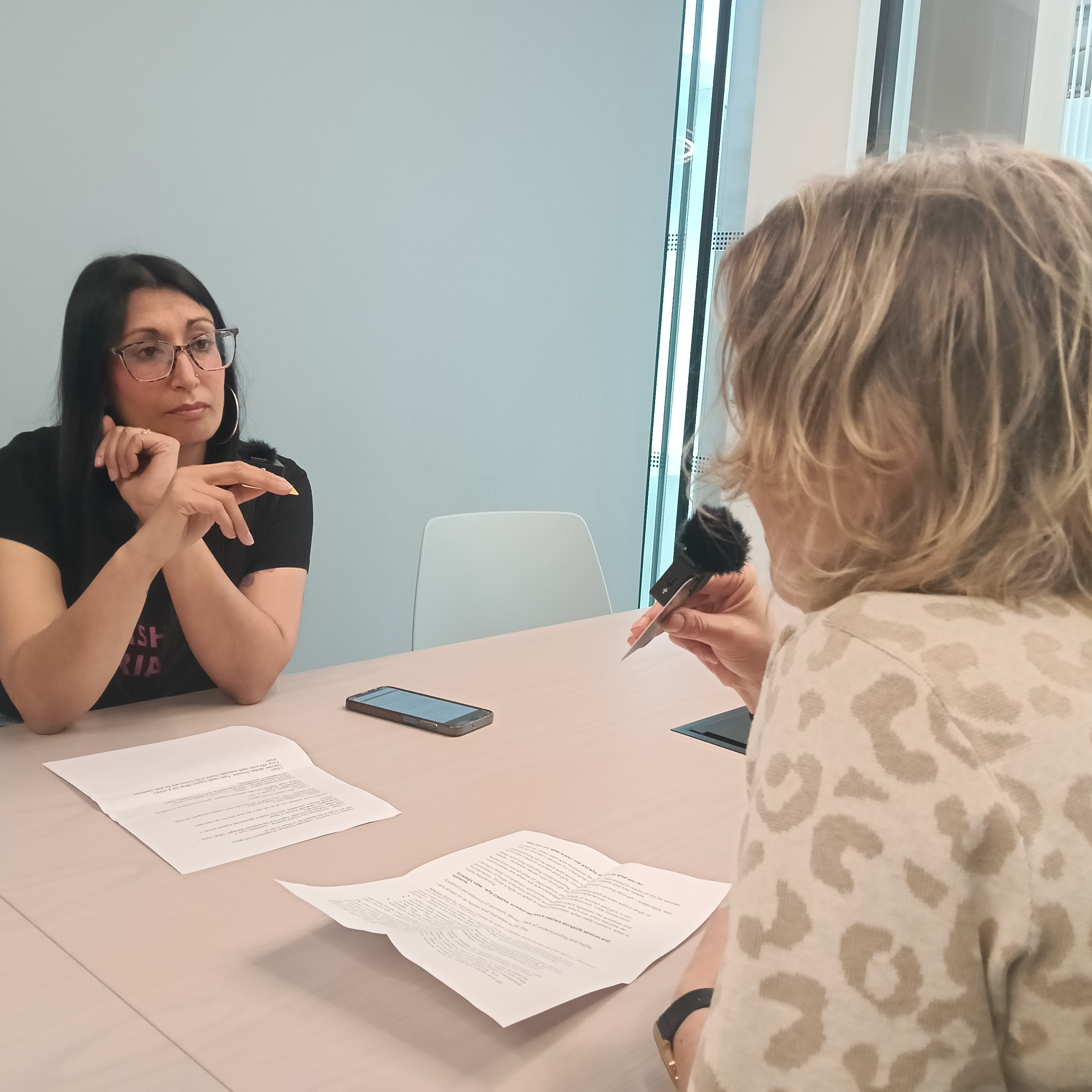
In 2024, a Churchill Fellowship allowed Kirtley to investigate how theatre-makers in Africa, Europe and North America were addressing gender-based violence. Her research connected her with practitioners and organisations in Malawi, South Africa, Germany, Romania, Canada and the United States.
The journey was wide-ranging. She encountered participatory work with girls and women in Malawi; theatre grounded in ritual, movement and non-literal representations of trauma in South Africa; peer-led work with young men in Berlin; Roma feminist theatre in Bucharest; interactive and politically engaged practice in Canada; and survivor-led theatre, fundraising models and Theatre of the Oppressed practitioners in the United States.
She saw performance being used in schools, refuges and community spaces. Forum Theatre allowed participants to interrupt a scene, enter it and test a different course of action. Legislative Theatre carried lived experience towards people capable of changing policy. Podcasts and digital testimony offered anonymity and created an archive where a live performance might disappear.
Some of the most important lessons were quieter.
Kirtley's report, Staging Violence Against Women and Girls, records a consistent finding across very different countries: the process can be as consequential as the performance. Workshops, women's circles, shared meals, childcare, transport and the patient development of relationships all affect who can participate and whether they remain safe.
"Often, the most political act was not protest, but provision: bus fare, childcare, safety, care," she writes. "The small acts have bigger impacts."
The report rejects the spectacle of violence. Graphic reenactment is not the price survivors must pay to make an audience understand. Symbolism, movement, fictional characters and composite testimony can hold the truth of abuse without reproducing it. The person contributing an experience must retain control over whether it is shared, how it is shaped and whether it can be withdrawn.
This is what Kirtley calls story stewardship. Consent can't be secured once and then treated as permanent. Care can't end on opening night.
Her research also brought home a material truth. Ethical practice requires time, trained facilitators, safeguarding, accessible venues, support workers and relationships with specialist organisations. All of that costs money. Survivor-led theatre cannot be built indefinitely from goodwill.
"We cannot ask survivors to share their stories within systems that do not protect, support or value them," she writes.
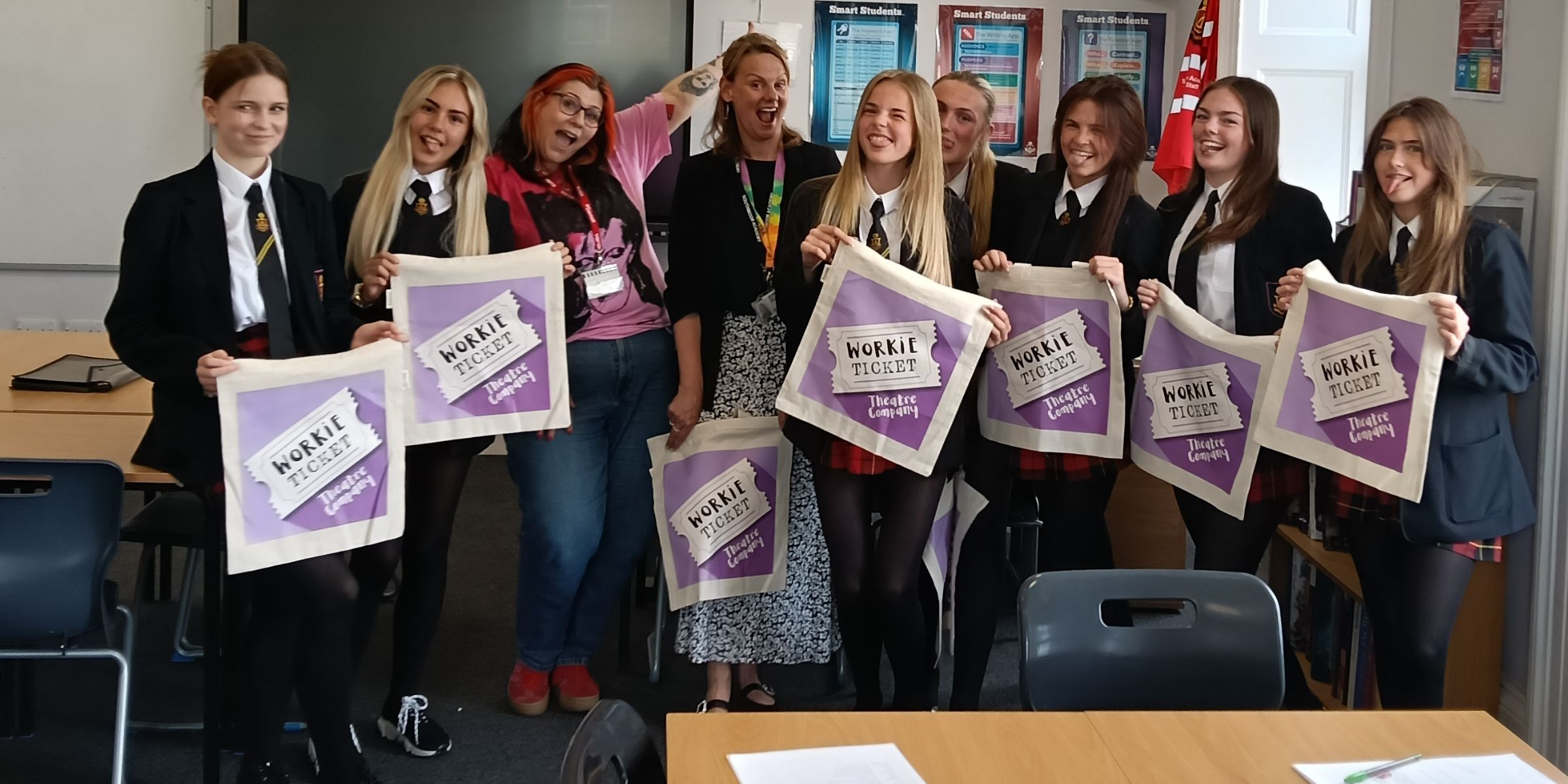
The first episode of Theatre of the Survivor contains #DiamondsGoneMissing, an audio play written by Kirtley and developed with Year 10 students at Southmoor Academy in Sunderland.
Diamond is 15 and in a relationship with an 18-year-old. When the play meets her, she's fled from her boyfriend and is talking to her sister on an isolated clifftop. Through their exchange, the drama examines grooming, stalking, coercion and the ways controlling behaviour can be mistaken for attention or love.
Diamond is fictional, but she wasn't invented at a desk. The students built her collectively. They discussed healthy and unhealthy relationships, body image, age gaps and the pressures that arrive through a phone every day. They gave the character elements they recognised without being required to turn themselves into the story.
"We created somebody that represents you - not you personally, but what you're angry at and what you're frustrated at," Kirtley explains.
She then wrote the play, which is directed by Corinne Kilvington and performed by Ashlea Sanderson and Meena Al-Nawrasy. The actors took it back to the students and read it to them. The movement of the story matters: conversation became character, character became drama, and the drama returned to the young women whose knowledge had shaped it.
This approach offers protection, but it's not evasive. Some of what young women have told Workie Ticket is deeply disturbing. During an earlier project, Kirtley heard that boys at one school had compiled a list of girls they wanted to sexually assault. Other participants described the names boys used for them and the pressure to conform to sexualised standards of appearance.
Kirtley had taught and worked with young people and gangs in Manchester. She had researched Andrew Tate and the manosphere for projects with boys. Even so, she was shocked by the language the girls reported and by the extent to which misogyny had entered their daily environment.
Adults, she believes, haven't fully caught up with an online culture that follows children everywhere. Previous generations could close a magazine. A young person now opens a phone and encounters algorithms capable of feeding anxiety, misogyny and increasingly extreme material back to them without pause.
The harm is not confined to girls. Kirtley talks about boys being told that sexually experienced women have less value, while some male influencers encourage young men to injure themselves in pursuit of a more sharply defined jaw. One of her teenage sons eventually deleted his social media accounts because he felt targeted regardless of what he did.
She is careful not to turn this into another indictment of young people, parents or schools.
"It's not their fault. We've messed up," she says.
Teachers are already being asked to manage problems far beyond their training and resources. A single assembly, delivered so that an institution can say the subject has been covered, cannot compete with a system that reaches a child for hours each day. Kirtley argues for sustained work with youth workers, specialist organisations and artists capable of creating honest conversations over time.
The girls' testimony also exposes a problem in the public response to the manosphere. Concern frequently concentrates on what misogynistic content is doing to boys. That work is necessary, but the experiences of the girls living with its consequences can become secondary.
As Kirtley remembers it, the young women's response was direct: "Hello. It's us that are going to pay."

The second episode centres on Tara, a woman in her thirties navigating coercive control, identity and family expectations. The play was developed with Al-Falaq, a Sunderland-based Bengali women's group, and written and performed by actor and facilitator Maryam Ali.
It was work that could easily have gone wrong. An outside organisation arriving with a predetermined story about culture, faith and abuse might reinforce precisely the stereotypes it claimed to examine. Workie Ticket began without a play.
Kirtley joined Al-Falaq's tea-and-talk sessions. For several weeks she drank tea, ate with the women and spoke about children, food, politics and ordinary life. She brought cake. In one introductory exercise she brought a photograph of her children, a yellow rose and a book about Geordie language: small objects that told the group something about the person asking to enter their space.
Only after relationships had begun to form did the creative work take shape.
The women wanted to discuss coercive control within extended family structures, and how a woman can lose parts of her identity after marriage. Some described control exercised not by one individual but across a family. Kirtley found points of recognition in her own experience while remaining conscious that similarity did not erase cultural difference.
"It doesn't matter what culture you're from," she says. "We can all connect a little bit with that."
Bushra Rahman and Chompa Begum, Al-Falaq's founders, contributed their knowledge. Bengali was incorporated into the script, and Ali brought her own cultural and artistic understanding to Tara's story.
The result doesn't present abuse as a Bengali problem. Kirtley's Fellowship work with Roma feminists in Romania had sharpened her understanding of that danger: violence experienced within a marginalised group is routinely blamed on its culture, while racism, poverty, state power and institutional neglect disappear from view.
Her conclusion from working across communities is that the circumstances and tools of abuse may differ, but coercive behaviour is grimly recognisable.
"The survivor might be completely different," she explains, "but the perpetrator is using the same behaviour."
The third episode uses song rather than a play. Musician Kirsten Hall has written from the story of Poppy, a childless survivor in her twenties, a character created with a Survivor Forum. The episode also includes the voices and knowledge of Wearside Women in Need.
The change of form is deliberate. Kirtley's Fellowship showed her that testimony need not be funnelled into one approved kind of theatre. A song, movement, an anonymous recording, a fictional scene or a digital story can offer different degrees of distance and control.
Podcasting also answers a concern that has followed Kirtley since the pandemic: what happens to the experiences of women whose lives are seldom preserved?
When venues and community centres closed, Workie Ticket made Woman Up, a podcast documenting women's lives in the North East during Covid. It recorded the experiences of women giving birth in masks, sex workers, social workers, women trapped in abusive homes and older women enduring isolation. The series was placed in the Feminist Library archive in London.
Kirtley wanted future generations to encounter more than an official account of the pandemic. She wanted them to hear what women in the North East had done to survive it.
In Canada, she met theatre-maker Rachel Cairns, whose podcast Aborsh brought performance, testimony and the history of abortion together. Online conversations with Malawi's WoNA Collective demonstrated how audio work could preserve stories while protecting participants. Those encounters helped turn a long-held idea into Theatre of the Survivor.
The podcast is therefore both performance and record. A live play can create an intense shared experience, then vanish. Audio can travel, be revisited and enter an archive. It allows somebody to listen privately, including a woman beginning to recognise her own circumstances.
Theatre of the Survivor has been supported by Sunderland City Council, the Catherine Cookson Charitable Trust and the Sir James Knott Trust. Its arrival coincides with Sunderland's ten-year No More strategy to eradicate domestic abuse and gender-based violence.
The strategy records a 9.3 per cent increase in domestic-abuse incidents in Sunderland during 2023-24. It commits the city to prevention and to a survivor-led process it calls "making it real": people with lived experience helping to define the problem, develop responses and judge whether they work.
Workie Ticket's project looks like one practical expression of that principle. It brings public health, schools, community organisations, specialist services and artists into the same piece of work. Yet its future, like that of much community-led culture, remains dependent on organisations repeatedly proving their value through short funding cycles.
Kirtley saw a different funding culture in the United States, where individual philanthropy can provide substantial support to arts organisations. She was encouraged to bring that model home. It couldn't simply be transplanted to a North East where potential donors and communities are themselves under pressure.
Workie Ticket will be nine years old in November. It has recently moved into a space in North Shields. Kirtley still finds herself fighting for funding each year.
This competition is particularly uncomfortable because women's services are also struggling for survival. A theatre company seeking money for work connected with domestic abuse can appear to be competing with organisations providing refuge and frontline support. Workie Ticket is both an arts organisation and a women's organisation, but Kirtley doesn't pretend that removes the tension.
Her case is that the services and the art should form part of the same ecology. Theatre cannot provide emergency accommodation or legal advice. A refuge isn't funded to become a permanent creative home. Joined together, however, specialist support and sustained cultural practice can help people move from safety towards agency, community and public influence.
This is where the phrase "culture as infrastructure" becomes literal. Prevention can't consist solely of information campaigns and one-off school assemblies. It requires repeated encounters in which people can recognise harmful behaviour, practise different responses and discover that their experience carries knowledge.
JoJo's report calls for collaboration across theatre, education, health, social care and justice. It also calls for work with men and boys, consent education, peer mentoring and serious attention to masculinity. The burden of preventing male violence cannot be placed upon women and girls by teaching them to identify danger more efficiently.
Theatre will not end gender-based violence. Kirtley is frank about that. It can make structures visible, rehearse resistance and bring people who hold power into contact with knowledge that conventional consultations often flatten.
"One play is not going to change the world," she writes. "But it can change who gets to speak - and that is how the world begins to change."
The first series is not the end of the experiment. Workie Ticket has secured funding for a second, which will demonstrate further ways theatre can be used. Planned subjects include stalking, post-separation abuse and the family courts, along with women's experiences of cancer.
Kirtley also wants to develop Theatre of the Survivor as a method that other practitioners can use. Its manifesto is plain-spoken and exacting: care is the work; dignity comes before drama; process matters; participation must be accessible; no story should be extracted and abandoned; survivor-led work must be properly resourced.
Her larger ambition is a creative hub where survivors can return, make work and find continuity rather than another brief project with a closing date. She imagines a place where somebody can begin by having a brew and, if they choose, eventually help create a play, podcast, workshop or campaign.
When asked what she wants councillors, commissioners and funders to do after hearing the series, Kirtley's first answer is one word.
"Listen."
Then she adds the part that changes listening from a sympathetic gesture into a public responsibility: listen actively and take action. Those with money should fund the work. Those with buildings might offer an unused room. Institutions with large audiences can share it. Decision-makers can attend a workshop, open a door or bring survivor-led practice into places where policy is formed.
Workie Ticket's scale is modest beside the scale of the violence it confronts. That doesn't make the work ornamental. It makes the question of what society chooses to support more urgent.
Theatre of the Survivor doesn't begin with a grand stage or an instruction to disclose. It begins with warmth, time and the possibility that the person entering the room already knows something the institution needs to learn.
It begins with a brew. From there, people listen. Then they create. And, sometimes, the room begins to change.
The first episode of Theatre of the Survivor launches on 21 September 2026 and will be available through major podcast platforms, including Spotify and Apple Podcasts, and at theatreofthesurvivor.podbean.com.
If you have been affected by domestic abuse, Wearside Women in Need's 24-hour helpline is 0800 066 5555.
The free National Domestic Abuse Helpline is available around the clock on 0808 2000 247. In an emergency, call 999.
Header image: Students from Southmoor Academy, with Nicola and JoJo





