



Lumberjack dreams were lived when MagNorth recently spent a day working alongside members of Woodmatters Woodshare Scheme, the innovative community opportunity developedby Gareth & Ro Thomas to get people clued up on wood.
Drizzle has set in, mid-winter gloom hangs and the sound of waterproof clothing drowns out the crackle of our fire, which blazes through a sizable thrash pile despite the conditions. We’re at Holeslack Woods for a member’s coppicing day; a hands-on day of clearing, cutting, burning, chopping and generally learning what it takes to manage a historic coppiced woodland in South Cumbria. However, one thing is clear from the moment we enter the walled site: Woodshare is for everyone.
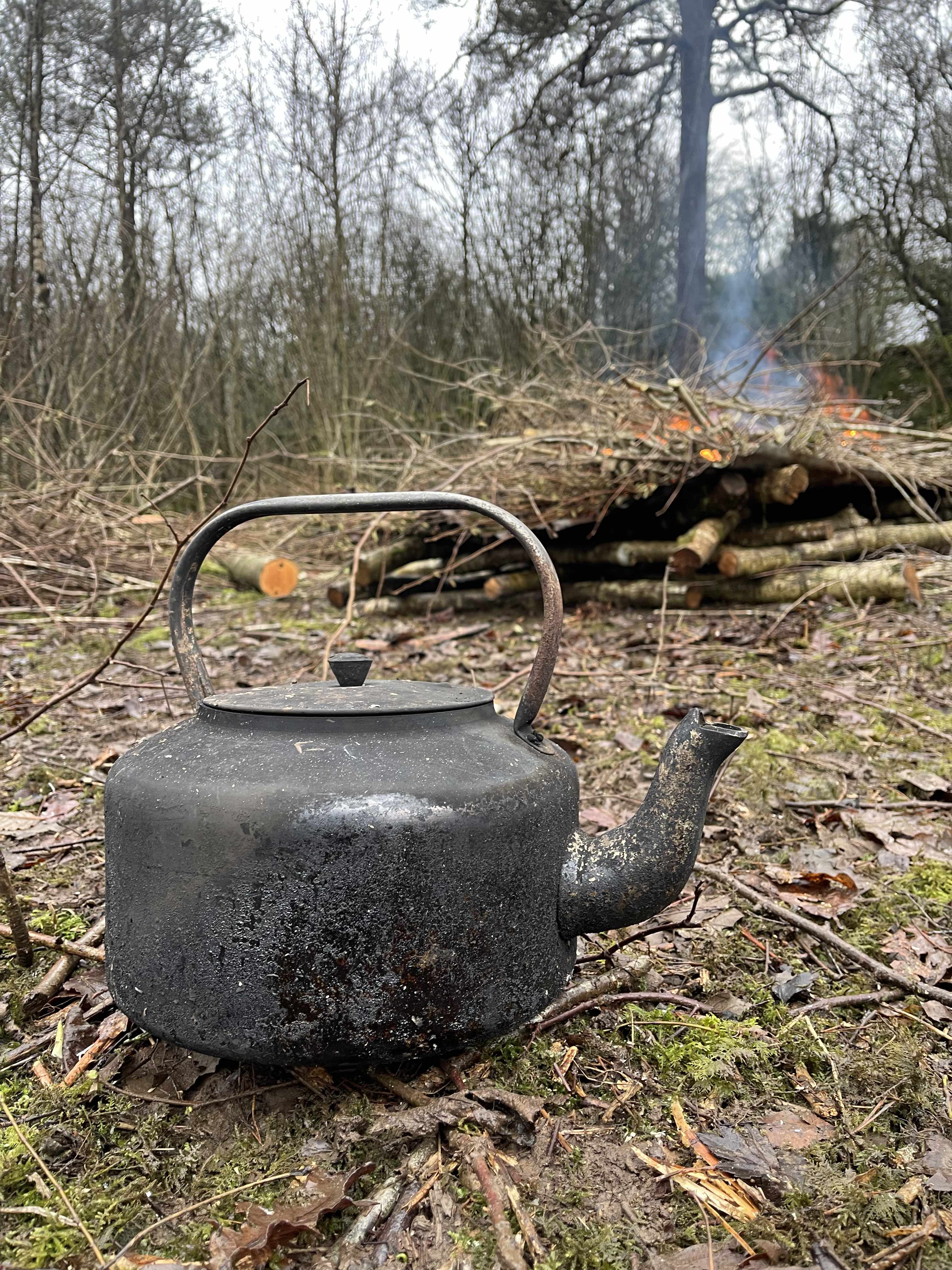
Pat, a long-time member and self-proclaimed fire boss, welcomes us with loud warmth. A former priest turned postie, Pat has been working alongside fellow Woodshare members at Holeslack and their second site near Sizegh for seasons. Woodmatter schief and our instructor Gareth greets Pat as an old friend and we all gather under a tarp for briefing and chitchat before work begins in ernest, although with the fire going it seems the day is already well under way. It’s not long before another member drops a well worn kettle directly into the embers at the heart of the fire.
Woodshare community membership scheme has been getting Kendal locals into the woods since 2005, when Woodmatters developed the collaboration with The National Trust to manage historic coppice woods. Members join the scheme for a small annual fee which gives them access to working days throughout the winter coppicing season. The scheme was set up to provide opportunities for local people to participate in management of the woods around them as well as gaining skills and access to low cost firewood. Woodmatters, which runs Woodshare, is a company deeply immersed in all things nature, woodland and social benefit so to build a bridge between community and the woodland surrounding them was a natural step.
Working alongside Gareth for even just a few soggy hours, his absolute passion for woodlands is impossible to resist. But more than that, Gareth is driven to share this passion through everything he does, all with bountiful positivity and generosity. Whether he’s teaching a new member the specifics of a Japanese sharpened saw (cut on the pull!) or explaining why we might leave a diseased tree standing. It helps keep morale high when fingers are getting cold and sodden clothes hang heavy.
“An old woodworker I knew boasted he’d sold one hundred different products from coppiced wood before he died” he tells us as we sort holly into piles according to size or straightness.
“My favourite is the beam for haaf netting” A traditional, and still practiced, fishing technique used on the tidal flats of Morecambe Bay.
“Only perfectly straight stakes are chosen by the haaf netters. If a single kink in the wood gets caught by the tide it starts to jiggle around until the haaf beam comes loose.
"Not a bigmarket for haaf beams, mind”
It’s impossible not to check every length of wood now, eyeballing for kinks in case we find a perfect beam. Is there prestige in that, we wonder?
There’s certainly nothing glamorous about yomping through mud, intermittently skewered by hawthorn that flings out from amongst the holly thrash with menace. More experienced members have a second pair of gloves but as the novice here we’re forced to carefully lay our wet gloves beside the fire in the hope they might dry even a little….Yet, brew break comes, Gareth lifts the vast kettle out of the fire with a stake (one of the hundred products?) offering round hot, sweet tea and hot chocolate. Everyone’s smiling and plonk down with satisfied noises to drink. There really is a shared, simple pleasure to being in the woods.
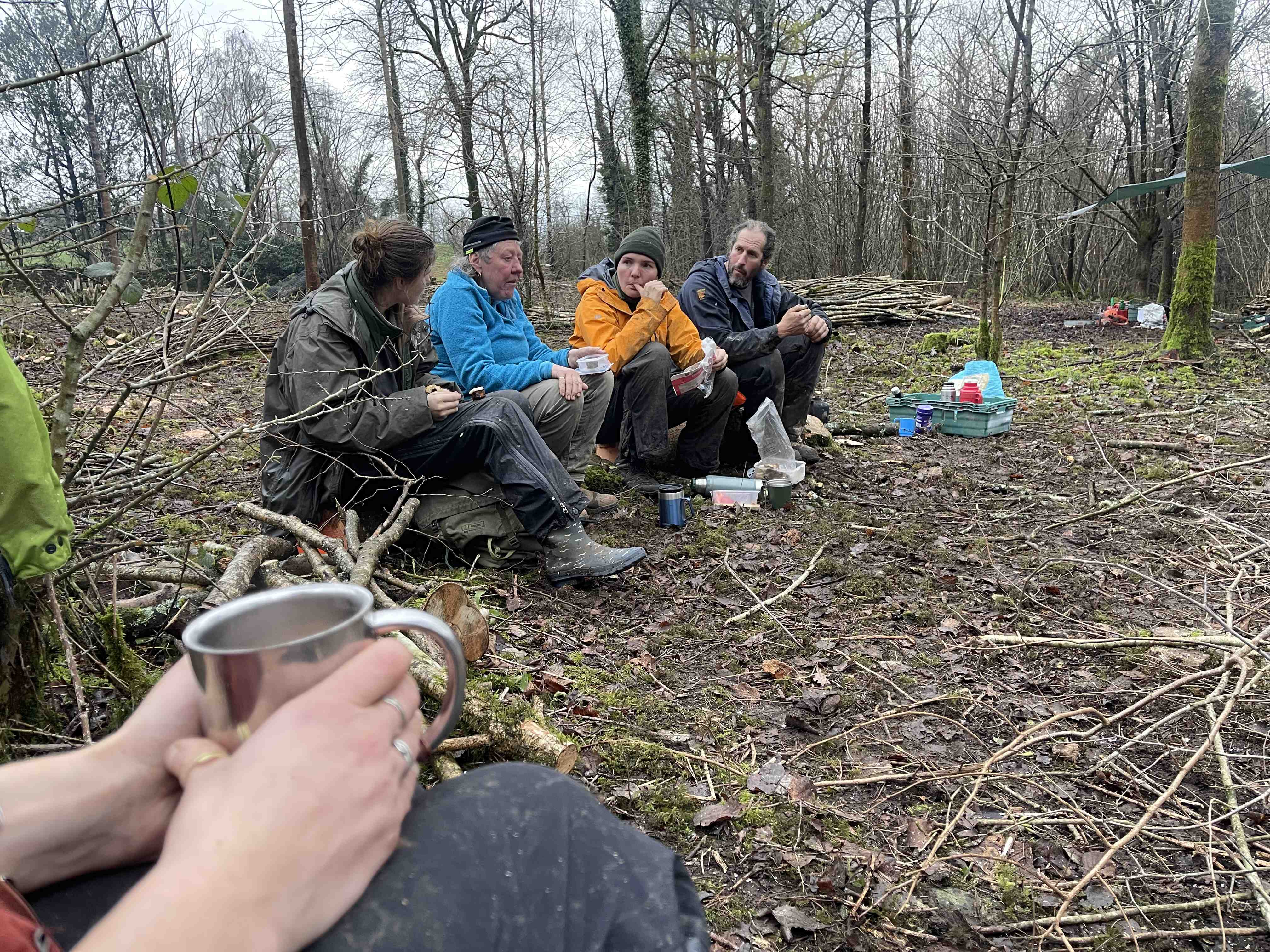
Huddled together, perched on freshly cut ash stumps, we meet Freya; fresh from another season crewing a heritage yacht across Europe. Freya worked her first woodshare twenty years ago as a child. Members are family and she moves through the woodland like a woman who belongs, explaining to us how to identify dead woodand and how much to leave on the ground.
Members like Freya are common to the Woodshare community, many of whom come back each winter for the outdoor experience and skills as well as the affordable fire wood - every member leaves the work day with ten bags of chopped logs. This creates a sense of connection to the very woodland themselves. Gareth’s excitement when he explains the significance of the site we’re on shows in his body language, in the energy he maintains until the very end of that gloomy, December day….
This site on the slopes outside Kendal, the very first worked by the Woodshare community,has now been brought through a full twenty-year coppicing cycle making members like Freya and her family part of a historic routine that would have shaped these landscapes and the working rhythms when coppicing for charcoal production was a local industry.
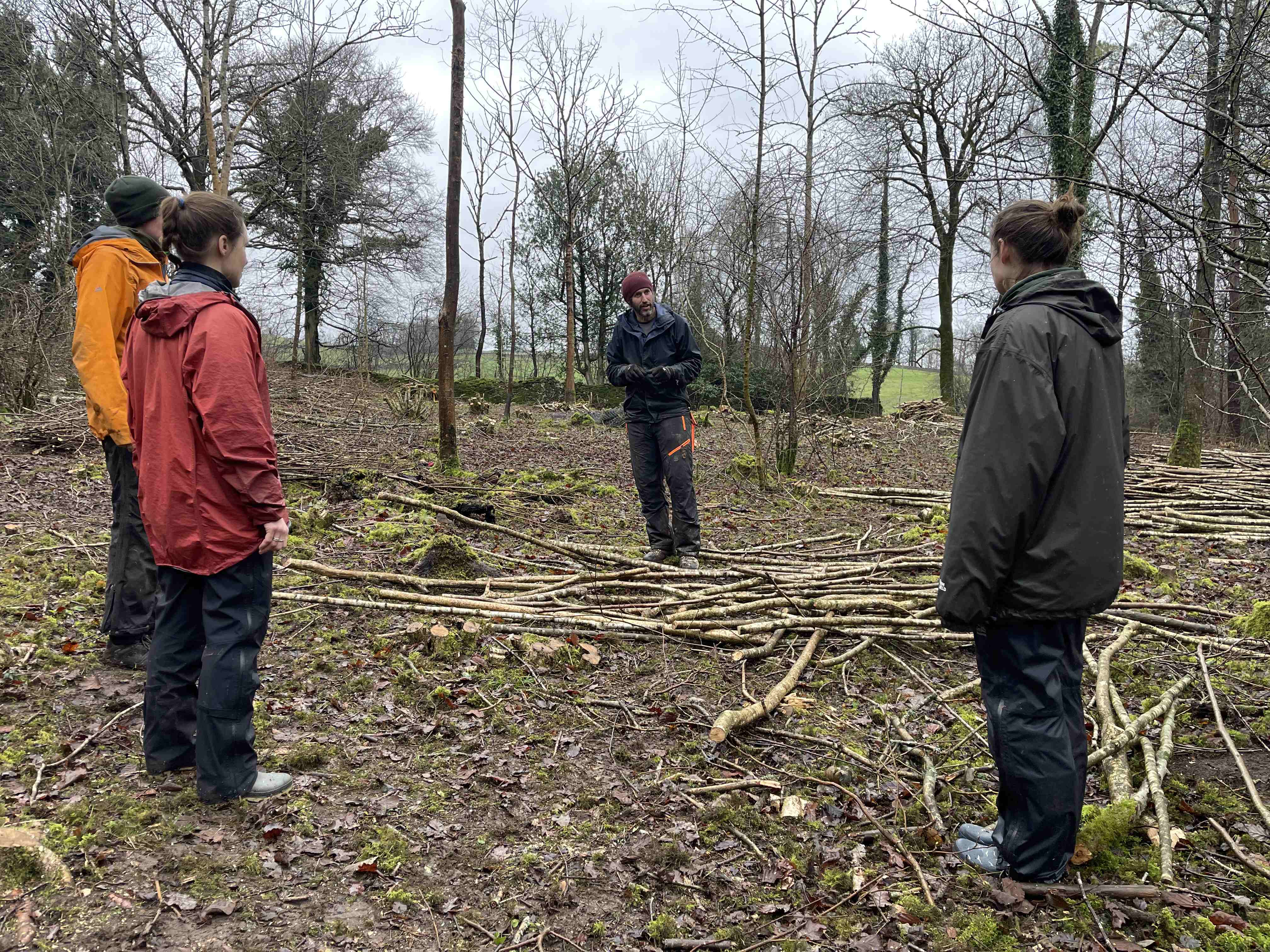
Through community schemes like Woodshare we get to be part of something bigger than us, participating in cycles that stretch beyond our own lives.
Break over, we clatter empty mugs by a tree stump and refill the kettle for lunch. Meanwhile, the two thousand year old yew tree perched on the estate edge watches us set back to work. A diseased ash is felled; piles of thrash burned down; stakes piled up; tea drunk; stories shared and we leave the woods a little more knowledgeable, a little more hardy. Not quite lumberjack but maybe guardian?





