



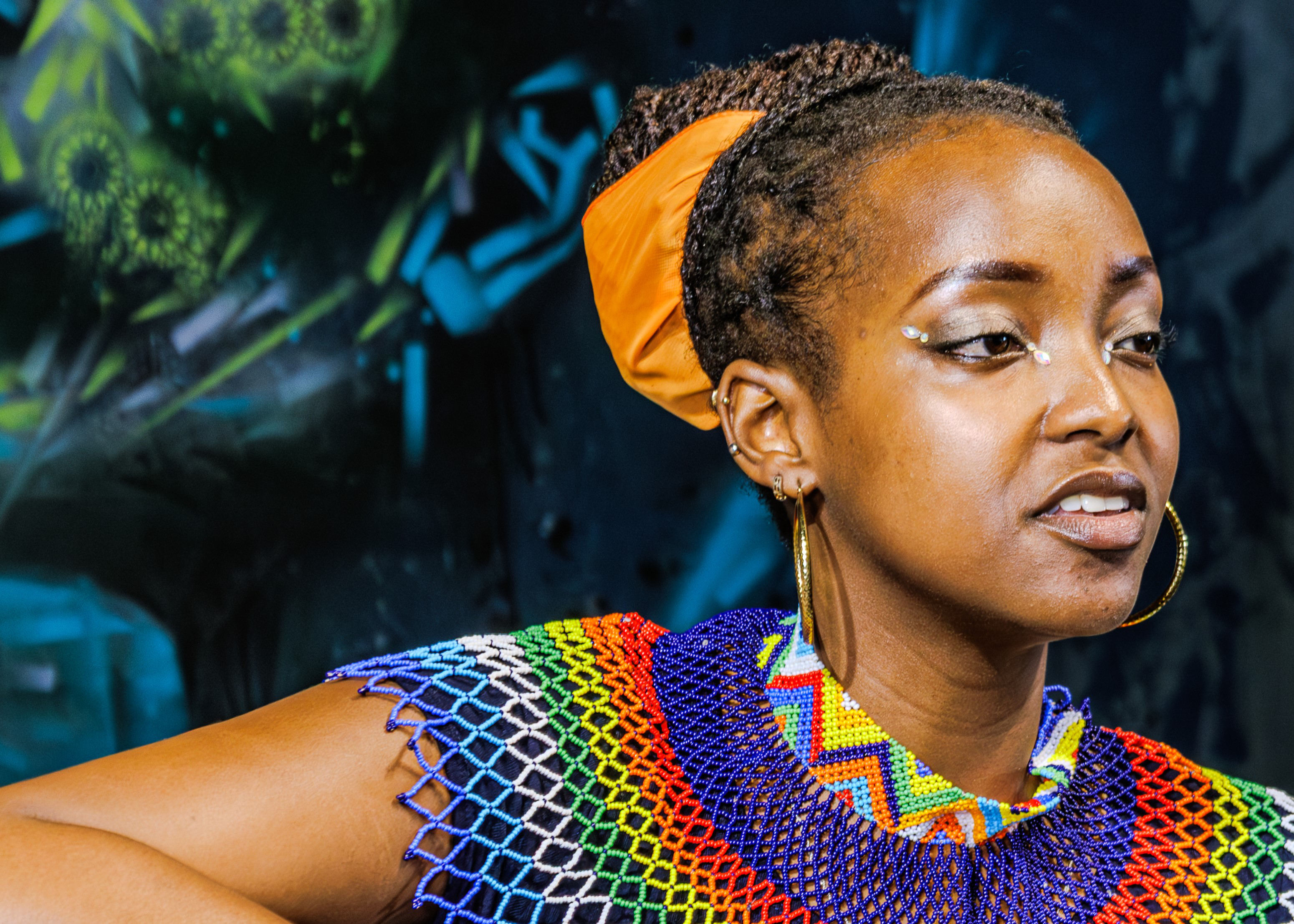
For Melanie Macharia, Soul Safari is not just a concert. It is a reckoning, a homecoming and, in some ways, an answer to a question she has been carrying since leaving Kenya.
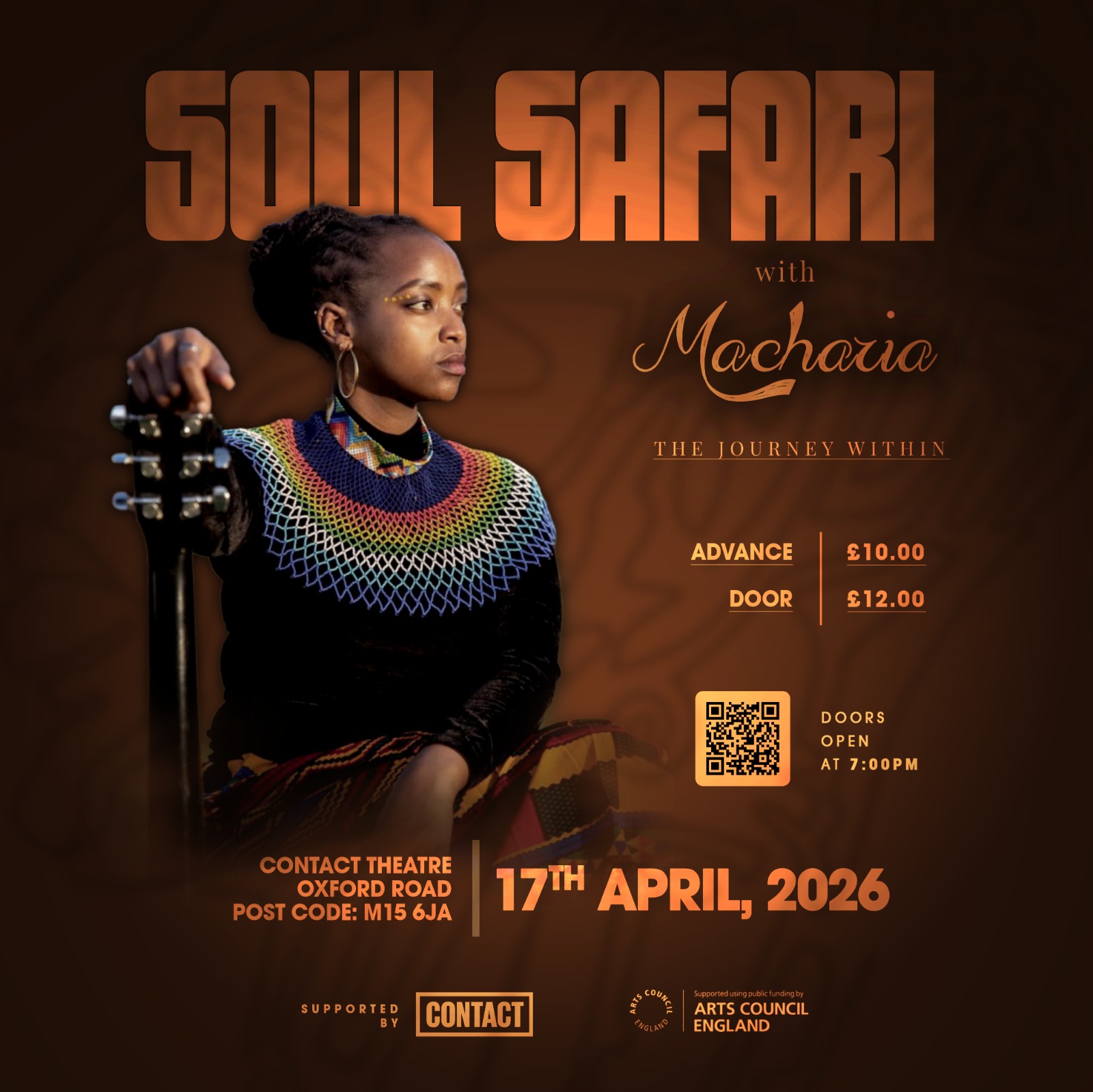
The Manchester-based artist brings the immersive performance to Contact Theatre on Friday 17 April, blending original music with Kenyan coastal and Kikuyu folk traditions in a piece shaped by storytelling, audience interaction and a search for belonging. Performed in Swahili, Kikuyu and English, the show explores home, identity and cultural connection - but it also reaches for something more communal: a way of making people feel less alone.
“Soul Safari is going to be a space for anyone who feels like they’ve lost a part of themselves and is just looking for that feeling of belonging and looking for that feeling of home,” Macharia explains to MagNorth. “It’s going to be me kind of just guiding them through my journey through the music.”
That journey is built into the structure of the performance itself. It begins, she says, with “a bit of dissonance” and the solitude she felt after moving to Manchester in October 2023 to study for a master’s in vocal performance at the University of Manchester. She graduated in 2024, but still remembers the dislocation of those first months: the loneliness, the silence, the abrupt distance from family and familiarity.
“Some of the songs I wrote when I first moved to Manchester” sit in that opening section, she says, before the piece moves into “actually seeking home and seeking that sense of belonging”. By the second half, the emotional terrain changes again, becoming “more of just a very much celebration and acceptance of where I am and how far I’ve come.”
Macharia speaks warmly about Manchester, and with a kind of grateful surprise. She says she did not fully know what to expect before arriving, but found herself immersed in a music scene that felt expansive and alive.
“The music scene is so diverse and so amazing,” she says. “There’s something for anyone and everyone, every single night of the week.”
But Soul Safari was never only about arriving somewhere new. Its real spark came from going back.
The piece was developed with support from an Arts Council England Develop Your Creative Practice grant, which enabled Macharia to return to Kenya in 2025 and spend time observing, listening and asking herself what had shifted in her absence. Her pitch for that funding, she says, was simple: “I had to leave my country to love my country.”
Back home, she found herself asking: what had she lost by being away? What had distance revealed? What had she taken for granted?
The answers touched everything: family, language, culture, even the social texture of daily life. She talks about missing the ease of Kenyan community - the shopkeeper who will stop and chat, the neighbour you can ask for salt, the security guard who becomes part of a conversation, the way children move through communal spaces with a sense of safety and shared care. It was, she realised, not just a place she missed, but a way of being with other people.
“Distance makes the heart grow fonder,” she says. “The farther away you are from someone or from something, the more you realise, oh yeah, this is something I genuinely care about. This is something I genuinely appreciate.”
That distance also forced a deeper confrontation with identity.
Early in her music career, Macharia says, she resisted being boxed in as an “African singer”. With a background spanning musical theatre, opera, jazz, pop, soul and gospel, she did not want to be reduced to a single category. But over time she realised that, in rejecting the label, she had also begun rejecting something more essential in herself.
“I am and always will have been made in Kenya,” she says. “That’s not something that’s going to change. And that’s something I need to embrace because that’s what makes me unique. That’s what makes me me. That’s what makes my story different. And that’s what makes my story amazing.”
That shift in thinking gave her new freedom creatively, especially around language. Although she grew up in an English-speaking household, Swahili and Kikuyu remained part of her inheritance. For a long time, though, she felt uncertain about claiming them in her work.
“What right do I have to be singing in Swahili?” she remembers wondering. “What right do I have to be so attached to this language that is technically mine?”
The return to Kenya changed that. Rather than being met with suspicion or judgement, she found encouragement - people willing to help, recommend books, answer questions, support the process of learning.
“No one cares that I didn’t speak it for the past 25 years,” she says. “As long as I’m doing it now…as long as I’m putting in the effort to learn it and to fully understand and fully immerse myself in the culture.” The trip, she says, gave her “that freedom and that permission to just be and exist” - and even more importantly, “a freedom to fail as well”.
One of the most affecting moments of that return came when she visited the ancestral home of the Kikuyu people and spent time hearing stories from elders about origin, lineage and community. She speaks about learning more deeply about Agikuyu and Mumbi, the founding figures in Kikuyu tradition, and connecting that history to her own Wanjiku clan. It was a reminder that culture is not abstract, but lived, inherited, spoken and carried forward.
At one point in the interview, she says simply: “I am a daughter of Mombi.” It is a striking line - not performative, but grounding. It sounds like someone locating herself in a story much older than migration or career or genre.
She also speaks with real feeling about her parents, and about how being away made her newly aware of all the ways they had held her up. Going home meant more than revisiting place: it meant recognising support she had once seen as ordinary - the driving, the paying for lessons, the encouragement, the simple fact of being there.
“I got to see just how much my parents have supported me through the years,” she says, reflecting on everything from music lessons to cultural research trips to the emotional steadiness they offered as she found her voice.
If Soul Safari is rooted in that personal rediscovery, it is also designed to be shared. One of the most distinctive aspects of the show is Macharia’s commitment to audience participation. In the press material, she says she wanted to make something that felt “shared, not performed at a distance,” and that ethos runs right through the piece.
For Macharia, that means call and response - a central element in many Kenyan musical traditions. It means teaching the audience phrases before a song begins, inviting them to join in, moving through the crowd, and dissolving the invisible wall that can exist between performer and audience in more formal Western settings.
“A big part of Kenyan music is call and response,” she says. “A lot of our songs…someone sings the first line and then people respond to that.” In some communities, she adds, music and dance are effectively the same thing. “You can’t separate the two. You have to be moving when the music is playing.”
She knows that might feel unfamiliar to some audiences, but she believes people are hungry for it.
“People are so interested in having something different,” she says. “They do really enjoy that element of call and response. They do enjoy being involved and they do enjoy sharing bits of themselves through these performances.”
Sometimes, she says, she asks people during a performance to think about something they want to reconnect with - something they have lost or let go quiet. The answers can be unexpectedly moving.
“Someone said they want to get back in touch with music. Someone said they want to get back in touch with family. Someone said they want to get back in touch with reading,” she says. Holding space for those thoughts, and for those small acts of honesty, has become one of the most important parts of her live work.
There is, throughout the interview, a strong sense that Soul Safari is as much about reassurance as revelation. Macharia is very clear about the people she hopes might find themselves in it: those who have moved away from home, those who feel disconnected, those who are still in the messy middle of transition.
“It’s going to be okay,” she says. “You’re going to be all right. You’re gonna get through this.”

That message comes from hard-won experience. She talks openly about how, when she first arrived in the UK, she tried to outrun loneliness by constantly filling her time and seeking company. Eventually, she had to admit to herself that she was struggling.
“We’re not okay right now,” she says of that moment. “We’re feeling very lonely, we’re feeling very disconnected from home, we’re missing people - and that’s okay.” Rather than dodge those feelings, she says, she had to move through them. “We have to go through it, not around it, not above it or below it.”
Her work beyond the stage is part of that same philosophy of connection. Alongside her music, Macharia has worked extensively with young people, previously in Youth Zone settings and now at Contact Theatre as Engagement and Agency Alumni Coordinator, supporting young people aged 13 to 30.
She sees a direct relationship between that work and the way she performs: it has sharpened her communication, deepened her sensitivity to different needs in the room, and reminded her to keep creativity loose, playful and alive.
“Just think like a seven-year-old child who’s singing because they love singing,” she says. “Just sing. Whatever comes, comes, and you can make it make sense later.”
It also feels fitting that Soul Safari will be staged at Contact, an organisation she admired long before she joined it professionally.
“It was on my vision board,” she says. “I want to work with Contact Theatre…if and when I get the money to do something, I knew I wanted it to be at Contact Theatre.” For an artist whose work is so concerned with welcome, participation and cultural space-making, it sounds like a natural home.
But Macharia hopes the show does more than tell her own story. She wants it to open up a wider conversation about what Kenyan music can sound like, and about the limits of the assumptions often placed on African artists.
She speaks about wanting audiences to leave with a broader understanding - not just of migration and belonging, but of Kenyan musical identity itself: layered, specific, communal, contemporary and alive.
And Soul Safari is only one step in that process. Songs from the performance, she says, will feed into a forthcoming EP - a way of carrying the journey beyond one evening and into the next phase of her work.
For now, though, the invitation is simple: come ready to listen, sing, respond and maybe recognise something of yourself along the way.
Or, as Macharia puts it in the press release: “Soul Safari is about returning to yourself, to your culture, your voice, your sense of home. It’s an invitation to reflect, to connect, and to celebrate where we come from.”
Soul Safari – Macharia is at Contact Theatre, Manchester, on Friday 17 April at 7.30pm. The immersive concert blends live music, storytelling and audience interaction, and is performed in Swahili, Kikuyu and English.





