



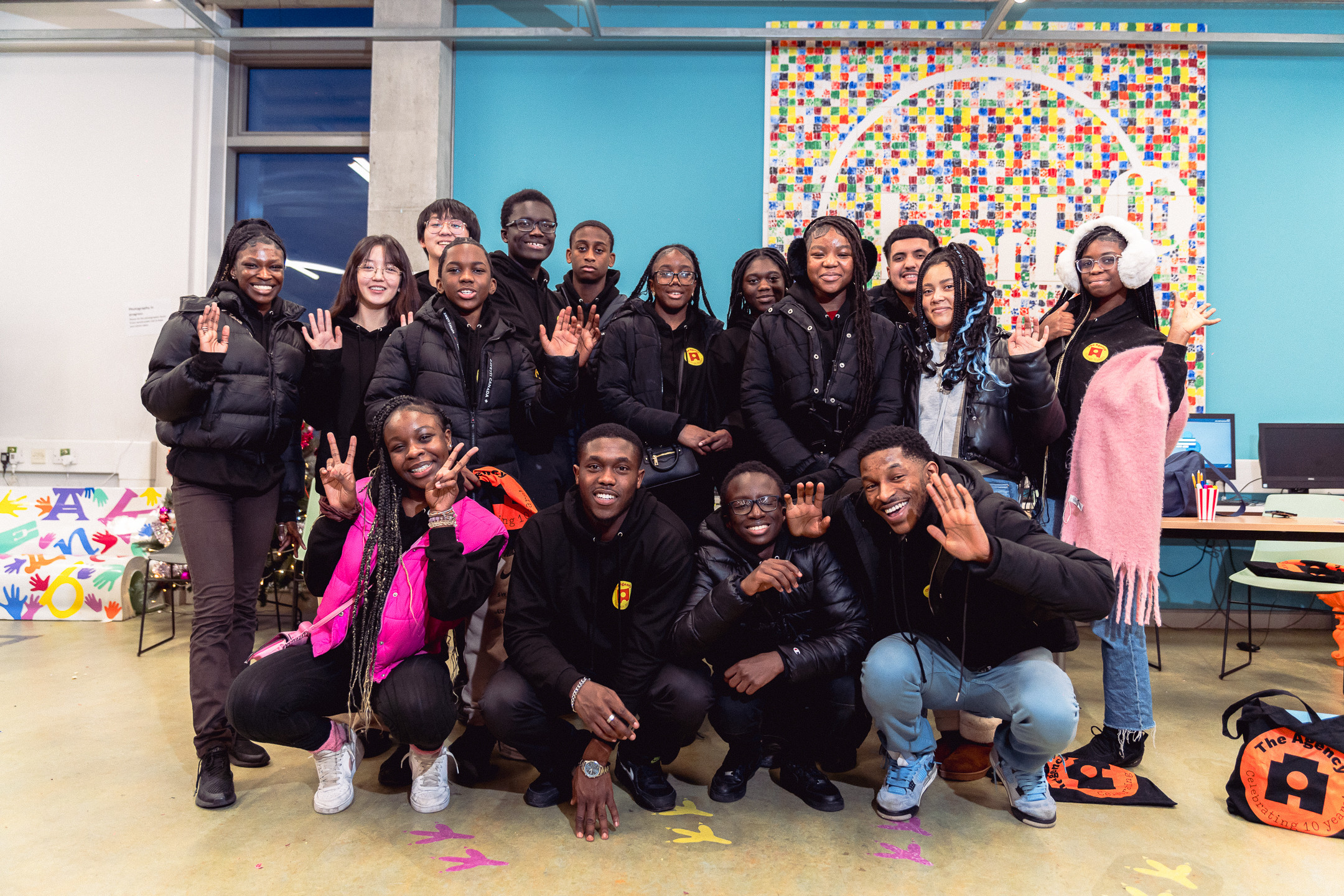
There is a sentence in the story of The Agency of Change that should probably be pinned above the door of every council chamber, arts institution, youth service and funding body in the country.
Young people are not problems to be solved, but creators of new futures.
It comes from Marcus Faustini, the Brazilian theatre maker, activist and journalist whose original idea for The Agency was developed in the favelas of Rio de Janeiro. But it lands with particular force here on our patch - in Manchester, Bolton and every town where young people are too often discussed in the language of risk, deficit, intervention and crisis.

Because this is not simply another nice youth arts project. It is a local/global story about power: who has it, who is trusted with it, and what happens when creativity is treated not as decoration, but as civic infrastructure.
The Agency of Change has now launched as an independent charity after 13 years of work across the UK. In that time, it has reached more than 41,000 people, worked with more than 900 young people and supported over 250 youth-led social enterprise projects tackling issues including knife and gang crime, mental health, unemployment, loneliness among care leavers and negative perceptions of communities. The programme is currently active in Belfast, Bolton, Chester, London, Manchester and Southampton, with partners including Contact in Manchester and Octagon Theatre in Bolton.
Its new chapter matters because The Agency is now being led, in part, by the very people it was created to support. Former young “Agents” are joining its governance as trustees - a shift that moves the work beyond participation and into something more serious: structural power.
For decades, young people have been asked to “have a voice”. They have been invited into consultation rooms, encouraged to share lived experience, photographed for reports, placed on panels, and then too often sent back out into systems that remain largely unchanged. The Agency of Change starts from a different premise. It asks young people to identify the issues that matter in their own communities, design solutions, pitch them, and then receive funding, mentoring and practical support to make those ideas real.
In Bolton, where The Agency works through the Octagon Theatre in Farnworth, the programme is explicitly framed around enabling young people to become “creative leaders and change makers” in their communities. The Octagon has described its Bolton programme as being rooted in Farnworth, with recruitment for a new cohort expected in summer 2026.
At Contact in Manchester, the fit is obvious. Contact has long been recognised for putting young people at the centre of artistic and organisational life, with people aged 13-30 involved in programming, appointments and board-level decision-making. The Agency’s registered address is now listed at Contact Theatre on Oxford Road, Manchester - a neat, northern anchor for a movement whose roots stretch back to Rio.
The projects themselves are strikingly practical. Current work includes The People’s Outdoor Cinema, designed as an affordable cinema experience for families; No Blade, which provides workshops aimed at preventing knife crime; Project Breakout, which turns online games into real-life social experiences to reduce isolation; Crowned Roots, which shares Afro hair-braiding skills and confidence; Manny Cutz, which teaches barbering; and Newlight Networks, a youth group helping teenagers cope with addictions and leading to the creation of a public mural.
None of this is vague “empowerment” language. These are young people reading the streets, families, pressures and possibilities around them - and responding with enterprise, imagination and care.
The model arrived in the UK through a partnership between Battersea Arts Centre, Contact and People’s Palace Projects at Queen Mary University of London. Now those founding theatre partners are stepping back as The Agency becomes independent. Battersea Arts Centre marked the transition in March 2026, describing it as a new chapter for the organisation, while People’s Palace Projects also confirmed the move and the appointment of Saad Eddine Said as Chair of the Board.
That appointment is significant. Said is known for work around citizen-led governance and institutional transformation. As CEO and Artistic Director of New Art Exchange, he led the organisation to embed a Citizen Assembly into its governance - a move that sits alongside The Agency’s wider belief that communities should not simply be consulted by institutions, but help to shape and lead them.
In his new role, Said is clear that The Agency’s next task is not just to keep delivering good projects, but to embed trust in young people structurally.
“Over the past decade, The Agency of Change has shown what happens when young people are trusted with real responsibility and supported to lead,” he says. “The task ahead is to embed that trust structurally, so that young people’s voices and decision-making are not dependent on a project or funding cycle, but become part of the cultural infrastructure of our towns and cities.”
And that phrase - cultural infrastructure - cannot be overused. It suggests that youth leadership should not be treated as a temporary add-on, a grant-funded pilot or a cheerful community engagement strand. It should be part of the way places function.
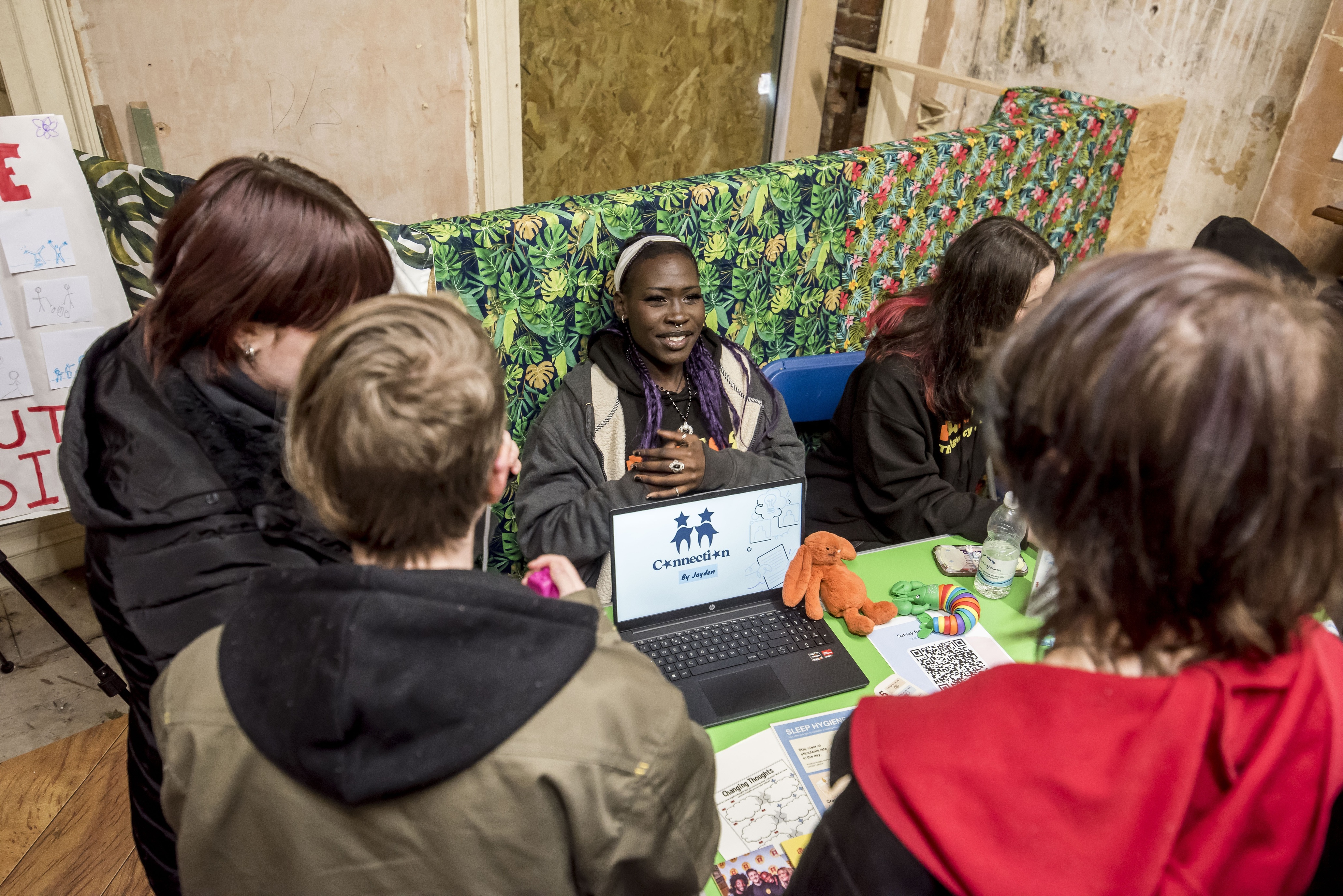
This is where The Agency feels especially relevant to the North.
Across northern towns and cities, there is no shortage of language about regeneration, skills, opportunity and pride in place. But the question is always: who gets to define what needs regenerating? Who decides what counts as opportunity? Who is trusted to lead, and who is merely invited to be grateful?
The Agency’s answer is radical. Start with the young people who know the place because they live it. Give them time, money, mentorship and responsibility. Then watch what they build.
For Henrietta Imoreh, now a trustee of The Agency of Change and an alumni Agent, the experience was transformative.
“I entered The Agency lacking confidence, tools and stability,” she says. “Receiving funding and support gave me power for the first time, the power over my story, my project and how I wanted to create change. I’m now proud to serve as a trustee, helping to ensure other young people - so often excluded from opportunities - have the same chance to shape their futures and create change.”
Aaron Omotosho, also a trustee and former Agent, describes joining the board as “a natural next step” in a journey that began when he first became an Agent. “The Agency programme invests in young people as leaders,” he says, “and I’m proud to now help shape an organisation that has played such an important role in shaping who I am.”
That is the real story here. Not simply that a charity has become independent. Not simply that a programme has expanded. But that young people who were once participants are now governors of the institution itself.
The local/global arc of the work is also expanding. This year, The Agency of Change has supported the establishment of a new programme in Colima, Mexico, run by LAPSO - Laboratory for Peace and Social Justice - in a city facing extreme violence. A first cohort of 21 young Agents has already taken part. Two projects are now being realised: one creating a rotating forum bringing together women from the affluent north and underserved south of the city; another creating a book by and for Colima’s young people to reclaim cultural heritage, celebrate pre-Hispanic traditions and strengthen social cohesion.
It is tempting, perhaps, to see Rio, Colima, Manchester and Bolton as dramatically different contexts. In many ways, of course, they are. But The Agency’s central proposition travels because inequality travels. So does youth creativity. So does the frustration of being spoken about but not listened to. So does the desire to make home better.
Marcus Faustini, whose original Brazilian model inspired the programme, describes The Agency as being born from a belief in young people’s “potency” - their capacity to act, imagine and transform.
“What began in the favelas of Rio was an invitation for young people to recognise their potency and act on it,” he says. “Seeing my idea travel across countries and cultures, and now stand as an independent movement in the UK, is a powerful reminder that creativity and courage can transform communities anywhere.”
Paul Heritage, Artistic Director of People’s Palace Projects, puts it even more directly. What Faustini created in Rio, he says, “was not a local solution to a local problem, it was something the world needed to see.”
“A proof that young people facing the sharpest edges of inequality are not in need of rescue; they are generators of change. The Agency becoming independent, led by the very people it was built for, is not a surprise to us. They are no longer the future of this movement, they are running it.”
For our readers, that line might well resonate.
The North does not need another generation of young people being told they are the future while being denied agency in the present. It does not need creativity reduced to murals after the funding decisions have already been made, or young voices invited in only when the agenda has been set elsewhere. It needs models that recognise culture as a way of organising power, building confidence, creating work, strengthening belonging and repairing civic life.
Jack Dale-Dowd, CEO of Contact, captures that double movement - local and international, intimate and ambitious - when he says The Agency “feels incredibly local” while also opening a network that spans nationally and internationally.
“Over the past 13 years, projects developed by Agents have addressed inequality, isolation, mental health and crime, with those with lived experience key to the driving factors,” he says. “The Agency feels incredibly local, it speaks to all of our values and those of the communities we work with, it also opens a network that spans nationally and internationally, connecting Agents in a way that is hopeful, ambitious and so meaningful.”
That may be the point. The most powerful civic ideas often begin somewhere specific: a street, an estate, a youth centre, a theatre, a family, a group chat, a frustration that refuses to stay private. But with the right support, they can become something larger.
The Agency of Change is not asking whether young people can lead. It has spent 13 years proving that they already can.
The question now is whether the rest of us - institutions, funders, politicians, cultural organisations, civic leaders, journalists - are willing to catch up.
Header image: Manchester Agency Group Community Day 1





