



It was the summer of 2022, and as I trawled through the cases of wartime documents that my great-grandmother had left behind, I came across one that made me stop in my tracks.
By this point I’d read upwards of fifty letters between my greatgrandparents, Charlotte and George, from throughout the Second World War. My eyes scanned each aging and cracking page taking in every elegantly penned line.
‘I will take the opportunity of wishing you a happy Christmas sweetheart, may we be together for the following one, just as we have always wanted to be.’
There was something captivating about getting to read the words of a letter which the writer did not think would assist in telling a story nearly a century later.
Four lines from the bottom I paused.
‘Oh, to be back in good old Glasgow.’

My great-grandfather had been briefly posted here in 1939, despite living most of his life in Yorkshire. His handwriting as neat as a pin, had traced out the heartbreaking statement unknowing of what the war would do to his family.
But I think I should take this story back to the beginning. In 2015, five years after my great-grandmother had passed away, my gran and I went through the documents for the first time. As a teenager I was enchanted but didn’t understand the depth. Cut to 2022 and I decided it was time to do something with these documents. I’d written for a few magazines and loved storytelling, so compiling the archive into a book felt natural.
When I set out to assemble these documents into some form of timeline, and then create a narrative for the book, I hadn’t imagined I would feel such attachment to their contents. More than eight decades after the wartime events described, as I perused the words on the page in front of me about their lives in Yorkshire, these people felt like humans with intricate lives for the first time.
In one of my reading sessions with the documents I stumbled upon a letter I hadn’t read before.
'Oh Charlotte, my sweetest darling, how I long to be with you again, to hold you in my arms as I used to. I have longed for many things in life, but none so much as I have for you at present. This dirty rotten war makes me look forward to the days when I can make you happy.’
Despite growing up with my great-grandmother, Charlotte, who became the title character of ‘Finding Charlotte’, this document brought her life into focus for the first time for me as an adult. As a child, when I sat with her in the nursing home, and spent afternoons at her house, I was blissfully unaware of all that she had endured.
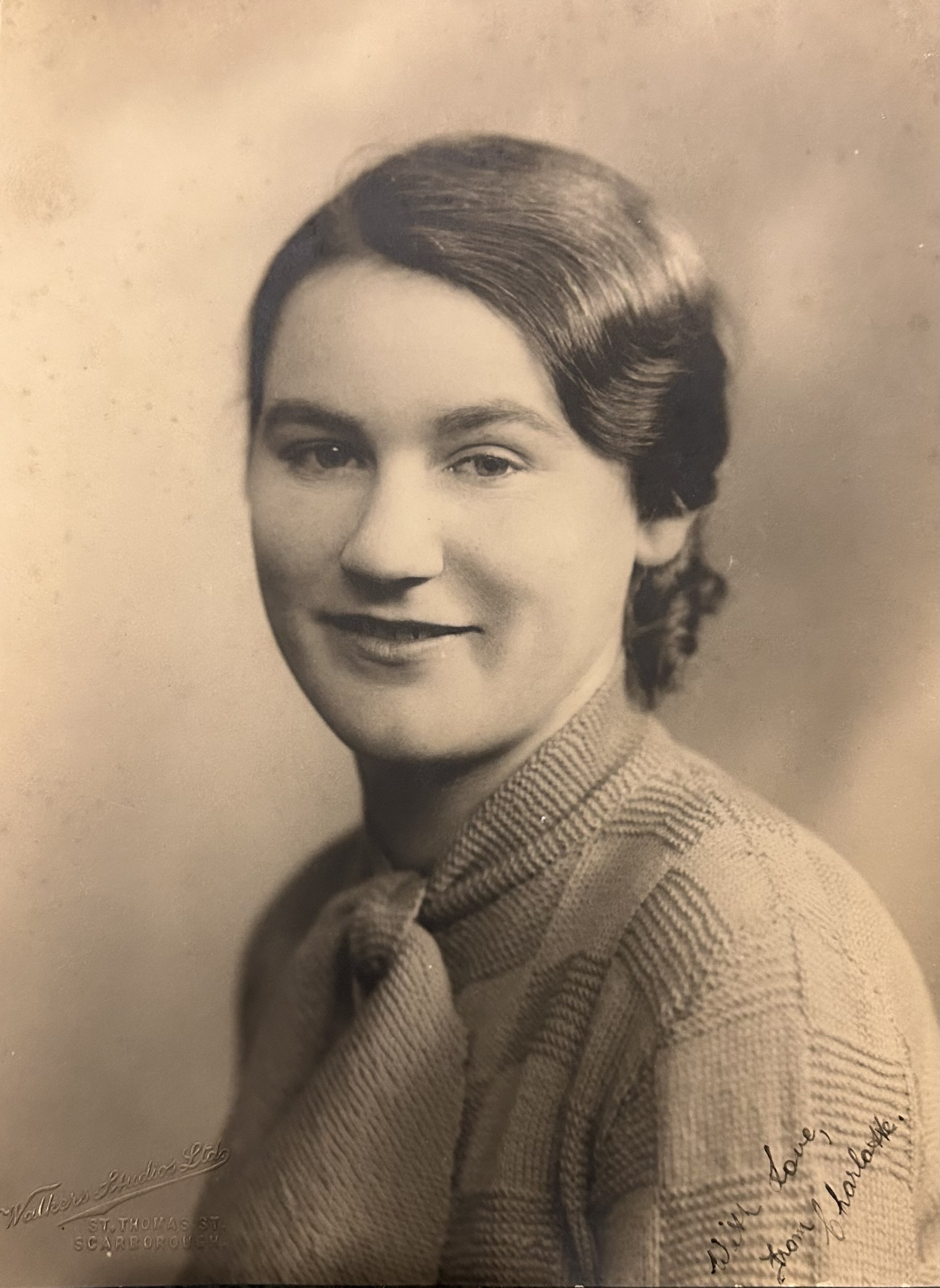
However, the family archive began to put this into perspective for me. Reading the heartbreaking words which my great-grandfather wrote to her as he longed to be back on home soil proved to me that there was a deeper story than just narrative, but one with real emotion too.
By the winter of 2023 I had compiled all the documents into a rough timeline and began work on writing the first chapters. Set across my family’s home in Yorkshire, primarily between Scarborough, York, and Leeds, the tale of my great-grandmother's life in the pre and war years began, opening up the intricate details of a life in the quiet corners of Yorkshire that was affected by headline making events.
At their core, the documents revealed the relationship between my greatgrandmother and great-grandfather whilst he was posted across the world during World War Two. There was a central focus on the lead up to and during his time in South-East Asia around the fall of Singapore. The letters tracked his thoughts and feelings about returning home, and how he felt being on the front lines. These were followed by telegrams and correspondence to Charlotte from the war office about his capture by the Japanese when Singapore fell. The third and closing section of what feels like a trilogy of letters are between Charlotte and her sisters, learning to deal with the aftermath of George’s capture and death as a Japanese prisoner of war.
From these letters we can see intimately into Charlotte’s experience as the wife of a prisoner of war. Perhaps most interesting to me is the idea that these letters do not just represent Charlotte’s life and story, but thousands of women across Yorkshire who experienced the same heartache. Our family archive does not simply discuss the turmoil that Charlotte felt throughout these years, but it allows us to experience it more than eight decades on. This was one of my hopes for the book; to be able to bring this story to others who wanted to feel what their family may have experienced.
However, the documents also provided narratives for those around them. What gaps were left in Charlotte and George’s story, could be filled with their family members. This expanded the story from just Scarborough to York and Leeds also, where their families had built their foundations in the early 20th century. With each chapter that I researched, new questions and routes unfolded about these people.
Take the chapter about an aunt of Charlotte, Doris, who moved alone to New Zealand in the 1920s. It’s a story that didn’t fit the original narrative of the book, but by keeping the plot points intact and using research about the time period to expand contextual information about Doris, it became a parallel to Charlotte’s life; adding to the overarching theme of women’s lives at this time. Charlotte’s story, and indeed those of the women in her life, resembles that of many women at the time of WW2 Britain.

There is something compelling about younger generations returning to family archives, particularly when they reveal the lives of working-class women whose wartime experiences are often overlooked. Without preserving and researching these documents, we risk losing their stories to time. Whether a handful of photographs or hundreds of letters, every family story deserves to be conserved.
Book Note
Finding Charlotte by Ben Robinson
Published by BRbooks, 2026
ISBN: 9781036964702
£10.99 RRP, paperback





