



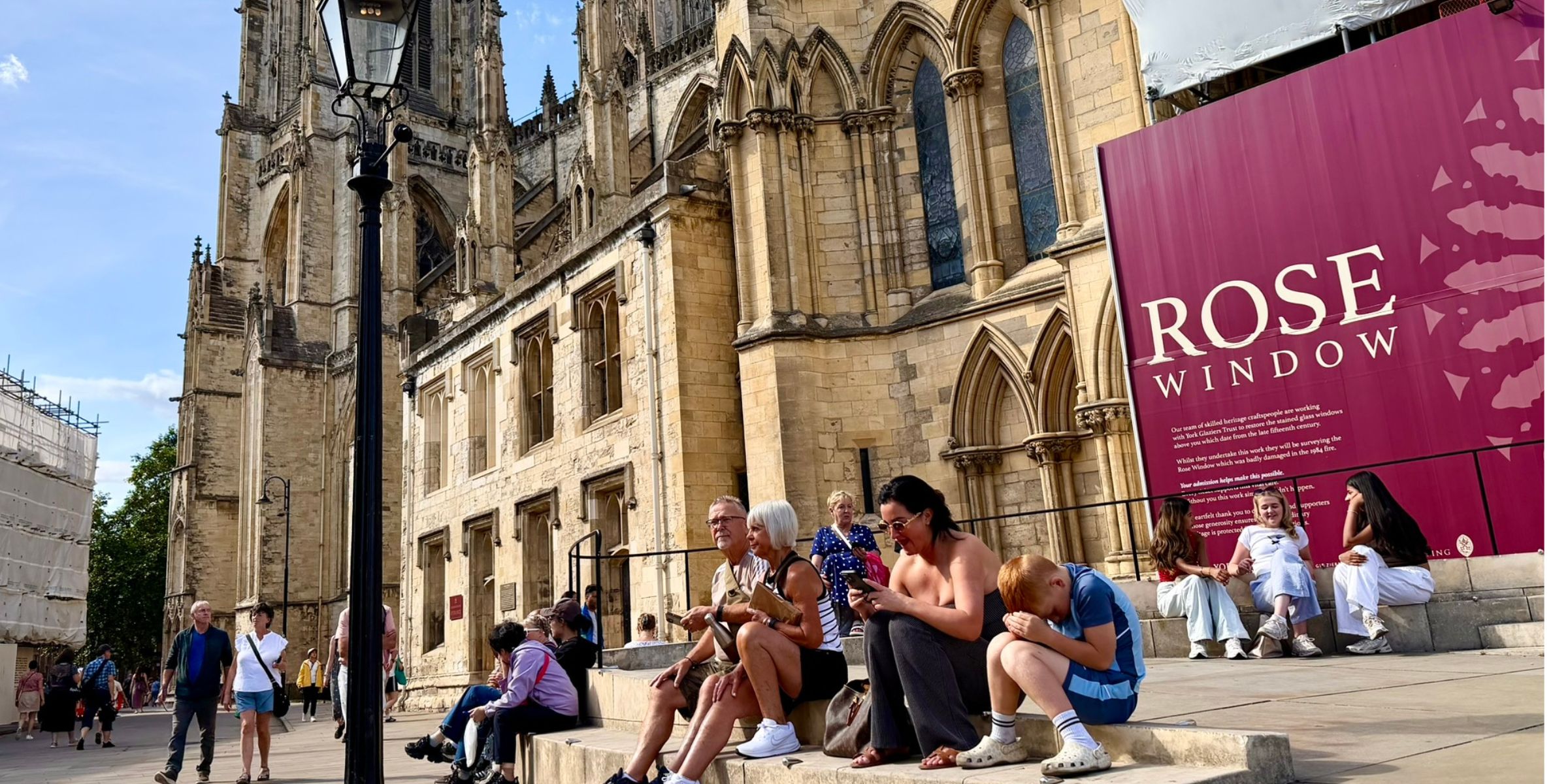
Lots of our Northern cities (and towns) know they're being looked at. York's one of them. Its stonework rises obligingly into blue sky; its old streets narrow themselves into irresistible frames; its ghosts report for work in cloaks and tall hats. Wherever the eye lands, somebody's raising a phone to meet it.
We'd arrived with a few hours to spare before meeting a friend for Choral Evensong at York Minster. This wasn't an assignment, exactly. There was no itinerary and no list of essential attractions. We simply started walking - through Museum Gardens, around the Minster and into streets packed with visitors from across the world, all trying to take a little bit of York away with them.
Before long, however, we became less interested in the city people had come to see than in the people themselves.
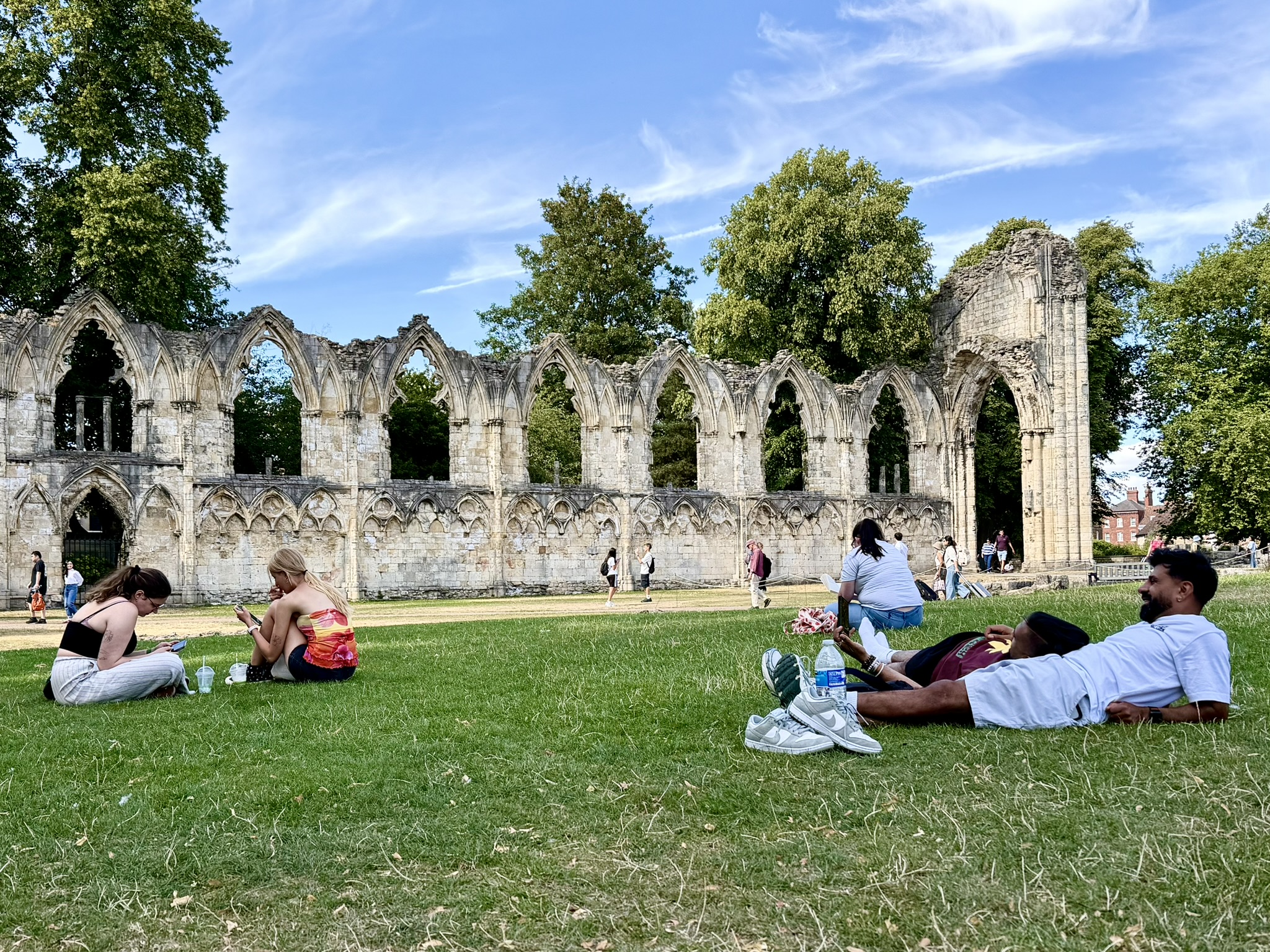
In Museum Gardens, Amjit and his friend were stretched out on the grass beside the ruins of St Mary’s Abbey. They'd reached York after visiting Whitby and Middlesbrough, where they'd undertaken an important piece of northern fieldwork: sampling a chicken parmo.
Amjit is head of Religious Education at a school in Leicester. The new academic year's approaching, but he was making a determined effort not to think about it. Around us, families crossed the lawn, students sat in the sun and centuries of ecclesiastical stonework stood roofless above the picnics. For the moment, September could wait.
That became the rhythm of the afternoon. York provided the imposing backdrop; people supplied the more immediate stories.
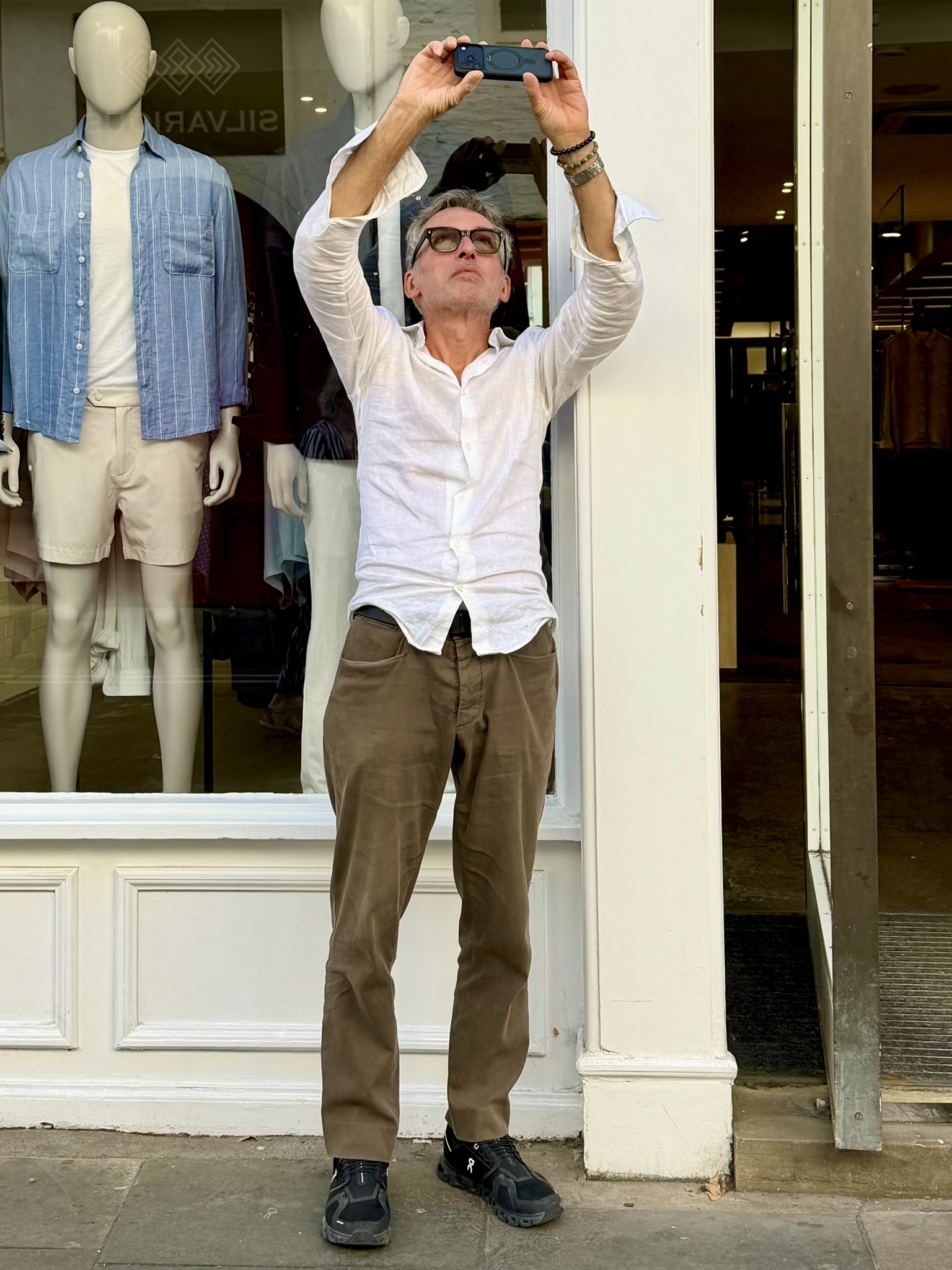
Eric was standing outside a shop, arms raised, photographing something high above the street. An architect and architecture lecturer from Brooklyn, New York, he told us he'd recently been in Sofia judging an architecture competition. York was one of several European stops with his family before their return to the United States.
He looked differently from the rest of us: not simply upwards, but into proportion, material, line and alteration. The city might be old, but it's never finished. There was scaffolding around St Michael le Belfrey; the Rose Window at the Minster was under restoration; ancient facades met shop signs, security cameras and the everyday apparatus of a working city.
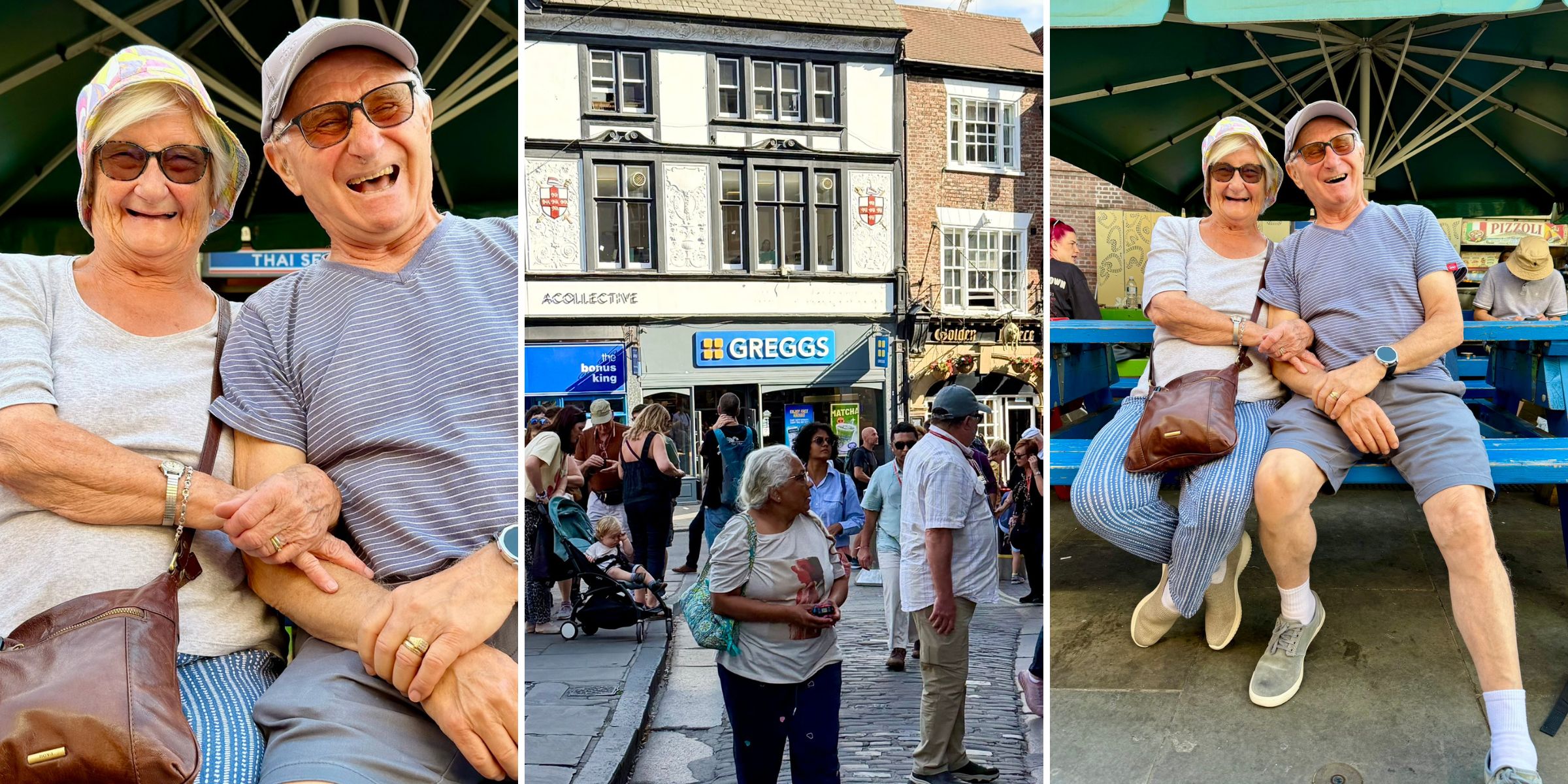
Agostino and Maureen, a lovely married couple from Hertfordshire, had come for a two-day break. Agostino was Italian, very funny and increasingly exercised by a matter of civic importance: how had the council allowed a Greggs to occupy a position facing the bottom of the Shambles, one of the country’s most famous historic streets?
It wasn't the past he objected to, but the sausage rolls place within it.
The conversation then took an unexpected turn. The couple told us about their work as film extras in a number of big-name productions. In a city selling carefully staged encounters with Romans, Vikings, wizards and ghosts, we'd stumbled on two people who knew something about standing inside a manufactured world and making it appear real.
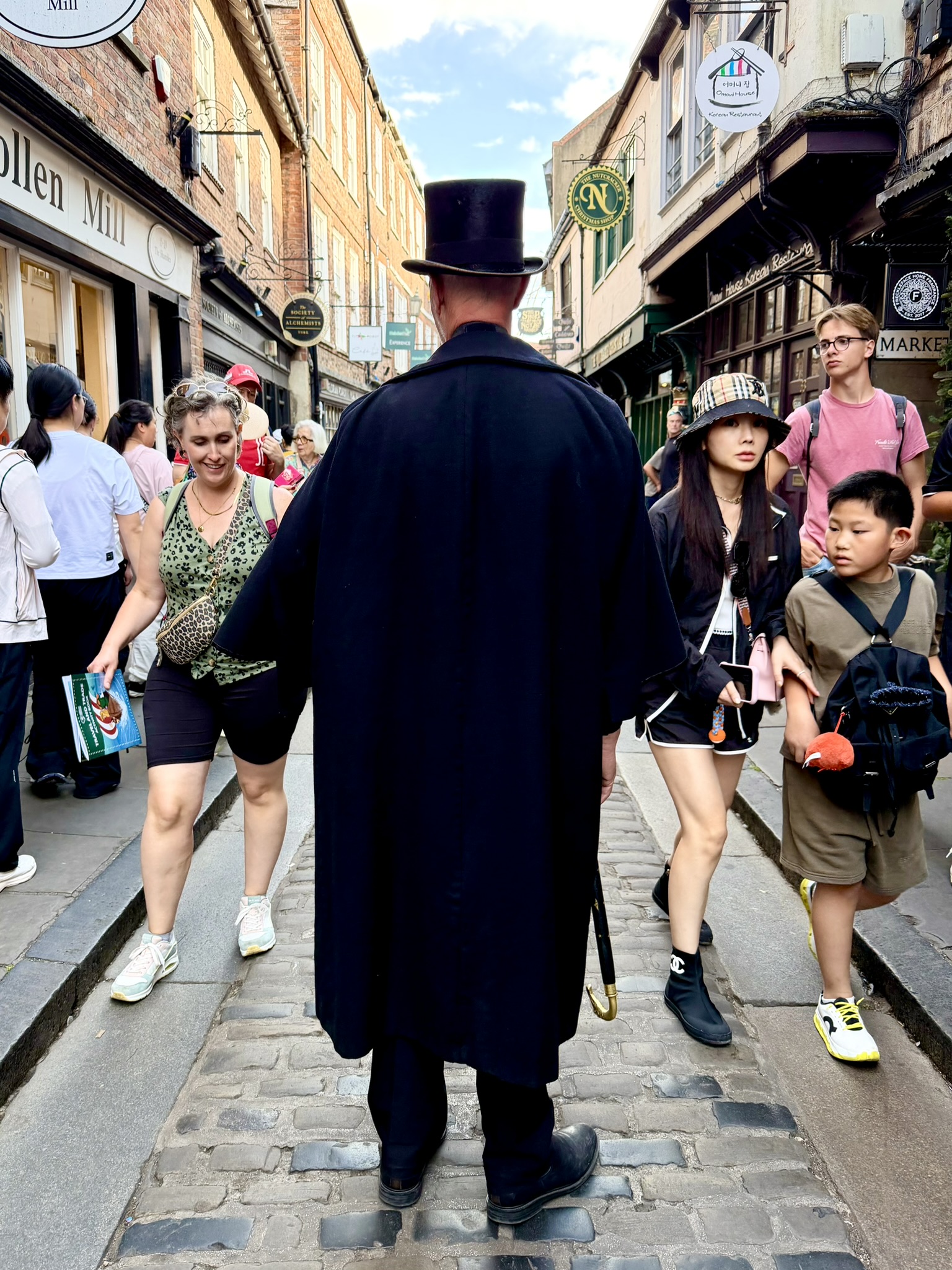
A man in a top hat and dark cloak was hoping to recruit customers for his ghost walk that evening. A sign hung against his chest, which he repeatedly revealed from behind the cloak. Viewed from the front, it might have been advertising. Viewed from behind, his urgent flashes of activity suggested something less suitable for a family afternoon.
Nearby, a group of impeccably styled young women were conducting what appeared to be a Vogue-level photo shoot outside the Potions Cauldron. York’s timbered walls and theatrical shopfronts had become their set. When we drifted too close, one of them issued a clear production instruction: “Stand away please - we are filming.”
We apologised, of course. Every director needs control of the frame.
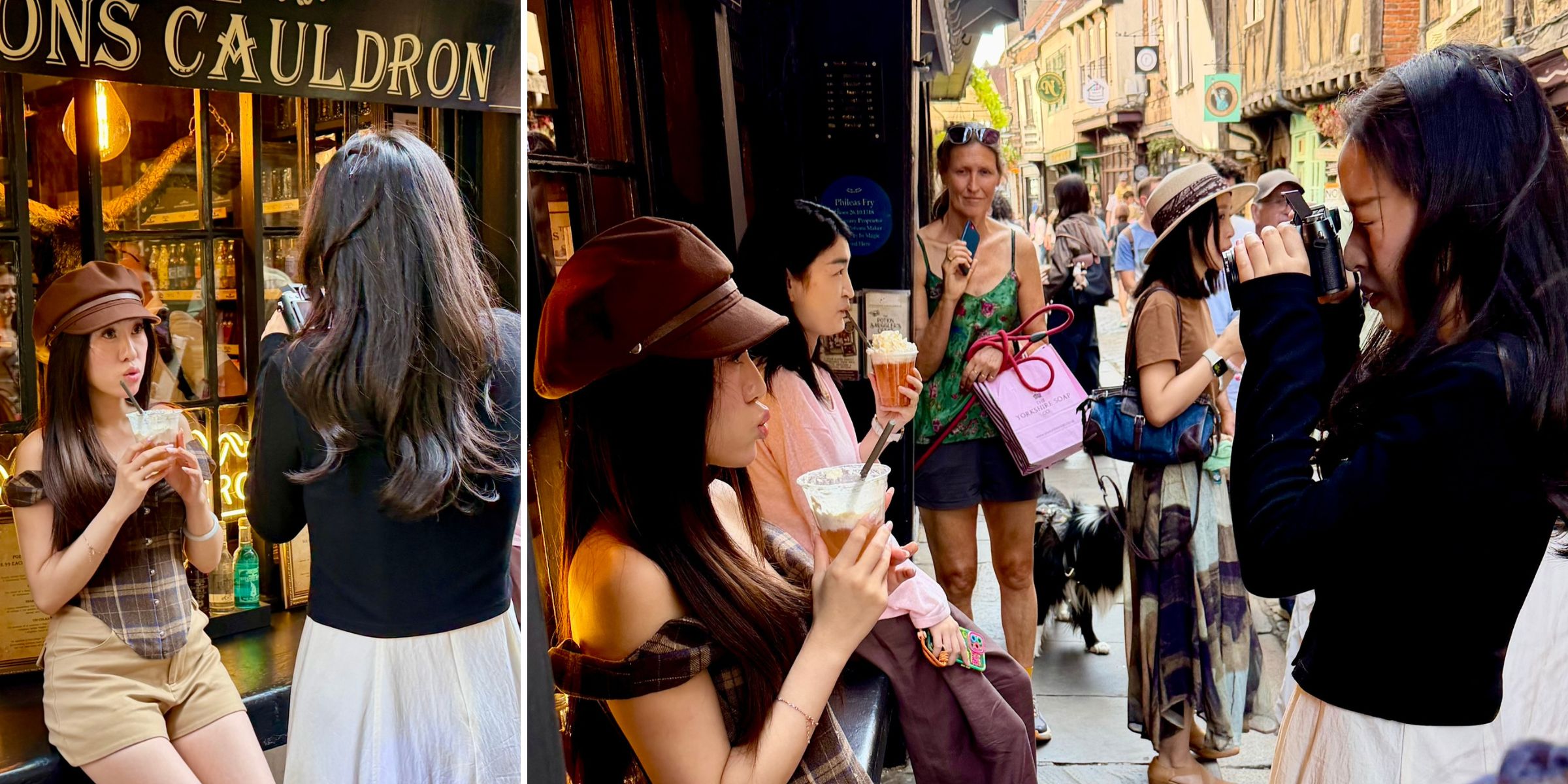
This is what tourism looks like now, and York manages to make its contradictions unusually visible. We travel to see something old, then experience it through the newest device in our pocket. We photograph our companions photographing us. The resulting picture might travel farther than we did. Or ever will do.
It would be easy to become superior about all this, but the photographs resist it. There's delight in the posing, concentration in the framing and generosity in the endless taking of pictures for other people. Much of what looks like vanity is also collaboration: hold this, stand there, move left, let me make you look as marvellous as you felt when we were here.
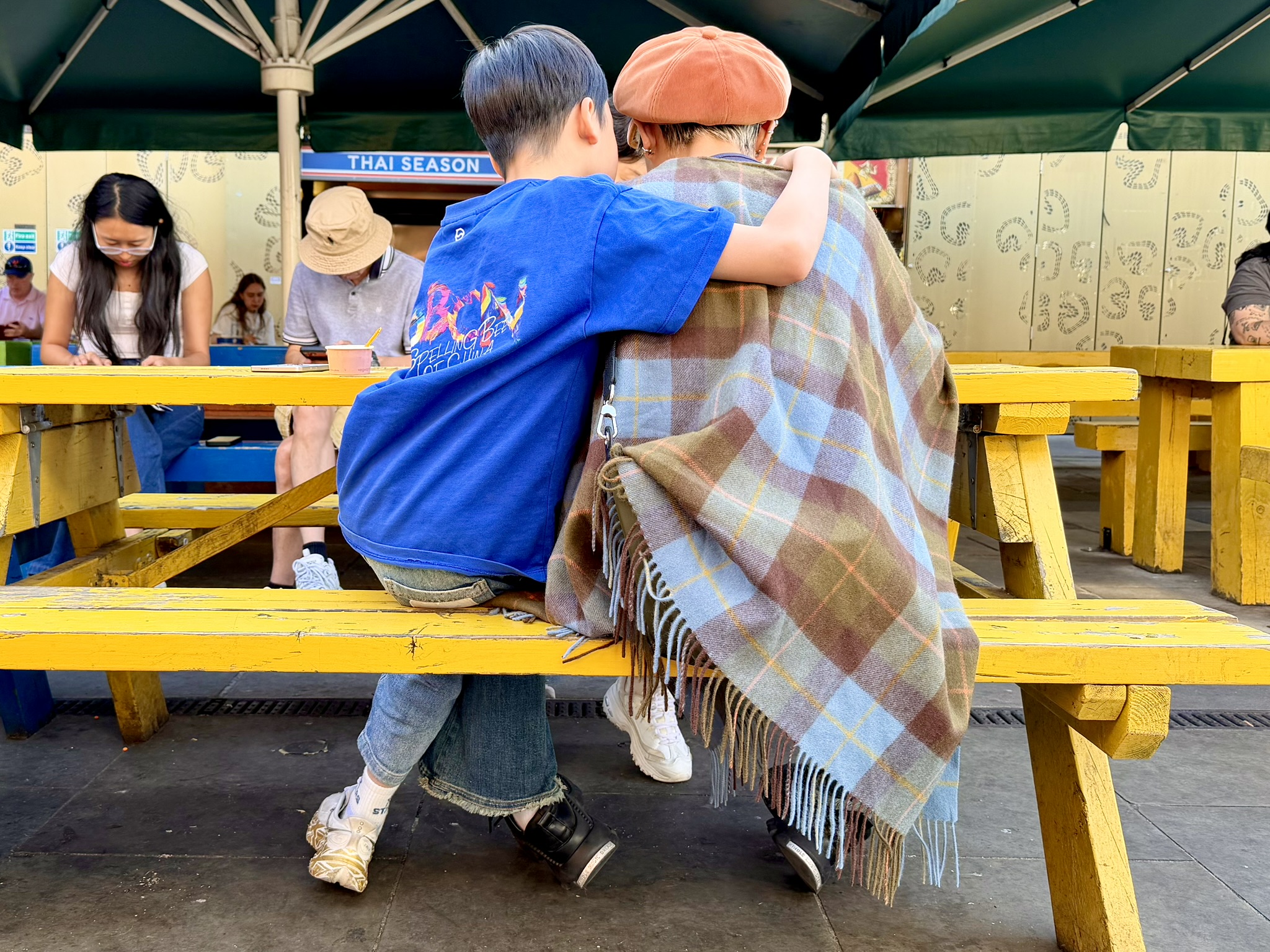
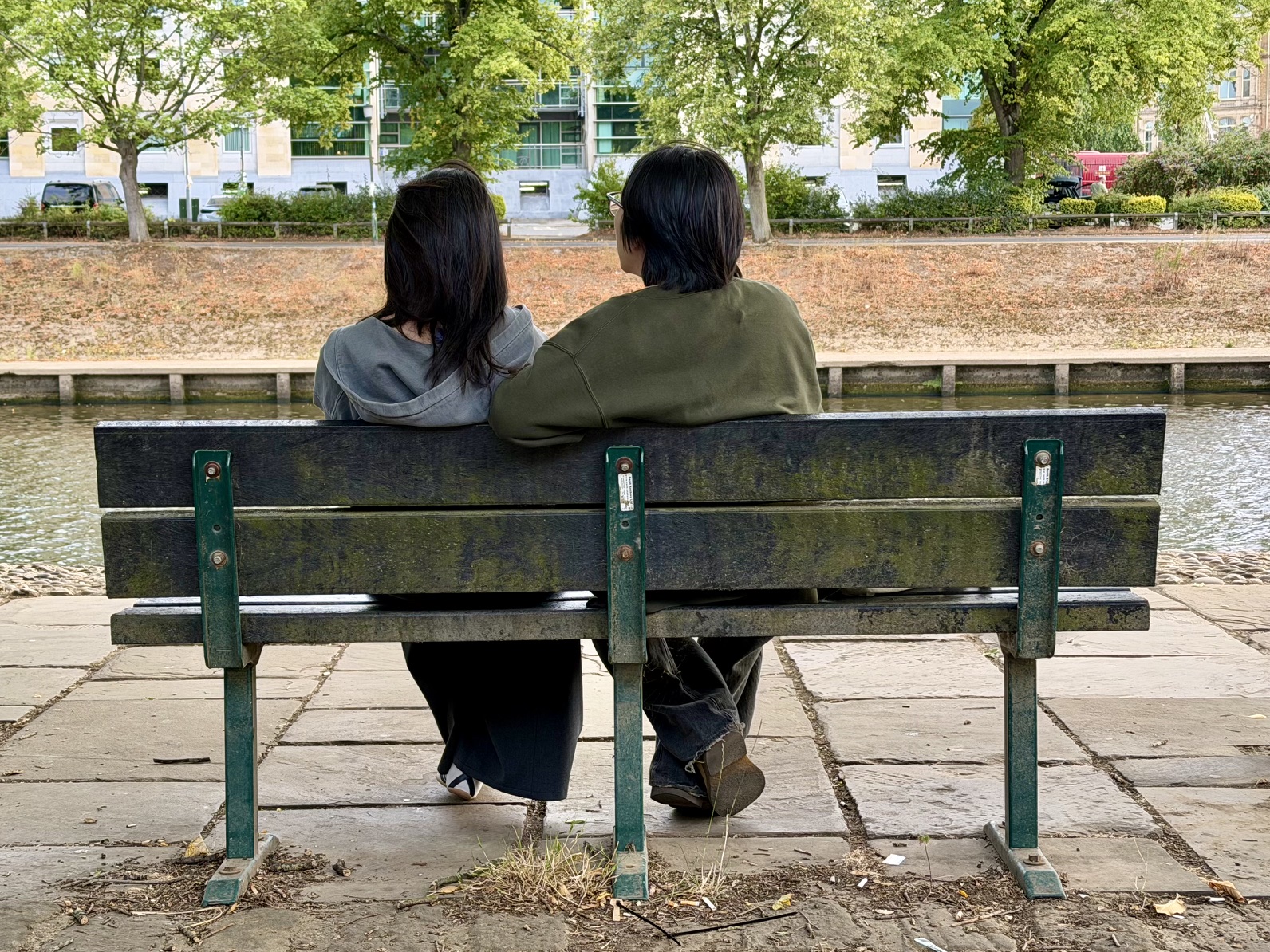
More than the cameras or costumes, it was the couples we kept noticing. Not only romantic couples, but pairs of every kind: friends resting on grass; a child’s arm around an adult’s shoulders; two people on a bench with their backs to the river; husbands and wives laughing in the market; companions pausing while one of them found the right angle.
Perhaps we rarely travel simply to see a place. We go to experience it beside somebody else - to accumulate a private store of shared references, wrong turns and jokes that'll make little sense to anyone who wasn't there.
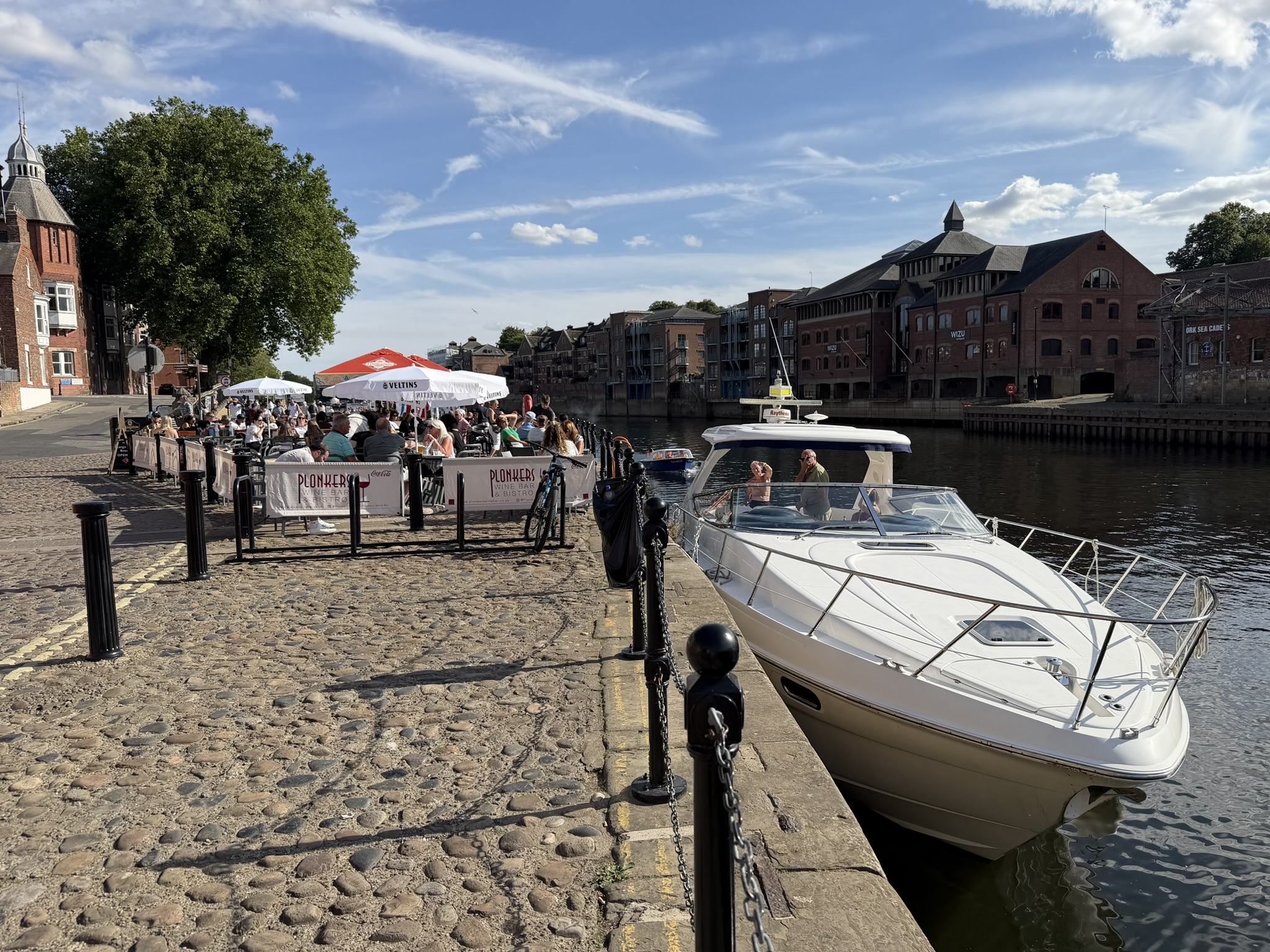
Two couples had travelled upriver for the day on what they described as their “floating bar”. When we took their picture, they immediately demanded to know whether we were CID. Or HMRC. “You might recognise us from Crimewatch,” they added. They had the practised rhythm of people who'd been making each other laugh for years.
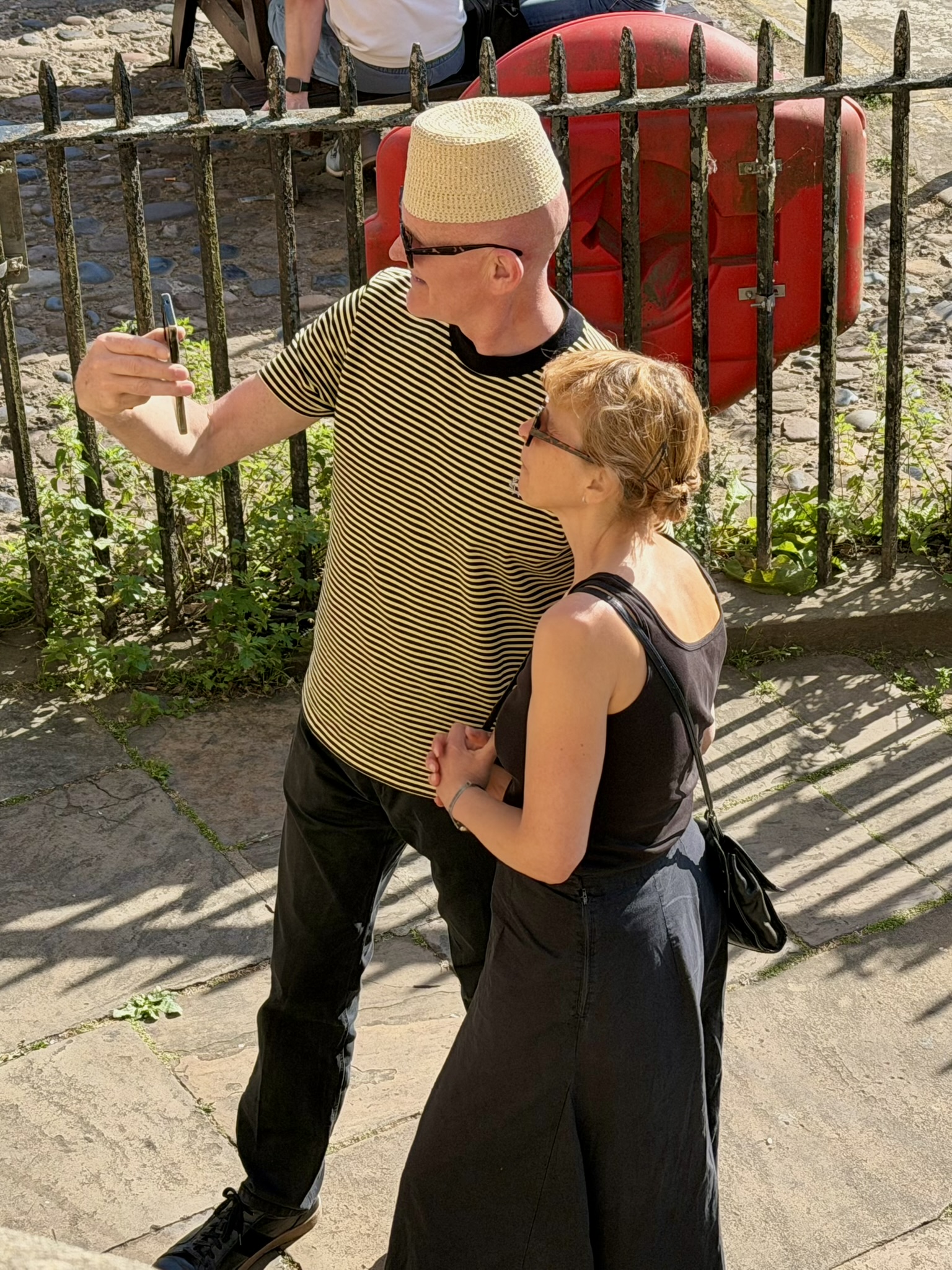
Another man was wearing a close-fitting hat in the sunshine. Its purpose was entirely practical. We didn't think he was headed to a Sufi gathering - or emulating Tommy Cooper. “I need it to keep the sun off,” he explained. “The hair’s gone.” Very cool.
These were tiny exchanges, but together they changed the afternoon. The historic city was spectacular, as always, but it became less like a collection of monuments and more like a temporary gathering of lives - teachers, architects, film extras, amateur comedians, families and friends - briefly sharing the same streets.
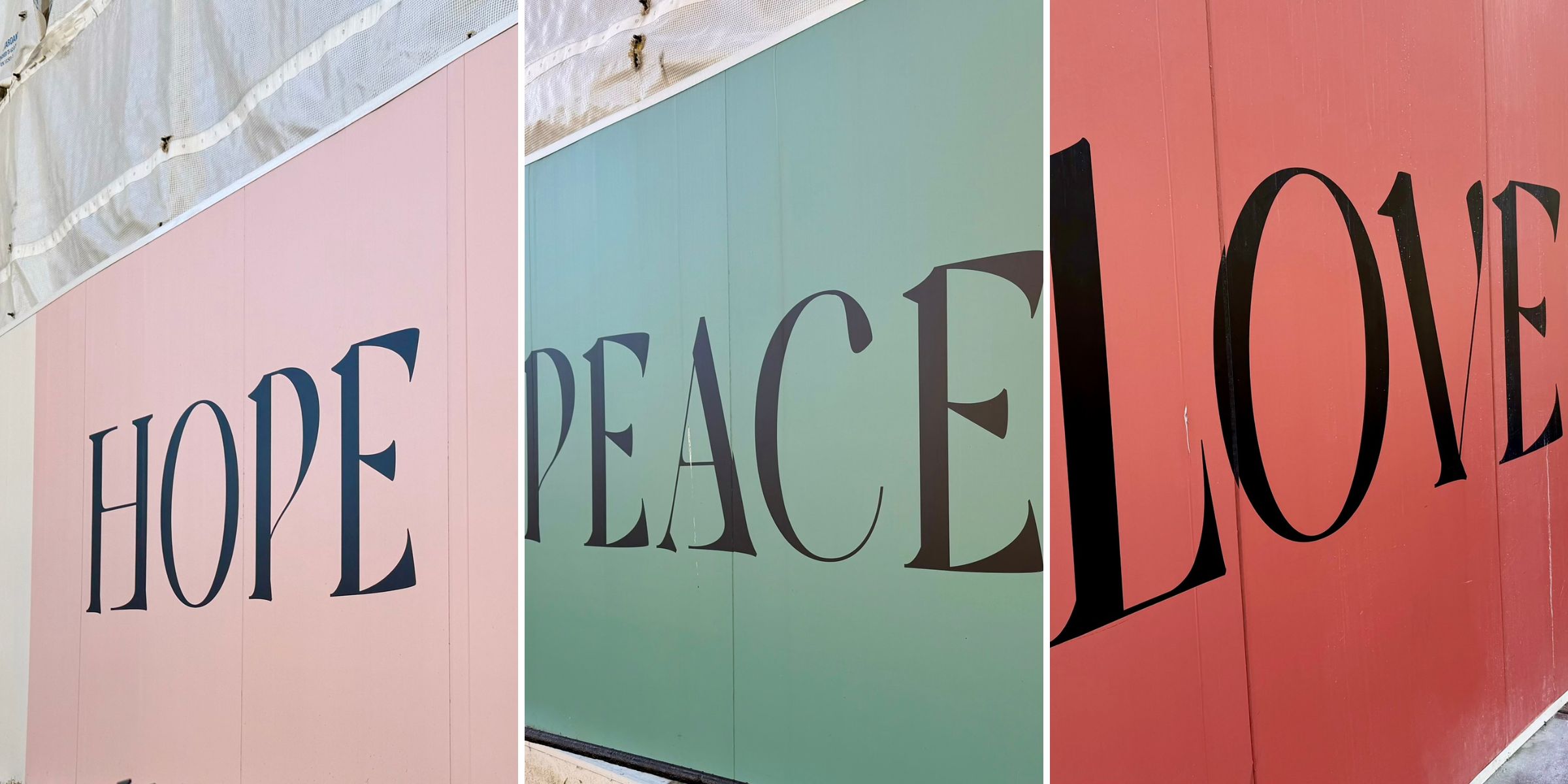
On the perimeter fencing around the renovation of St Michael le Belfrey were three enormous words: LOVE. PEACE. HOPE. Against the noise, commerce and constant image-making of the surrounding streets, they landed with unexpected force. They looked decorative at first, then began to feel like instructions.
Eventually the slow toll of a bell beckoned the faithful, the benevolent agnostics and the confirmed atheists to the Minster for Choral Evensong. Labels felt rather small inside that space. After several hours among crowds marvelling at York’s ancient - and not so ancient - sights, the shift in atmosphere was profound.
There were polite requests not to film or take photographs during the service. For quite a few visitors, the request proved too much. Perhaps that was understandable. When confronted by something beautiful, our first instinct is increasingly to preserve evidence of it. Yet the Minster was asking for something harder: attention without possession.
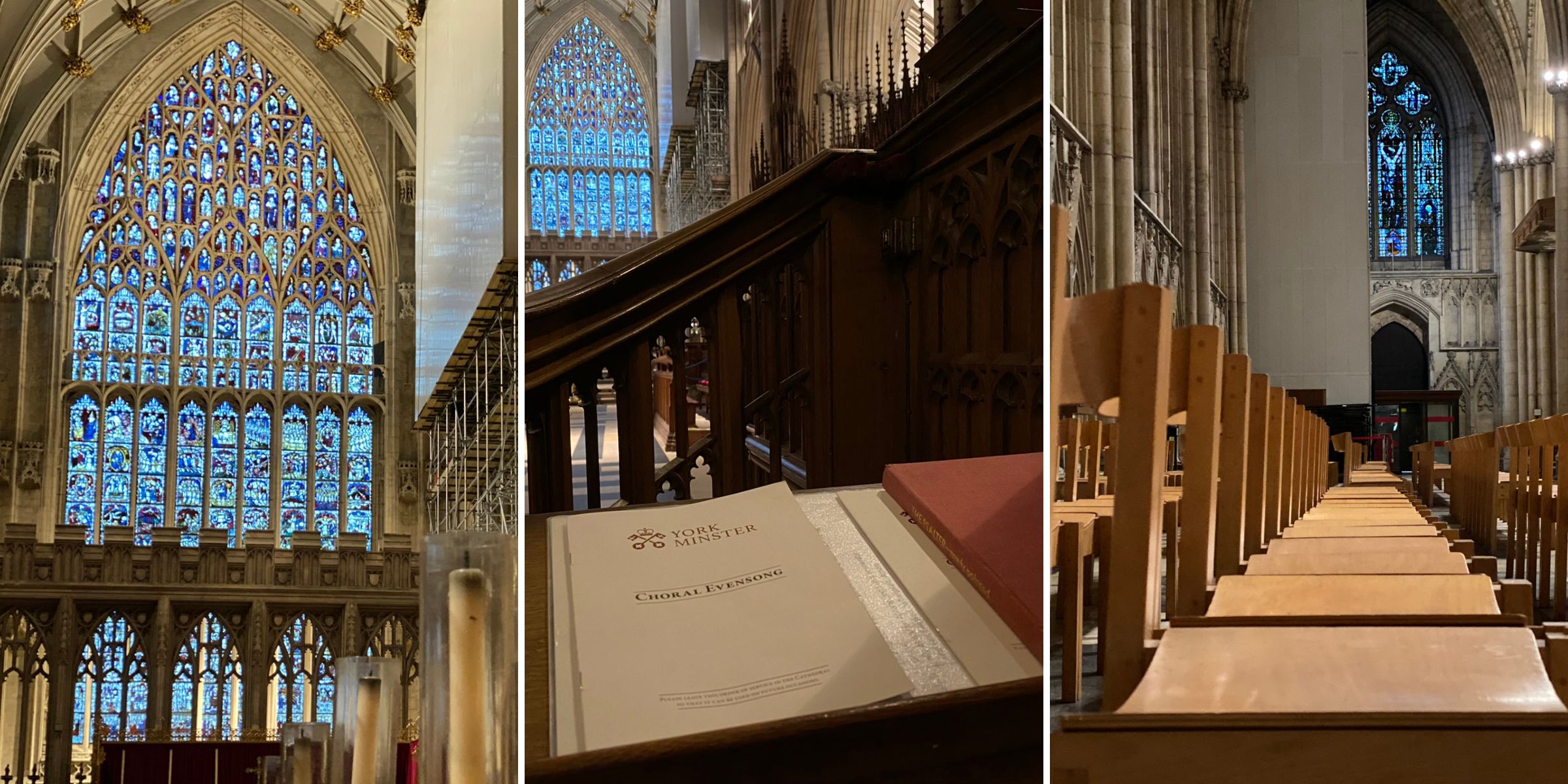
Then came the service and the music. Courtesy of Canon Maggie and Antwerp's supernal Helcion Choir. The city’s performances, poses, sales pitches and camera shutters fell away. Stone, voices and fading daylight held the same vast interior. Nothing needed arranging. Nobody needed directing. For a little while, there was only the experience itself.
We'd spent the afternoon photographing people looking at York. It ended in a place that quietly asked all of us to stop looking through a screen and simply be there.
After the ghosts, the Greggs, the parmo, the floating bar and the strangers who'd briefly become part of our day, the peace was absolute.
All images: MagNorth





