



.jpg)
I love historic buildings. I think it's wonderful the way they allow us to admire the (sometimes difficult) past from a comfortable distance. But Ripon Workhouse museum isn't one of those.
When the newly transformed museum opens its doors on Tuesday 21 July, visitors will be invited to step into the lives of the paupers (horrd term), vagrants (another horrid word) and children who once entered through its gates - people for whom the workhouse wasn't a heritage attraction, but a final and deeply feared refuge.
Following a £2.8 million redevelopment, the Workhouse Museum has been expanded into a more immersive visitor experience, combining restored historic rooms, personal stories, interactive displays and practical activities intended to reveal the realities of life inside one of Britain’s most complete surviving Victorian workhouses.
And its central question is a deliberately direct one: Could you survive the workhouse?
It's tempting, from the comparative comfort of the 21st century, to treat the Victorian workhouse as something safely confined to the past: an institution of gruel, uniforms and forbidding stone corridors, remembered from school history lessons and Dickens adaptations.
But workhouses were never just buildings. They were the physical expression of a social belief: that poverty should be made unpleasant enough to discourage people from seeking help.
Those who crossed the threshold surrendered much of their independence. Families might be separated. Meals were meagre. Work was repetitive and exhausting. The distinction between assistance and punishment was often deliberately blurred.
Ripon’s museum occupies a particularly important place within that history. The surviving site includes the Workhouse Museum, Prison and Police Museum and Courthouse Museum, all within walking distance of one another. Together, they trace a route through Victorian systems of poverty, crime, judgement and punishment - and reveal how easily vulnerable people could pass from one institution into another.
The newly restored Residents’ Block was the largest building on the workhouse site and the place where paupers ate, slept and worked.
Acquired by Ripon Museum Trust in 2017, it had suffered years of changing use, including periods as a care home and council offices. The roof leaked, the windows were deteriorating and many of its original features had been lost or obscured.
The restoration has now brought rooms including the Old Men’s Day Room, Kitchen and Dining Hall back into use, while the original workhouse cellar has been opened to the public for the first time.
For curator Dr Laura Allan, that cellar offers one of the most revealing glimpses into the life of the building.
It remains largely untouched from the period before the Residents’ Block became council offices, and still contains the huge original meat-block table on which the workhouse pigs would have been butchered, alongside its trough and sink.
“It’s like glimpsing behind the curtain,” she says, “seeing how it truly was.”
That sense of looking beyond the official version of history runs through the redevelopment.
.jpg)
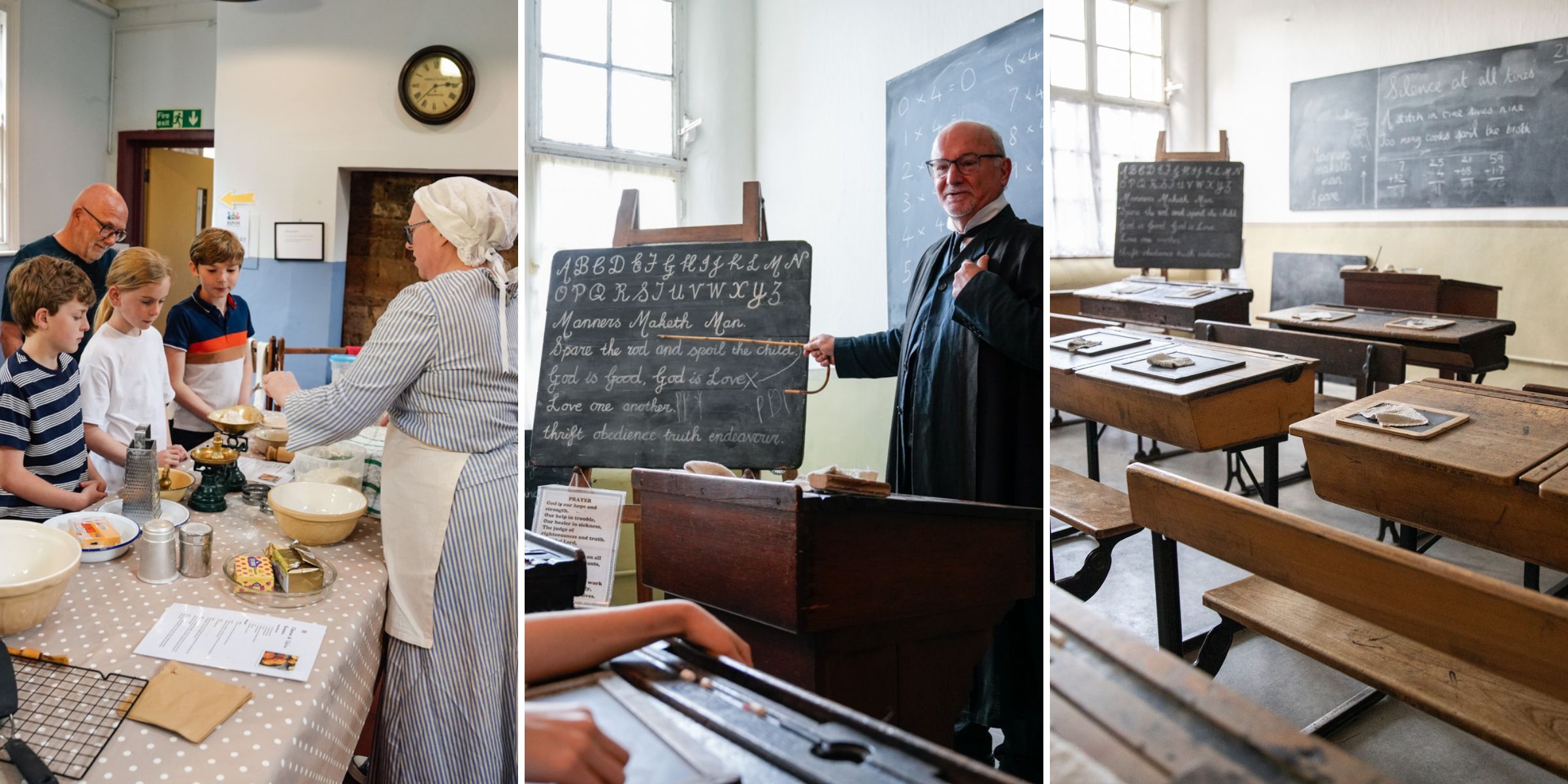
Visitors will be able to shut themselves inside a vagrant’s cell and listen to the sounds of a night spent behind its locked door. They can sweep the yard, pick oakum from old ropes and attempt some of the laborious jobs once given to workhouse residents.
Children can search for hidden mice in the kitchen, use traditional weighing scales to measure out the kind of sparse meals served to inmates and spin a wheel in the Guardians’ Room to discover what fate might have awaited them.
There are replica workhouse uniforms to try on, although the experience is intended to provoke more than a novelty photograph.
Behind each activity lies the story of someone whose choices had narrowed until entering the workhouse was the only one remaining.
That emphasis on individual lives is central to the museum.
The language historically used around poverty - paupers, vagrants, inmates, the deserving and undeserving poor - would strip people of their identity before they had even entered the institution. This museum has the opportunity to reverse that process.
Rather than presenting poverty as an abstract Victorian problem, Ripon’s new displays return attention to the people who experienced it: the elderly, the sick, those unable to find work, mothers and children, travellers, labourers and people whose lives had been overturned by circumstances they couldn't control.
Alexa Vernon, Director of Ripon Museums Trust, says the transformed museum has been designed to place visitors inside those stories and encourage them to think about the values that shaped the workhouse system.
“Their stories challenge us to think about fairness, dignity and opportunity, both in Victorian Britain and today,” she says.
“This project is about much more than restoring a historic building. It is about preserving important heritage, creating opportunities for communities and young people to engage with history, and inspiring visitors to reflect on how we can build a fairer future.”
The intention, she adds, is that people leave not only better informed, but “more compassionate, thoughtful and connected to the stories of those who came before us.”
That connection between past and present is perhaps the most important part of the museum’s reopening. We no longer have workhouses. But the questions that sustained them haven't entirely disappeared.
Who's entitled to help? How much dignity should accompany that help? When does support become surveillance or punishment? How do institutions speak about the people who depend on them? And how quickly can hardship become something for which an individual is blamed?
A good museum doesn't force a simple comparison between Victorian poverty and life today. Nor does it turn history into an uncomplicated moral lesson in which the past was cruel and the present enlightened. Instead, it gives us enough evidence to notice uncomfortable echoes for ourselves.
Ripon’s new Discover Space will extend those conversations through exhibitions, creative projects and community activity, connecting the history of the site with present-day questions surrounding inequality, justice and social change.
The wider Inspiration for a Fairer Future project has also included conservation, new historical interpretation, youth engagement, collections care, learning programmes and opportunities for community participation.
Backed principally by The National Lottery Heritage Fund, alongside support from organisations including the Wolfson Foundation, Garfield Weston Foundation and North Yorkshire Council, the project represents a substantial investment not only in an important building, but in what that building can mean to the people around it.
It's also strengthening Ripon’s cultural offer, too.
Visitors can continue from the workhouse to the city’s Courthouse Museum, where magistrates once passed judgement, and the Prison and Police Museum, where original cells survive.
Seen together, the three sites tell a compelling story about the systems Victorian society created to manage poverty, disorder and crime - and about the people who found themselves caught within them.
There will, inevitably, be enjoyment in exploring the restored rooms, opening unfamiliar doors and encountering the objects and details of another age. But the real achievement of Ripon’s transformed Workhouse Museum may lie in its refusal to offer a wholly comfortable day out.
The people who lived within these walls weren't characters in a costume drama. Their hunger was real. Their fear was real. Their separation from family, loss of liberty and dependence upon an often-harsh institution were real.
By restoring the building, Ripon Museums Trust has preserved an exceptional part of our northern history.
By restoring the stories of the people inside it, the museum might have done something more important still.
It's given the workhouse back its human face.
Ripon Workhouse Museum reopens to the public on Tuesday 21 July. Further information, opening times and tickets are available from Ripon Museums.
Images: Ripon Museums





