



.jpg)
Full disclosure: I am a Southerner who lives up North and now call Wigan home. The reason we live here is simple: we love it. And now in your head you are reading this in an imaginary Southern accent.
That probably ruins the atmosphere slightly…
Still, the North has fascinated me for years, though perhaps not in the way people expect. I have never been particularly interested in postcard nostalgia, brass bands emerging from the mist or endless conversations about “grit”. Most real northern life was quieter than that.
What interests me more are the ordinary places people stopped noticing years ago. Those environments became the starting point for Yard & Ginnel. What draws me to these places is not what is happening, but the fact that nothing much is. No historical event or cinematic climax. Just back lanes, side streets and terraces where life repeated itself quietly for decades until the surroundings became almost invisible.
I believe we carry a collective memory of the North, often rooted somewhere around the Victorian and industrial eras. It is imagery that is neither completely true nor entirely false. Part history, part inheritance.
It comes from paintings, television, cinema, books, family stories and photographs. Individually our memories are different, yet there remains a surprising commonality in how the North is imagined culturally, certainly far more than with the South.
I suspect many people who respond to my work are not remembering one specific place at all. They are remembering fragments. A grandfather’s street in Bolton. A scene from Coronation Street. A school trip to Beamish. A photograph on a biscuit tin. The North in our imaginations often exists as a patchwork assembled from half-remembered cultural pieces.
I would also argue strongly that there is a melancholic air to all this. There is an inexplicable combination of missing a place and era that I was never part of mixed with gratitude that I probably won’t die of rickets.
Anyway, it’s what made me start Yard & Ginnel. Creating black and white images of a North that may never have existed but clearly continues to live in our imaginations.
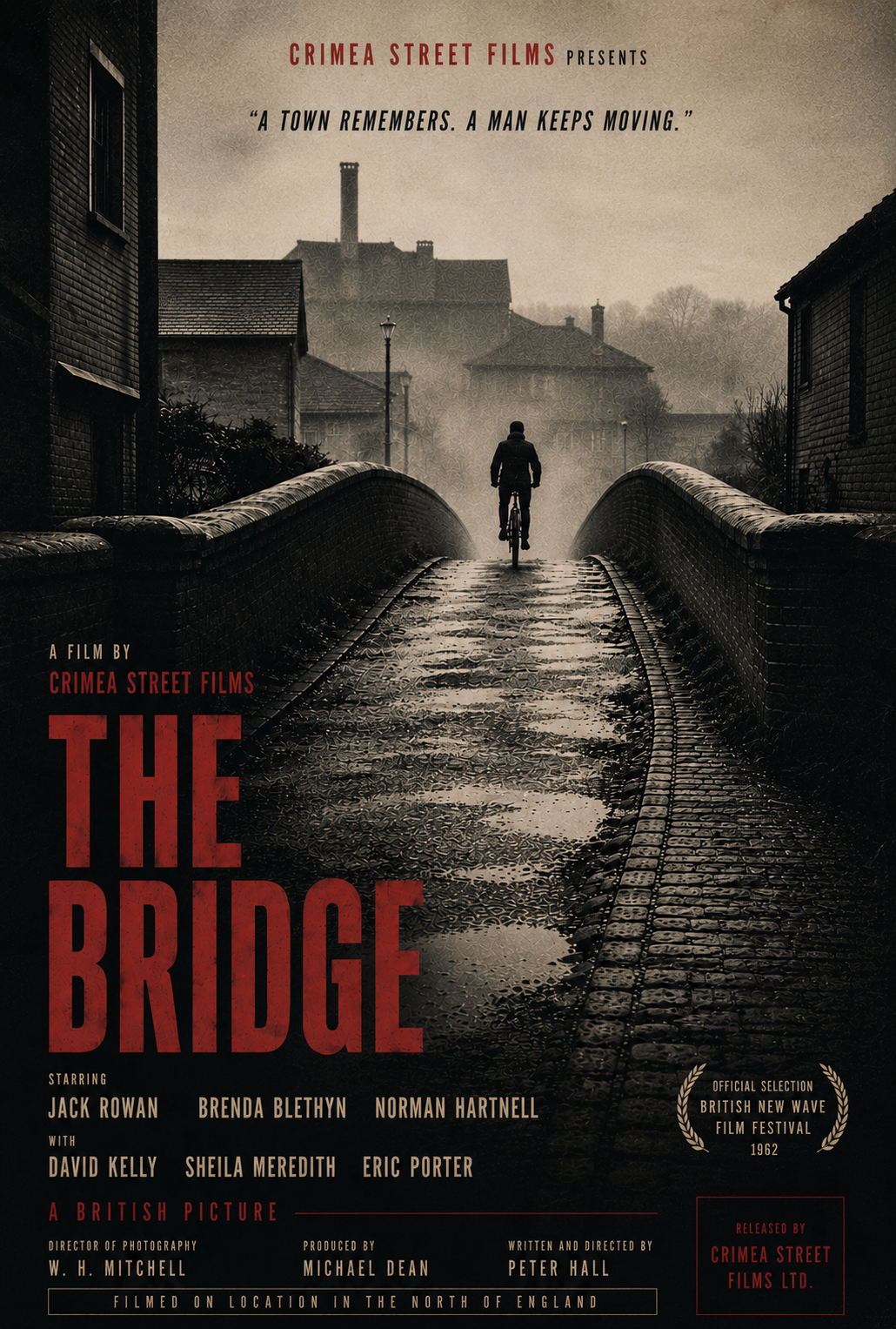
Then, at some point the images started becoming film posters. Which perhaps says something about how closely the North and cinema have always been linked culturally.
I wondered what would happen if these northern scenes were reframed as forgotten British cinema from another era. Not blockbuster films, the kind of low-budget dramas people vaguely remember seeing late at night years ago.
Presented as a fictional studio operating between 1957 and 1966, Crimea Street Films transforms the original Yard & Ginnel images into misremembered cinema history. Always based on my original prints, these classically sized 22 x 28 inch posters developed a life of their own.
People start vaguely remembering films that just like Crimea Street founder, Alistair Dunmore, never existed. Somehow the posters already feel familiar, like half-remembered kitchen sink dramas from a time when you didn’t need a mortgage to go to the cinema.
Once actor names, ageing and typography were introduced, people began responding to the posters differently. Not as illustrations, but almost as recovered artefacts. Some even started mentioning films they were convinced they had once seen, despite the fact they never existed in the first place.
And then there is what I call Northern Deco. There is a beauty to the North that many locals don’t often boast about (unless they are from Yorkshire). Working-class northern streets were never designed to look stylish, but the curves, angles, repetition and scale make them so.
Terraced streets were built economically and repeatedly, yet repetition creates its own strange visual rhythm. Chimneys align. Ginnels narrow perspective. Wet paving reflects light. Once simplified, these supposedly ordinary environments begin carrying an elegance that was probably always there.
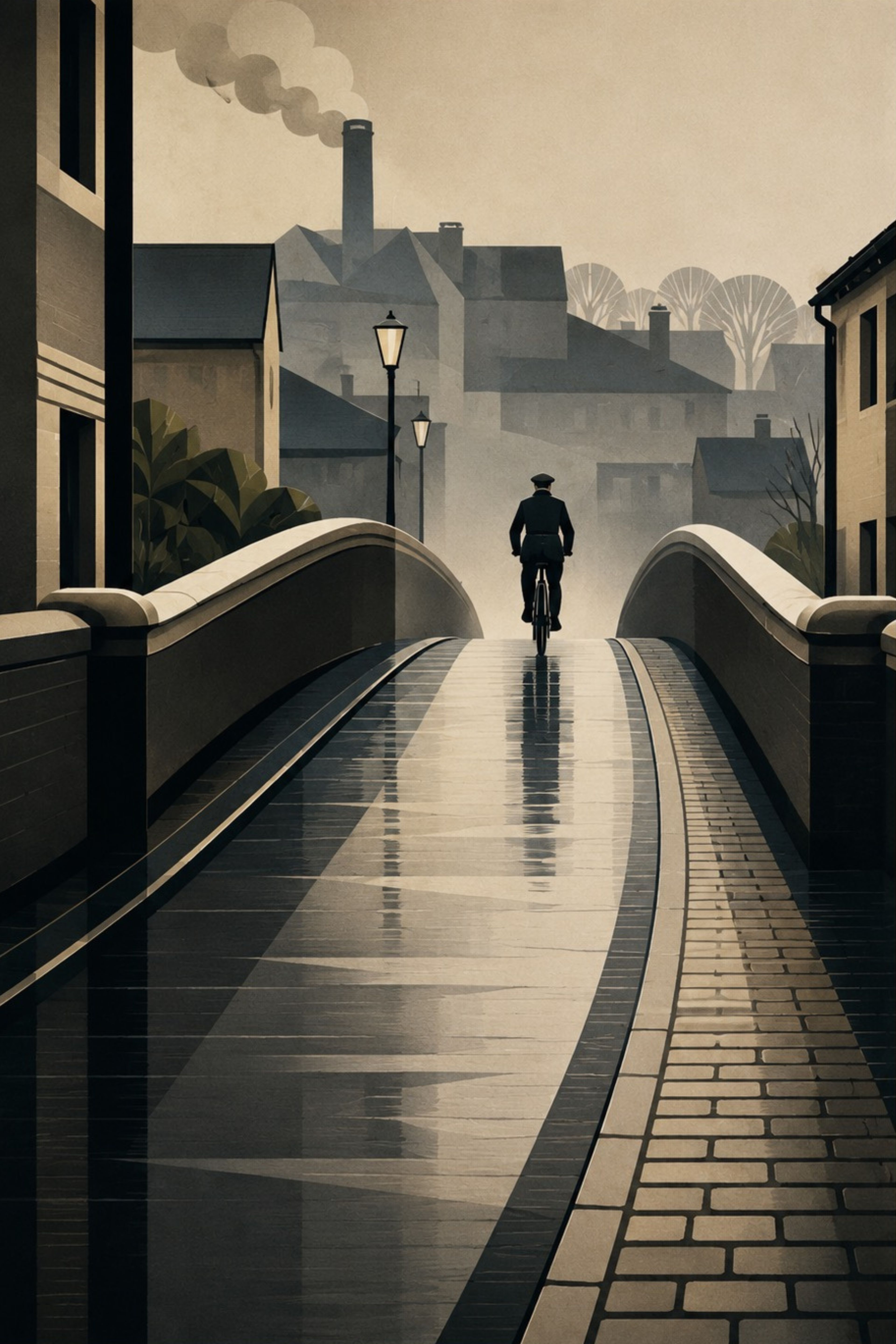
I like to think my Northern Deco pieces still carry northern identity, but perhaps a tad less melancholy and a soupçon of 1930s style.
So now the same image exists in three different forms, with the film posters and Northern Deco pieces always beginning life as reworkings of the original black and white prints.
However, not an endless churn but instead 5 monthly releases and then they are gone.
As an example, here are three versions of The Bridge and if want to see more, head to Yard & Ginnel.





