



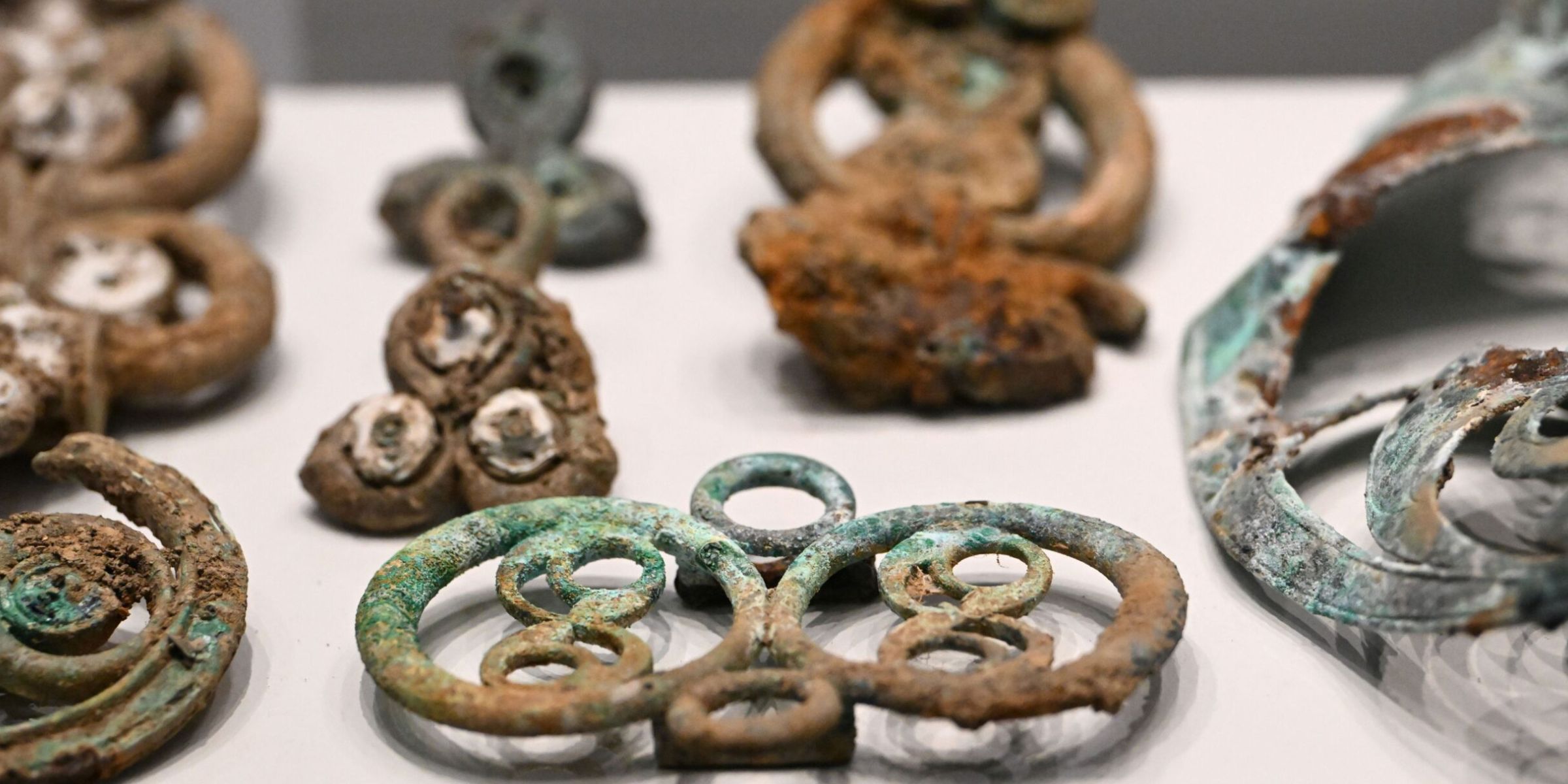
Yorkshire has always been known as a hotspot for Iron Age finds, the blossoming ‘Arras culture’ differing from other settlements in its lack of large-scale violence and skilled artisans.
A recent discovery found ‘unexpected’ evidence of large furnaces and ‘firmly established’ metalwork in the area. Other recent finds, many unearthed in the nearby market town of Pocklington, include chariot burials and shields, but the most puzzling and mysterious of all, the Melsonby Hoard, has only recently gone on display at Yorkshire Museum.
The largest collection of Iron Age metalwork ever found in the UK may have some of its origins in Thornton’s furnaces, but many of our questions about the Hoard still have no answers.
In 2021, metal detectorist Peter Heads made the discovery near the village of Melsonby, close to Stanwick, which is often known as the ‘royal capital of the Brigantes’. It quickly became apparent how monumental this discovery was, and each object was painstakingly recorded, excavated, and then stabilised by experts from Durham University.
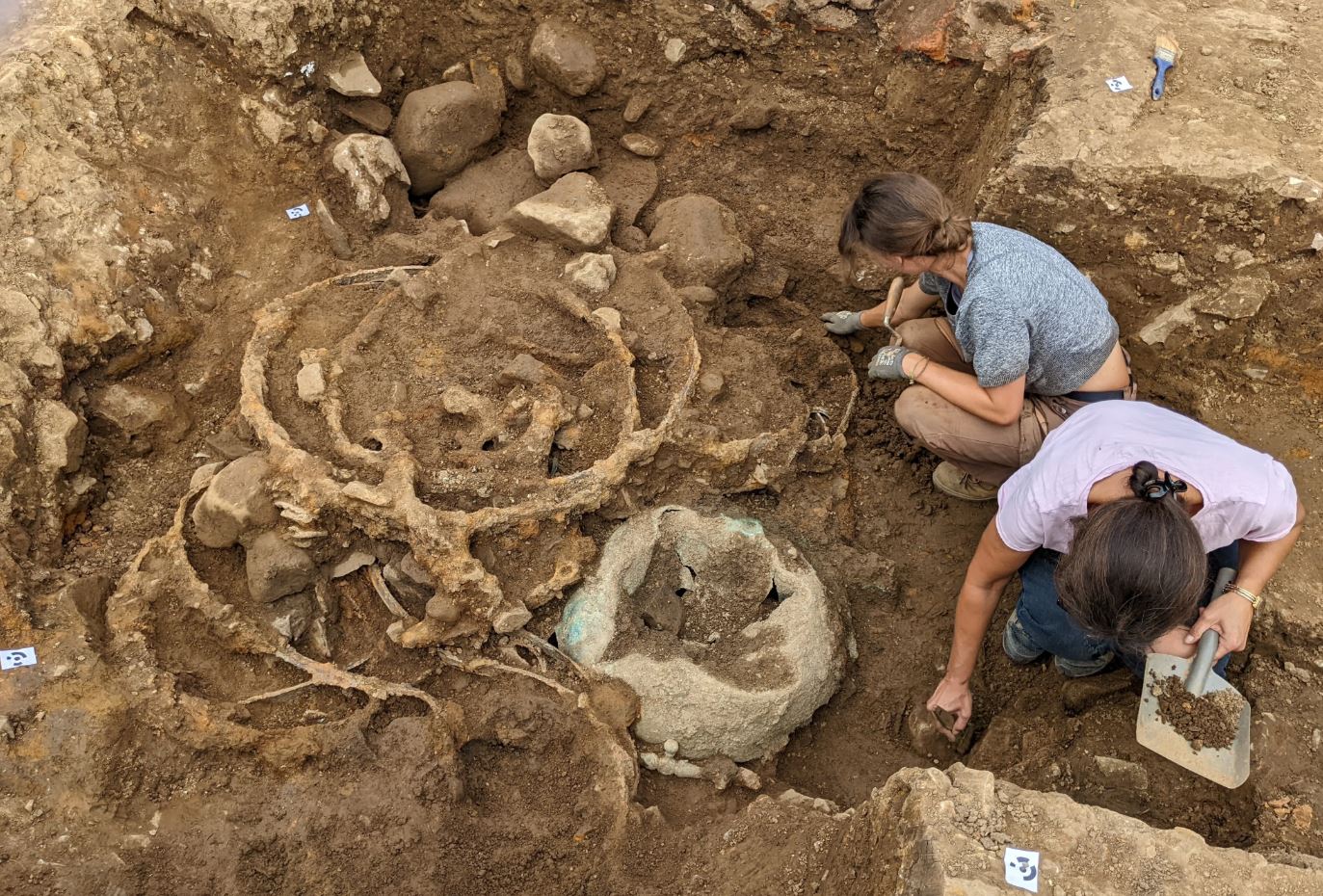
In total, around 900 objects were found. Due to the expense of stabilising and preserving such a vast amount of objects, last year a fundraiser was launched, and thanks to the many generous donations of the public, the funds from this allowed York Museums Trust to acquire the hoard.
Experts say that the Melsonby Hoard resembles Iron Age funerary rituals, especially with the discovery of a large, ornate mirror, which is an item often found buried with high-status Iron Age women - but the problem is, no human remains were found at the site. Each object had been ritually destroyed, often with fire, before burial, with some 88 objects bound together by thread and cloth and buried separately, potentially pointing to some kind of festival or religious practice observed by the Brigantes.
Many of the items, such as the weaponry and chariot parts, some of which are so unique the like of them has never been found from the era before, might indicate the destruction of spoils from some sort of battle, but the proportion of usable and regular weapons is very small, and the area was not known for its battles. Most of the weapons appear to be ceremonial, and there is even a Roman-style spear among the finds.
The Iron Age is a fascinating period of history, not simply because of the enigma that surrounds all prehistoric cultures, but also because of the clear evidence showcased by the Melsonby Hoard of connections to the continent. One particularly intriguing item is a wine mixing bowl, similar to the type found in the Mediterranean at the time, but with decoration typical of the Brigantes, which implies that knowledge and skills were shared between different peoples and incorporated into their various cultures.
There were many such items proving links between Iron Age Britain and Europe - many of the artefacts are decorated with faded coral, which once would have been bright, vibrant colours, not native to Britain.
Even with the limited and ‘primitive’ technology that the Brigantes had, they still had extensive and successful trade networks, and other finds in the area support this. Techniques from Europe, skills and art, were shared between cultures, and survive in the form of tattered treasures we find buried under the ground.
The elephant in the room remains, however - why was the Melsonby Hoard buried? Such a variety of objects being buried is a wonderful and exciting find, but also a puzzling one.
A mirror being buried alongside glass beads, chariot parts, all intentionally burned and deformed before burial, with no writings to explain why any of this was done - it is a compelling mystery. Could it have been a display of power, to burn such valuable items - items from lands far away, or rarities such as a mirror - and discard them in the ground?
Was it a ritual offering, supported by the possibly-separate burial of the Block? Or was it the destruction of battle spoils? If it was a funeral, why were there no human remains?
The museum’s lead curator, Emily North, said that we are only just beginning to understand the Melsonby Hoard - it’s unlikely that we’ll ever know for sure, but that is what makes this unprecedented discovery all the more exciting. Plus, the discovery in Thornton proves that we still have so much left to find, so much evidence hidden from sight, waiting to be unearthed.
The collection needs to be fully stabilised and preserved properly to see potentially hidden details and studied, hopefully then revealing more of its secrets.
Regardless of what is found in the future, this is an amazing, once-in-a-lifetime find, a tantalising mystery, and an incredible look into the Iron Age that we have never had before.
Undoubtedly, both within the Melsonby Hoard and in the area, there is still much more to discover.
Chariots, Treasure and Power: Secrets of the Melsonby Hoard is at Yorkshire Museum until Summer 2027
Included in general admission. Book Now
Header image: Iron Age objects in Chariots, Treasure and Power at the Yorkshire Museum. Image courtesy of YMT, photo by Anthony Chappel-Ross





