



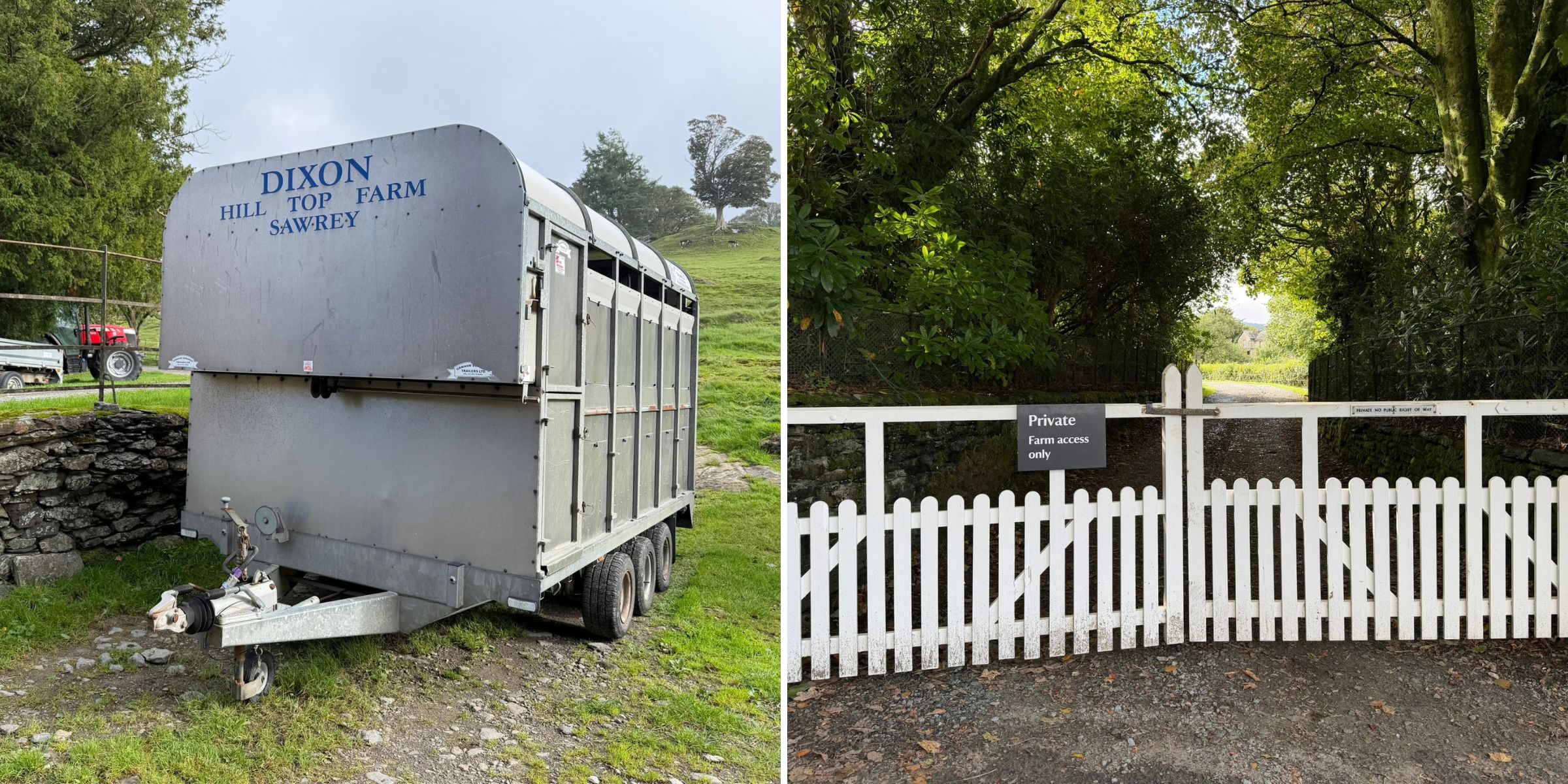
There is a gate at Hill Top that leads towards one of the most carefully preserved literary worlds in Britain.
Beyond it stands the 17th-century farmhouse Beatrix Potter bought in 1905: the retreat that became her sanctuary, inspiration and, eventually, part of a remarkable Lakeland inheritance.
Visitors arrive from across the world. They walk through a cottage garden restored to evoke Potter’s lifetime and enter rooms filled with the objects that surrounded her.
Scenes encountered in childhood books appear again in stone, timber, furniture and landscape.
But beside that gate is another Hill Top.
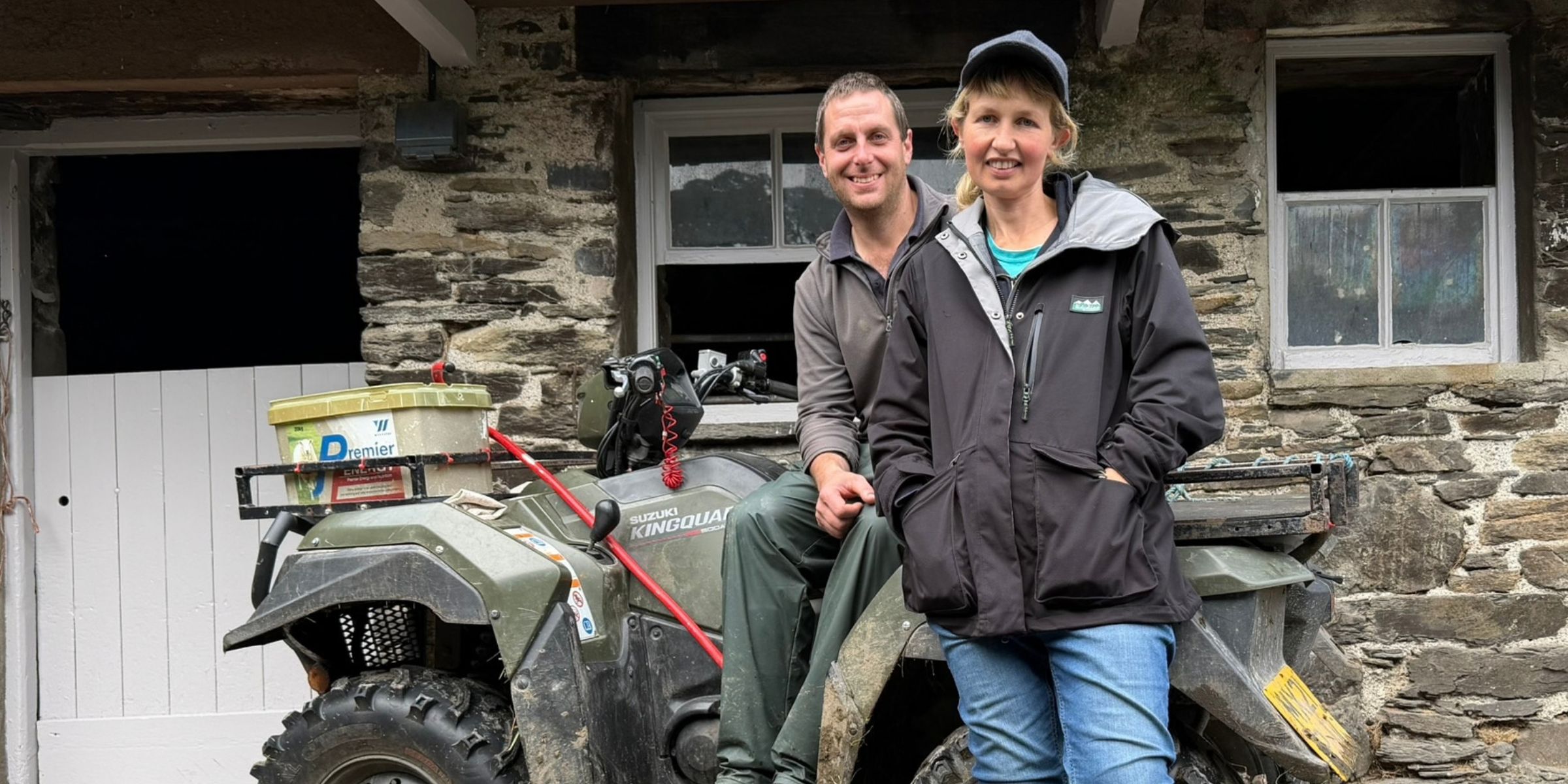
It has livestock, machinery, silage, vet bills, fallen walls, wet winters and a farming family trying to make the figures add up. This isn’t a reconstruction of Potter’s farm. It is the real one.
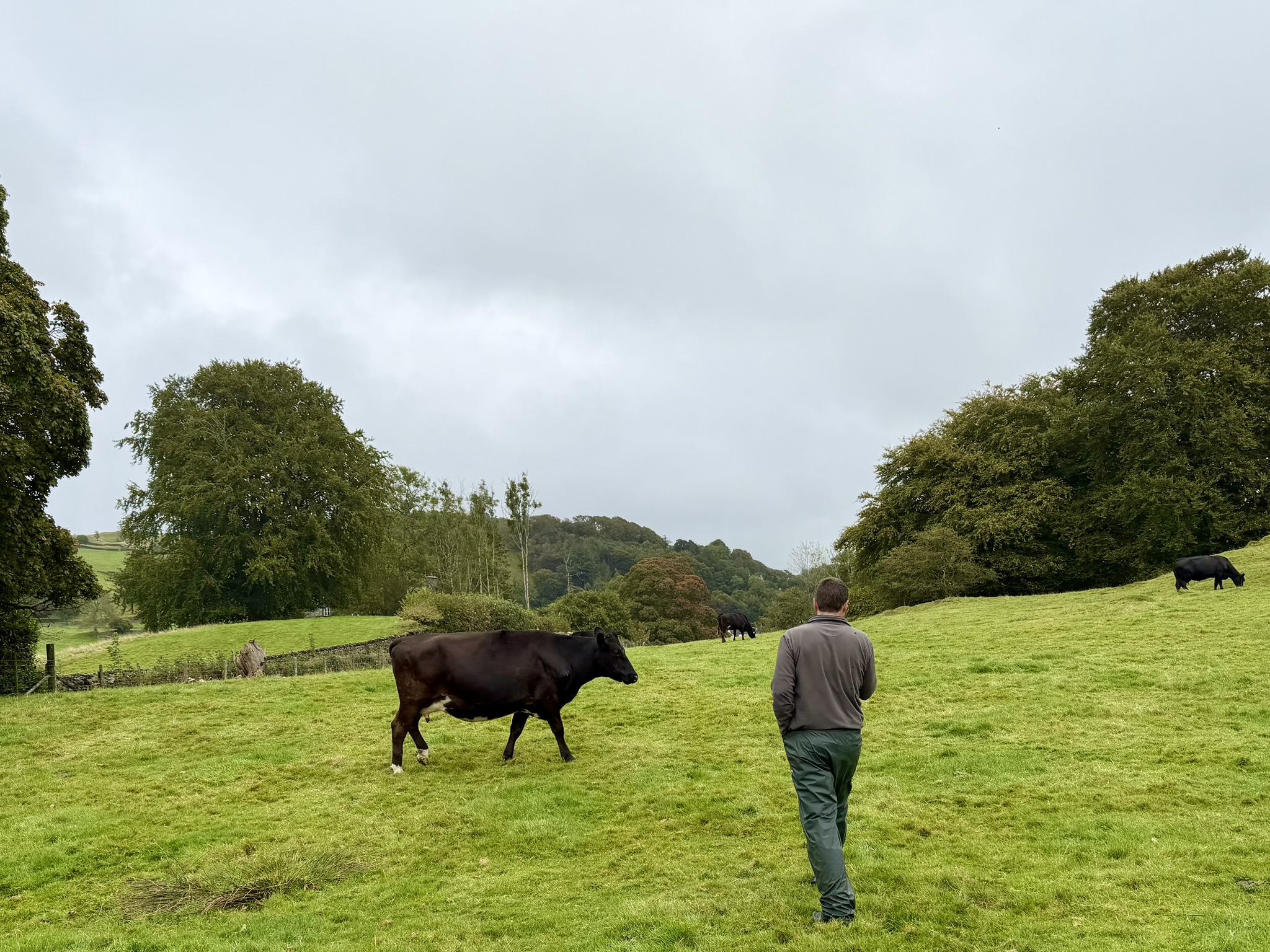
As we walk across a field, nine-month-old Isla sleeps in her buggy. Her mum, Amy, talks about tenancy, diversification and the disappearance of predictable agricultural support. Her dad, Dan, keeps one eye on the cattle. Isla, the first baby born at Barrow’s Hospital on Christmas Day, wakes occasionally before drifting back to sleep. Around her, three generations of farming and the future of the Lake District are being discussed.
Amy and Dan moved into the farmhouse at the beginning of August, after a substantial refurbishment by their landlord, the National Trust. Amy’s father Gaerry held the tenancy before them and worked in partnership throughout with his brother Melvyn.
For a time, the couple had to contemplate leaving Hill Top. They visited other available farms, attended viewings and examined whether the businesses could support them. There remained a possibility that this holding, too, would be placed on the open market.
Their new tenancy therefore represents much more than a change of name on an agreement. It gives a young farming family the time and security to develop a business, maintain an internationally important landscape and raise a child within the community that shaped them.
“You could never afford to buy a farm. Even a small piece of land is almost untouchable,” Amy says. For many younger farmers, a tenancy is the only credible route into an industry where land values bear little relationship to the income that can be earned from agriculture.
Even then, farms rarely become available. Competition is intense, start-up costs are daunting and no prospective tenant can rely on family succession.
Amy and Dan believe the National Trust understands this.
“The National Trust, for the younger generation, are supportive,” Dan explains. Farms that have recently become available locally have gone to younger people with connections to the area. The Trust, they say, recognises that the existing community must be sustained as carefully as the physical landscape.
It’s an important distinction. Protecting the Lake District can’t simply mean conserving its buildings, views and cultural associations. It also means enabling people with the skills to farm it to remain here.

Beatrix Potter eventually left more than 4,000 acres and 15 farms to the National Trust. Hill Top house and its attached farm passed to the charity following her death, with the intention that the land would remain a working part of the Lake District.
Today, the Hill Top holding extends to more than 280 acres and remains operational throughout the year. Its Herdwick sheep descend from the same farming legacy Potter worked to protect.
Amy grew up here. Dan comes from a Cumbrian farming background of his own. Neither needs to be persuaded that the land carries responsibilities beyond the length of a single tenancy.
Yet they don’t speak about inheritance as though farming has to remain unchanged. Hill Top was once a dairy farm. It’s now a stock-rearing enterprise with a suckler herd alongside the Herdwicks. Its cattle are bred and reared here before moving elsewhere to be finished; the farm doesn’t have the winter ground or buildings required to keep increasing numbers indefinitely.
The Herdwicks remain because they belong to this terrain in a practical, not merely picturesque, sense. Hardy and hefted to the fells, the breed has developed around the Lake District’s climate and difficult upland ground. The National Trust estimates that two-thirds of the world’s breeding Herdwicks ewes live on its land.
That makes the survival of farms such as Hill Top part of something considerably larger than the preservation of one famous flock.
Amy and Dan are proud of their place within that story. But pride can’t pay an electricity bill, repair machinery or purchase medicine for an animal.
“We’ve been lucky to take on a farm,” Amy says. “But at the minute, with all the rising costs, it does feel a bit like a liability.”
Fuel, electricity, feed, medicine, repairs and specialist labour have all become more expensive. The couple with the help of family undertake as much of the work as possible themselves. Every task contracted out - fencing, hedging, or machinery
repair - places another cost against a business that receives most of its income at only a few points in the year.
“You’ve only got three or four paydays,” Amy explains. “What you make in October & November has to keep you going.”
After years in paid employment, the uncertainty requires a different way of thinking. There is no regular wage arriving at the end of the week. A lamb might be worth £80 or £180 when it eventually reaches market.
The not-knowing is unsettling. The farm bears the cost and risk in the meantime.
“We’re not here to get rich,” Amy says.
“No,” Dan adds. “It’s to make a living.”
For earlier generations, the Basic Payment Scheme provided at least one predictable element in an otherwise volatile business.
That system has been dismantled since Britain left the European Union. Basic Payments were replaced by progressively reduced, “delinked” payments from 2024. For 2026 and 2027, the Government plans a 98 per cent reduction to the first £30,000 of a farm’s reference payment, with anything above that removed completely. Payments cease after 2027.
The intention is to redirect public money towards environmental work through programmes including the Sustainable Farming Incentive. The principle - that farmers should be rewarded for producing public goods such as healthier soils,
cleaner water and wildlife habitat - has considerable merit.
The problem described at Hill Top is not an unwillingness to participate. It’s the insecurity created while one support system disappears and its replacements continue changing.
Amy and Dan know they must join new schemes. They also know those schemes will alter the way they farm, including the number and type of livestock the land carries. The couple aren’t opposed to that change. The National Trust, they say, has also approached it constructively.
“They’re supportive,” Amy says. “They want farming in the Lake District to continue.”
Before the new tenancy began, the couple walked the holding with representatives of the Trust. They discussed the land, the condition of the landscape and how it might be managed in future.
According to Amy and Dan, the Trust doesn’t want to sweep away the character of Hill Top in pursuit of a fashionable environmental prescription. It understands that the landscape’s cultural significance lies partly in its continuity as a farm.
That support matters. An environmental agreement might run for only a few years, but decisions about grazing, trees, hedges and livestock can influence the land for generations.
The lazy version of the national argument places farmers on one side and conservationists on the other.
That distinction makes little sense at Hill Top.
The stone walls, small fields, pasture, hedges and open views celebrated by visitors are neither untouched nature nor an accidental backdrop to Potter’s stories. They are the accumulated result of farming decisions and physical labour.
“It’s a working landscape,” Amy and Dan say. “It needs looking after by those who know it. It’s a product of hard work from those before us.”
Dan speaks about farming and nature going “hand in hand”.
That doesn’t mean every inherited practice has to continue forever. Climate and economics are already forcing change.
A dry period during the growing season left pasture beginning to burn and delayed the point at which lambs could be taken from the ewes. Wetter autumns can bring cattle indoors sooner, increasing the demand for housing, bedding and winter feed.
At the same time, keeping cattle on saturated ground risks damaging both soil and the grass needed by the sheep.
Hill Top has produced a good silage crop this year, but Dan explains the grass didn’t regrow as expected afterwards. These aren’t abstract debates about global temperature. They’re decisions about whether sufficient fodder exists to carry cattle through the winter.
Some less productive land could be entered into woodland creation or environmental management. Elsewhere, livestock numbers are likely to fall.
Amy and Dan’s argument isn’t that trees or lower stocking densities are inherently wrong. It’s that every intervention must begin with a detailed understanding of the farm.
Plant trees immediately behind an old dry-stone wall and, decades later, their roots are likely to destabilise it. Reduce grazing on neighbouring land and red deer can become more numerous, travelling across holdings and knocking down walls as they move. Remove too much livestock and the vegetation, habitats and appearance of the landscape change with it.
“You can’t keep reaping and reaping and not put anything back,” Dan says of the land. Whether through manure, sensitive grazing, lime or fertiliser, farming requires continual reinvestment.
That principle applies to people too.
Hill Top welcomes tens of thousands of visitors attracted by Beatrix Potter, yet many arrive without realising that the land immediately beside the house remains a working farm.
Some attempt to wander into the yard. Others are surprised to encounter machinery, livestock or mud.
The farm tours developed by Amy offer a bridge between the preserved house and the agricultural life surrounding it. They’re independently operated by the farmers, although the National Trust helps promote them and may sell remaining places through the Hill Top ticket office.
“There’s a story to be told on either side of the gate” Amy says. “Together, it links.”
The tours connect Potter’s farming life and Herdwick legacy with the realities of upland agriculture in 2026. Visitors encounter the sheep, buildings and farmyard, but they also hear about markets, changing support, food production and the decisions shaping the land.
Amy doesn’t polish the farm before every group arrives - although she admits that she has tried.
“I tell them explain it’s a working farm,” she says. “It’s not perfect. It’s not picture-perfect.”
There is livestock. There is muck. You can’t have livestock without deadstock.
Agriculture can’t be made entirely tidy for public consumption without ceasing to be agriculture.
The tours began as a modest experiment during her father’s tenancy. Three years later, they’re becoming an increasingly important strand of the business and a rare opportunity for people with little connection to farming to enter a working holding.
They also expose the central challenge of diversification.
Without additional income, the farm would need considerably more livestock to sustain two people. Yet increasing numbers would conflict with the direction of environmental schemes and exceed what the holding can comfortably support.
Diversification is therefore necessary. But every hour spent leading a tour, staffing a shop or developing a visitor enterprise is an hour taken from farming.
“How far do you go,” Amy asks, “before it takes you away from what you were doing in the first place?”
Her ambition is not to turn Hill Top into a large attraction. The couple toy with the idea and talk instead about perhaps a small outlet selling local food: somewhere residents and visitors could buy milk, potatoes and other essentials.
Despite the number of tourists passing through Near Sawrey, the village has nowhere to buy a pint of milk.
The National Trust, she believes, would be open to the conversation. That willingness to listen is characteristic of the relationship Amy and Dan describe: not an institution dictating every answer, but a landlord and tenants working through
what sustainability means in practice.
“My aim is to keep this farm real & alive – a true working homestead complete with all the smiles and disasters farm life brings. Compassionately connecting the public to this life is working progress,” Amy says.
The survival of upland farming can’t be separated from the survival of rural communities.
Dan talks about a time when the village could fill two minibuses with children to the local school, now you would struggle to fill one & as a direct result, the annual village May Queen event is desperately fighting for survival.
Now, families with long connections to the area struggle to find homes they can afford.
Friends have moved away. Former farmhouses and cottages have become holiday accommodation. Local workers might serve an expanding visitor economy without earning enough to live within the very landscape they maintain.
“You lose the character,” Amy says. “And you’ve got to think: all this needs looking after. It needs people to do that.”
The consequences eventually return to the farm.
Family, neighbours and skilled workers available to help during silage, lambing or an emergency are growing older. Fewer younger people are coming behind them.
Amy and Dan save money by completing most work themselves with help from family, but no farm is truly independent of its community.
Agriculture sustains employment far beyond the farm gate: auction marts, abattoirs, feed mills, machinery businesses, veterinary practices, contractors and hauliers. As farms disappear, demand for those services contracts too, making life more difficult for those that remain.
The Lake District might still look recognisable when viewed from a car or a holiday cottage. But a landscape can retain its outward beauty while the human system that created it quietly disappears.
This is why the National Trust’s tenanted farms matter. The Trust can’t control commodity markets, national housing policy or the design of agricultural payments. What it can do is offer viable tenancies, invest in buildings, work with farmers over environmental change and give younger local people the time required to establish a business.
At Hill Top, Amy and Dan believe it’s doing precisely that. The partnership offers a model of resilience that is neither preservation at all costs nor change imposed from a distance. It recognises that cultural heritage, food production, nature recovery and rural communities must be considered together.
Throughout our conversation, Isla climbs, giggles – and then sleeps.
She’s nine months old and already lives closer to Beatrix Potter’s famous farmhouse than almost anyone else in the world. Yet Amy and Dan won’t assume that she must become a farmer.
They’ll encourage her if that’s the life she chooses. The land will be here. The knowledge will surround her. But being tied to a farm is too demanding - and too personal - to be imposed as an obligation.
For now, her presence represents possibility and hope, rather than succession.
The future of Hill Top doesn’t rest on one sleeping child. And the future of British farming shouldn’t depend on young families repeatedly finding the resilience to absorb uncertainty.
It requires functioning partnerships: between farmers and landowners, food production and environmental stewardship, national institutions and local knowledge.
Beatrix Potter understood that saving the Lake District meant acquiring farms as well as views. She protected land, but she also protected the conditions under which farming could continue.
More than a century after she bought Hill Top, that inheritance is being renewed rather than simply preserved.
Amy and Dan are adapting the business, caring for livestock, maintaining the fields and walls, explaining farming to visitors and raising a family here. The National Trust is providing the tenancy, investment and institutional support that allow them to try.
Across the gate, visitors encounter the world Potter left behind.
On this side, a young couple are working to ensure that her landscape still has a future.





