



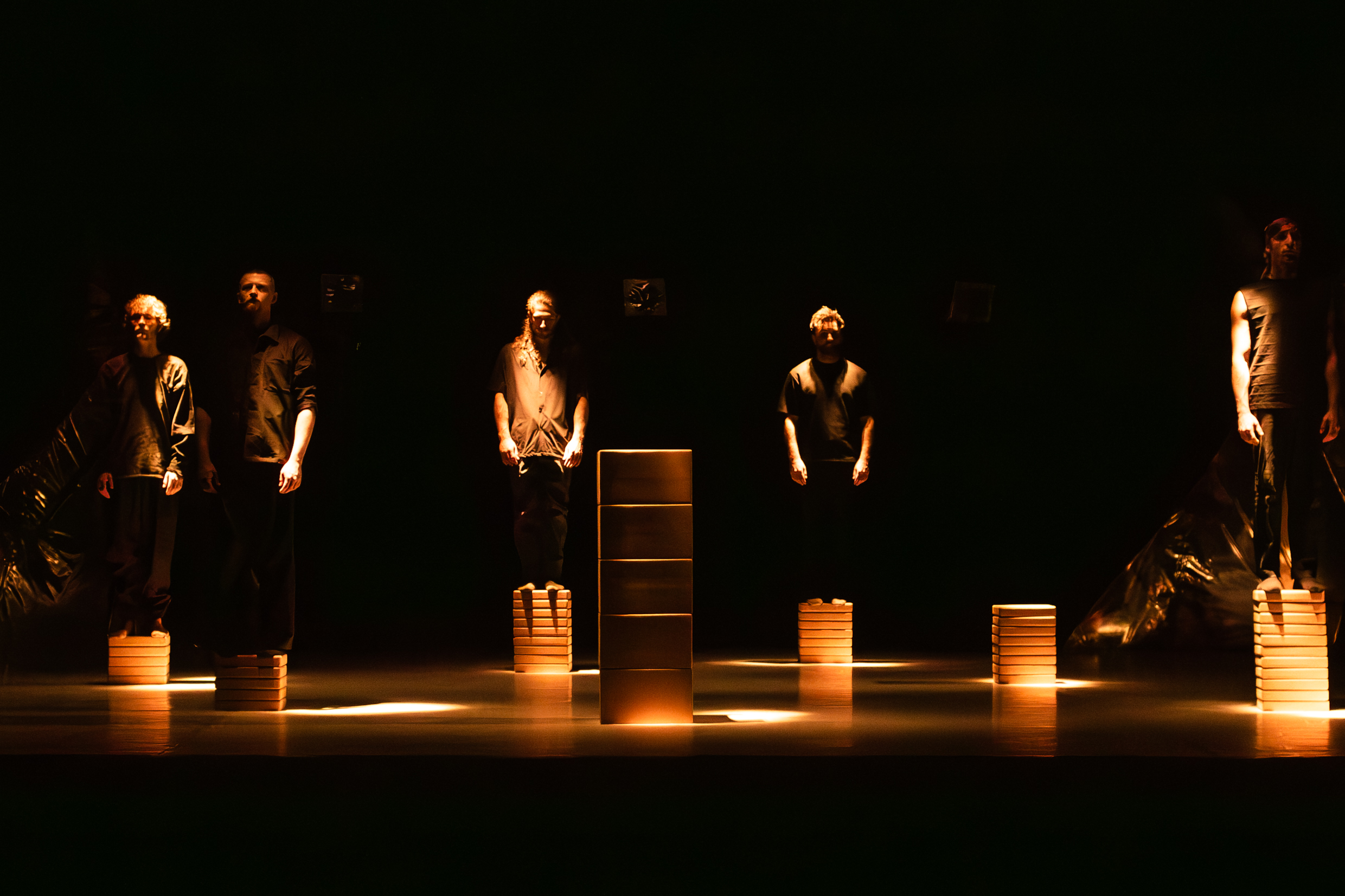
There is a moment, says Tamsin Fitzgerald, the Artistic Director and CEO of 2Faced Dance Company, where words stop being enough.
“I think the body has the capacity to offer nuance and subtlety that words cannot sometimes,” she reflects. “How a hand is placed on a shoulder or a foot presses into the floor says so much about how a person is or what they are trying to communicate.”
It is in that space - between what is felt and what can be said - that TOMORROW, the latest work from 2Faced Dance, exists.
Opening its official press night in Leeds this April, the production is not simply another contemporary dance piece. It is a response - urgent, human and unflinching - to the state of male mental health in Britain today.
At its core, TOMORROW is built from lived experience.
Developed in collaboration with men experiencing mental health challenges, the work draws directly from conversations, testimonies and shared moments of vulnerability.
For Fitzgerald, this was not an abstract starting point. It was personal.
“Where we live in Herefordshire there is a higher number than the national average of male suicides in young men,” she explains. “There were a few people close to me who had experienced really life defining poor mental health and it felt like the time to explore this grief.”
Those stories are not translated neatly. Instead, they are embedded - in movement, in physical tension, in the weight and release of bodies sharing space.
“The men that we worked with were utterly generous in their honesty,” she says. “These are woven into the moments in the work along with the dancers’ stories and life experiences.”
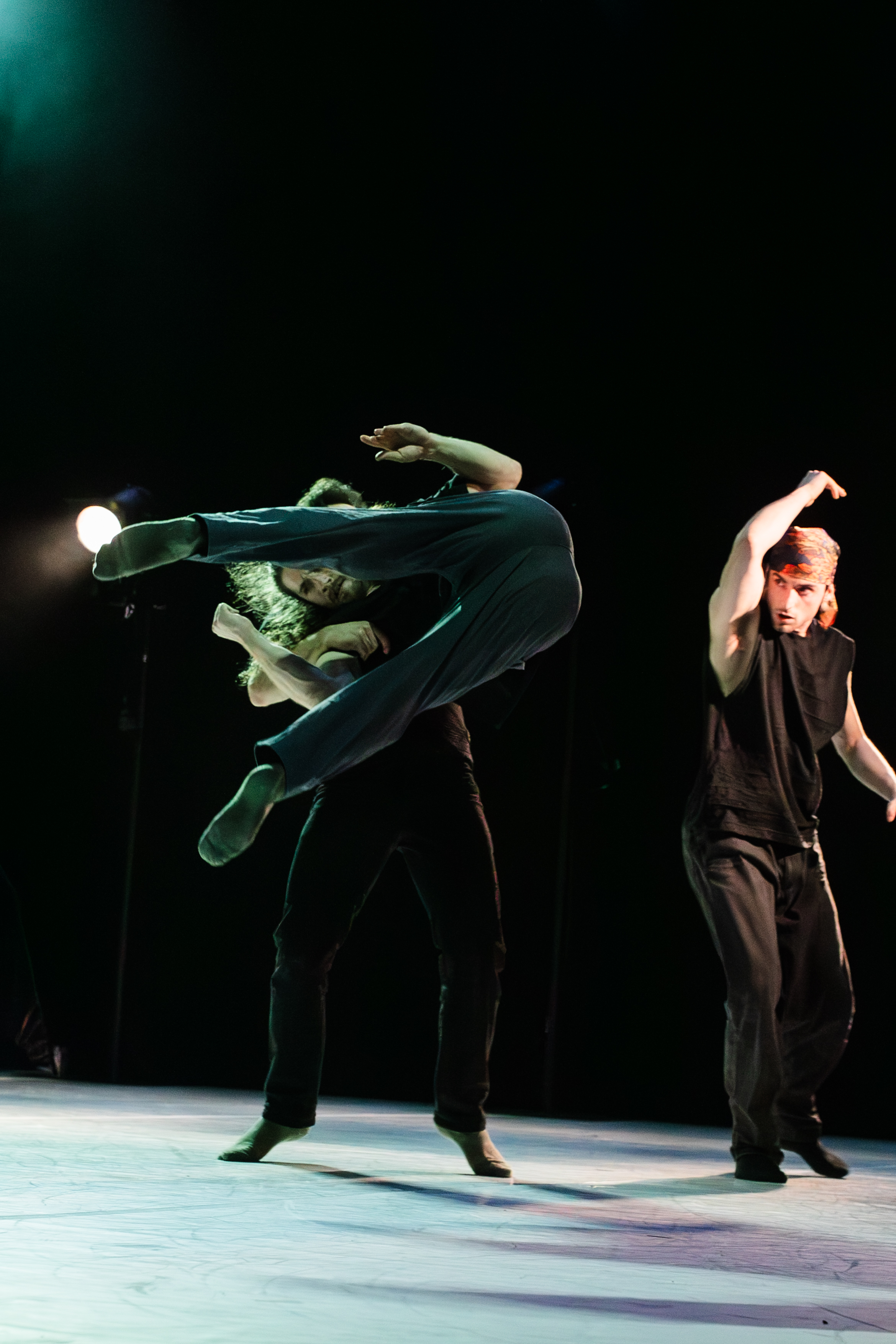
The themes the piece tackles are stark: emotional repression, isolation, identity and the pressure to endure.
As the background info to the production outlines, TOMORROW “responds to the unspoken pressures many men carry - expectations of strength, emotional silence, isolation and resilience.”
These are not new conversations - but they remain unresolved ones.
In the UK, suicide remains one of the leading causes of death among men under 50. Yet despite increasing awareness campaigns, stigma and silence still shape how many men experience mental health.
Fitzgerald’s approach is not to lecture, but to reveal. “TOMORROW is about what it feels like to be a man right now - the pressures, the fragility and the hope,” she explains.
Hope, notably, sits alongside struggle - not after it.
There is something particularly powerful about addressing mental health through dance.
Without dialogue, without explanation, the audience is asked to feel first - and interpret second. “Contemporary dance can communicate emotions that are sometimes hard to put into words,” Fitzgerald says.
That emotional immediacy becomes crucial when dealing with subjects that are often buried beneath language or avoided entirely.
The timing is equally significant. In a post-pandemic world where conversations around wellbeing have intensified - but not necessarily deepened - TOMORROW seeks to move beyond awareness into connection.
Importantly, the performance does not end with the final movement.
Each tour date includes “Head Talks” - post-show discussions bringing together artists, mental health practitioners and audiences to unpack the themes raised on stage.
For Fitzgerald, this extension is essential: “There is much discussion about the role that the arts can play in health,” she says. “Let’s normalise the subject of mental health so that there is less shame associated with it. Let’s laugh together, over conversation.”
Alongside this, the company is running engagement programmes with men experiencing mental health challenges, positioning participants not just as audiences - but as collaborators.

After opening in Malvern, the tour arrives in at the Stanley & Audrey Burton Theatre in Leeds on 2 April - a key moment for the production.
From there, it continues across the UK, carrying with it not just a performance, but a framework for dialogue in each community it visits. For Fitzgerald, the meaning of the work will shift with every audience. “People will take different meaning in the work depending on their life experience,” she says. “I’m hoping that the piece unites communities.”
In the end, TOMORROW is not trying to provide answers. It is trying to open something.
“I want people to feel,” Fitzgerald says simply. “To have empathy and more understanding. To ask the person next to them if they are ok.”
It is a small action - but perhaps the most important one.
Because if TOMORROW succeeds - and it must - it will not just be remembered for what happens on stage, but for what happens after: conversations started, silences broken, and the possibility that someone, somewhere, feels less alone.
All Images: 2Faced Dance





