



Partway through our delicious supper at Ad Gefrin, Donnie Grant had a suggestion. The distillery was spectacular after dark. Would we like to see it?
We left the company of the dinner table for the stills: their polished surfaces catching the carefully placed light, their scale suddenly demanding our attention. Beyond the huge cathedral-like window, lay the river. And there was the quiet.
My photographs couldn't possibly catch it. Some places require you to stand in them for a while.
Donnie, Ad Gefrin’s Head of Site and Operations, had been eating with us, talking about the benefits of sitting down together, sharing food and making time for conversation. His invitation was spontaneous, and offered by someone keen for us to experience a part of the place that he clearly loves. While supper continued elsewhere in the building, we were gifted this unexpected moment.
It's stayed with me because it seemed to belong to everything else that had happened that evening.
We had come to Wooler for the launch of Modern Classics, the first exhibition in a partnership between Ad Gefrin and Newcastle’s independent gallery, The Biscuit Factory. Work by Paula Dunn, Angelo Murphy and Garry Courtnell had found a home among the building’s exquisite textured walls, corridors and bistro. There were introductions, speeches and conversations in front of paintings, followed by dinner at the Bēodern Supper Club.
Through it all ran a shared concern with people and place: who gets to encounter art, where people gather, and what a business rooted in a rural town might contribute to its future.
Ad Gefrin, the Anglo-Saxon museum and whisky distillery opened in March 2023, is the vision of Alan and Eileen Ferguson. Their commitment to Wooler brings heritage, production, employment and hospitality into the same undertaking. Its significance extends to the possibilities it creates for people to work, visit, learn and spend time in North Northumberland.
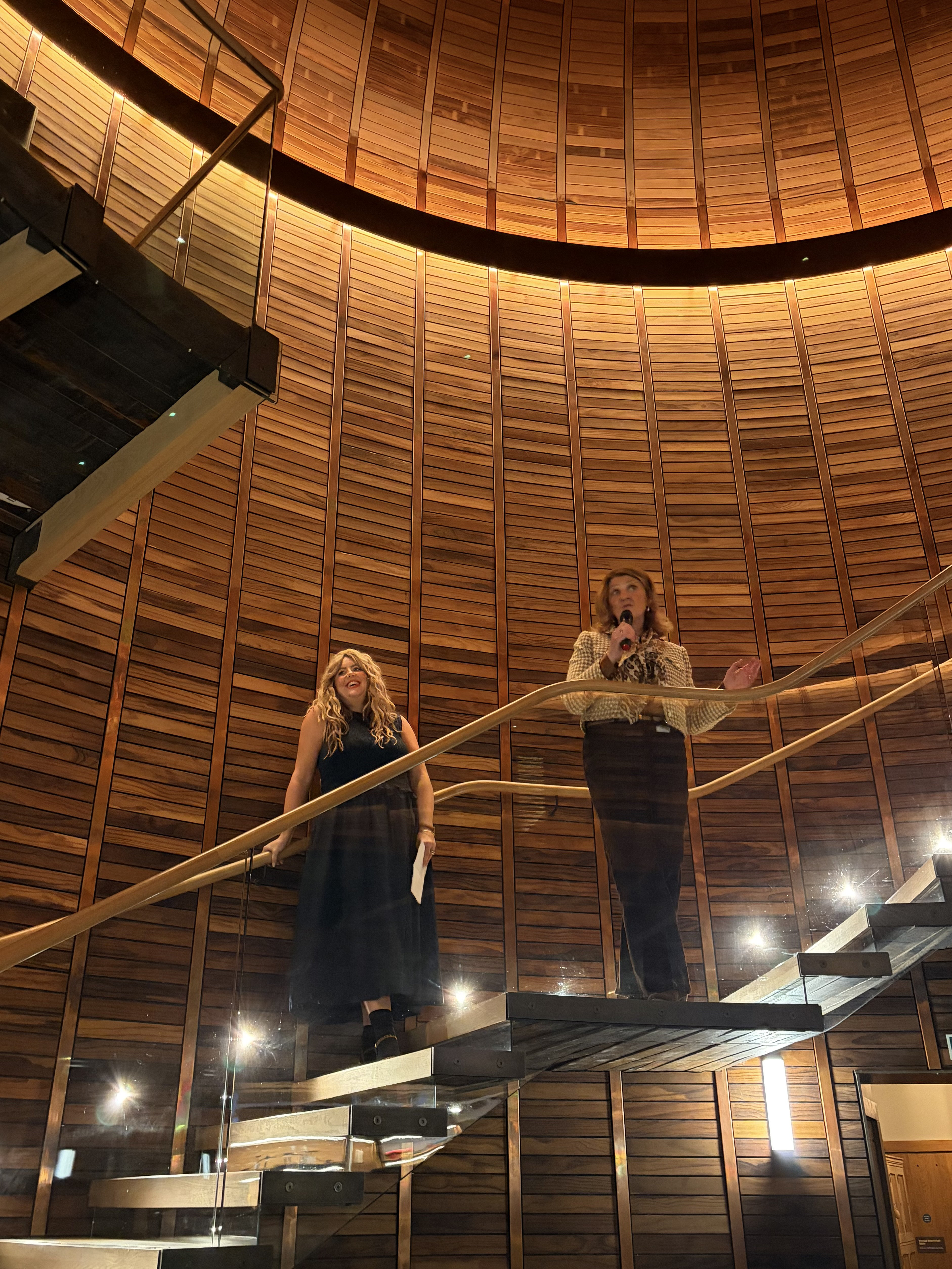
Talking to Eileen during the preview, I was struck by how readily she moved from the achievement of opening the building to the work still ahead.
“Whenever you do anything, the vision doesn’t stop on the day you conclude,” she said. “Life is a journey and it seemed to be the most obvious thing for me to include art in it.”
In conversation that evening, she spoke of Ad Gefrin with the affection one might reserve for a member of the family. That sense of attachment helps explain the continuing attention: the building has opened, the business is operating, but there are further relationships to make and other ways to use its spaces.
“I was absolutely overwhelmed that the Biscuit Factory actually wanted to work with us, because they’re so established and I really admire them,” she explained.
Eileen was particularly pleased that people could experience this exhibition without travelling a great distance.
“We’re really privileged to have such a great exhibition and bring it out to people who don’t live in the cities,” she said.
The practical detail mattered to her: rural Northumberland, with parking at the door. The exhibition is free to visit. Together, those things give the ambition a tangible form. A person can come into the building and spend time with contemporary paintings nearer to home.
“And then we’ve got a few more picture rails up and we’re going to show more art, because now we’ve got a gallery.” Eileen's joy was palpable.
The partnership itself began with a visit. Rachel Brown, Director of The Biscuit Factory, came to Ad Gefrin and recognised the possibilities of the place. Later, a conversation at a gallery preview brought an introduction; emails and months of discussion followed.
What emerged was a shared interest in craft, heritage and the communities around both organisations. Rachel described wanting a partnership that would draw on their respective expertise and bring something of additional value to a Northumberland audience.
An exhibition was an obvious possibility. Hanging it required thought.
Ad Gefrin has curved walls, hidden corners and surfaces with a presence of their own. Rachel and her team considered colour, subject matter and the character of each space, while giving the artists freedom to make their collections. The curation followed from that conversation between the work and the building.
“We didn’t want to dictate the artists’ collection. We wanted them to just, you know, organically create a collection that they were happy with,” she told me.
Walking around, the result felt remarkably assured. Eileen delighted in the relationship between the paintings and the tactile walls, and in the placement of work concerned with food around the bistro. Looking, eating and talking could all happen within the same sequence of rooms.
During her address to the assembled guests, Rachel gave the evening its clearest statement of purpose.
“At the heart of this collaboration is a belief that community is something we actively create.”
She spoke about making room for different voices and giving people reasons to gather. There's a useful challenge in that word “actively”. A building can provide the space, but people must keep doing the work of inviting, introducing, listening and returning.
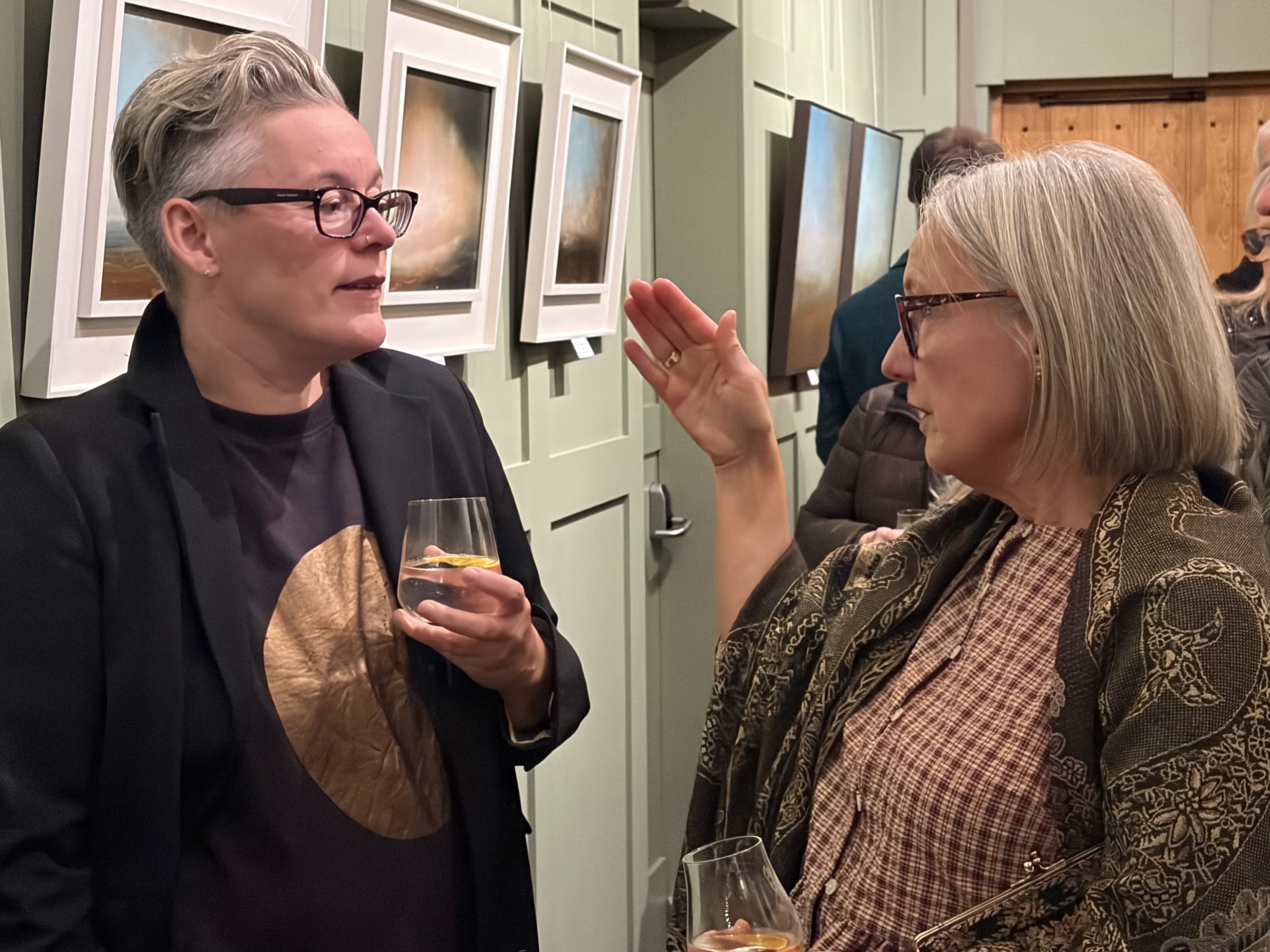
Paula Dunn’s paintings brought another understanding of place into the conversation.
Based in Saltaire, West Yorkshire, she knows Northumberland through family connections and repeated visits. All but three of the paintings she was showing had been made specifically for this exhibition, with Northumberland in mind.
Her process begins with memory. She generally works without photographs or sketches, allowing the painting to develop through colour, shapes and her responses to what happens on its surface. A particular place may emerge as she works; then her decisions become more deliberate.
For this collection, the light was important from the beginning.
“I know the light in Northumberland is different,” she told me. “It’s much cooler, more crystal light.
“I tend to sort of base my paintings on memories of a place, so I don’t use photographs, I don’t use sketches, that kind of thing.”
She began with a blue base layer, establishing something that would influence the colours above it. The landscape enters through accumulated experience: the quality of light remembered, a colour recognised, a shape that brings somewhere back to mind.
That makes these paintings an especially thoughtful contribution to the exhibition. Northumberland is a source of inspiration for artists; here, work shaped by the county is being shown within it, where people can bring their own experience of the landscape to the encounter.
There was warmth and humour in Paula’s account of the titles, too. She borrows lines from the poetry of her partner, Nick Allen. Post-it notes carrying possible phrases sit on her wall. Sometimes the words accompany a painting as it develops; sometimes she finds a line for a finished work. They have also brought their work together in a book.
The words offer viewers another way into the paintings, while revealing a further collaboration behind them.
Asked what she hoped people might take away, Paula returned to appreciation of the landscape, and to the care that appreciation ought to encourage.
“Just sort of, you know, having a bit of time to stop and look.
“Go and look after it,” she said.
She spoke about what's on our doorstep, the moors outside her own home, and the value of taking time to stop and look. It was an invitation that suited the evening: attention given to a painting, a person across the table, or a familiar landscape seen afresh.
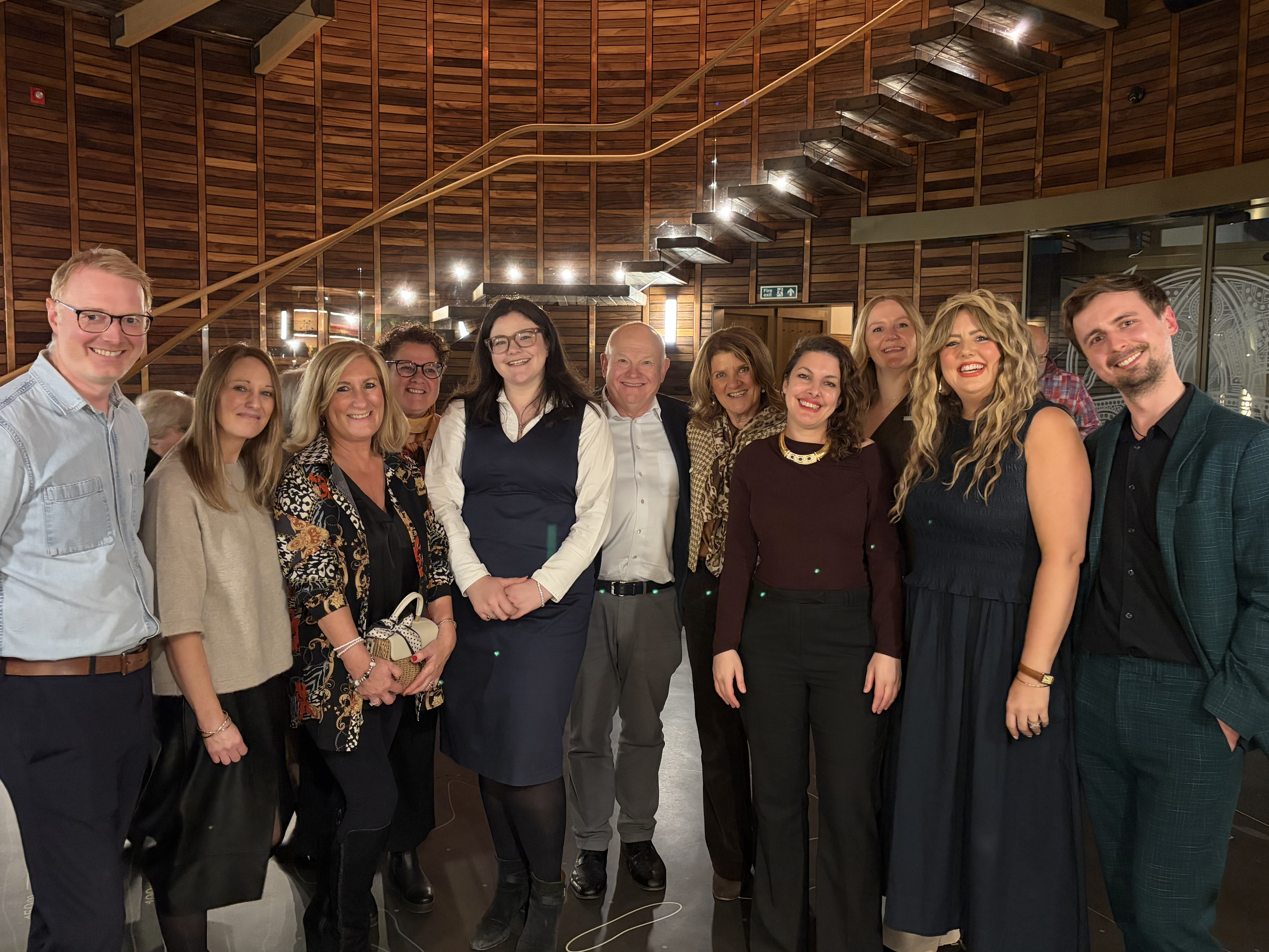
Rachel sees the exhibition as the beginning of a continuing exchange. She described ambitions for further exhibitions, creative workshops and cultural events, with activity moving between Wooler and Newcastle. There's scope for relationships to develop through repeated encounters, giving artists and audiences reasons to return.
The wider economic story of Ad Gefrin deserves that same sustained attention. Understanding its contribution means hearing from the people who run it, tracing the skills and work involved, and seeing how its connections with the surrounding area develop. I hope to return to spend time with Donnie and learn more about that daily operation.

For this visit, it was the experience of genuine welcome that remained most vivid. Eileen’s pleasure in what the artists had brought to the building. Rachel’s care in finding their work a place within it. Paula explaining the cooler light that had guided her hand. Conversations over supper that I didn't record, but was glad to have been part of.
And then Donnie’s invitation to step away from the table for a few minutes.
The stills caught the light. The great window looked towards the river. We stood in the quiet, taking it in.
There was more to see, and someone wanted to show us.
Modern Classics features Paula Dunn, Angelo Murphy and Garry Courtnell at Ad Gefrin, South Road, Wooler, from 23 October to 13 December 2026.
Exhibition admission is free. Opening hours: 10.30am–5pm daily; check before travelling.


